Map of Germany showing where the Maull arms are recorded
The Maull arms were recorded in Westphalia, c. 1765.
Westphalia was a land of small estates and fortified farmhouses in western Germany. Its families were numerous and not especially rich, but each held its own ground, and holding ground was what brought arms.
This is where the arms were entered in the register. Families often moved to other parts of the country, so the same name can turn up in more than one region.
The body that granted and recorded arms in Germany in this period.
Francis I, Holy Roman Emperor
Sovereign of the period
Francis I, Holy Roman Emperor
1745–1765
Reigning in Germany when the Maull arms are first recorded.
How Arms Worked in Germany
In the Holy Roman Empire, coats of arms were often granted to individuals by the Emperor or his representatives. These arms were then passed down through the generations to all legitimate descendants of the original holder. Younger branches of a family usually kept the same shield design without needing to change it, as the arms belonged to the entire lineage.
Granting authority
The Holy Roman Emperor held the sole power to grant new coats of arms throughout his vast imperial territories.
How they got arms
Families typically obtained their coats of arms through a formal imperial grant or by proving their noble status to the authorities.
Where arms were recorded
These grants were officially recorded in the Imperial Chancery registers, which began keeping formal records of such honors during the Middle Ages.
The family's standing
Recorded among the armigerous families of Westphalia.
Origin & History of the Maull Family in Germany
The family name Maull has deep roots in the historical region of Westphalia, where records confirm members of the family were established by 1765. In the German language, the name is often linked to the Middle High German word *mūl*, which historically referred to a mule or a person with a distinct mouth. During the eighteenth century, Westphalia was a landscape defined by small farming communities and growing trade networks, providing a stable environment for families to settle and develop their local identity. As the family lived in this region, they became part of the social fabric of rural German life, likely working in trades or agriculture that supported the local economy. The persistence of the name in parish registers from this era shows that the Maull family was well-integrated into their community long before the waves of migration that would eventually spread the name across the globe.
Coat of Arms & Family Crest Details
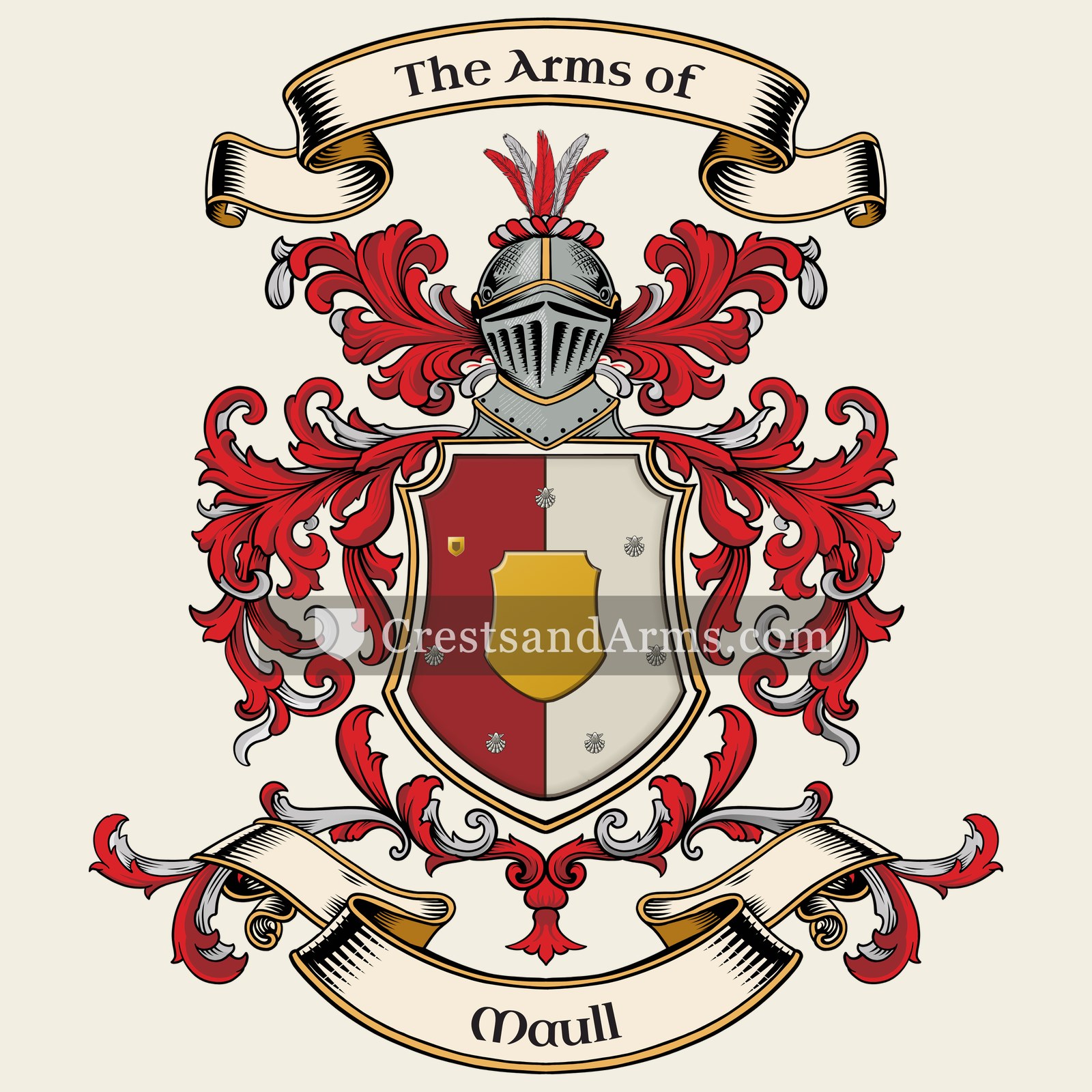
Symbols on this shield
paleMilitary strength, and a fortified defence
escallopThe pilgrim's shell, and a long journey made
escutcheonA shield within a shield, and a claim inherited
Colours
Red (Gules)Means: Military strength
Silver (Argent)Means: Peace and sincerity
Gold (Or)Means: Generosity
Historical info
Source
Sir Bernard Burke, The General Armory of England, Scotland, Ireland and Wales, London: Harrison & Sons, 1884
Blazon (the actual original written record)
“Gu. six escallops, three, two, and one ar. an inescutcheon per pale or and of the second”
Irelandc. 1671
Digital archive packCoat of arms PNG, gold border print PDF, vector SVG and the certificate of authenticity. Sent to your email in minutes.
Map of Ireland showing where the Maull arms are recorded
The Maull arms were recorded in Ireland, c. 1671.
Arms such as these were typically recorded in Dublin.
Dublin was the seat of government in Ireland and the place where grants were sought and recorded. Families with business at the castle or the courts settled nearby, and settling there put their arms on record.
This is where the arms were entered in the register. Families often moved to other parts of the country, so the same name can turn up in more than one region.
The body that granted and recorded arms in Ireland in this period.
Charles II of England
Sovereign of the period
Charles II of England
1660–1685
Reigning in Germany when the Maull arms are first recorded.
How Arms Worked in Ireland
The Ulster King of Arms granted coats of arms to individuals who proved their social standing and good character. These symbols were typically inherited by all legitimate descendants of the original holder. If a family branch wanted a unique look, they could apply for a specific change to their design through the office to ensure their identity remained distinct.
Granting authority
The Ulster King of Arms acted as the official body that regulated and issued all coats of arms throughout Ireland.
How they got arms
Families obtained their arms through formal grants issued by the office after proving their eligibility and paying the required fees.
Where arms were recorded
All official grants were recorded in the registers held by the Ulster King of Arms starting from the year 1552.
The family's standing
Recorded among the armigerous families of Ireland.
Origin & History of the Maull Family in Ireland
The surname Maull has a distinct history in Ireland that can be traced back to the seventeenth century. Official records confirm that members of the Maull family were living in Dublin as early as 1671. During this period, Dublin was a bustling center of trade and administration, making it a common destination for families seeking new opportunities. The name likely arrived in Ireland through migration from Britain, as the family established roots in the capital city during a time of significant social and political change. While the name is not as common as others in the region, its presence in early Dublin tax and legal documents shows that the family was integrated into the urban life of the city. These early settlers helped establish the name in Irish history, leaving behind a trail of records that document their growth and movement within the country over the following centuries.
Related Branches & Arms
Root word
Maultier
A hybrid offspring of a male donkey and a female horse.
This name
MaullA nickname for a stubborn person or someone who worked with pack animals.
also spelled
Maule
Maull
Mawl
Maulle
Mawle
Documented Sources
J. B. Rietstap, Armorial Général, Gouda: G. B. van Goor Zonen, 1884–87
Brechenmacher, Josef Karlmann. Etymologisches Wörterbuch der Deutschen Familiennamen. 1957
Heimatverein Westfalen. Westfälische Zeitschrift: Zeitschrift für vaterländische Geschichte und Altertumskunde. 1965
Landesarchiv Nordrhein-Westfalen. Kirchenbücher der evangelischen und katholischen Gemeinden in Westfalen. 1765
Digital archive packCoat of arms PNG, gold border print PDF, vector SVG and the certificate of authenticity. Sent to your email in minutes.


 fessThe military belt, and readiness to serve
 fessThe military belt, and readiness to serve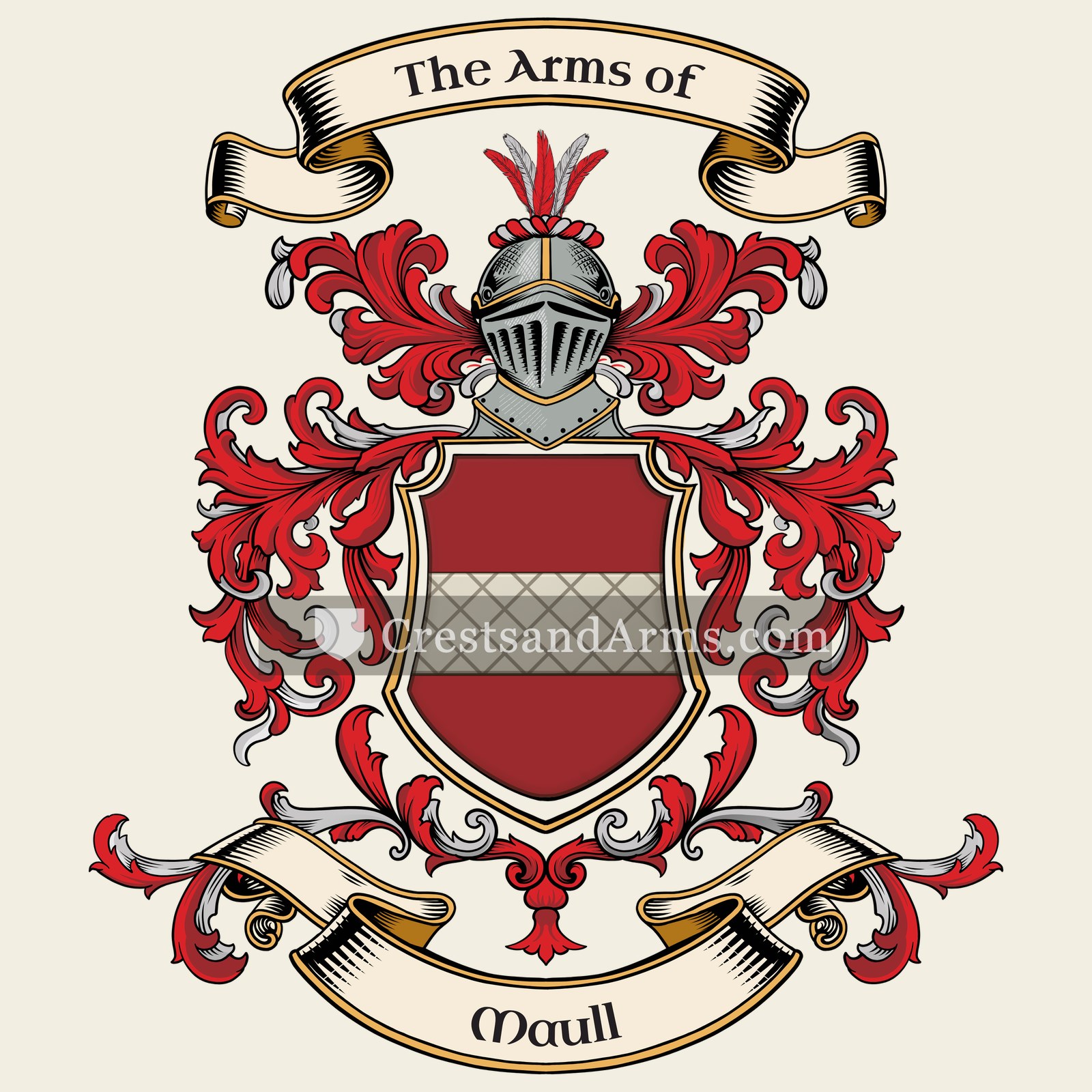


 paleMilitary strength, and a fortified defence
 escallopThe pilgrim's shell, and a long journey made
 escutcheonA shield within a shield, and a claim inherited