Map of Switzerland showing where the Mays arms are recorded
The Mays arms were recorded in Holl, c. 1745.
Arms such as these were typically recorded in Bern.
Bern was the largest of the Swiss cantons and ran itself, with its own council and its own courts. Its governing families held office for generations, and office of that kind carried a shield with it.
This is where the arms were entered in the register. Families often moved to other parts of the country, so the same name can turn up in more than one region.
The body that granted and recorded arms in Switzerland in this period.
How Arms Worked in Switzerland
In Switzerland, coats of arms were not restricted to the nobility and were often adopted by common citizens and families. These symbols were passed down through generations to show family identity. When branches of a family grew, they often changed small details of the design to distinguish their own line from the original group.
Granting authority
Cantonal and civic authorities managed the use of coats of arms within their specific regions and local jurisdictions.
How they got arms
Families typically assumed their own coats of arms based on local custom rather than receiving them from a central monarch.
Where arms were recorded
Arms were recorded in various cantonal and civic registers starting from the fourteenth century throughout the Swiss region.
The family's standing
Recorded among the armigerous families of Switzerland.
Origin & History of the Mays Family in Switzerland
The history of the Mays family in Switzerland is deeply rooted in the cultural and social landscape of the Canton of Bern during the eighteenth century. By 1745, records confirm that members of the family were established residents within this region, which was then a powerful city-state known for its strict administrative record-keeping. During this period, the name was often associated with families living in rural or semi-rural communes where agriculture and local trade formed the backbone of daily life. Life in Bern at this time was governed by a rigid class structure, and families like the Mays were typically integrated into the local parish systems. These systems tracked births, marriages, and deaths with great precision, reflecting a society that valued stability and community lineage. As the family navigated the political shifts of the Swiss Confederation, their presence in Bern suggests they were part of the hardworking population that helped maintain the region’s economic and social order before the major upheavals of the nineteenth century.
Meaning of the Mays family crest colors & symbols
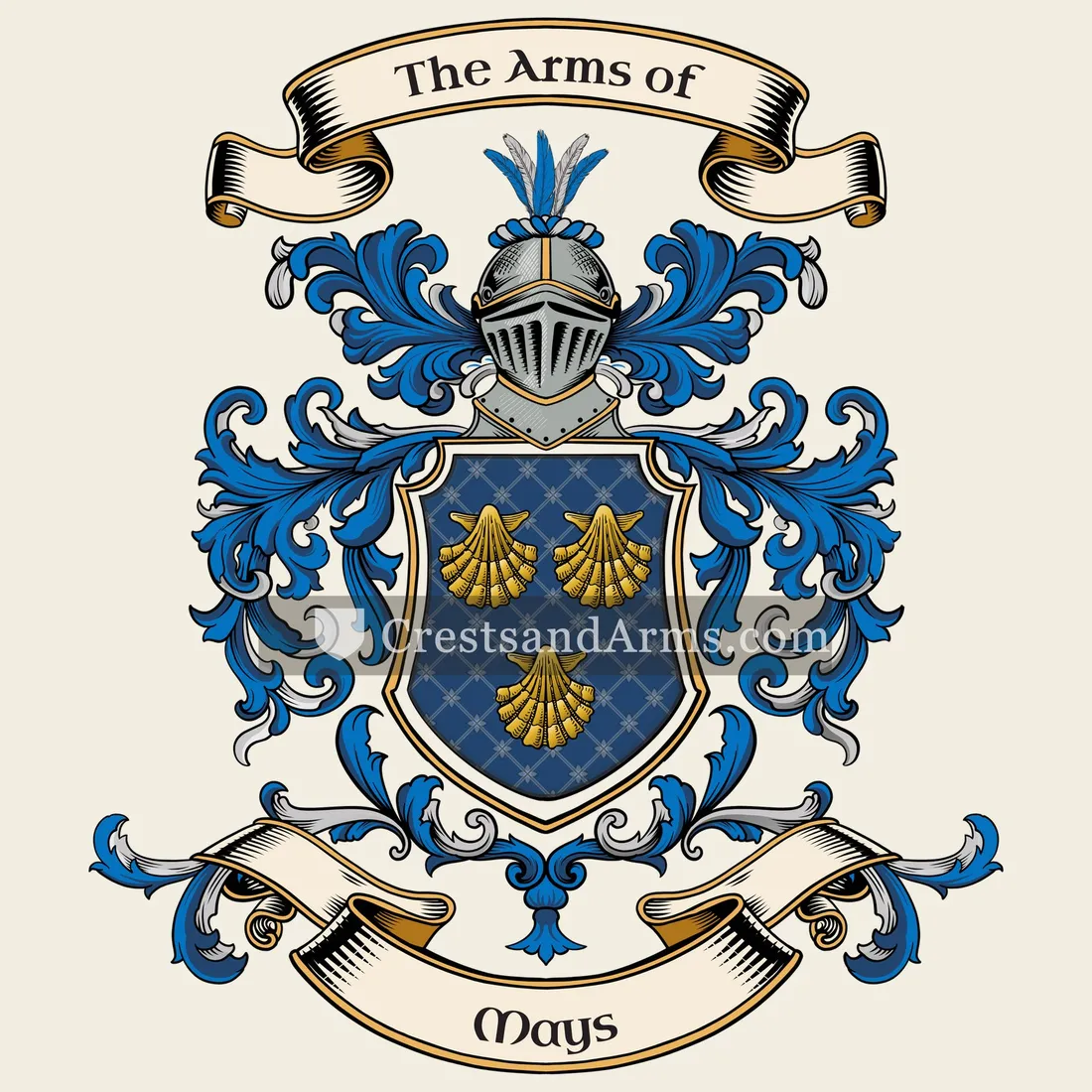
Symbols on this shield
escallopThe pilgrim's shell, and a long journey made
Colours
Blue (Azure)Means: Loyalty and truth
Gold (Or)Means: Generosity
Historical info
Source
J. B. Rietstap, Armorial Général, Gouda: G. B. van Goor Zonen, 1884–87
Blazon (the actual original written record)
“D'azur à trois coquilles d'or.”
FlandreFlandre, c. 1663
Digital archive packCoat of arms PNG, gold border print PDF, vector SVG and the certificate of authenticity. Sent to your email in minutes.
Map of Belgium showing where the Mays arms are recorded
The Mays arms were recorded in Flandre, c. 1663.
Flandre grew rich on cloth, and its towns were among the busiest in Europe. Merchant families bought land with their profits and took arms to go with it, so trade put as many names in the registers here as land did.
This is where the arms were entered in the register. Families often moved to other parts of the country, so the same name can turn up in more than one region.
The body that granted and recorded arms in Belgium in this period.
Philip IV of Spain
Sovereign of the period
Philip IV of Spain
1621–1665
Reigning in Switzerland when the Mays arms are first recorded.
How Arms Worked in Belgium
In Belgium, a coat of arms is considered personal property that is passed down through the male line to legitimate descendants. Families often use the same shield design across generations to show their shared heritage. If a branch of the family wants to change the design, they must apply for an official update to their specific version of the arms.
Granting authority
The Conseil héraldique is the official body that regulates and approves all coats of arms in Belgium.
How they got arms
Families obtain their coats of arms through formal royal grants or by confirming their historical right to use existing designs.
Where arms were recorded
All approved coats of arms are officially recorded in the public registers of the Conseil héraldique since 1844.
The family's standing
Recorded among the armigerous families of Flandre.
Origin & History of the Mays Family in Belgium
The family name Mays has roots that trace back to the historic region of Flanders in present-day Belgium. By the year 1663, records confirm that members of the family were established within this area, which was then a bustling center of trade and craftsmanship. During the seventeenth century, Flanders was a place of significant social and economic movement, often shaped by the influence of local guilds and the agricultural prosperity of the Low Countries. Families living in this region during that period typically identified themselves through their local community ties and their specific trades. The name Mays likely evolved as a way to distinguish these individuals within their local parishes as they navigated the complex political landscape of the Spanish Netherlands. Over time, the family became part of the fabric of Flemish life, contributing to the local traditions and the unique cultural identity that defined the region during the early modern era.
Mays Meaning & Related Branches
Root word
Maius
Latin term for the month of May or the goddess Maia.
This name
MaysAn occupational name for someone born in May or a seasonal agricultural worker.
also spelled
Meis
Mays
Mice
Documented Sources
J. B. Rietstap, Armorial Général, Gouda: G. B. van Goor Zonen, 1884–87
Staatsarchiv des Kantons Bern, Kirchenbücher der Kirchgemeinde Bern (Church records of the parish of Bern)
Staatsarchiv des Kantons Bern, Burgerrodel (Citizenship registers)
Dubler, Anne-Marie, Der Kanton Bern im Zeitalter des Ancien Régime, 1985
Historisches Lexikon der Schweiz, Bern (Gemeinde), 2002
Digital archive packCoat of arms PNG, gold border print PDF, vector SVG and the certificate of authenticity. Sent to your email in minutes.


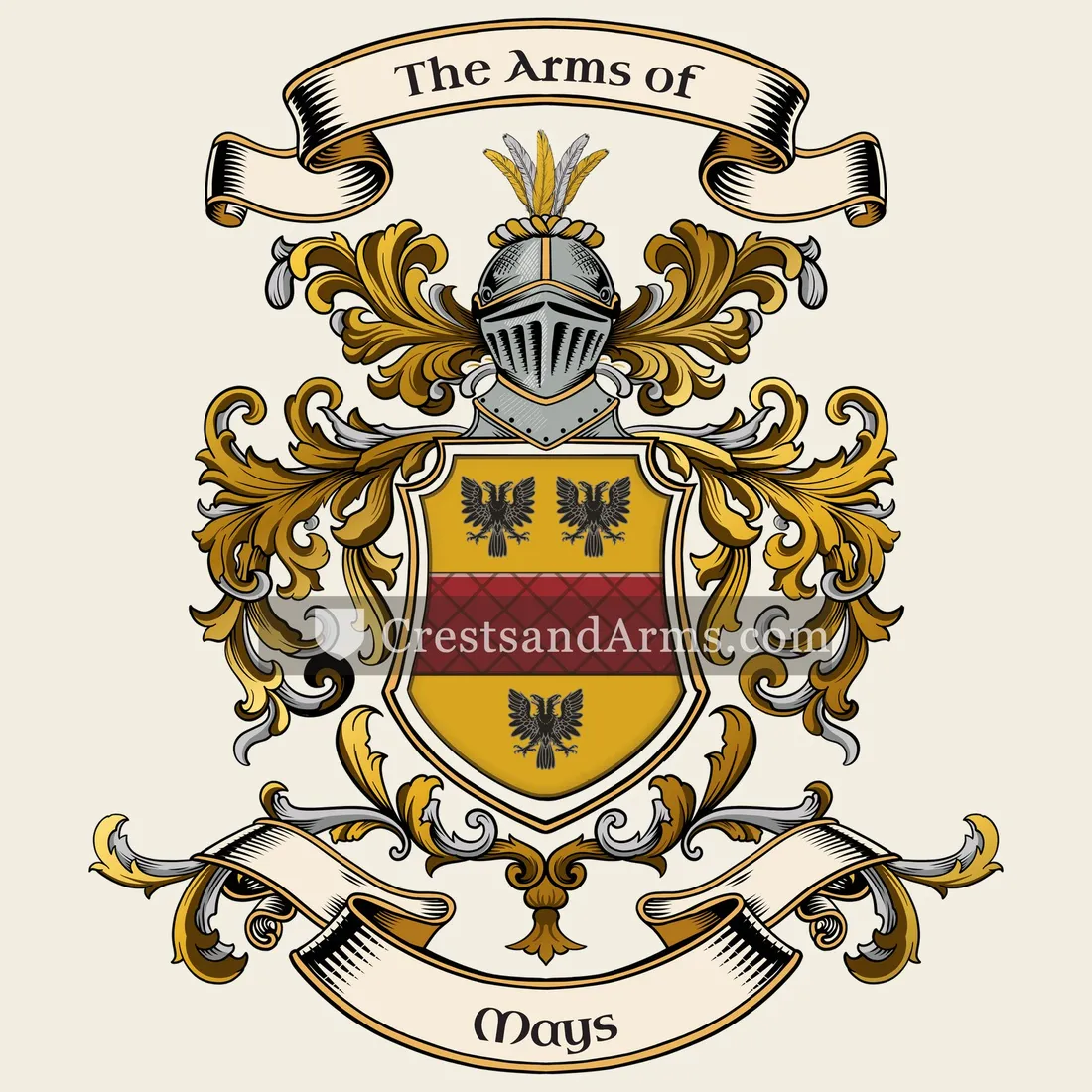
 fessThe military belt, and readiness to serve
 eagleNobility, strength and a keen mind
 fessThe military belt, and readiness to serve
 eagleNobility, strength and a keen mind

 escallopThe pilgrim's shell, and a long journey made