Map of Netherlands showing where the Mazel arms are recorded
The Mazel arms were recorded in Netherlands, c. 1815.
Arms such as these were typically recorded in Friesland.
Friesland was low, wet country on the northern coast of the Netherlands, farmed by families who had held the same land for centuries. Free landholders were unusually common there, and a free landholder could carry arms.
This is where the arms were entered in the register. Families often moved to other parts of the country, so the same name can turn up in more than one region.
Region
Friesland
First recorded
1815
Granting Authority for the Mazel Arms
Hoge Raad van Adel
Photograph made by me · CC BY-SA 3.0
The body that granted and recorded arms in Netherlands in this period.
William I of the Netherlands
Sovereign of the period
William I of the Netherlands
1815–1840
Reigning in Netherlands when the Mazel arms are first recorded.
How Arms Worked in Netherlands
In the Netherlands, coats of arms were often used by noble families and those who held specific public offices. These arms were passed down through the generations to legitimate descendants. Younger branches of a family usually kept the original design without needing to add special marks. This system ensured that the family identity remained clear and consistent over many years.
Granting authority
The Hoge Raad van Adel is the official body that regulates and manages noble titles and coats of arms in the Netherlands.
How they got arms
Families typically obtained their coats of arms through official royal grants or by proving their long-standing historical use of the symbols.
Where arms were recorded
Coats of arms are officially recorded in the registers held by the Hoge Raad van Adel, which began its work in 1814.
The family's standing
Recorded among the armigerous families of Netherlands.
Origin & History of the Mazel Family in Netherlands
The history of the Mazel family in the Netherlands is deeply connected to the northern province of Friesland, where records confirm their presence by 1815. During this period, the Netherlands underwent significant changes in how citizens registered their surnames due to the introduction of the Napoleonic civil registry. While the name Mazel has roots in various European linguistic traditions, its appearance in the Frisian landscape suggests a family that integrated into the local administrative and social structures of the early nineteenth century. Many families in this region during the post-Napoleonic era were transitioning from traditional naming customs to fixed hereditary surnames to comply with new government laws. By establishing themselves in Friesland, the Mazel family became part of the unique cultural fabric of the northern Netherlands, where they participated in the local economy and community life as the country transitioned into a modern unified state.
Meaning of the Mazel family crest colors & symbols
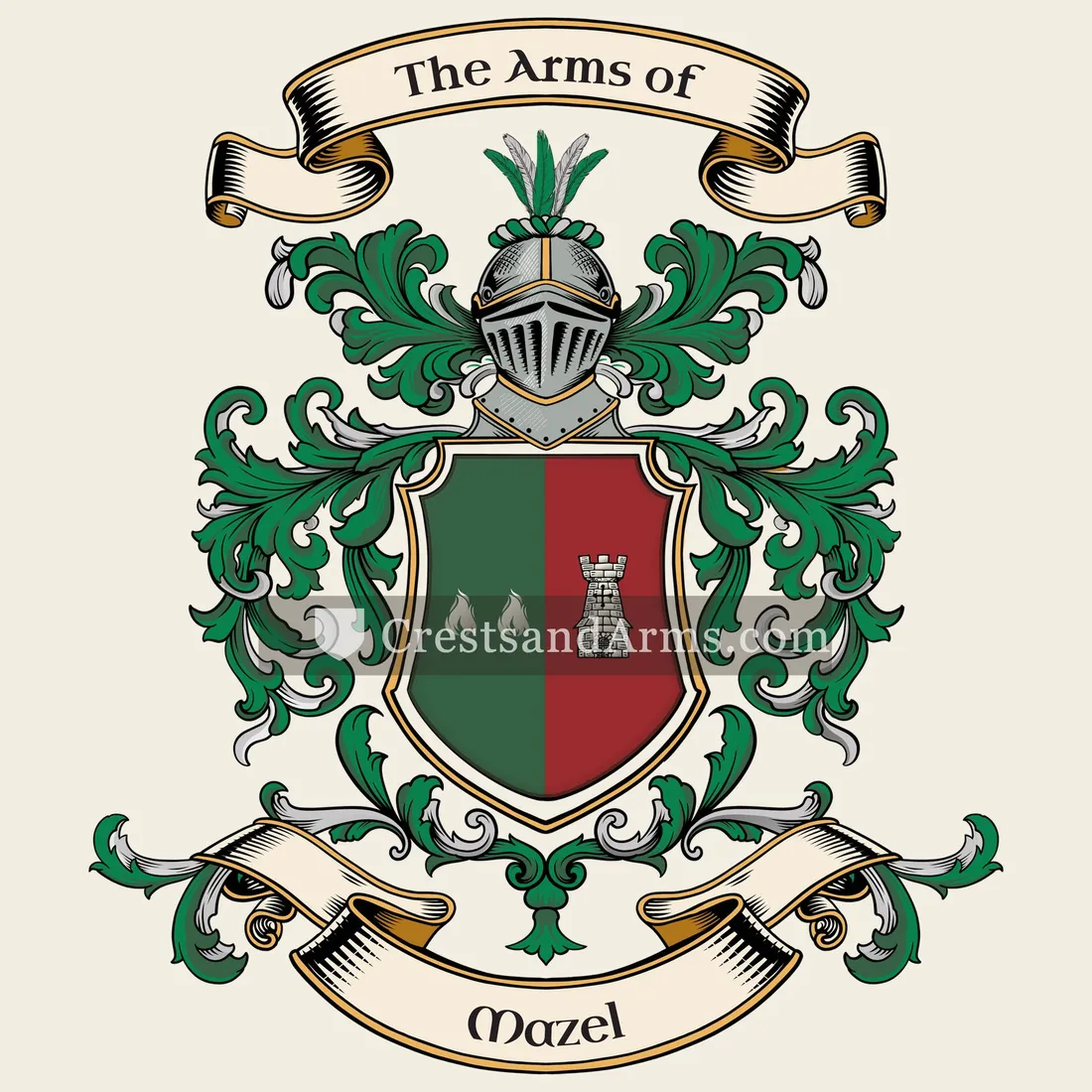
Symbols on this shield
fireZeal and purification
towerGrandeur and solidity, and a stronghold defended
Colours
Green (Vert)Means: Hope
Red (Gules)Means: Military strength
Silver (Argent)Means: Peace and sincerity
Historical info
Source
J. B. Rietstap, Armorial Général, Gouda: G. B. van Goor Zonen, 1884–87
Blazon (the actual original written record)
“Parti: au 1 de sin à deux flambeaux d'arg., allumés de gu., fichés dans deux chandeliers du même; au 2 de gu. à une tour d'arg., maçonnée de sa., sommée d'une colombe d'arg., tenant de sa patte dextre une branche de sin. en pal.”
BourgogneBourgogne, c. 1663
Digital archive packCoat of arms PNG, gold border print PDF, vector SVG and the certificate of authenticity. Sent to your email in minutes.
Map of France showing where the Mazel arms are recorded
The Mazel arms were recorded in Bourgogne, c. 1663.
Bourgogne was one of the richest parts of France, built on wine, wool and the roads that carried both. Wealth of that kind bought land, and land brought arms, so the region filled with armed families earlier than most of the country.
This is where the arms were entered in the register. Families often moved to other parts of the country, so the same name can turn up in more than one region.
The body that granted and recorded arms in France in this period.
Louis XIV of France
Sovereign of the period
Louis XIV of France
1643–1715
Reigning in Netherlands when the Mazel arms are first recorded.
How Arms Worked in France
In France, a coat of arms was a mark of honor that passed down through the male line to all legitimate descendants. Families often used the same shield without changes to show their shared heritage. If a branch wanted to stand out, they could add a small mark to their shield to show their specific place in the family tree.
Granting authority
The Juge d'armes de France acted as the official authority that regulated and verified coats of arms across the country.
How they got arms
Families typically inherited their arms from ancestors, though they could also receive them through royal grants or by proving their noble status.
Where arms were recorded
Coats of arms were officially recorded in the Armorial Général de France, which began its main collection in the year 1696.
The family's standing
Recorded among the armigerous families of Bourgogne.
Origin & History of the Mazel Family in France
The family name Mazel carries a rich history rooted in the rural landscapes of France, with documented evidence placing members of the family in the Bourgogne region as early as 1663. The name itself is thought to be derived from the Old French word "mas," which referred to a small farm or a rural dwelling. This suggests that the earliest ancestors were likely independent farmers or landholders who were deeply connected to the agricultural life of the French countryside. During the seventeenth century, Bourgogne was a hub of viticulture and trade, and families like the Mazels were often integral to the local community structure. As they moved through the generations, they became part of the social fabric of the region, living through a time of significant cultural and political transition in France. By settling in this area, the family established a long-standing presence that reflected the traditional values and labor-intensive lifestyle of the era.
Mazel Meaning & Related Branches
Root word
mazzal
A Hebrew term referring to a constellation, star, or destiny.
This name
MazelDerived from a term for luck, fortune, or a favorable star.
also spelled
Masel
Documented Sources
J. B. Rietstap, Armorial Général, Gouda: G. B. van Goor Zonen, 1884–87
AlleFriezen, Burgerlijke Stand Geboorteakten (Civil Registry Birth Records)
Nationaal Archief, Registers van de Burgerlijke Stand (Civil Registry Records)
Dijkstra, B., Friese familienamen: Een overzicht van hun oorsprong en verspreiding, 1998
Meertens, P.J., De betekenis van de Nederlandse familienamen, 1950
Digital archive packCoat of arms PNG, gold border print PDF, vector SVG and the certificate of authenticity. Sent to your email in minutes.


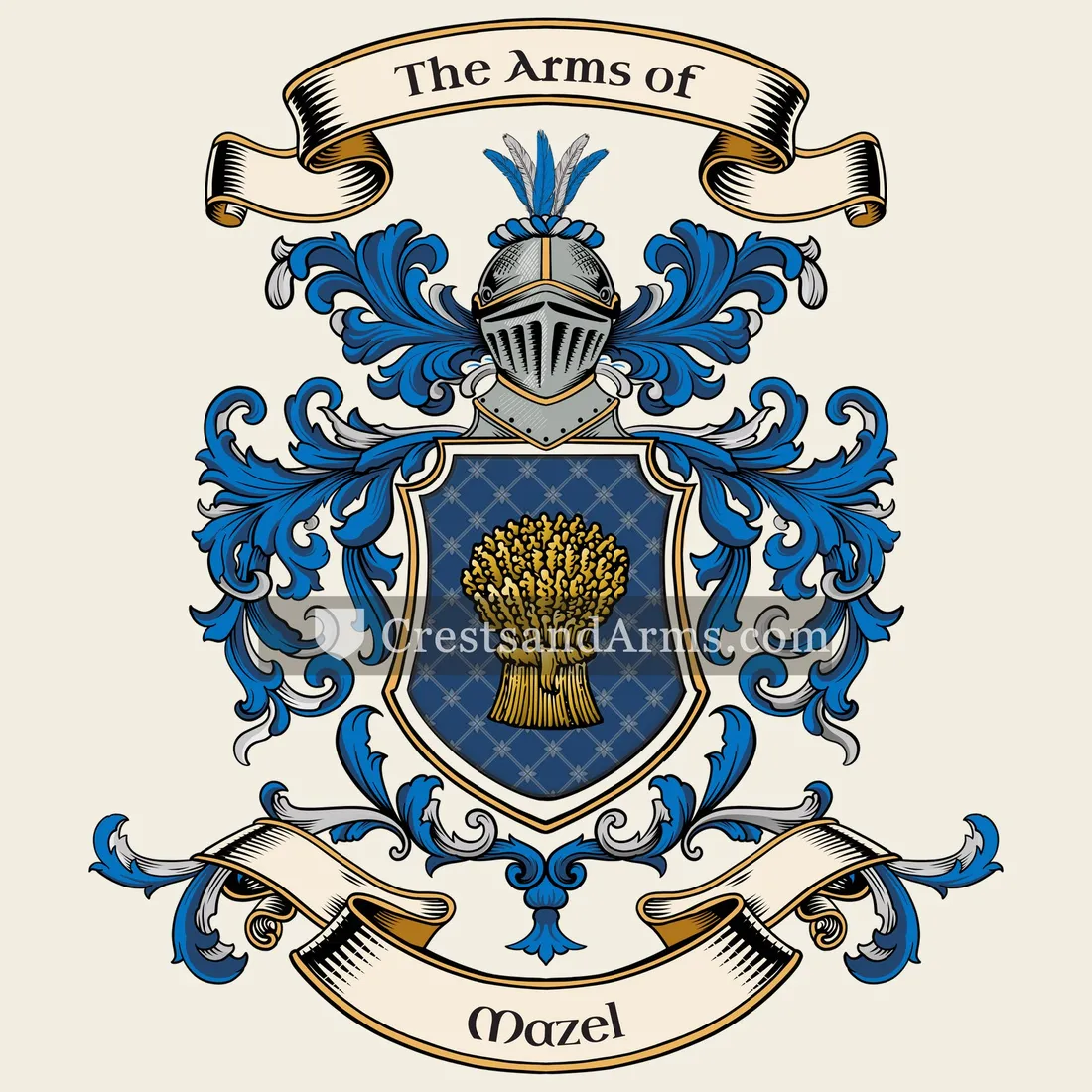
 wheatsheafPlenty, and the harvest of one's own labour
 wheatsheafPlenty, and the harvest of one's own labour


 fireZeal and purification
 towerGrandeur and solidity, and a stronghold defended