A record of documented arms, meaning and origin, researched for the Mccampbell family lines. Documented in 3 countries.
Reg. 4435 · Britain, M–O
Coat of Arms & Family Crest Details
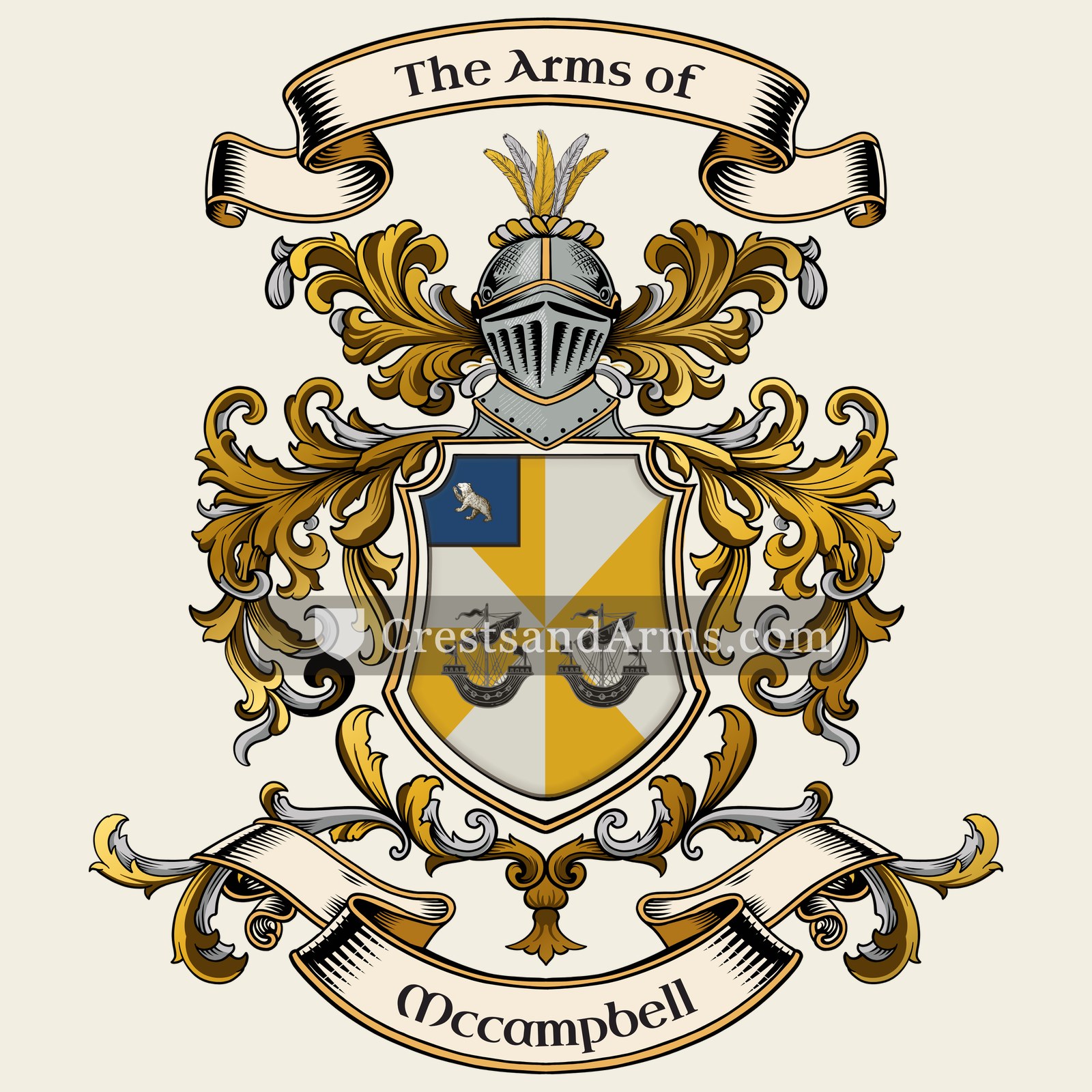
Symbols on this shield
shipEnterprise, and a great voyage undertaken
Colours
Gold (Or)Means: Generosity
ErmineMeans: Dignity
Black (Sable)Means: Constancy
Historical info
Source
J. B. Rietstap, Armorial Général, Gouda: G. B. van Goor Zonen, 1884–87
Blazon (the actual original written record)
“Ec.: aux 1 et 4 gironné d'or et de sa. (Campbell); aux 2 et 3 d'arg. à une galère de sa., les voiles ferlées (Lorn). L'écu entouré d'une bord. crén. d'herm. C.: une hure de sanglier d'or. D.: FOLLOW ME.”
SurreySurrey, c. 1700
Digital archive packCoat of arms PNG, gold border print PDF, vector SVG and the certificate of authenticity. Sent to your email in minutes.
Map of Britain showing where the Mccampbell arms are recorded
The Mccampbell arms were recorded in Surrey, c. 1700.
Surrey sat just south of London and filled up with families who had made money in the City. Buying an estate there was the usual next step, and an estate was the usual reason to take arms.
This is where the arms were entered in the register. Families often moved to other parts of the country, so the same name can turn up in more than one region.
The body that granted and recorded arms in Britain in this period.
William III of England
Sovereign of the period
William III of England
1694–1702
Reigning in Britain when the Mccampbell arms are first recorded.
How Arms Worked in Britain
English heraldry allowed arms to be shared by all legitimate descendants of the original owner. These symbols were treated as personal property that moved through the generations to all children. While the eldest son kept the original design, other family members could use the same shield without needing to change it or register their own unique versions.
Granting authority
The College of Arms in London has regulated the use of coats of arms throughout England and Wales since 1484.
How they got arms
Families typically obtained their coats of arms through a formal grant from the Crown or by proving their ancient right to them.
Where arms were recorded
All official coats of arms are recorded in the registers kept at the College of Arms, which date back to the fifteenth century.
The family's standing
Recorded among the armigerous families of Surrey.
Origin & History of the Mccampbell Family in Britain
The McCampbell name carries a history deeply rooted in the movement of families across the British Isles during the late seventeenth and early eighteenth centuries. While the name is often associated with Scottish origins, records confirm that members of the family were established in the county of Surrey by the year 1700. During this period, Surrey was a region undergoing significant social and economic shifts as people migrated toward the growing influence of London. Families like the McCampbells often settled in such areas to take advantage of new trade opportunities and the stability offered by the English countryside. Their presence in Surrey suggests that they were part of a broader trend of families moving south to seek land, employment, or religious freedom. By documenting their lives in local parish registers and legal papers, these early settlers helped weave their family identity into the fabric of English local history.
Coat of Arms & Family Crest Details
Colours
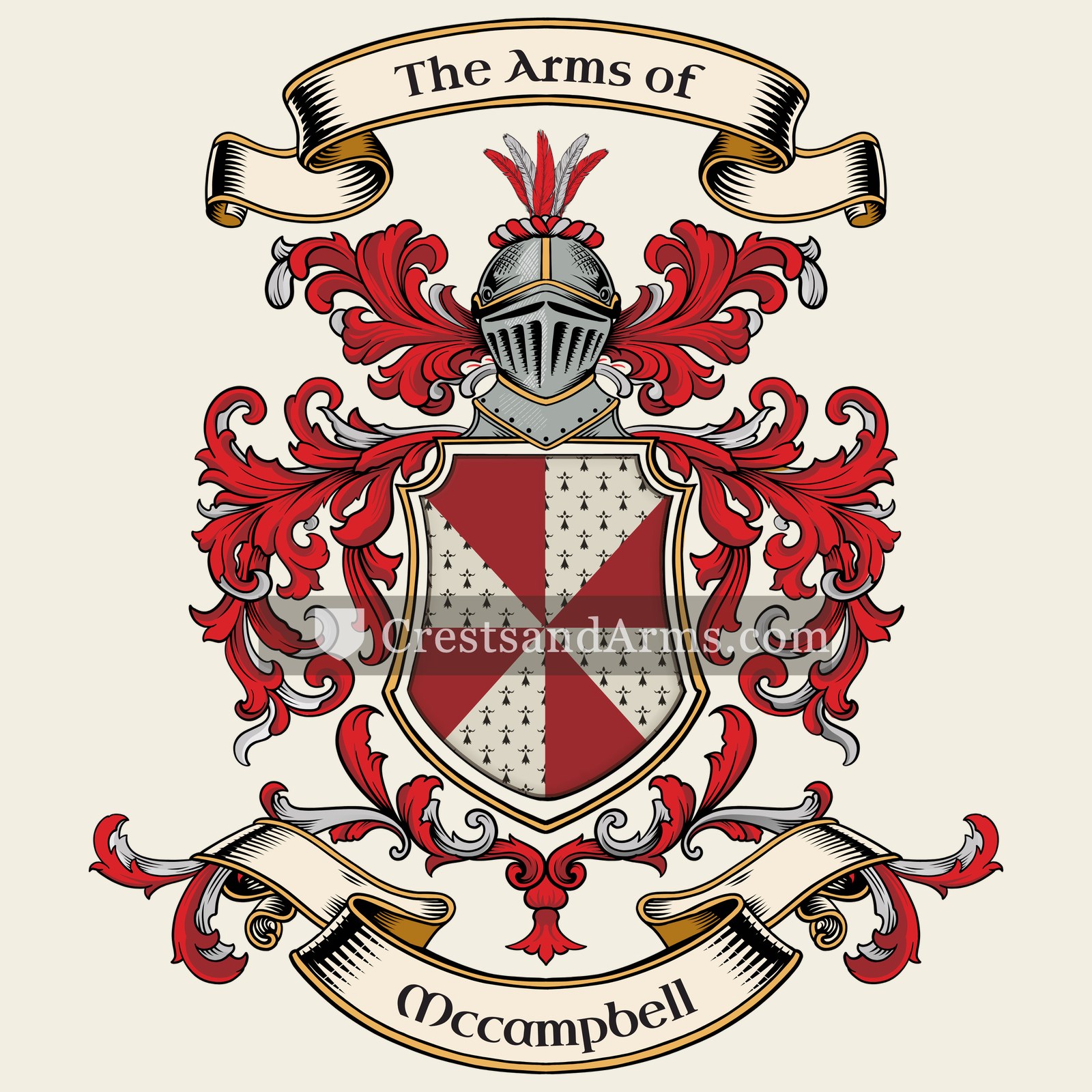
ErmineMeans: Dignity
Red (Gules)Means: Military strength
Historical info
Source
Sir Bernard Burke, The General Armory of England, Scotland, Ireland and Wales, London: Harrison & Sons, 1884
Blazon (the actual original written record)
“Gyronny of eight erm. and gu”
AyrLoudoun · Ayr, c. 1601
Digital archive packCoat of arms PNG, gold border print PDF, vector SVG and the certificate of authenticity. Sent to your email in minutes.
Map of Scotland showing where the Mccampbell arms are recorded
The Mccampbell arms were recorded in Ayr, c. 1601.
Ayrshire was farming country along Scotland's south-west coast, held in a great many small estates. Its lairds were numerous rather than rich, and each holding brought its own claim to arms.
This is where the arms were entered in the register. Families often moved to other parts of the country, so the same name can turn up in more than one region.
The body that granted and recorded arms in Scotland in this period.
James VI and I
Sovereign of the period
James VI and I
1587–1625
Reigning in Britain when the Mccampbell arms are first recorded.
How Arms Worked in Scotland
Scottish heraldry is unique because it treats a coat of arms as a piece of personal property protected by law. Only one person can own a specific design at any given time. When a family grows, the head keeps the original shield while other relatives must apply for their own distinct version with slight changes to prove their specific identity.
Granting authority
The Court of the Lord Lyon acts as the official body that regulates and controls all heraldic matters throughout Scotland.
How they got arms
Individuals obtain a legal right to their arms through a formal petition process that confirms their identity and family connection.
Where arms were recorded
All valid coats of arms are officially entered into the Public Register of All Arms and Bearings starting from 1672.
The family's standing
Recorded among the armigerous families of Ayr.
Origin & History of the Mccampbell Family in Scotland
The McCampbell surname finds its historical roots in the rugged landscape of southwestern Scotland, specifically within the county of Ayrshire. By the year 1601, records confirm that members of the family were firmly established in the town of Ayr, a bustling coastal burgh known for its trade and strategic importance. The name itself is a variation of the Gaelic "Mac Cathmhaoil," which translates to "son of the battle chief." This suggests that the early ancestors of the family were likely warriors or leaders who held positions of influence within their local clans. Living in Ayrshire placed the family at the center of a region defined by shifting political loyalties and the complex social structures of the Scottish Lowlands. Over time, these early settlers adapted to the changing economic conditions of the seventeenth century, transitioning from their traditional roles into the agricultural and mercantile life that defined the area. Their presence in official town documents from the early 1600s highlights their integration into the civic fabric of Scotland long before many of their descendants began the journey to North America.
Coat of Arms & Family Crest Details
Symbols on this shield
cantonA mark of honour granted by the sovereign
bearStrength, cunning and protection of kin
shipEnterprise, and a great voyage undertaken
Colours
Blue (Azure)Means: Loyalty and truth
Silver (Argent)Means: Peace and sincerity
Black (Sable)Means: Constancy
Gold (Or)Means: Generosity
Historical info
Source
Sir Bernard Burke, The General Armory of England, Scotland, Ireland and Wales, London: Harrison & Sons, 1884
Blazon (the actual original written record)
“Quarterly, 1st and 4th, gyronny of eight sa. and or, on a canton az. a bear's head couped ar. muzzled gu.; 2nd and 3rd, ar. a lymphad sailed furled and oars in action sa”
IrelandCarrickboy, c. 1645
Digital archive packCoat of arms PNG, gold border print PDF, vector SVG and the certificate of authenticity. Sent to your email in minutes.
Map of Ireland showing where the Mccampbell arms are recorded
The Mccampbell arms were recorded in Carrickboy, c. 1645.
Arms such as these were typically recorded in Dublin.
Dublin was the seat of government in Ireland and the place where grants were sought and recorded. Families with business at the castle or the courts settled nearby, and settling there put their arms on record.
This is where the arms were entered in the register. Families often moved to other parts of the country, so the same name can turn up in more than one region.
The body that granted and recorded arms in Ireland in this period.
Charles I of England
Sovereign of the period
Charles I of England
1625–1649
Reigning in Britain when the Mccampbell arms are first recorded.
How Arms Worked in Ireland
The Ulster King of Arms granted coats of arms to individuals who proved their social standing and good character. These symbols were typically inherited by all legitimate descendants of the original holder. If a family branch wanted a unique look, they could apply for a specific change to their design through the office to ensure their identity remained distinct.
Granting authority
The Ulster King of Arms acted as the official body that regulated and issued all coats of arms throughout Ireland.
How they got arms
Families obtained their arms through formal grants issued by the office after proving their eligibility and paying the required fees.
Where arms were recorded
All official grants were recorded in the registers held by the Ulster King of Arms starting from the year 1552.
The family's standing
Recorded among the armigerous families of Ireland.
Origin & History of the Mccampbell Family in Ireland
The McCampbell name has deep roots in the complex social landscape of seventeenth-century Ireland. By 1645, records confirm that members of the family were established in Dublin, a city that served as a vital hub for trade and administration during a period of intense political upheaval. The name itself is an anglicized variation of a Gaelic patronymic, likely reflecting a lineage that merged older Irish traditions with the shifting cultural influences of the era. Families like the McCampbells often navigated the transition between rural life and the growing urban centers of the Pale, where they participated in the local economy and civic affairs. Their presence in the capital suggests they were part of a mobile population that adapted to the changing laws and social structures defining Ireland at the time. Through these early records, we see a family that maintained its identity while becoming integrated into the evolving fabric of Irish society.
Related Branches & Arms
Root word
Mac Cathmhaoil
Gaelic patronymic meaning son of the battle chief.
This name
MccampbellA Scottish and Irish surname derived from the Gaelic term for a warrior or battle leader.
also spelled
Campbel
Cambell
Kambel
Documented Sources
J. B. Rietstap, Armorial Général, Gouda: G. B. van Goor Zonen, 1884–87
Surrey History Centre, Parish registers of Surrey, 1538–1900
The National Archives, Records of the Prerogative Court of Canterbury, 1690–1710
Digital archive packCoat of arms PNG, gold border print PDF, vector SVG and the certificate of authenticity. Sent to your email in minutes.


 shipEnterprise, and a great voyage undertaken
 shipEnterprise, and a great voyage undertaken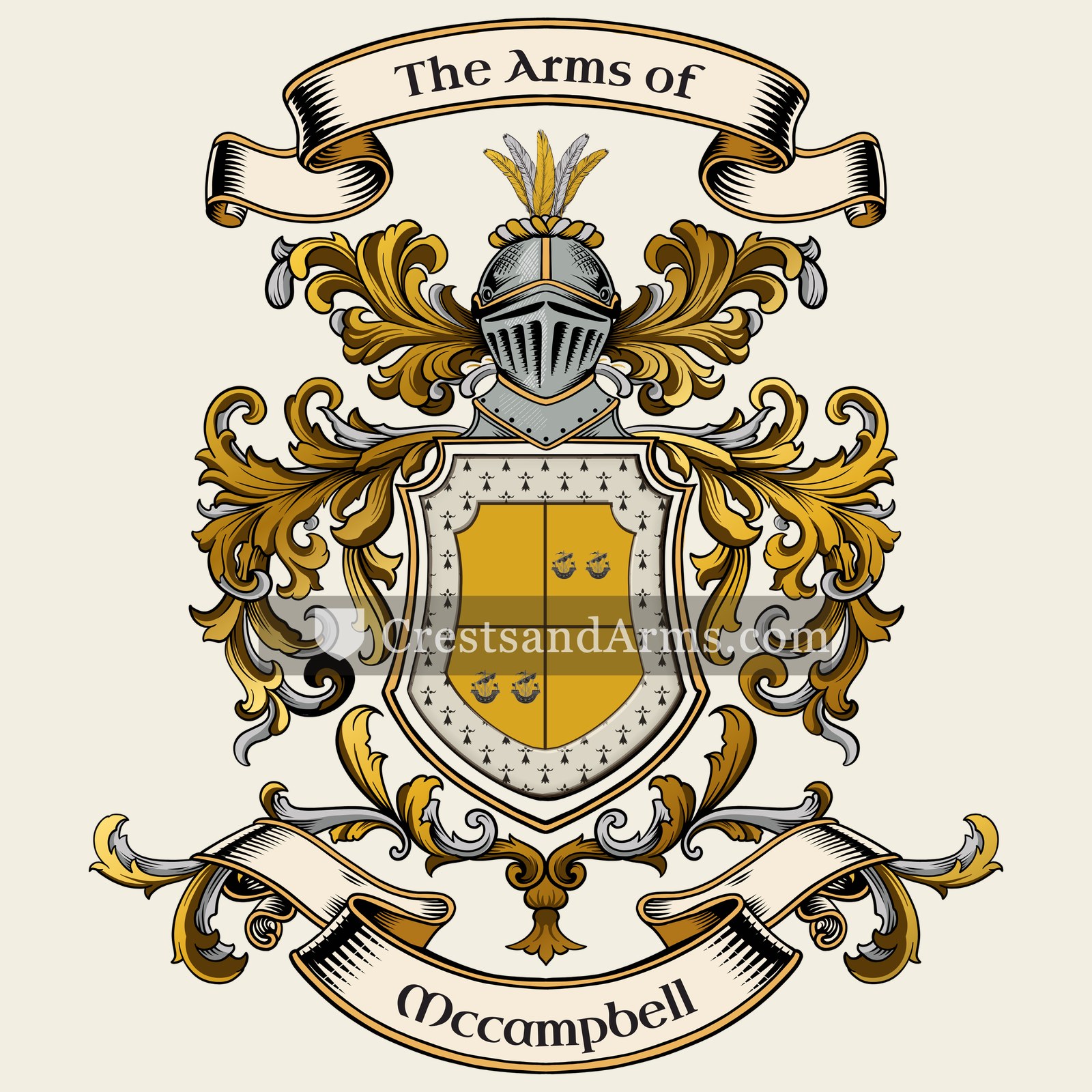




 cantonA mark of honour granted by the sovereign
 bearStrength, cunning and protection of kin