Map of France showing where the Mchone arms are recorded
The Mchone arms were recorded in Bourgogne, c. 1663.
Bourgogne was one of the richest parts of France, built on wine, wool and the roads that carried both. Wealth of that kind bought land, and land brought arms, so the region filled with armed families earlier than most of the country.
This is where the arms were entered in the register. Families often moved to other parts of the country, so the same name can turn up in more than one region.
The body that granted and recorded arms in France in this period.
Louis XIV of France
Sovereign of the period
Louis XIV of France
1643–1715
Reigning in France when the Mchone arms are first recorded.
How Arms Worked in France
In France, a coat of arms was a mark of honor that passed down through the male line to all legitimate descendants. Families often used the same shield without changes to show their shared heritage. If a branch wanted to stand out, they could add a small mark to their shield to show their specific place in the family tree.
Granting authority
The Juge d'armes de France acted as the official authority that regulated and verified coats of arms across the country.
How they got arms
Families typically inherited their arms from ancestors, though they could also receive them through royal grants or by proving their noble status.
Where arms were recorded
Coats of arms were officially recorded in the Armorial Général de France, which began its main collection in the year 1696.
The family's standing
Recorded among the armigerous families of Bourgogne.
Origin & History of the Mchone Family in France
The history of the Mchone family name in France is deeply rooted in the historical region of Bourgogne, where records confirm the presence of family members as early as 1663. During the seventeenth century, Bourgogne was a prominent center for viticulture and trade, and families living in this area were often tied to the land through agricultural labor or local craftsmanship. The name likely evolved as a localized variation of regional surnames common to the eastern provinces of France, reflecting the specific dialects spoken in the area at the time. As members of the community, these early ancestors would have navigated the social and economic changes of the French monarchy, living through a period where local parish records became the primary method for tracking births, marriages, and deaths. By settling in this fertile region, the family established a foundation that spanned generations, contributing to the rich cultural and social tapestry of the Bourgogne province long before the name eventually migrated to other parts of the world.
Coat of Arms & Family Crest Details
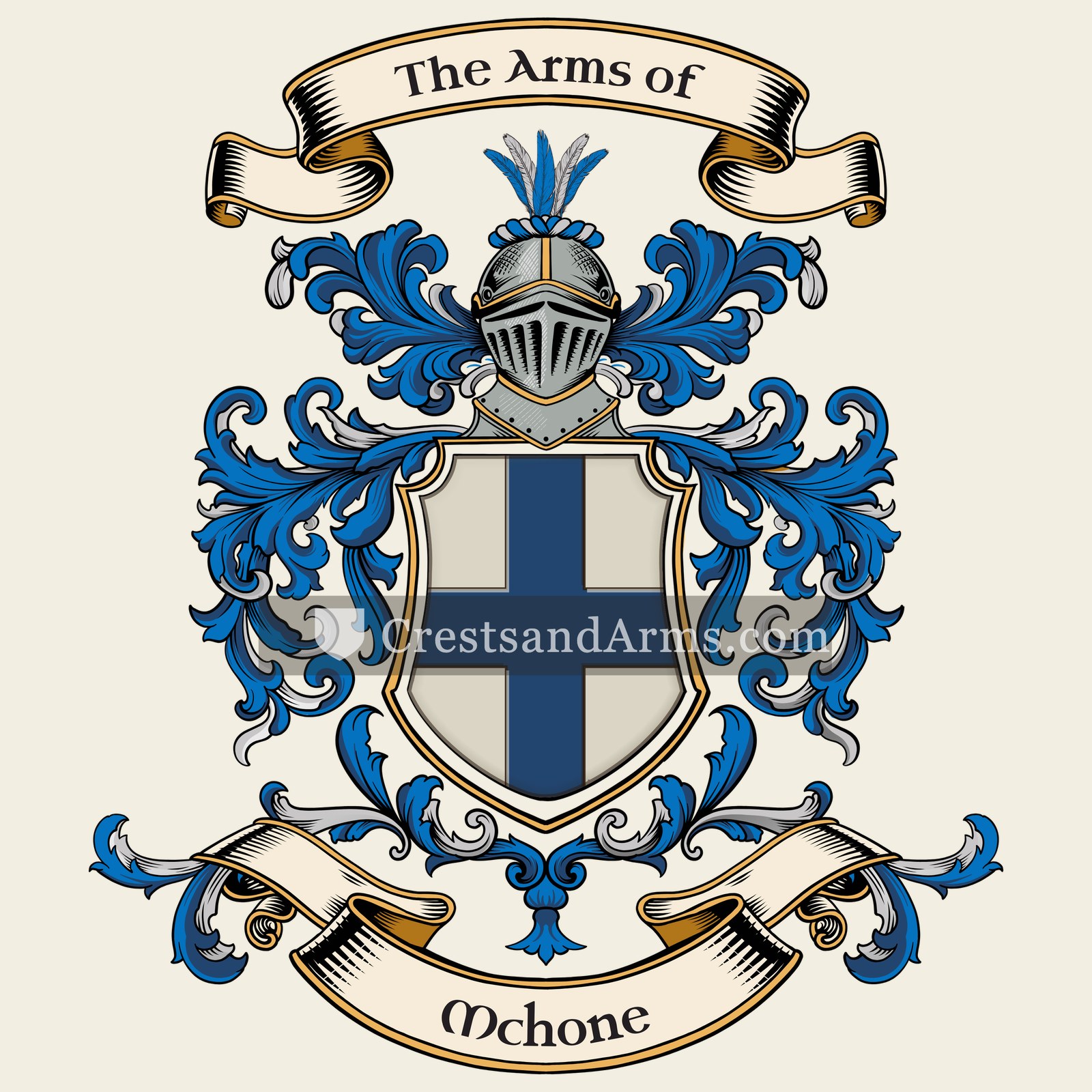
Symbols on this shield
cross symbolChristian faith and service
Colours
Silver (Argent)Means: Peace and sincerity
Blue (Azure)Means: Loyalty and truth
Historical info
Source
J. B. Rietstap, Armorial Général, Gouda: G. B. van Goor Zonen, 1884–87
Blazon (the actual original written record)
“D'arg. à la croix d'azur.”
Switzerlandc. 1745
Digital archive packCoat of arms PNG, gold border print PDF, vector SVG and the certificate of authenticity. Sent to your email in minutes.
Map of Switzerland showing where the Mchone arms are recorded
The Mchone arms were recorded in Switzerland, c. 1745.
Arms such as these were typically recorded in Bern.
Bern was the largest of the Swiss cantons and ran itself, with its own council and its own courts. Its governing families held office for generations, and office of that kind carried a shield with it.
This is where the arms were entered in the register. Families often moved to other parts of the country, so the same name can turn up in more than one region.
The body that granted and recorded arms in Switzerland in this period.
How Arms Worked in Switzerland
In Switzerland, coats of arms were not restricted to the nobility and were often adopted by common citizens and families. These symbols were passed down through generations to show family identity. When branches of a family grew, they often changed small details of the design to distinguish their own line from the original group.
Granting authority
Cantonal and civic authorities managed the use of coats of arms within their specific regions and local jurisdictions.
How they got arms
Families typically assumed their own coats of arms based on local custom rather than receiving them from a central monarch.
Where arms were recorded
Arms were recorded in various cantonal and civic registers starting from the fourteenth century throughout the Swiss region.
The family's standing
Recorded among the armigerous families of Switzerland.
Origin & History of the Mchone Family in Switzerland
The family name Mchone traces its roots back to the mountainous landscapes of Switzerland, where early records confirm the family was established in the canton of Bern by 1745. During this period, Bern was a powerful city-state defined by strict social structures and a strong emphasis on agricultural life. Families with this name were likely part of the hardworking citizenry that sustained the local economy through farming or skilled trade work in the alpine valleys. Life in mid-18th century Bern was heavily influenced by the Reformed Church, which kept meticulous records of births, marriages, and deaths. These documents suggest that the Mchone ancestors were deeply integrated into the local community and subject to the laws and customs of the Swiss Confederation. As the century progressed, the pressures of limited land and economic shifts likely encouraged these individuals to look beyond the borders of their home canton, eventually leading to their migration across Europe and toward the Americas.
Related Branches & Arms
Root word
Meschin
Old French term meaning a young man or a servant.
This name
MchoneA locative or occupational surname derived from a nickname for a youth or attendant.
also spelled
Mychon
Michond
Michont
Mishon
Documented Sources
J. B. Rietstap, Armorial Général, Gouda: G. B. van Goor Zonen, 1884–87
Archives départementales de la Côte-d'Or, Registres paroissiaux et d'état civil
Bouchard, Gérard, Quelques arpents d'Amérique: Population et économie du peuplement français en Amérique du Nord, 1996
Richard, Jean, Histoire de la Bourgogne, 1988
Digital archive packCoat of arms PNG, gold border print PDF, vector SVG and the certificate of authenticity. Sent to your email in minutes.


 chevronProtection, and faithful service completed
 mulletThe third son, and a divine quality from above
 chevronProtection, and faithful service completed
 mulletThe third son, and a divine quality from above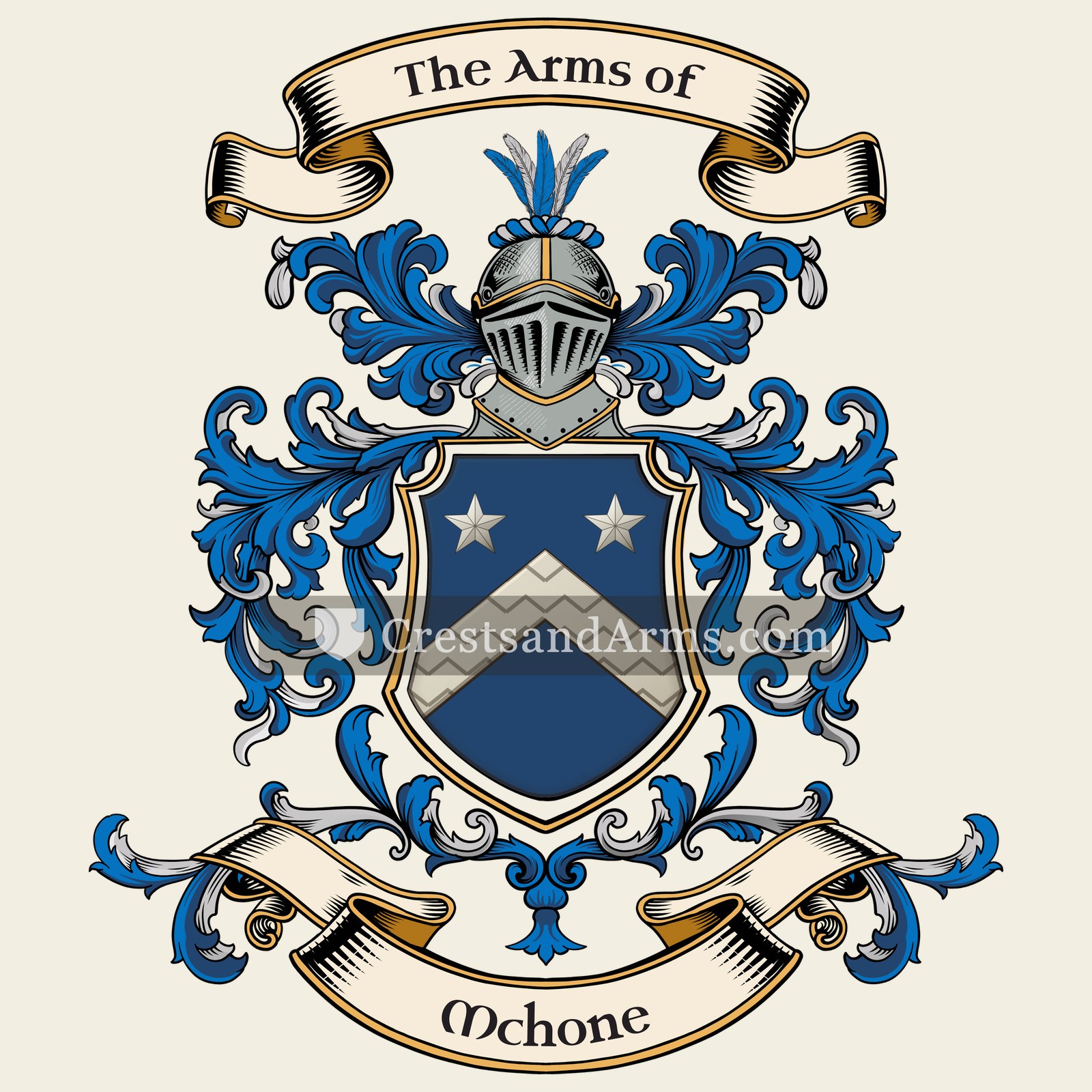


 cross symbolChristian faith and service