Map of Germany showing where the Mckee arms are recorded
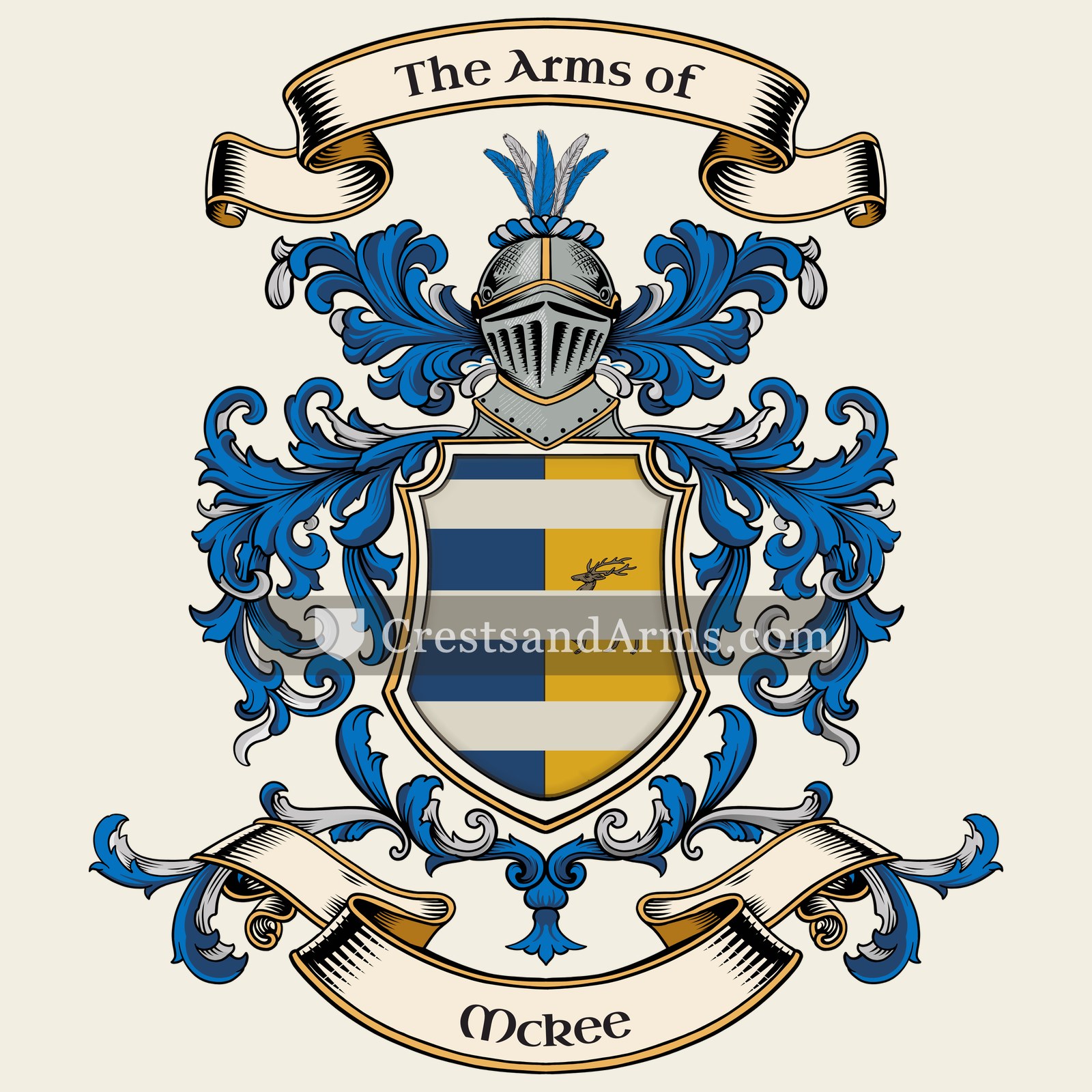
The Mckee arms were recorded in Silesia, c. 1806.
Silesia was farming country in the east of the German lands, held in large estates by families who stayed put for generations. Owning land was what entitled a family to arms, so the region fills a good deal of the register.
This is where the arms were entered in the register. Families often moved to other parts of the country, so the same name can turn up in more than one region.
The body that granted and recorded arms in Germany in this period.
Frederick William III of Prussia
Sovereign of the period
Frederick William III of Prussia
1797–1840
Reigning in Germany when the Mckee arms are first recorded.
How Arms Worked in Germany
Prussian heraldry was strictly tied to social rank and noble status rather than being a free choice for every citizen. These symbols were treated as permanent family property that moved through the generations to all legitimate heirs. If a family branch wanted to change their design to stand out, they had to apply for official permission to alter their specific version of the shield.
Granting authority
The Prussian Heroldsamt acted as the central state office that managed and strictly controlled all noble titles and coats of arms.
How they got arms
Families usually obtained their arms through formal royal grants or by proving their long-standing noble status to the state authorities.
Where arms were recorded
All official coats of arms were kept in the rolls of the Prussian Heroldsamt, which functioned from 1706 until 1918.
The family's standing
Recorded among the armigerous families of Silesia.
Origin & History of the Mckee Family in Germany
The family name McKee has deep roots that stretch across European borders, reflecting a history of movement and adaptation. While the name is often associated with Gaelic origins in Scotland and Ireland, historical records confirm that members of the family were established in the region of Silesia by 1806. During this period, Silesia was a crossroads of cultural and political change, serving as a vital area for families navigating the shifting boundaries of Central Europe. The presence of the McKee name in this region suggests that early ancestors were likely involved in the agricultural or trade networks that defined life in the Prussian territories. By settling in such a diverse area, these early family members helped build a legacy that blended their traditional heritage with the evolving customs of their new home.
Mckee Meaning & Related Branches
Root word
Mac Aodha
Gaelic patronymic meaning son of the fire god or son of Aodh.
This name
MckeeDerived from the Irish Gaelic name meaning son of the fire-born one.
also spelled
Muecke
Muecken
Mooka
Documented Sources
J. B. Rietstap, Armorial Général, Gouda: G. B. van Goor Zonen, 1884–87
Black, George Fraser. The Surnames of Scotland: Their Origin, Meaning, and History. 1946
Knie, Johann Georg. Alphabetisch-statistisch-topographische Uebersicht der Dörfer, Flecken, Städte und andern Orte der Königl. Preuss. Provinz Schlesien. 1830
State Archives in Wrocław (Archiwum Państwowe we Wrocławiu), Akta stanu cywilnego (Civil Status Records), 1806
Digital archive packCoat of arms PNG, gold border print PDF, vector SVG and the certificate of authenticity. Sent to your email in minutes.


 stagPeace and harmony, and one who will not fight unprovoked
 stagPeace and harmony, and one who will not fight unprovoked