Map of Scotland showing where the Mcqueeney arms are recorded
The Mcqueeney arms were recorded in Inverness, c. 1748.
Inverness was the largest Highland county, clan country of glens and long sea lochs. Chiefs recorded arms to mark the head of a family, and cadet branches recorded their own to show their place.
This is where the arms were entered in the register. Families often moved to other parts of the country, so the same name can turn up in more than one region.
The body that granted and recorded arms in Scotland in this period.
George II of Great Britain
Sovereign of the period
George II of Great Britain
1727–1760
Reigning in Scotland when the Mcqueeney arms are first recorded.
How Arms Worked in Scotland
Scottish heraldry is unique because it treats a coat of arms as a piece of personal property protected by law. Only one person can own a specific design at any given time. When a family grows, the head keeps the original shield while other relatives must apply for their own distinct version with slight changes to prove their specific identity.
Granting authority
The Court of the Lord Lyon acts as the official body that regulates and controls all heraldic matters throughout Scotland.
How they got arms
Individuals obtain a legal right to their arms through a formal petition process that confirms their identity and family connection.
Where arms were recorded
All valid coats of arms are officially entered into the Public Register of All Arms and Bearings starting from 1672.
The family's standing
Recorded among the armigerous families of Inverness.
Origin & History of the Mcqueeney Family in Scotland
The family name Mcqueeney is a variation of the Gaelic name Mac Cuinn, which translates to the son of Conn. Historical records confirm that members of the family were established in the Inverness region by 1748. During this period, Inverness served as a vital hub for the Highland clans, and families in the area were deeply connected to the shifting political landscape of northern Scotland. The name likely evolved as the family integrated into the local Gaelic-speaking communities of the Highlands. By the mid-eighteenth century, the Mcqueeneys were part of a society transitioning through significant cultural changes following the Jacobite risings. Their presence in Inverness suggests they were part of the regional workforce or trade networks that defined life in the Scottish Highlands during the mid-1700s.
Meaning of the Mcqueeney family crest colors & symbols
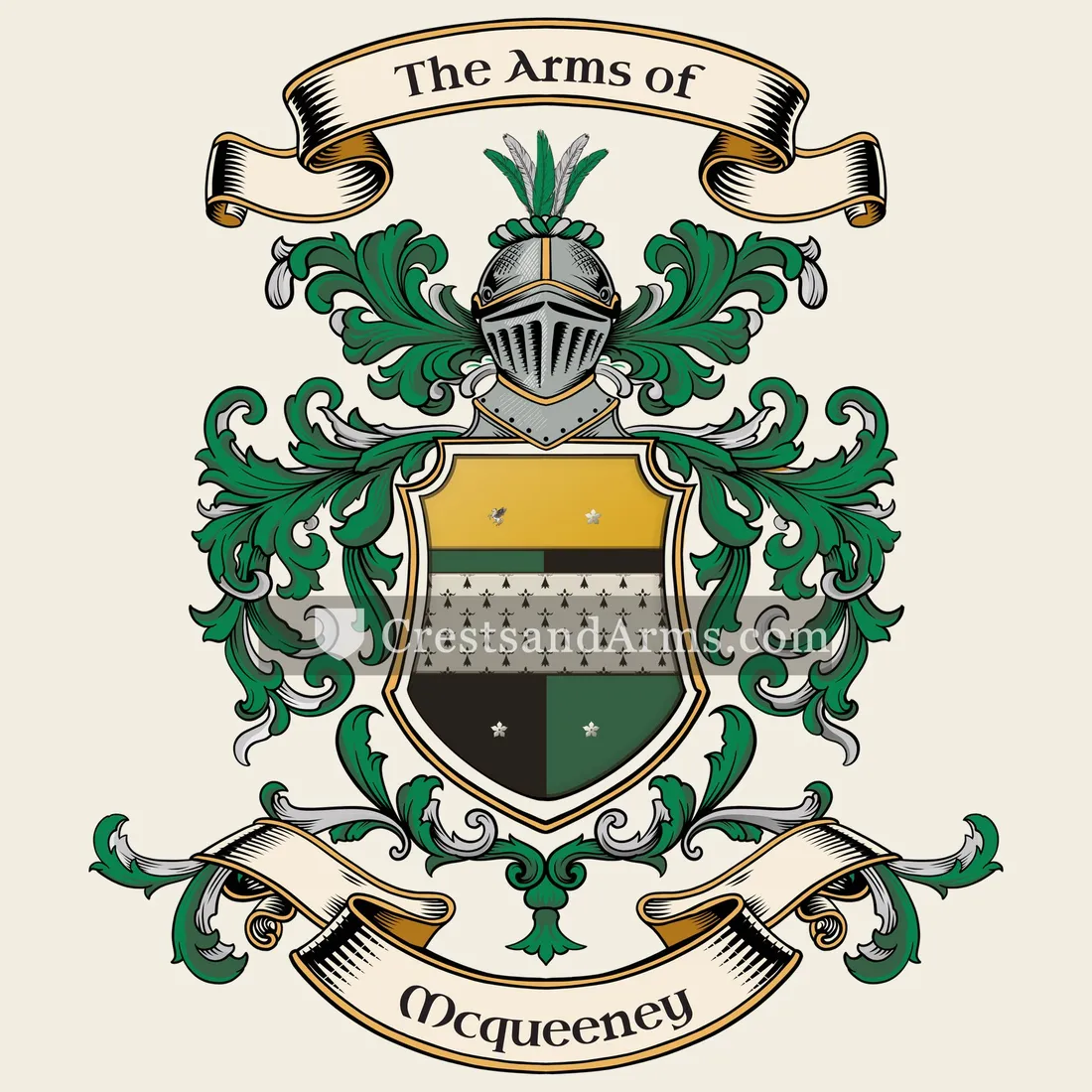
Symbols on this shield
chiefAuthority, wisdom and dominion
fessThe military belt, and readiness to serve
pegasusFame, eloquence and swift renown
cinquefoilHope and joy
Colours
Green (Vert)Means: Hope
Black (Sable)Means: Constancy
ErmineMeans: Dignity
Gold (Or)Means: Generosity
Silver (Argent)Means: Peace and sincerity
Historical info
Source
Sir Bernard Burke, The General Armory of England, Scotland, Ireland and Wales, London: Harrison & Sons, 1884
Blazon (the actual original written record)
“Vert a pegasus saliant ar. a chief or, quartering POTTER, viz., Sa. a fesse erm. betw. three cinquefoils ar”
BedfordBedford, c. 1620
Digital archive packCoat of arms PNG, gold border print PDF, vector SVG and the certificate of authenticity. Sent to your email in minutes.
Map of England showing where the Mcqueeney arms are recorded
The Mcqueeney arms were recorded in Bedford, c. 1620.
Bedfordshire was small, flat farming country close to London. Its manors were held by middling families rather than great ones, but a manor was a manor, and holding one brought arms.
This is where the arms were entered in the register. Families often moved to other parts of the country, so the same name can turn up in more than one region.
The body that granted and recorded arms in England in this period.
James VI and I
Sovereign of the period
James VI and I
1603–1625
Reigning in Scotland when the Mcqueeney arms are first recorded.
How Arms Worked in England
English heraldry allowed arms to be shared by all legitimate descendants of the original owner. These symbols were treated as personal property that moved through the generations to all children. While the eldest son kept the original design, other family members could use the same shield without needing to change it or register their own unique versions.
Granting authority
The College of Arms in London has regulated the use of coats of arms throughout England and Wales since 1484.
How they got arms
Families typically obtained their coats of arms through a formal grant from the Crown or by proving their ancient right to them.
Where arms were recorded
All official coats of arms are recorded in the registers kept at the College of Arms, which date back to the fifteenth century.
The family's standing
Recorded among the armigerous families of Bedford.
Origin & History of the Mcqueeney Family in England
The family name Mcqueeney is a variant of names rooted in Gaelic traditions, yet its presence in England reveals a long history of migration and adaptation. By the year 1620, records confirm that members of the family were established in the town of Bedford. During this period, England was undergoing significant social changes, and families moving from the northern regions or across the borders often settled in growing market towns like Bedford to find new opportunities in trade and agriculture. As these families integrated into local life, the spelling of their name often shifted to reflect how it sounded to English clerks and neighbors. This transition highlights the way the family name evolved from its original linguistic roots into the form recognized in English records today. Living in Bedford during the early seventeenth century placed these ancestors in a community that was deeply involved in the religious and political shifts of the time, marking the beginning of the family’s long-standing connection to English history.
Mcqueeney Meaning & Related Branches
Root word
Mac Shuibhne
Gaelic patronymic meaning son of Suibhne, which translates to well-going or pleasant.
This name
McqueeneyA Scottish surname derived from the Gaelic personal name Suibhne, signifying a pleasant or well-disposed individual.
also spelled
McQueen
Documented Sources
Sir Bernard Burke, The General Armory of England, Scotland, Ireland and Wales, London: Harrison & Sons, 1884
Black, George Fraser. The Surnames of Scotland: Their Origin, Meaning, and History. 1946
National Records of Scotland. Inverness Burgh Register of Sasines. 1748
Digital archive packCoat of arms PNG, gold border print PDF, vector SVG and the certificate of authenticity. Sent to your email in minutes.


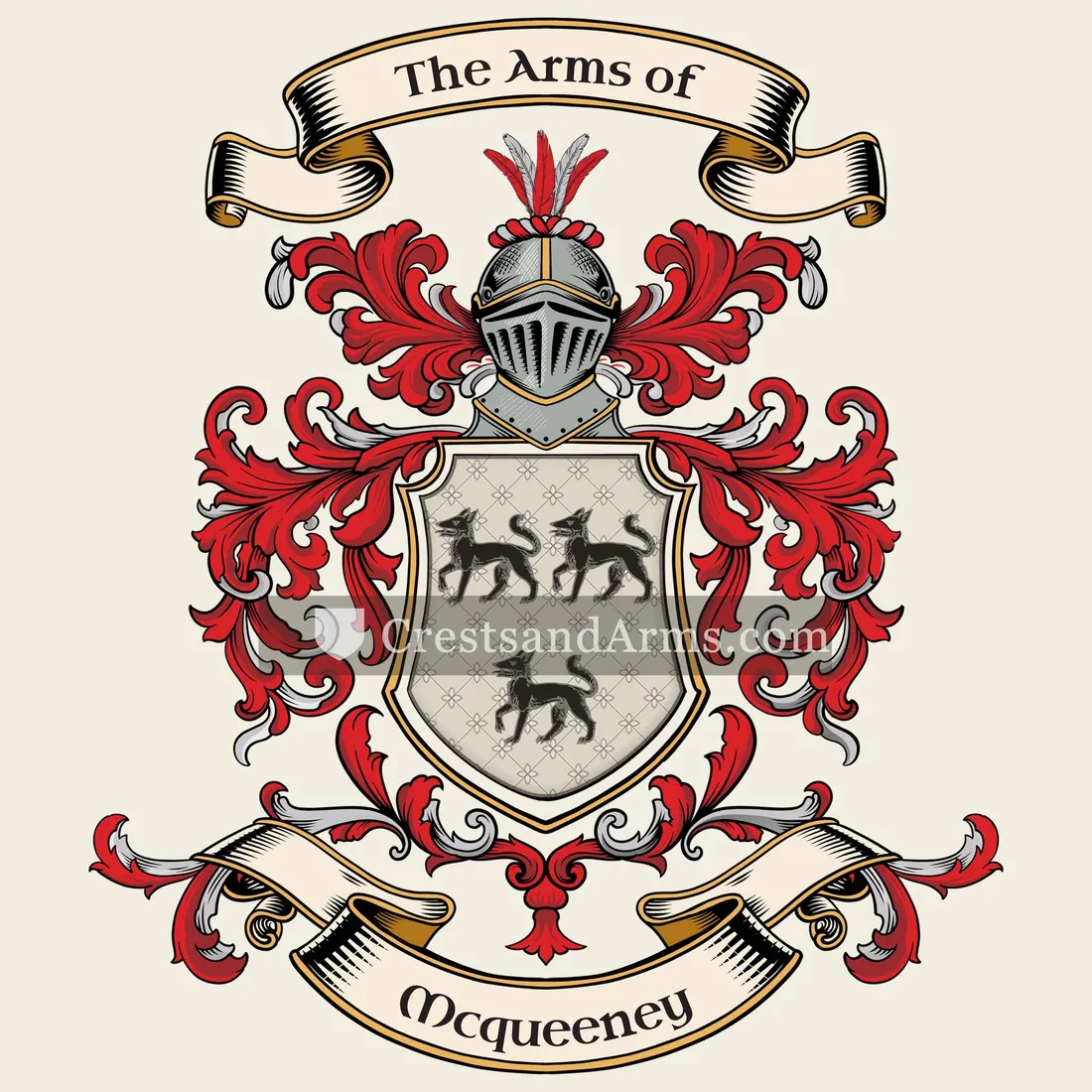
 wolfReward from long service and hard work
 wolfReward from long service and hard work


 chiefAuthority, wisdom and dominion
 fessThe military belt, and readiness to serve
 pegasusFame, eloquence and swift renown
 cinquefoilHope and joy