Map of Netherlands showing where the Melville arms are recorded
The Melville arms were recorded in Amsterdam, c. 1815.
This is where the arms were entered in the register. Families often moved to other parts of the country, so the same name can turn up in more than one region.
Region
Amsterdam
Town
Amsterdam
First recorded
1815
Granting Authority for the Melville Arms
Hoge Raad van Adel
Photograph made by me · CC BY-SA 3.0
The body that granted and recorded arms in Netherlands in this period.
William I of the Netherlands
Sovereign of the period
William I of the Netherlands
1815–1840
Reigning in Netherlands when the Melville arms are first recorded.
How Arms Worked in Netherlands
In the Netherlands, coats of arms were often used by noble families and those who held specific public offices. These arms were passed down through the generations to legitimate descendants. Younger branches of a family usually kept the original design without needing to add special marks. This system ensured that the family identity remained clear and consistent over many years.
Granting authority
The Hoge Raad van Adel is the official body that regulates and manages noble titles and coats of arms in the Netherlands.
How they got arms
Families typically obtained their coats of arms through official royal grants or by proving their long-standing historical use of the symbols.
Where arms were recorded
Coats of arms are officially recorded in the registers held by the Hoge Raad van Adel, which began its work in 1814.
The family's standing
Recorded among the armigerous families of Netherlands.
Origin & History of the Melville Family in Netherlands
The history of the Melville name in the Netherlands is deeply connected to the bustling trade environment of Amsterdam during the early nineteenth century. While the name itself has roots in Scotland, family members established a firm presence in the Dutch capital by 1815. During this period, Amsterdam was recovering from the Napoleonic era and re-emerging as a global hub for finance and shipping. Members of the Melville family likely integrated into this urban landscape by participating in the city’s extensive merchant networks or administrative sectors. Because Amsterdam served as a crossroads for international business, the arrival of the family suggests they were part of a broader movement of professionals who sought new opportunities in a rapidly modernizing European port. Their presence in the city records from 1815 highlights the family’s role as part of the diverse population that helped rebuild the Dutch economy following the restoration of the monarchy.
Coat of Arms & Family Crest Details
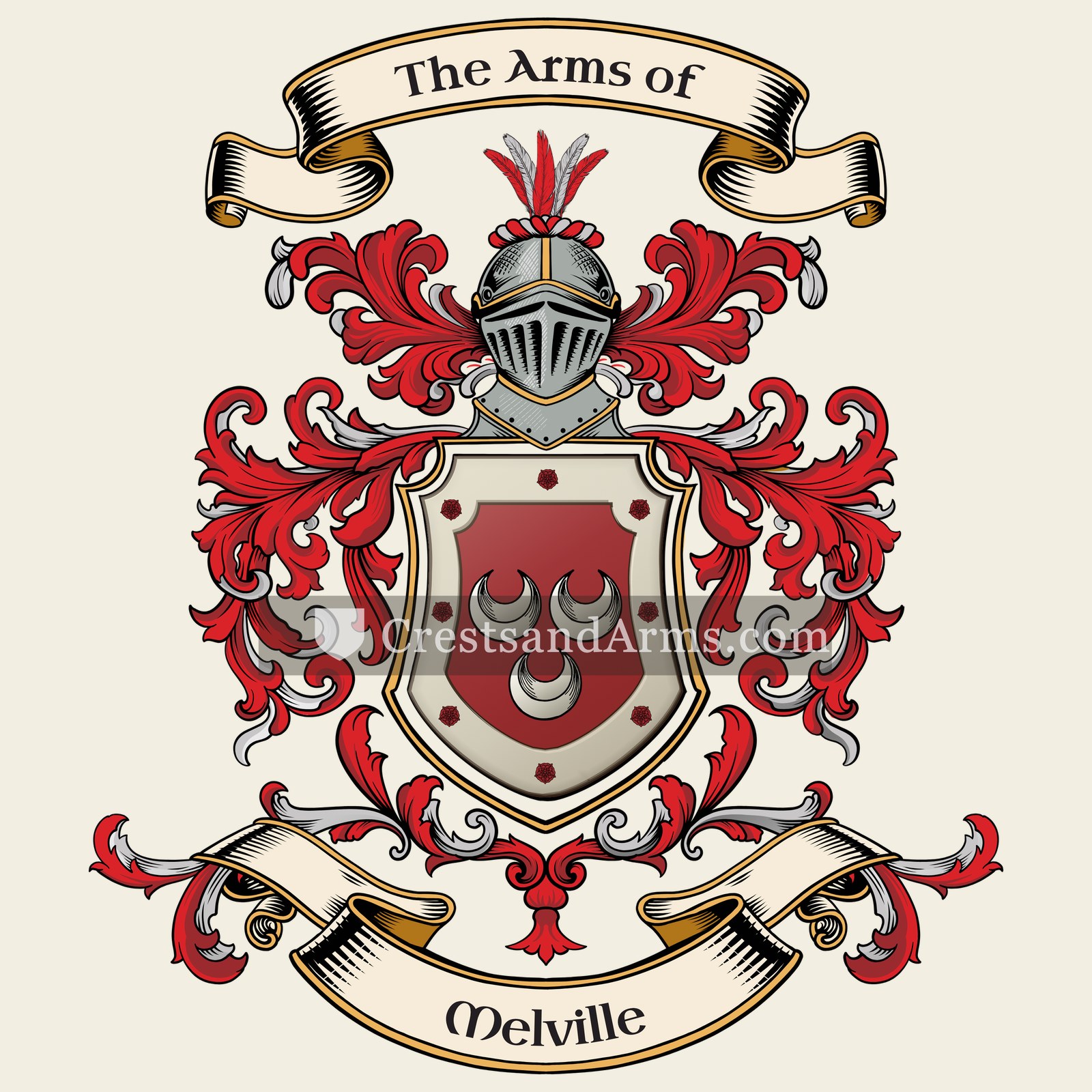
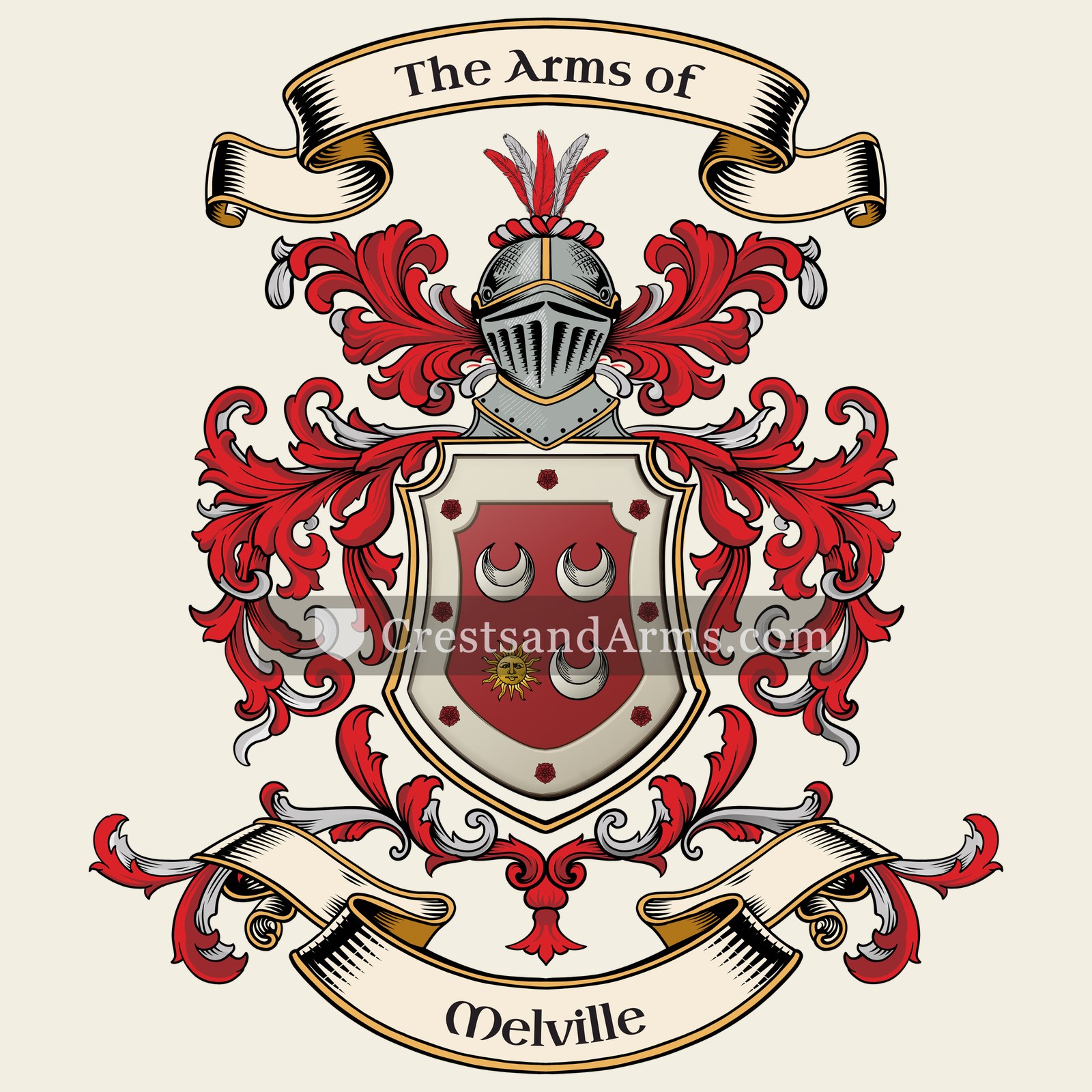
Symbols on this shield
bordureA difference between branches of one family
sunGlory, splendour and the source of life
crescentHonour by the sovereign, and the second son
roseThe seventh son, and beauty with grace
Colours
Red (Gules)Means: Military strength
Silver (Argent)Means: Peace and sincerity
Gold (Or)Means: Generosity
Historical info
Source
Sir Bernard Burke, The General Armory of England, Scotland, Ireland and Wales, London: Harrison & Sons, 1884
Blazon (the actual original written record)
“Gu. a sun betw. three crescents ar. within a bordure of the second, charged with eight roses of the first”
FifeMurdocairnie · Fife, c. 1672
Digital archive packCoat of arms PNG, gold border print PDF, vector SVG and the certificate of authenticity. Sent to your email in minutes.
Map of Scotland showing where the Melville arms are recorded
The Melville arms were recorded in Fife, c. 1672.
Fife was farming country between two firths, with royal palaces and old burghs along its coast. Its landed families were numerous and close to the court, and closeness to the court brought arms.
This is where the arms were entered in the register. Families often moved to other parts of the country, so the same name can turn up in more than one region.
The body that granted and recorded arms in Scotland in this period.
Charles II of England
Sovereign of the period
Charles II of England
1660–1685
Reigning in Netherlands when the Melville arms are first recorded.
How Arms Worked in Scotland
Scottish heraldry is unique because it treats a coat of arms as a piece of personal property protected by law. Only one person can own a specific design at any given time. When a family grows, the head keeps the original shield while other relatives must apply for their own distinct version with slight changes to prove their specific identity.
Granting authority
The Court of the Lord Lyon acts as the official body that regulates and controls all heraldic matters throughout Scotland.
How they got arms
Individuals obtain a legal right to their arms through a formal petition process that confirms their identity and family connection.
Where arms were recorded
All valid coats of arms are officially entered into the Public Register of All Arms and Bearings starting from 1672.
The family's standing
Recorded among the armigerous families of Fife.
Origin & History of the Melville Family in Scotland
The name Melville originated from a place called Malleville in Normandy, France. When the Normans traveled to Britain, members of this family moved north and settled in Scotland during the twelfth century. By the time King David I reigned, the Melvilles had established themselves as significant landowners in the region of Fife. They became deeply integrated into Scottish society and often served as royal officials or advisors to the crown. Their presence in Fife remained strong for centuries, and by 1672, the family was well-documented in local records as established members of the Scottish gentry. This long history shows how the family transitioned from their continental roots to become a permanent part of the social and political fabric of medieval Scotland.
Coat of Arms & Family Crest Details
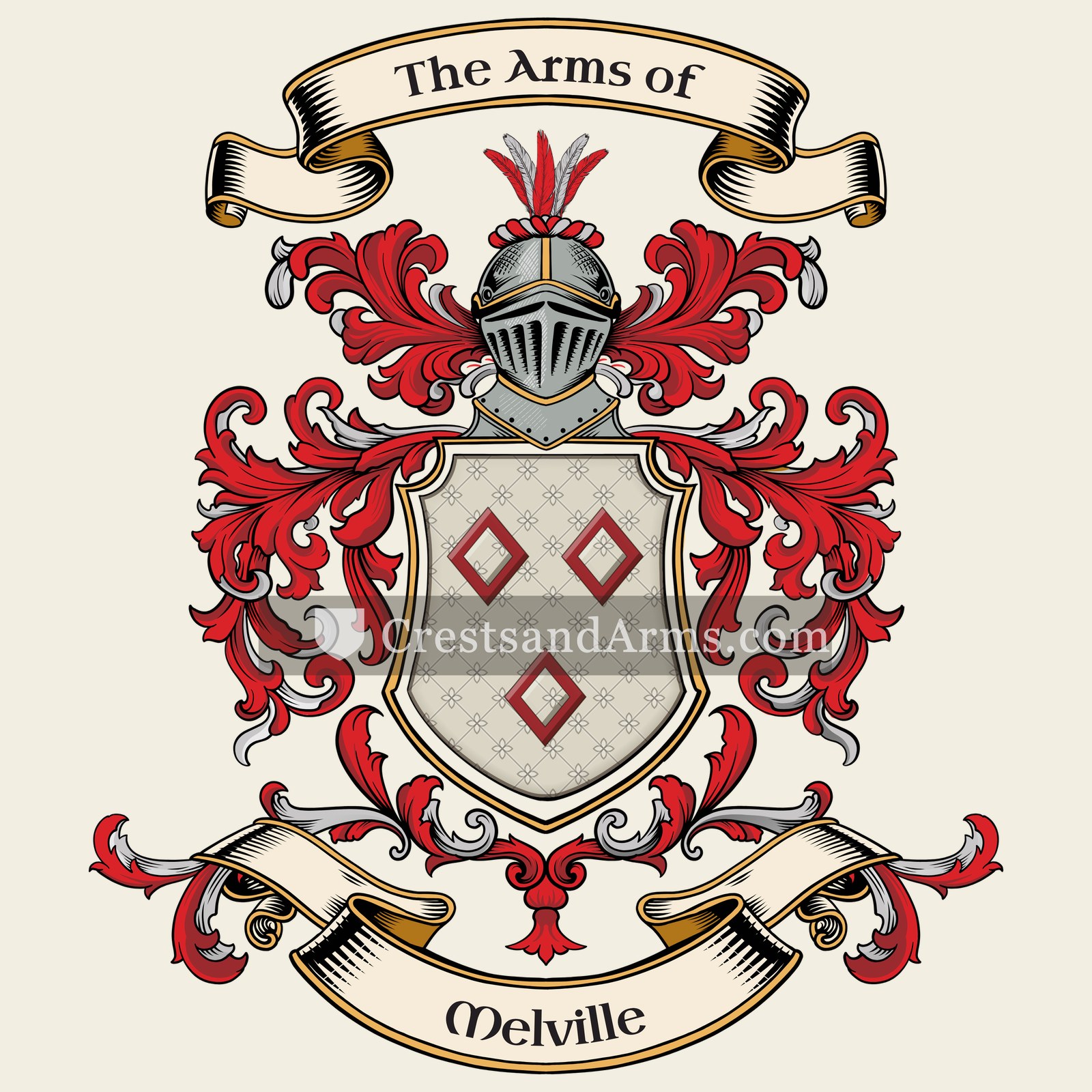
Symbols on this shield
masclePersuasion and the mail of a knight's coat
Colours
Silver (Argent)Means: Peace and sincerity
Red (Gules)Means: Military strength
Historical info
Source
Sir Bernard Burke, The General Armory of England, Scotland, Ireland and Wales, London: Harrison & Sons, 1884
Blazon (the actual original written record)
“Ar. a fesse betw. three mascles gu”
Englandc. 1620
Digital archive packCoat of arms PNG, gold border print PDF, vector SVG and the certificate of authenticity. Sent to your email in minutes.
Map of England showing where the Melville arms are recorded
The Melville arms were recorded in England, c. 1620.
Arms such as these were typically recorded in York.
Yorkshire is the largest of the English counties, and it held more gentry families than any other. Land there was split among a great many households rather than a few, so a great many of them carried arms.
This is where the arms were entered in the register. Families often moved to other parts of the country, so the same name can turn up in more than one region.
The body that granted and recorded arms in England in this period.
James VI and I
Sovereign of the period
James VI and I
1603–1625
Reigning in Netherlands when the Melville arms are first recorded.
How Arms Worked in England
English heraldry allowed arms to be shared by all legitimate descendants of the original owner. These symbols were treated as personal property that moved through the generations to all children. While the eldest son kept the original design, other family members could use the same shield without needing to change it or register their own unique versions.
Granting authority
The College of Arms in London has regulated the use of coats of arms throughout England and Wales since 1484.
How they got arms
Families typically obtained their coats of arms through a formal grant from the Crown or by proving their ancient right to them.
Where arms were recorded
All official coats of arms are recorded in the registers kept at the College of Arms, which date back to the fifteenth century.
The family's standing
Recorded among the armigerous families of England.
Origin & History of the Melville Family in England
The Melville family name traces its roots to the arrival of Norman settlers in the British Isles, eventually establishing a notable presence in Northern England. While the name is often associated with Scottish history, records confirm that members of the family were well-established in the city of York by 1620. During this period, York served as a vital administrative and commercial hub, and families like the Melvilles often integrated into the local merchant classes or the minor gentry. The name itself is believed to be locational in origin, derived from a place in Normandy called Malleville, which translates to "bad settlement" or "ill-favored town." Despite this somewhat gloomy meaning, the family became a fixture of English civic life, participating in the religious and social transitions that defined the seventeenth century. Their presence in York suggests a history of migration and adaptation as they moved from their ancestral lands to become part of the growing urban population in England.
Melville Meaning & Related Branches
Root word
Maleville
Derived from the Old French words for bad or ill settlement.
This name
MelvilleA habitational surname originating from Normandy, referring to a settlement with poor or difficult land.
also spelled
Melvil
Melvyle
Related arms
Affleckrecorded with Melville, same area
Douglasrecorded with Melville, same area
Fergusonrecorded with Melville, same area
Strachanrecorded with Melville, same area
Documented Sources
J. B. Rietstap, Armorial Général, Gouda: G. B. van Goor Zonen, 1884–87
Stadsarchief Amsterdam, Doop-, trouw- en begraafregisters (DTB)
Nationaal Archief, Bevolkingsregister van Amsterdam
Frijhoff, Willem and Maarten Prak, Geschiedenis van Amsterdam: Centrum van de wereld 1578-1650 (2004)
Israel, Jonathan, The Dutch Republic: Its Rise, Greatness, and Fall 1477-1806 (1995)
Digital archive packCoat of arms PNG, gold border print PDF, vector SVG and the certificate of authenticity. Sent to your email in minutes.


 crescentHonour by the sovereign, and the second son
 roseThe seventh son, and beauty with grace
 crescentHonour by the sovereign, and the second son
 roseThe seventh son, and beauty with grace


 bordureA difference between branches of one family
 sunGlory, splendour and the source of life


 masclePersuasion and the mail of a knight's coat