Map of Belgium showing where the Mewes arms are recorded
The Mewes arms were recorded in Flanders, c. 1598.
This is where the arms were entered in the register. Families often moved to other parts of the country, so the same name can turn up in more than one region.
The body that granted and recorded arms in Belgium in this period.
Philip II of Spain
Sovereign of the period
Philip II of Spain
1556–1598
Reigning in Belgium when the Mewes arms are first recorded.
How Arms Worked in Belgium
In Belgium, a coat of arms is considered personal property that is passed down through the male line to legitimate descendants. Families often use the same shield design across generations to show their shared heritage. If a branch of the family wants to change the design, they must apply for an official update to their specific version of the arms.
Granting authority
The Conseil héraldique is the official body that regulates and approves all coats of arms in Belgium.
How they got arms
Families obtain their coats of arms through formal royal grants or by confirming their historical right to use existing designs.
Where arms were recorded
All approved coats of arms are officially recorded in the public registers of the Conseil héraldique since 1844.
The family's standing
Recorded among the armigerous families of Belgium.
Origin & History of the Mewes Family in Belgium
The family name Mewes has deep roots in the historical region of Flanders, where records confirm members of the family were established as early as 1598. During this period, Flanders was a vibrant center of trade and craftsmanship, and the name likely evolved as a patronymic form of the name Bartholomew. Families in this area often lived in close-knit communities centered around local parishes, where the name was recorded in baptismal and marriage registers as the family navigated the complex social and religious shifts of the late sixteenth century. Because Flanders served as a crossroads for European commerce, the Mewes family likely participated in the local agricultural or mercantile life that defined the Flemish economy. Over time, the name became a permanent fixture in the region, reflecting the steady endurance of families who built their lives within the shifting borders and cultural landscapes of the Low Countries.
Coat of Arms & Family Crest Details
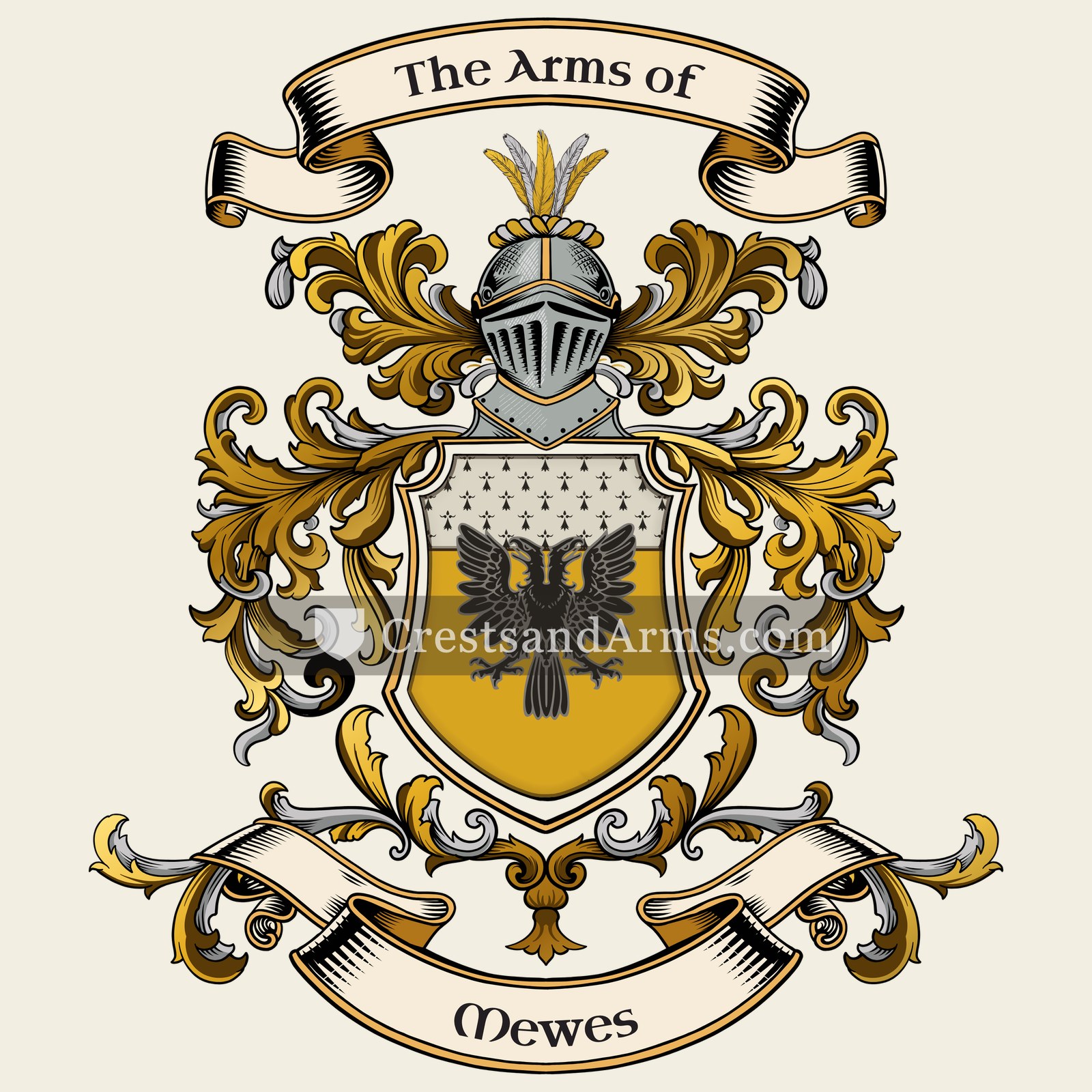
Symbols on this shield
chiefAuthority, wisdom and dominion
eagleNobility, strength and a keen mind
Colours
Gold (Or)Means: Generosity
ErmineMeans: Dignity
Black (Sable)Means: Constancy
Historical info
Source
Sir Bernard Burke, The General Armory of England, Scotland, Ireland and Wales, London: Harrison & Sons, 1884
Blazon (the actual original written record)
“Or, a chief erm. over all an eagle displ. sa”
BedfordWoburn · Bedford, c. 1620
Digital archive packCoat of arms PNG, gold border print PDF, vector SVG and the certificate of authenticity. Sent to your email in minutes.
Map of England showing where the Mewes arms are recorded
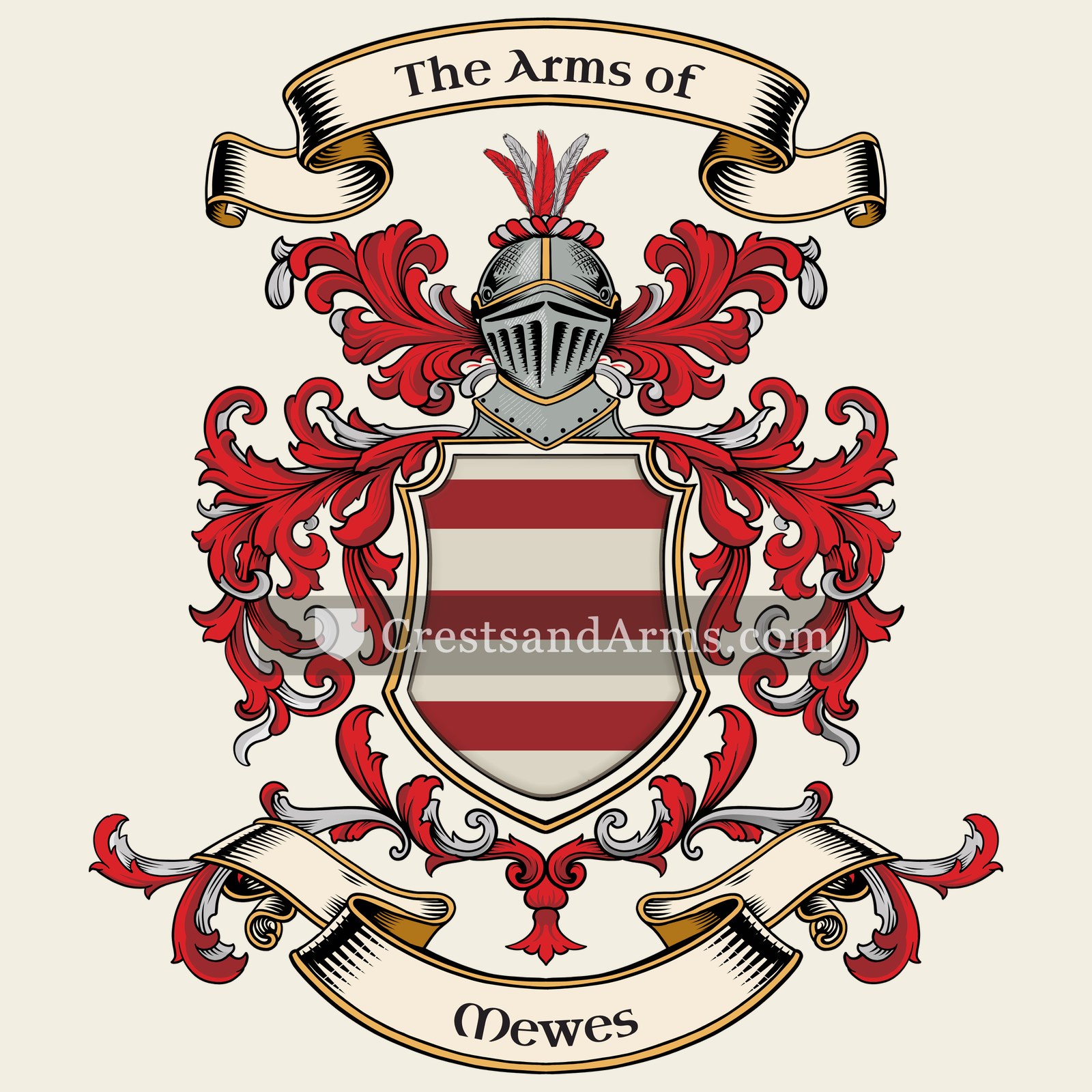
The Mewes arms were recorded in Bedford, c. 1620.
Bedfordshire was small, flat farming country close to London. Its manors were held by middling families rather than great ones, but a manor was a manor, and holding one brought arms.
This is where the arms were entered in the register. Families often moved to other parts of the country, so the same name can turn up in more than one region.
The body that granted and recorded arms in England in this period.
James VI and I
Sovereign of the period
James VI and I
1603–1625
Reigning in Belgium when the Mewes arms are first recorded.
How Arms Worked in England
English heraldry allowed arms to be shared by all legitimate descendants of the original owner. These symbols were treated as personal property that moved through the generations to all children. While the eldest son kept the original design, other family members could use the same shield without needing to change it or register their own unique versions.
Granting authority
The College of Arms in London has regulated the use of coats of arms throughout England and Wales since 1484.
How they got arms
Families typically obtained their coats of arms through a formal grant from the Crown or by proving their ancient right to them.
Where arms were recorded
All official coats of arms are recorded in the registers kept at the College of Arms, which date back to the fifteenth century.
The family's standing
Recorded among the armigerous families of Bedford.
Origin & History of the Mewes Family in England
The family name Mewes has deep roots in the English landscape, with early records confirming that members of the family were established in the town of Bedford by 1620. The name itself is likely a topographical or occupational surname, often linked to the Middle English word for a place where hawks were kept during their molting season, known as a mew. During the seventeenth century, families like the Mewes were typically part of the emerging middle class, often working as tradespeople or local landowners who helped shape the growth of market towns like Bedford. As the family settled into the region, they became part of the local social fabric, participating in parish life and contributing to the agricultural and commercial activities that defined the English Midlands at the time. This period was a time of significant change in England, and the presence of the Mewes family in Bedford reflects the way many families established long-standing roots in specific communities during the early modern era.
Related Branches & Arms
Root word
Matthias
Derived from the Hebrew name Matityahu meaning gift of God.
This name
MewesA patronymic surname originating from a Low German and Dutch diminutive form of the name Matthew.
also spelled
Mewis
Mewee
Related arms
Meuxsame arms
Mewee, or Mewisvariant spelling
Mewisvariant spelling
Mewysvariant spelling
Documented Sources
Sir Bernard Burke, The General Armory of England, Scotland, Ireland and Wales, London: Harrison & Sons, 1884
De Smet, A., Geschiedenis van de Vlaamse familienamen, 1974
State Archives in Belgium (Rijksarchief), Parochieregisters van het bisdom Gent, 1598
Digital archive packCoat of arms PNG, gold border print PDF, vector SVG and the certificate of authenticity. Sent to your email in minutes.




 chiefAuthority, wisdom and dominion
 eagleNobility, strength and a keen mind