Map of Netherlands showing where the Michaelis arms are recorded
The Michaelis arms were recorded in Netherlands, c. 1815.
Arms such as these were typically recorded in Friesland.
Friesland was low, wet country on the northern coast of the Netherlands, farmed by families who had held the same land for centuries. Free landholders were unusually common there, and a free landholder could carry arms.
This is where the arms were entered in the register. Families often moved to other parts of the country, so the same name can turn up in more than one region.
Region
Friesland
First recorded
1815
Granting Authority for the Michaelis Arms
Hoge Raad van Adel
Photograph made by me · CC BY-SA 3.0
The body that granted and recorded arms in Netherlands in this period.
William I of the Netherlands
Sovereign of the period
William I of the Netherlands
1815–1840
Reigning in Netherlands when the Michaelis arms are first recorded.
How Arms Worked in Netherlands
In the Netherlands, coats of arms were often used by noble families and those who held specific public offices. These arms were passed down through the generations to legitimate descendants. Younger branches of a family usually kept the original design without needing to add special marks. This system ensured that the family identity remained clear and consistent over many years.
Granting authority
The Hoge Raad van Adel is the official body that regulates and manages noble titles and coats of arms in the Netherlands.
How they got arms
Families typically obtained their coats of arms through official royal grants or by proving their long-standing historical use of the symbols.
Where arms were recorded
Coats of arms are officially recorded in the registers held by the Hoge Raad van Adel, which began its work in 1814.
The family's standing
Recorded among the armigerous families of Netherlands.
Origin & History of the Michaelis Family in Netherlands
The family name Michaelis has deep roots in the northern regions of the Netherlands, particularly within the province of Friesland. By the early nineteenth century, the name was firmly established in this area, appearing in official civil records around 1815. The name itself is a patronymic, meaning it was originally derived from the given name Michael, which honors the archangel of the same name. In the Dutch context, families often adopted these Latinized or biblical surnames during periods of social transition or when formal registration laws were enacted. Because Friesland maintained a distinct cultural and linguistic identity, the presence of the Michaelis family there suggests they were part of the local community during a time when the Netherlands was standardizing its naming conventions. These early ancestors were likely farmers, tradespeople, or laborers who contributed to the steady development of the Frisian landscape during the post-Napoleonic era.
Meaning of the Michaelis family crest colors & symbols
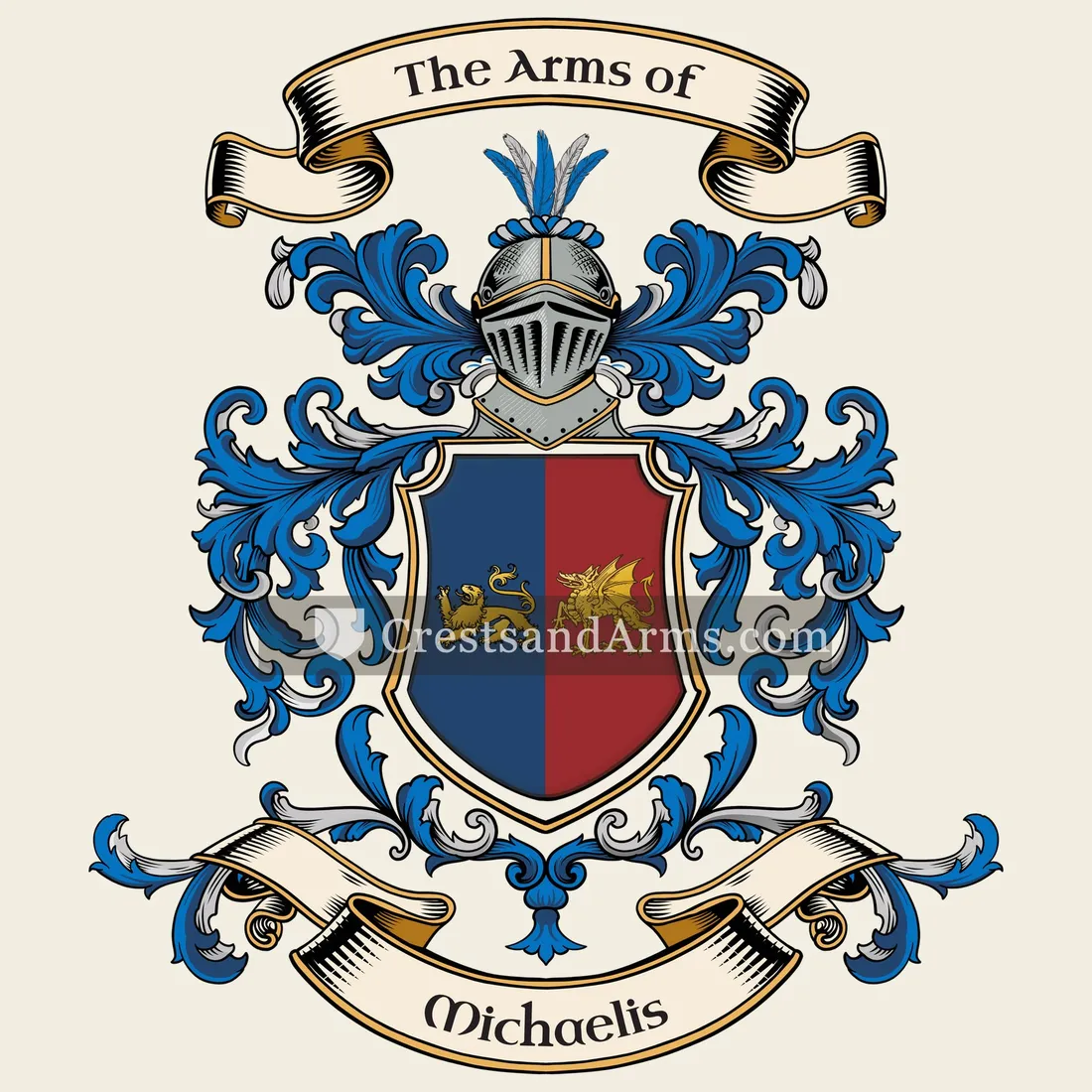
Symbols on this shield
lionCourage, strength and royalty
dragonA most valiant defender of treasure
Colours
Blue (Azure)Means: Loyalty and truth
Red (Gules)Means: Military strength
Gold (Or)Means: Generosity
Historical info
Source
J. B. Rietstap, Armorial Général, Gouda: G. B. van Goor Zonen, 1884–87
Blazon (the actual original written record)
“Parti: au 1 d'azur au lion cont. d'or; au 2 de gu. à un dragon ailé d'or.”
LanguedocLanguedoc, c. 1663
Digital archive packCoat of arms PNG, gold border print PDF, vector SVG and the certificate of authenticity. Sent to your email in minutes.
Map of France showing where the Michaelis arms are recorded
The Michaelis arms were recorded in Languedoc, c. 1663.
Languedoc stretched across the south of France, a country of small towns, vineyards and old local families. Its gentry were numerous rather than grand, and a great many of them held arms even where their estates were modest.
This is where the arms were entered in the register. Families often moved to other parts of the country, so the same name can turn up in more than one region.
The body that granted and recorded arms in France in this period.
Louis XIV of France
Sovereign of the period
Louis XIV of France
1643–1715
Reigning in Netherlands when the Michaelis arms are first recorded.
How Arms Worked in France
In France, a coat of arms was a mark of honor that passed down through the male line to all legitimate descendants. Families often used the same shield without changes to show their shared heritage. If a branch wanted to stand out, they could add a small mark to their shield to show their specific place in the family tree.
Granting authority
The Juge d'armes de France acted as the official authority that regulated and verified coats of arms across the country.
How they got arms
Families typically inherited their arms from ancestors, though they could also receive them through royal grants or by proving their noble status.
Where arms were recorded
Coats of arms were officially recorded in the Armorial Général de France, which began its main collection in the year 1696.
The family's standing
Recorded among the armigerous families of Languedoc.
Origin & History of the Michaelis Family in France
The family name Michaelis has deep roots in the Languedoc region of southern France, where records confirm members of the family were living as early as 1663. The name itself is a Latinized version of the Hebrew name Michael, which means "who is like God." During the seventeenth century, families in this part of France often adopted these formal, Latin-based surnames to reflect their religious devotion or to align with the scholarly traditions of the time. Living in Languedoc placed the Michaelis family in a region known for its complex history of religious diversity and agricultural trade. Because the area served as a crossroads for travelers moving between the Mediterranean coast and the interior of France, the family likely participated in the vibrant local economy of wine production and textile manufacturing. Over time, the name became a stable identifier for these families as they navigated the social and political shifts occurring throughout the French provinces.
Meaning of the Michaelis family crest colors & symbols
Colours
Silver (Argent)Means: Peace and sincerity
Historical info
Source
J. B. Rietstap, Armorial Général, Gouda: G. B. van Goor Zonen, 1884–87
Blazon (the actual original written record)
“D'arg à trois hameçons d'azur, les deux du chef affr. C.: un hameçon d'azur, entre un vol d'arg., chaque aile ch. d'un hameçon d'azur, affr.: ou, un vol d'azur et d'arg., chaque aile ch. d'un hameçon de l'un à l'autre, affr.”
GermanySpire, c. 1765
Digital archive packCoat of arms PNG, gold border print PDF, vector SVG and the certificate of authenticity. Sent to your email in minutes.
Map of Germany showing where the Michaelis arms are recorded
The Michaelis arms were recorded in Spire, c. 1765.
This is where the arms were entered in the register. Families often moved to other parts of the country, so the same name can turn up in more than one region.
The body that granted and recorded arms in Germany in this period.
Francis I, Holy Roman Emperor
Sovereign of the period
Francis I, Holy Roman Emperor
1745–1765
Reigning in Netherlands when the Michaelis arms are first recorded.
How Arms Worked in Germany
In the Holy Roman Empire, coats of arms were often granted to individuals by the Emperor or his representatives. These arms were then passed down through the generations to all legitimate descendants of the original holder. Younger branches of a family usually kept the same shield design without needing to change it, as the arms belonged to the entire lineage.
Granting authority
The Holy Roman Emperor held the sole power to grant new coats of arms throughout his vast imperial territories.
How they got arms
Families typically obtained their coats of arms through a formal imperial grant or by proving their noble status to the authorities.
Where arms were recorded
These grants were officially recorded in the Imperial Chancery registers, which began keeping formal records of such honors during the Middle Ages.
The family's standing
Recorded among the armigerous families of Germany.
Origin & History of the Michaelis Family in Germany
The surname Michaelis originates from the given name Michael, which traces its roots back to the Hebrew language and means "who is like God." In Germany, this name became a popular patronymic, meaning it was passed down to identify a person as the son of a man named Michael. By the middle of the 18th century, the family had established a notable presence in the city of Speyer. During this period, Speyer was a significant center for trade and administration within the Holy Roman Empire, and families like the Michaelis clan were often integrated into the local civic or merchant classes. The transition from a simple first name to a formal hereditary surname reflects the broader social changes in German society, where families began using fixed names to track lineage and property rights across generations. By 1765, the Michaelis name was firmly rooted in the regional records of the Palatinate, marking a period where the family contributed to the local community life of this historic city.
Michaelis Meaning & Related Branches
Root word
Mikha'el
Who is like God?
This name
MichaelisA patronymic surname derived from the Hebrew name meaning who is like God.
also spelled
Michael
Michaellis
Related arms
Friebensimilar arms
Micaelisvariant spelling
Michaelvariant spelling
Documented Sources
J. B. Rietstap, Armorial Général, Gouda: G. B. van Goor Zonen, 1884–87
Tresoar (Fries Historisch en Letterkundig Centrum), Burgerlijke Stand van Friesland (Civil Registration of Friesland)
Meertens, P.J., De betekenis van de Nederlandse familienamen, 1959
Winkler, Johan, De Nederlandse geslachtsnamen in oorsprong, geschiedenis en beteekenis, 1885
Digital archive packCoat of arms PNG, gold border print PDF, vector SVG and the certificate of authenticity. Sent to your email in minutes.


 eagleNobility, strength and a keen mind
 eagleNobility, strength and a keen mind
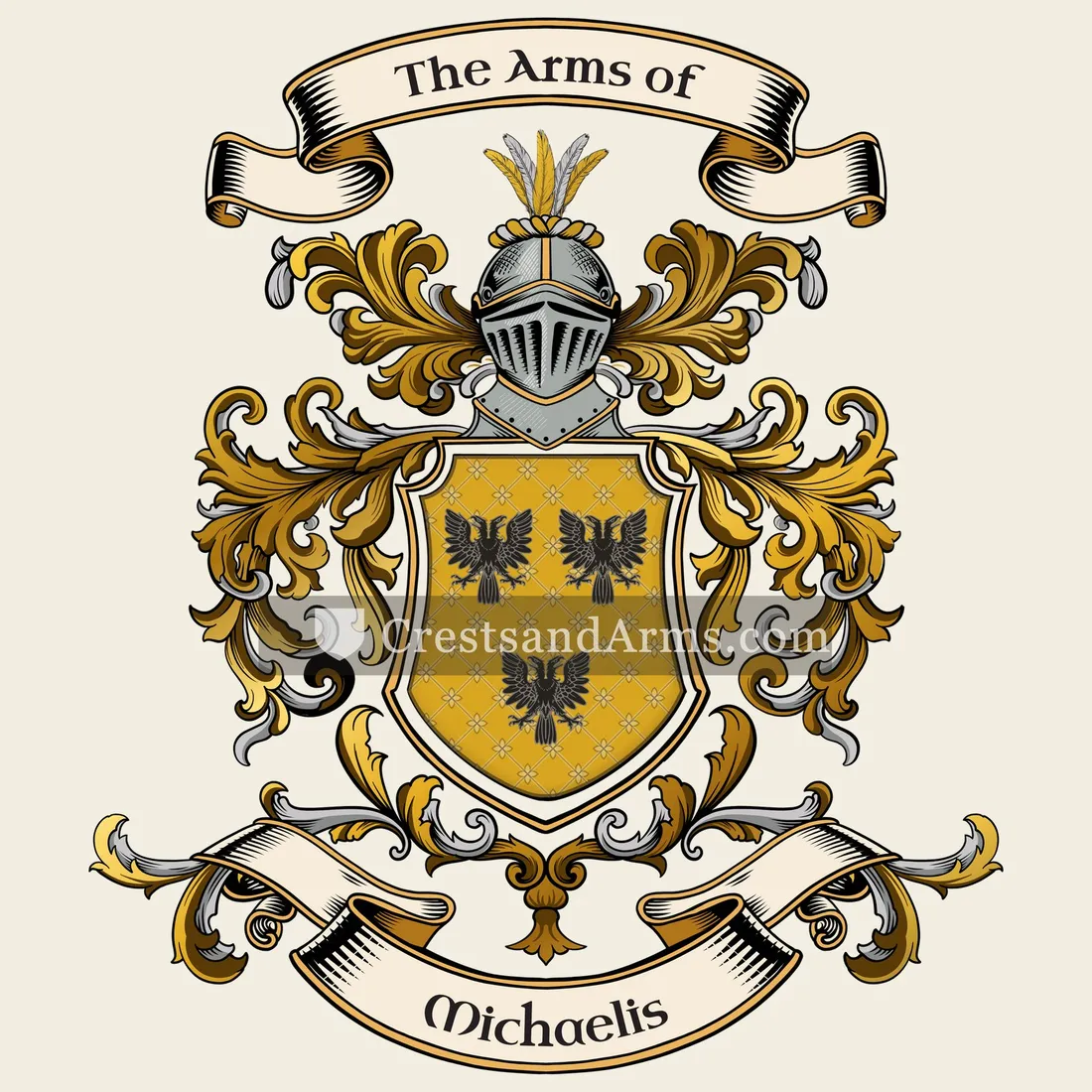


 lionCourage, strength and royalty
 dragonA most valiant defender of treasure