Map of Spain showing where the Millan arms are recorded
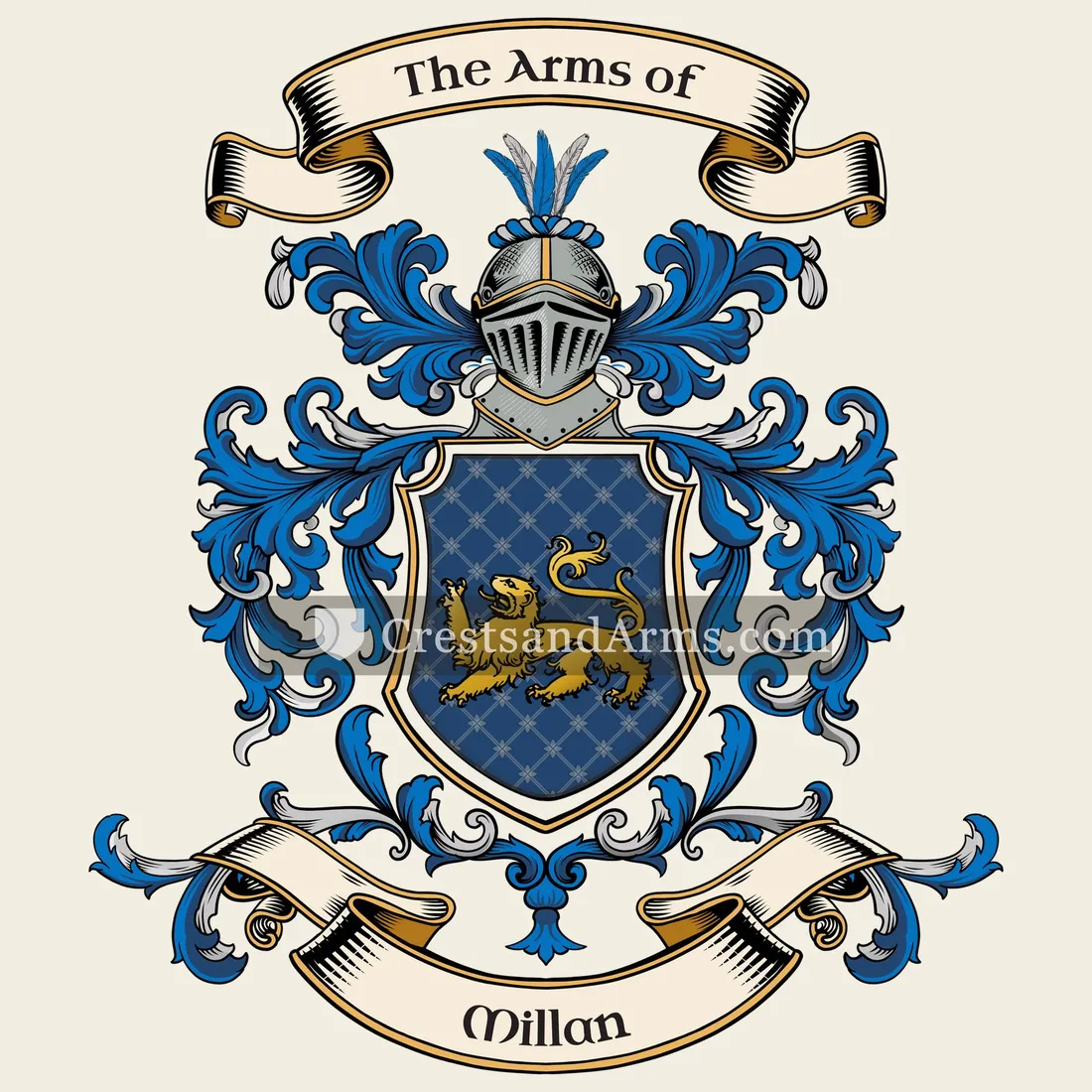
The Millan arms were recorded in Spain, c. 1722.
Arms such as these were typically recorded in Castile.
Castile was the heart of Spain and the source of most of its noble families. Land won in the long wars against the Moors was granted out to fighting men, and a man granted land was granted arms along with it.
This is where the arms were entered in the register. Families often moved to other parts of the country, so the same name can turn up in more than one region.
The body that granted and recorded arms in Spain in this period.
Philip V of Spain
Sovereign of the period
Philip V of Spain
1714–1724
Reigning in Spain when the Millan arms are first recorded.
How Arms Worked in Spain
In Spain, a coat of arms was considered a form of property that belonged to the entire family line. These arms were passed down from a father to all his children equally. Younger branches of the family usually kept the original design without needing to add any special marks to distinguish their specific line.
Granting authority
The Cronista Rey de Armas was the official body that regulated and granted coats of arms throughout Spain.
How they got arms
Families often obtained their arms through royal grants or by proving their noble status to the official heraldic authority.
Where arms were recorded
Coats of arms were officially recorded in the registers of the Cronista Rey de Armas starting in 1496.
The family's standing
Recorded among the armigerous families of Spain.
Origin & History of the Millan Family in Spain
The surname Millan has deep roots in the Spanish region of Castile, where family members were documented as early as 1722. The name is derived from the Latin name Aemilianus, which was popularized by Saint Aemilian of Cogolla, a famous monk who lived in the Rioja region during the sixth century. Because this saint was highly revered throughout the Iberian Peninsula, many families adopted the name to honor his legacy. Over time, the name evolved from its Latin origins into the Spanish form Millan. By the early 18th century, families bearing this name were well-established in the social and administrative fabric of Castile, often working as landowners or local officials. The name reflects a long history of cultural and religious influence that shaped the identity of families living in central Spain during the colonial era.
Millan Meaning & Related Branches
Root word
Aemilius
Latin name meaning rival or industrious.
This name
MillanA patronymic surname derived from the name Emilio, signifying son of Emilio.
also spelled
Millan
San Milan
Documented Sources
J. B. Rietstap, Armorial Général, Gouda: G. B. van Goor Zonen, 1884–87
Albaigès, Josep M., Diccionario de nombres de personas, 1993
Moll, Francesc de B., Els llinatges catalans, 1959
Archivo Histórico Nacional, Sección Nobleza, 1722
Digital archive packCoat of arms PNG, gold border print PDF, vector SVG and the certificate of authenticity. Sent to your email in minutes.


 lionCourage, strength and royalty
 lionCourage, strength and royalty