Map of Netherlands showing where the Mintz arms are recorded
The Mintz arms were recorded in Guelders, c. 1815.
Guelders was river country in the east of the Netherlands, held by families whose estates sat along the water. Land there stayed in the same hands for generations, and long tenure is what fills a register of arms.
This is where the arms were entered in the register. Families often moved to other parts of the country, so the same name can turn up in more than one region.
Region
Guelders
Town
Rotterdam
First recorded
1815
Granting Authority for the Mintz Arms
Hoge Raad van Adel
Photograph made by me · CC BY-SA 3.0
The body that granted and recorded arms in Netherlands in this period.
William I of the Netherlands
Sovereign of the period
William I of the Netherlands
1815–1840
Reigning in Netherlands when the Mintz arms are first recorded.
How Arms Worked in Netherlands
In the Netherlands, coats of arms were often used by noble families and those who held specific public offices. These arms were passed down through the generations to legitimate descendants. Younger branches of a family usually kept the original design without needing to add special marks. This system ensured that the family identity remained clear and consistent over many years.
Granting authority
The Hoge Raad van Adel is the official body that regulates and manages noble titles and coats of arms in the Netherlands.
How they got arms
Families typically obtained their coats of arms through official royal grants or by proving their long-standing historical use of the symbols.
Where arms were recorded
Coats of arms are officially recorded in the registers held by the Hoge Raad van Adel, which began its work in 1814.
The family's standing
Recorded among the armigerous families of Guelders.
Origin & History of the Mintz Family in Netherlands
The history of the Mintz family in the Netherlands is deeply connected to the region of Guelders, where records confirm their presence by 1815. The name Mintz is often associated with Jewish naming traditions in Central and Eastern Europe, where it frequently served as a topographic or occupational surname. Many families bearing this name migrated westward during periods of social and economic change, eventually settling in the Dutch provinces. By the early nineteenth century, the implementation of the Civil Registry in the Netherlands required all citizens to adopt permanent family names, which helped formalize the spelling and documentation of the Mintz lineage. During this era, members of the family in Guelders were integrated into the local community, participating in the regional economy and adapting to the evolving social landscape of the post-Napoleonic Netherlands. Their presence in this specific province highlights the broader patterns of movement and settlement that defined many families during the transition into the modern Dutch state.
Coat of Arms & Family Crest Details
Symbols on this shield
fessThe military belt, and readiness to serve
cross symbolChristian faith and service
roundelA coin, and one who has been to the crusades
Colours
Red (Gules)Means: Military strength
Blue (Azure)Means: Loyalty and truth
Black (Sable)Means: Constancy
Silver (Argent)Means: Peace and sincerity
Gold (Or)Means: Generosity
Historical info
Source
J. B. Rietstap, Armorial Général, Gouda: G. B. van Goor Zonen, 1884–87
Blazon (the actual original written record)
“Ec.: aux 1 et 4 de gu. à la fasce cannelée de sa., bordée-cannelée d'arg., et ch. de trois bes. d'or; aux 2 et 3 d'azur à une croix latine d'or, iss. d'un lacs d'amour du même. L'écu bordé d'or. Cq. cour. C.: une chouette assise, posée de front, au nat., les ailes levées. L.: à dextre d'or et d'azur, à sen. d'or et de gu.”
Germanyc. 1765
Digital archive packCoat of arms PNG, gold border print PDF, vector SVG and the certificate of authenticity. Sent to your email in minutes.
Map of Germany showing where the Mintz arms are recorded
The Mintz arms were recorded in Germany, c. 1765.
Arms such as these were typically recorded in Bavaria.
Bavaria was a country of old landed families and walled market towns. Estates passed down the same line for centuries, and both the landowners and the leading townsmen kept arms, which is why so many Bavarian names sit in the registers.
This is where the arms were entered in the register. Families often moved to other parts of the country, so the same name can turn up in more than one region.
The body that granted and recorded arms in Germany in this period.
Francis I, Holy Roman Emperor
Sovereign of the period
Francis I, Holy Roman Emperor
1745–1765
Reigning in Netherlands when the Mintz arms are first recorded.
How Arms Worked in Germany
In the Holy Roman Empire, coats of arms were often granted to individuals by the Emperor or his representatives. These arms were then passed down through the generations to all legitimate descendants of the original holder. Younger branches of a family usually kept the same shield design without needing to change it, as the arms belonged to the entire lineage.
Granting authority
The Holy Roman Emperor held the sole power to grant new coats of arms throughout his vast imperial territories.
How they got arms
Families typically obtained their coats of arms through a formal imperial grant or by proving their noble status to the authorities.
Where arms were recorded
These grants were officially recorded in the Imperial Chancery registers, which began keeping formal records of such honors during the Middle Ages.
The family's standing
Recorded among the armigerous families of Germany.
Origin & History of the Mintz Family in Germany
The family name Mintz has deep roots in the German-speaking regions of Central Europe, where it functioned as a descriptive surname. In the German language, the word *Münze* refers to a coin or a minting house. This suggests that the earliest ancestors to carry the name were likely involved in the trade of metalworking, banking, or the official production of currency. By the middle of the eighteenth century, the family established a documented presence in the region of Bavaria. During this era, life in Bavaria was defined by strict local record-keeping and the influence of the Holy Roman Empire. Families like the Mintz line were often tied to specific trades or crafts that were passed down through generations. These early members lived during a time of significant social change in Germany, as the transition from feudal systems toward more modern administrative structures began to shape how families identified themselves and recorded their lineage.
Coat of Arms & Family Crest Details
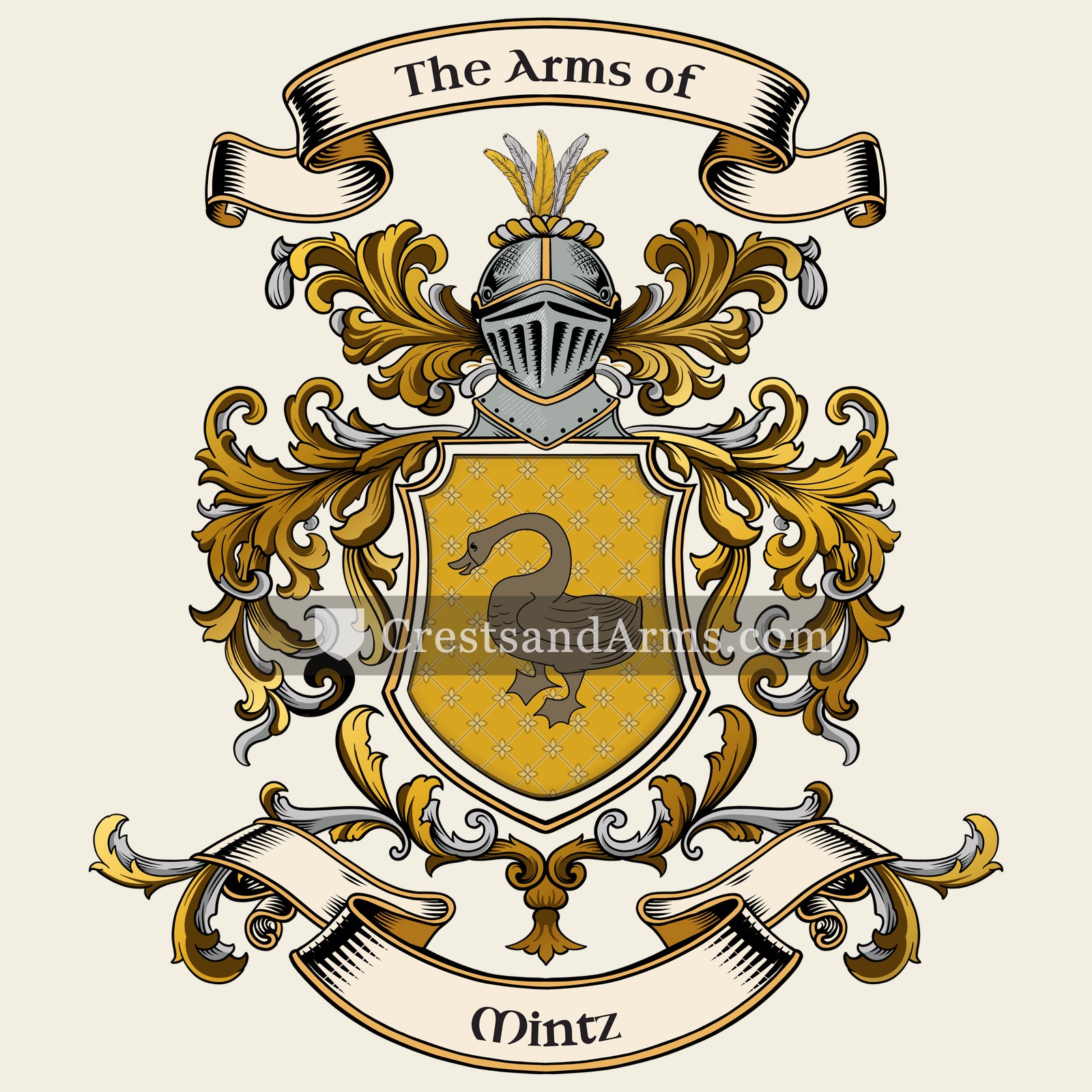
Symbols on this shield
swanGrace, light and the poet's art
Colours
Gold (Or)Means: Generosity
Historical info
Source
Sir Bernard Burke, The General Armory of England, Scotland, Ireland and Wales, London: Harrison & Sons, 1884
Blazon (the actual original written record)
“Or, a swan, wings extended ppr”
WarwickUmberslade · Warwick, c. 1620
Digital archive packCoat of arms PNG, gold border print PDF, vector SVG and the certificate of authenticity. Sent to your email in minutes.
Map of England showing where the Mintz arms are recorded
The Mintz arms were recorded in Warwick, c. 1620.
Warwickshire lay in the middle of England, and its landed families were spread evenly across it rather than gathered in one corner. A great many held a single manor each, and each of those holdings brought its own claim to arms.
This is where the arms were entered in the register. Families often moved to other parts of the country, so the same name can turn up in more than one region.
The body that granted and recorded arms in England in this period.
James VI and I
Sovereign of the period
James VI and I
1603–1625
Reigning in Netherlands when the Mintz arms are first recorded.
How Arms Worked in England
English heraldry allowed arms to be shared by all legitimate descendants of the original owner. These symbols were treated as personal property that moved through the generations to all children. While the eldest son kept the original design, other family members could use the same shield without needing to change it or register their own unique versions.
Granting authority
The College of Arms in London has regulated the use of coats of arms throughout England and Wales since 1484.
How they got arms
Families typically obtained their coats of arms through a formal grant from the Crown or by proving their ancient right to them.
Where arms were recorded
All official coats of arms are recorded in the registers kept at the College of Arms, which date back to the fifteenth century.
The family's standing
Recorded among the armigerous families of Warwick.
Origin & History of the Mintz Family in England
The history of the Mintz name in England is rooted in the social shifts of the early seventeenth century, particularly within the historic market town of Warwick. By 1620, members of the family were already established in this region, which was a significant center for trade and local administration during the Stuart period. The name itself is often linked to the Middle High German word *münze*, meaning mint or coin, suggesting that early ancestors may have been involved in the metalworking trades or the production of currency. As these families settled in Warwickshire, they became part of the local fabric of English life, likely participating in the agricultural and craft-based economy that defined the Midlands at the time. Their presence in Warwick reflects the broader movement of families who sought stability in established English towns, where they contributed to the local community through their specific professional skills and civic participation.
Related Branches & Arms
Root word
Münze
German word for coin or currency.
This name
MintzAn occupational surname for a person who worked as a moneyer or mint master.
also spelled
Muns
Munts
Muntes
Documented Sources
J. B. Rietstap, Armorial Général, Gouda: G. B. van Goor Zonen, 1884–87
Gelders Archief, Burgerlijke Stand Gelderland (Civil Registry of Guelders)


 cross symbolChristian faith and service
 cross symbolChristian faith and service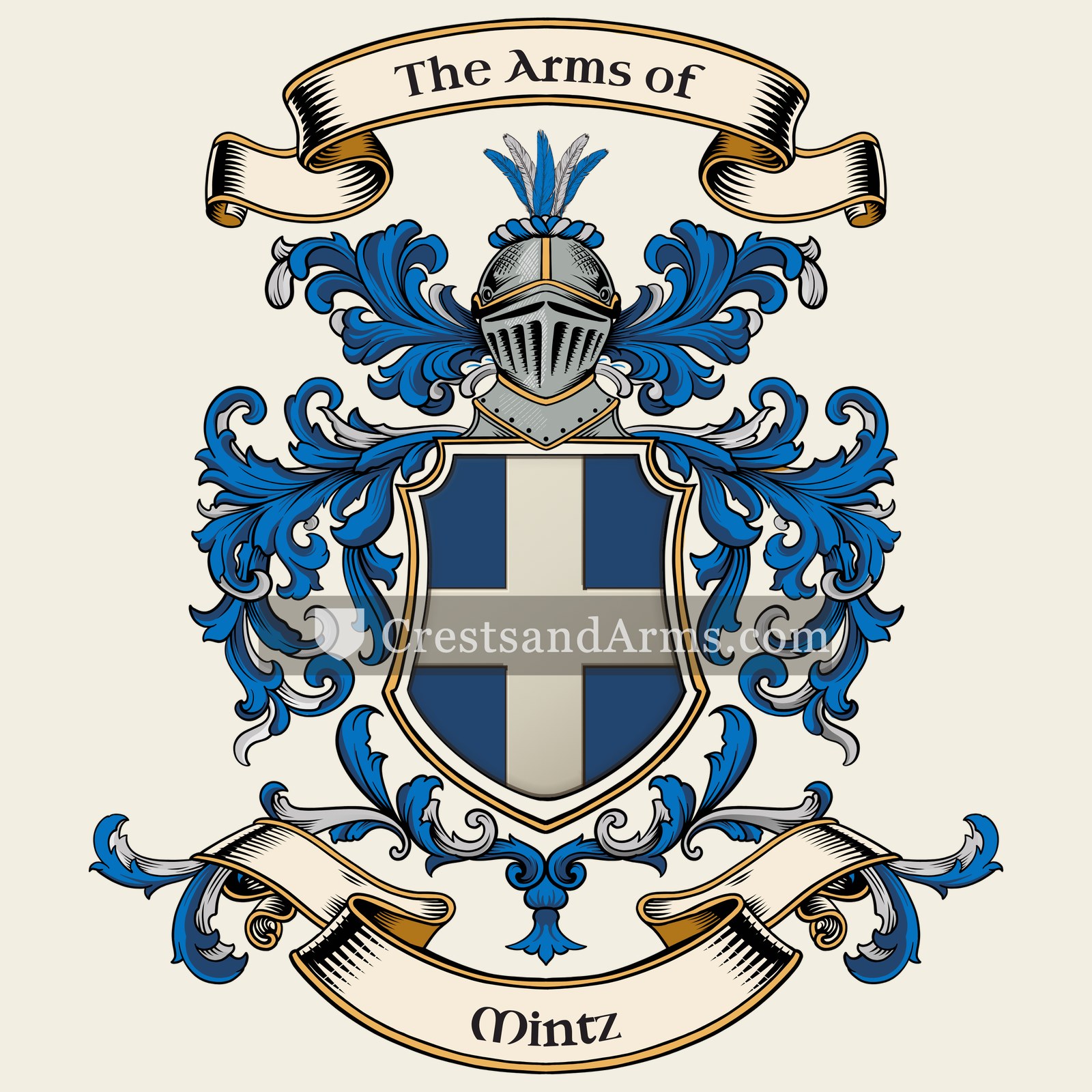


 fessThe military belt, and readiness to serve
 roundelA coin, and one who has been to the crusades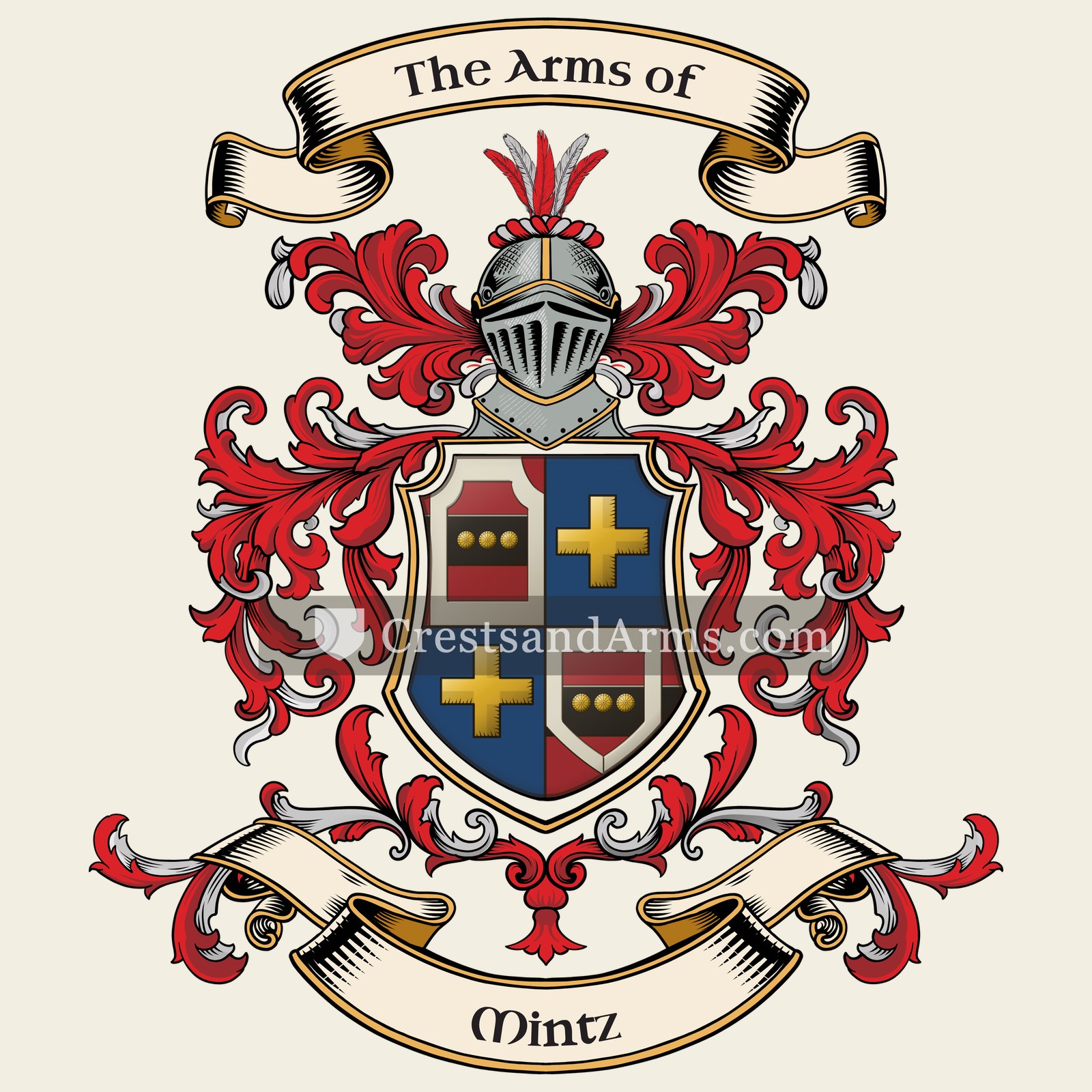


 swanGrace, light and the poet's art