A record of documented arms, meaning and origin, researched for the Miranda family lines. Documented in 2 countries.
Reg. 8095 · Spanish, M–O
Coat of Arms & Family Crest Details
Symbols on this shield
mountThe ground held, and steadfastness upon it
griffinValour and vigilance, guarding great treasure
mulletThe third son, and a divine quality from above
lionCourage, strength and royalty
escutcheonA shield within a shield, and a claim inherited
wolfReward from long service and hard work
treeLife, endurance and deep roots
Colours
Green (Vert)Means: Hope
Silver (Argent)Means: Peace and sincerity
Black (Sable)Means: Constancy
Gold (Or)Means: Generosity
Historical info
Source
J. B. Rietstap, Armorial Général, Gouda: G. B. van Goor Zonen, 1884–87
Blazon (the actual original written record)
“de sin. à un griffon d'or; aux 2 et 3 d'arg. à un loup de sa., pass. devant le fût d'un arbre au nat., le tout soutenu d'une terrasse de sin. L'écu entouré d'une bord. de sa., ch. en chef de cinq étoiles rangées d'arg., sur le flanc dextre d'un lion du même et sur le flanc sen. d'un écusson aussi d'arg.”
Spainc. 1722
Digital archive packCoat of arms PNG, gold border print PDF, vector SVG and the certificate of authenticity. Sent to your email in minutes.
Map of Spain showing where the Miranda arms are recorded
The Miranda arms were recorded in Spain, c. 1722.
Arms such as these were typically recorded in Castile.
Castile was the heart of Spain and the source of most of its noble families. Land won in the long wars against the Moors was granted out to fighting men, and a man granted land was granted arms along with it.
This is where the arms were entered in the register. Families often moved to other parts of the country, so the same name can turn up in more than one region.
The body that granted and recorded arms in Spain in this period.
Philip V of Spain
Sovereign of the period
Philip V of Spain
1714–1724
Reigning in Spain when the Miranda arms are first recorded.
How Arms Worked in Spain
In Spain, a coat of arms was considered a form of property that belonged to the entire family line. These arms were passed down from a father to all his children equally. Younger branches of the family usually kept the original design without needing to add any special marks to distinguish their specific line.
Granting authority
The Cronista Rey de Armas was the official body that regulated and granted coats of arms throughout Spain.
How they got arms
Families often obtained their arms through royal grants or by proving their noble status to the official heraldic authority.
Where arms were recorded
Coats of arms were officially recorded in the registers of the Cronista Rey de Armas starting in 1496.
The family's standing
Recorded among the armigerous families of Spain.
Origin & History of the Miranda Family in Spain
The surname Miranda finds its deepest roots in the rugged landscapes of northern Spain, specifically within the region of Castile. The name itself is derived from the Latin word mirandus, which means someone who is worthy of admiration or someone who looks out from a high vantage point. By the early 18th century, the family was well-established in the Castilian heartland, where they played a role in the local social and administrative structures of the time. Records from 1722 confirm that members of the Miranda family were active participants in the life of this region, likely serving as landowners or local officials who helped manage the daily affairs of their communities. As the family grew, they became deeply connected to the history of the Spanish interior, reflecting the broader patterns of migration and settlement that defined the Iberian Peninsula during the late colonial era.
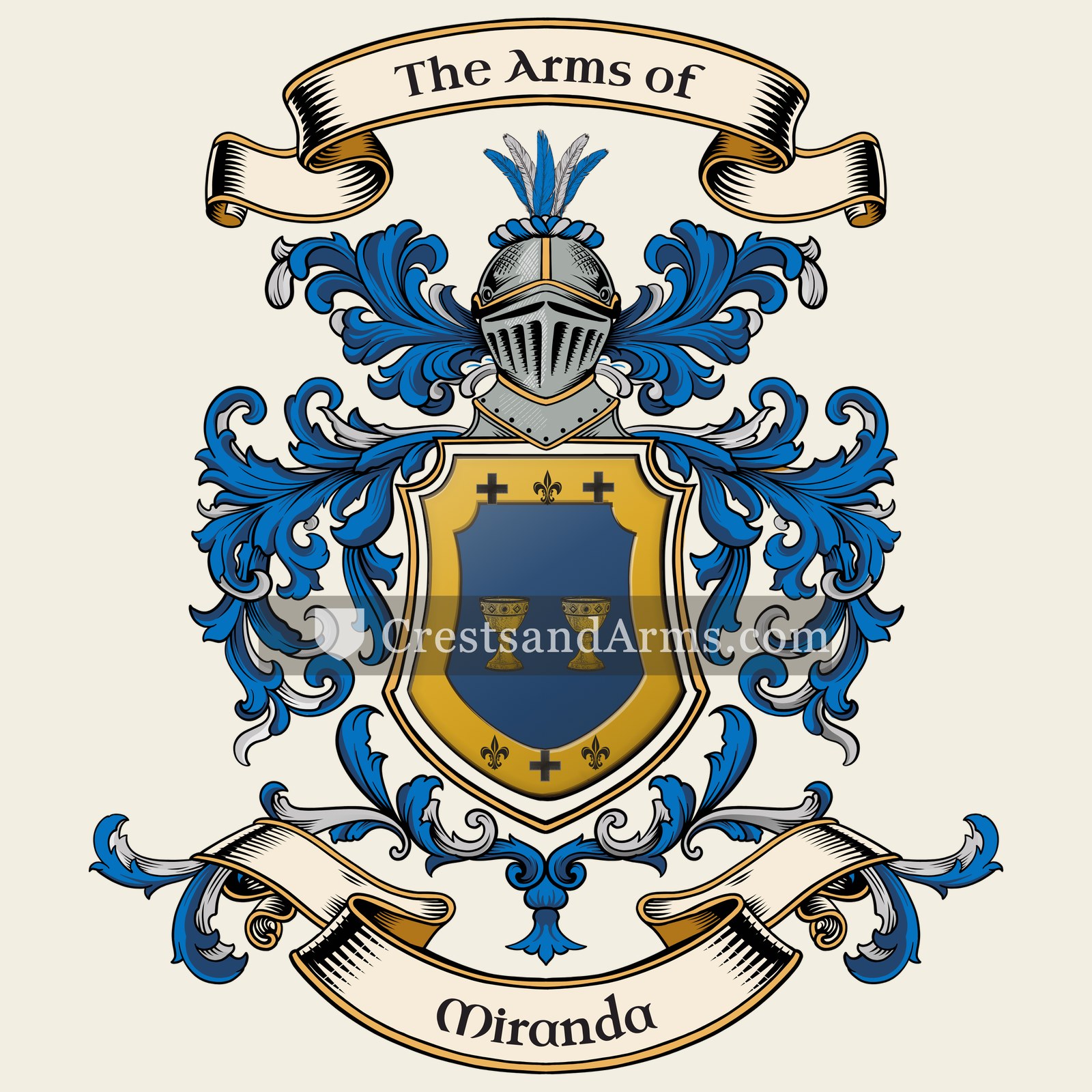
Coat of Arms & Family Crest Details
Symbols on this shield
cross symbolChristian faith and service
cupFaith, office, and a trust discharged
fleur de lisPurity, light, and the sixth son
Colours
Blue (Azure)Means: Loyalty and truth
Gold (Or)Means: Generosity
Historical info
Source
J. B. Rietstap, Armorial Général, Gouda: G. B. van Goor Zonen, 1884–87
Blazon (the actual original written record)
“D'azur à deux chaudières d'or, chacune ch. de deux fasces de sa., et sept têtes de serpent d'or, iss. de chaque côté, de chaque chaudière; à la bord. du premier, ch. de trois fleurs-de-lis d'or, 1 en chef et 2 au bas des flancs, et de trois taus d'or, posés 2 en haut des flancs, chacun surmontant une fleur-de-lis, et le troisième tau en p.”
NavarreValence · Navarre, c. 1663
Digital archive packCoat of arms PNG, gold border print PDF, vector SVG and the certificate of authenticity. Sent to your email in minutes.
Map of France showing where the Miranda arms are recorded
The Miranda arms were recorded in Navarre, c. 1663.
Navarre was mountain country straddling the Pyrenees, with a strong class of small independent landholders. A great many households counted as gentry there, and each needed a shield to be told apart.
This is where the arms were entered in the register. Families often moved to other parts of the country, so the same name can turn up in more than one region.
The body that granted and recorded arms in France in this period.
Louis XIV of France
Sovereign of the period
Louis XIV of France
1643–1715
Reigning in Spain when the Miranda arms are first recorded.
How Arms Worked in France
In France, a coat of arms was a mark of honor that passed down through the male line to all legitimate descendants. Families often used the same shield without changes to show their shared heritage. If a branch wanted to stand out, they could add a small mark to their shield to show their specific place in the family tree.
Granting authority
The Juge d'armes de France acted as the official authority that regulated and verified coats of arms across the country.
How they got arms
Families typically inherited their arms from ancestors, though they could also receive them through royal grants or by proving their noble status.
Where arms were recorded
Coats of arms were officially recorded in the Armorial Général de France, which began its main collection in the year 1696.
The family's standing
Recorded among the armigerous families of Navarre.
Origin & History of the Miranda Family in France
The name Miranda has deep roots in the borderlands between France and Spain, particularly within the historic Kingdom of Navarre. By the year 1663, records confirm that members of the family were well-established in this region, which served as a vital crossroads for trade and cultural exchange between the two nations. The name itself is derived from the Latin word mirandus, meaning someone who is worthy of admiration or wonder. In the context of the French and Navarrese frontier, the family likely gained prominence through their involvement in local administration or land management. Because the region was a frequent site of political shifts, the Miranda family often adapted to the changing borders while maintaining their influence in local society. Their presence in Navarre during the seventeenth century highlights how families moved across these mountainous territories to build new lives and secure their status within the community.
Miranda Meaning & Related Branches
Root word
mirandus
Latin term meaning to be wondered at or admirable.
This name
MirandaRefers to a person or place worthy of admiration or astonishment.
also spelled
Myranda
Mirand
Related arms
Esparzarecorded with Miranda, same area
Medranorecorded with Miranda, same area
Mergelinarecorded with Miranda, same area
Documented Sources
J. B. Rietstap, Armorial Général, Gouda: G. B. van Goor Zonen, 1884–87
Moll, Francesc de B., Els llinatges catalans, 1959
Faure, Roberto, Diccionario de apellidos españoles, 2001
Archivo General de Simancas, Registro del Sello de Corte
Archivo Histórico Nacional, Sección Nobleza
Digital archive packCoat of arms PNG, gold border print PDF, vector SVG and the certificate of authenticity. Sent to your email in minutes.


 mountThe ground held, and steadfastness upon it
 griffinValour and vigilance, guarding great treasure
 mulletThe third son, and a divine quality from above
 lionCourage, strength and royalty
 escutcheonA shield within a shield, and a claim inherited
 wolfReward from long service and hard work
 treeLife, endurance and deep roots
 mountThe ground held, and steadfastness upon it
 griffinValour and vigilance, guarding great treasure
 mulletThe third son, and a divine quality from above
 lionCourage, strength and royalty
 escutcheonA shield within a shield, and a claim inherited
 wolfReward from long service and hard work
 treeLife, endurance and deep roots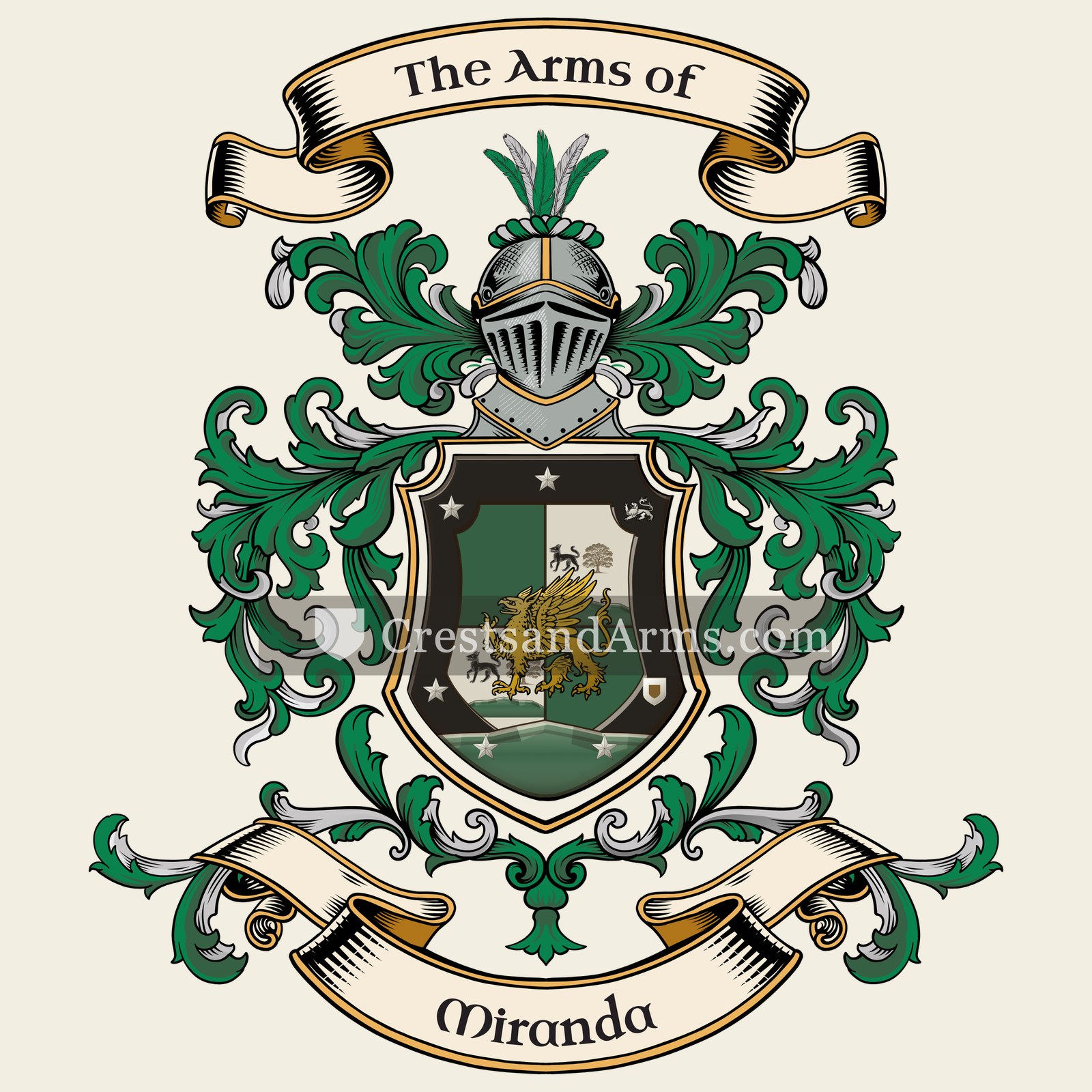


 cross symbolChristian faith and service
 cupFaith, office, and a trust discharged
 fleur de lisPurity, light, and the sixth son