Map of Denmark showing where the Mire arms are recorded
The Mire arms were recorded in Denmark, c. 1722.
Arms such as these were typically recorded in Sjaælland.
Zealand held the Danish court, the crown's offices and Copenhagen itself. Families who served the king kept estates within reach of it, and royal service was the ordinary route to a coat of arms.
This is where the arms were entered in the register. Families often moved to other parts of the country, so the same name can turn up in more than one region.
The body that granted and recorded arms in Denmark in this period.
Frederik IV of Denmark
Sovereign of the period
Frederik IV of Denmark
1699–1730
Reigning in Denmark when the Mire arms are first recorded.
How Arms Worked in Denmark
Danish heraldry during this period was closely tied to noble status and royal favor rather than being open to all citizens. Arms were typically granted by the monarch to individuals, and these symbols were then shared by all members of the noble house. If a family line died out, the right to use those specific arms ended with them.
Granting authority
The Danish royal chancery held the power to issue and regulate official coats of arms for the kingdom.
How they got arms
Families usually received their arms through a formal royal grant that confirmed their noble status and rights.
Where arms were recorded
These grants were officially recorded in the Danish Royal Chancery records starting in the sixteenth century.
The family's standing
Recorded among the armigerous families of Denmark.
Origin & History of the Mire Family in Denmark
The history of the Mire family in Denmark is rooted in the rural landscapes of Sjælland, where records confirm their presence as early as 1722. During this period, the family lived within a society defined by strict social hierarchies and the transition from traditional feudal farming to more organized agricultural practices. As inhabitants of Sjælland, the Mires were likely part of the local parish communities that served as the backbone of Danish life. These early ancestors navigated a time of significant change, as the Danish crown began implementing reforms that would eventually alter the lives of common families forever. By remaining in the same region for generations, the family contributed to the long-standing cultural identity of the island. Their story is a reflection of the quiet resilience of ordinary Danish people who built their lives through farming and local trade in the eighteenth century.
Meaning of the Mire family crest colors & symbols
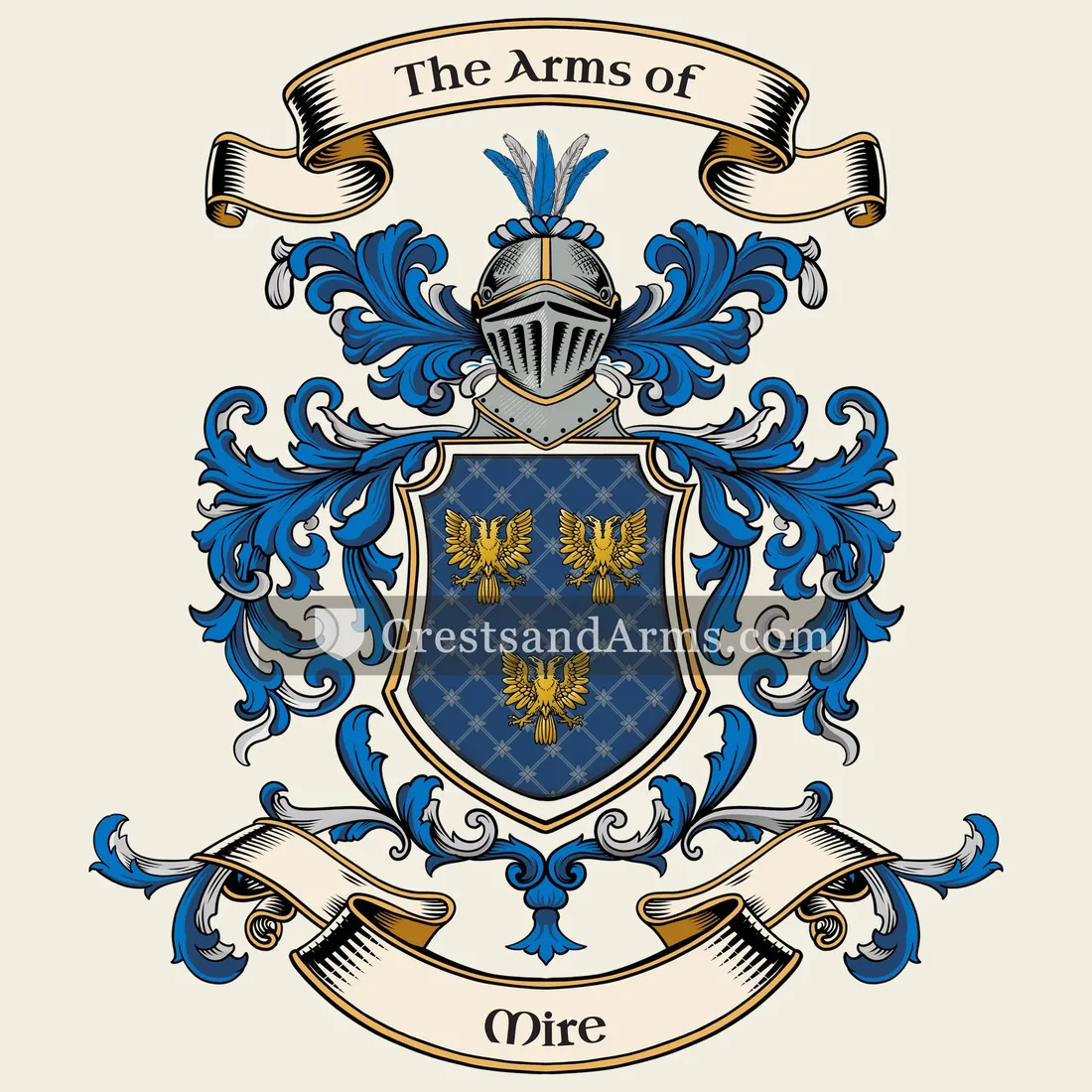
Symbols on this shield
eagleNobility, strength and a keen mind
Colours
Blue (Azure)Means: Loyalty and truth
Gold (Or)Means: Generosity
Historical info
Source
J. B. Rietstap, Armorial Général, Gouda: G. B. van Goor Zonen, 1884–87
Blazon (the actual original written record)
“D'azur à trois aigles d'or, bq., m. et cour. de gu., les deux du chef affr.”
GuyenneGuyenne, c. 1663
Digital archive packCoat of arms PNG, gold border print PDF, vector SVG and the certificate of authenticity. Sent to your email in minutes.
Map of France showing where the Mire arms are recorded
The Mire arms were recorded in Guyenne, c. 1663.
Guyenne was the great wine country of south-western France, shipping claret to England for centuries. The trade made merchant families rich, they bought vineyards and estates with the money, and land of that kind brought arms with it.
This is where the arms were entered in the register. Families often moved to other parts of the country, so the same name can turn up in more than one region.
The body that granted and recorded arms in France in this period.
Louis XIV of France
Sovereign of the period
Louis XIV of France
1643–1715
Reigning in Denmark when the Mire arms are first recorded.
How Arms Worked in France
In France, a coat of arms was a mark of honor that passed down through the male line to all legitimate descendants. Families often used the same shield without changes to show their shared heritage. If a branch wanted to stand out, they could add a small mark to their shield to show their specific place in the family tree.
Granting authority
The Juge d'armes de France acted as the official authority that regulated and verified coats of arms across the country.
How they got arms
Families typically inherited their arms from ancestors, though they could also receive them through royal grants or by proving their noble status.
Where arms were recorded
Coats of arms were officially recorded in the Armorial Général de France, which began its main collection in the year 1696.
The family's standing
Recorded among the armigerous families of Guyenne.
Origin & History of the Mire Family in France
The family name Mire traces its roots to the historic province of Guyenne in southwestern France, where records confirm the family was well-established by 1663. During this era, the region was a vibrant center of agricultural and social life, shaped by the influence of the Garonne River and the proximity to the Atlantic coast. The name Mire is often associated with the Old French word for a physician or a healer, suggesting that early ancestors may have held respected roles within their local communities. As residents of Guyenne, the family lived through a period of significant transition as the French monarchy consolidated power across the provinces. By maintaining a presence in this region, the family became part of the long-standing cultural fabric of southwestern France, contributing to the local traditions and the rural economy that defined life in the seventeenth century.
Mire Meaning & Related Branches
Root word
Myra
Derived from the Greek word for myrrh or fragrant oil.
This name
MireA Danish topographic surname referring to someone who lived near a marsh or swamp.
also spelled
Mire
Myer
Mir
Documented Sources
J. B. Rietstap, Armorial Général, Gouda: G. B. van Goor Zonen, 1884–87
Rigsarkivet (Danish National Archives), Kirkebøger (Parish Registers for Sjælland)
Rigsarkivet (Danish National Archives), Folketællinger (Census Records)
Trap, J.P., Kongeriget Danmark: Københavns Amt, 1906
Feldbæk, Ole, Danmarks historie: Den lange fred 1700-1800, 1990
Digital archive packCoat of arms PNG, gold border print PDF, vector SVG and the certificate of authenticity. Sent to your email in minutes.


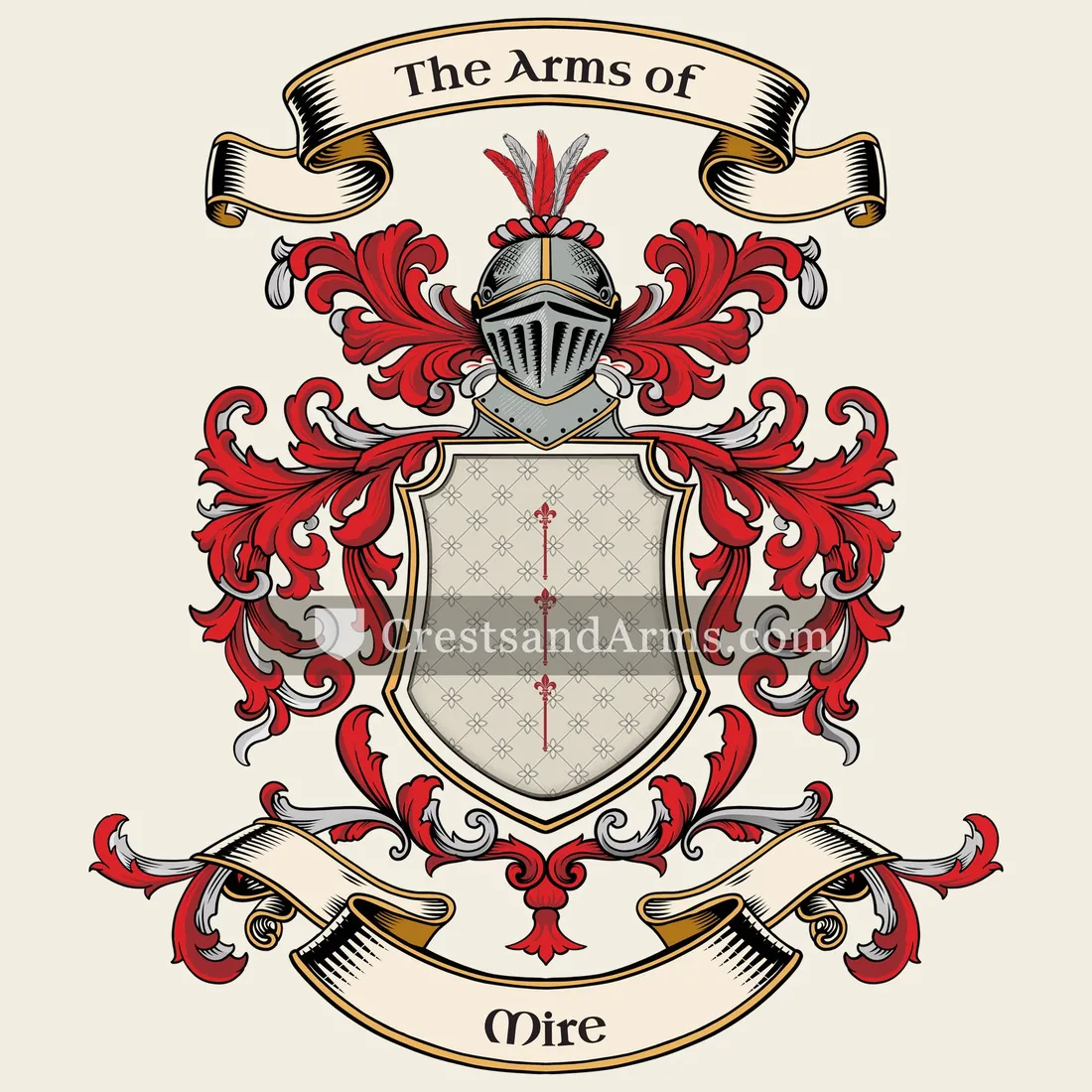
 batonAuthority and office held under the crown
 batonAuthority and office held under the crown


 eagleNobility, strength and a keen mind