Map of Spain showing where the Miya arms are recorded
The Miya arms were recorded in Murcie, c. 1722.
This is where the arms were entered in the register. Families often moved to other parts of the country, so the same name can turn up in more than one region.
The body that granted and recorded arms in Spain in this period.
Philip V of Spain
Sovereign of the period
Philip V of Spain
1714–1724
Reigning in Spain when the Miya arms are first recorded.
How Arms Worked in Spain
In Spain, a coat of arms was considered a form of property that belonged to the entire family line. These arms were passed down from a father to all his children equally. Younger branches of the family usually kept the original design without needing to add any special marks to distinguish their specific line.
Granting authority
The Cronista Rey de Armas was the official body that regulated and granted coats of arms throughout Spain.
How they got arms
Families often obtained their arms through royal grants or by proving their noble status to the official heraldic authority.
Where arms were recorded
Coats of arms were officially recorded in the registers of the Cronista Rey de Armas starting in 1496.
The family's standing
Recorded among the armigerous families of Spain.
Origin & History of the Miya Family in Spain
The history of the Miya family name is deeply connected to the region of Murcia, Spain, where records confirm their presence as early as 1722. During the eighteenth century, families in this area often lived in close-knit agricultural communities that relied on the fertile soil of the Segura River valley. The name likely evolved from local linguistic patterns or specific geographic markers that identified where early ancestors resided or worked. As the family established roots in Murcia, they became part of the social fabric of a city known for its blend of cultural influences and its importance as a regional trade hub. By documenting their lives in local parish registers and municipal files, these early members ensured that their presence was recorded during a time of significant growth for the Spanish Mediterranean coast.
Miya Meaning & Related Branches
Root word
Micaiah
Hebrew for who is like God
This name
MiyaA Spanish topographic surname referring to someone living near a shrine or temple
also spelled
Moyas
Moyae
Moyat
Documented Sources
J. B. Rietstap, Armorial Général, Gouda: G. B. van Goor Zonen, 1884–87
Archivo General de la Región de Murcia, Libros de Bautismos y Matrimonios de la Parroquia de San Bartolomé, 1722
Pérez de Tudela, Juan, Historia de la Región de Murcia: Siglo XVIII, 1995
Digital archive packCoat of arms PNG, gold border print PDF, vector SVG and the certificate of authenticity. Sent to your email in minutes.


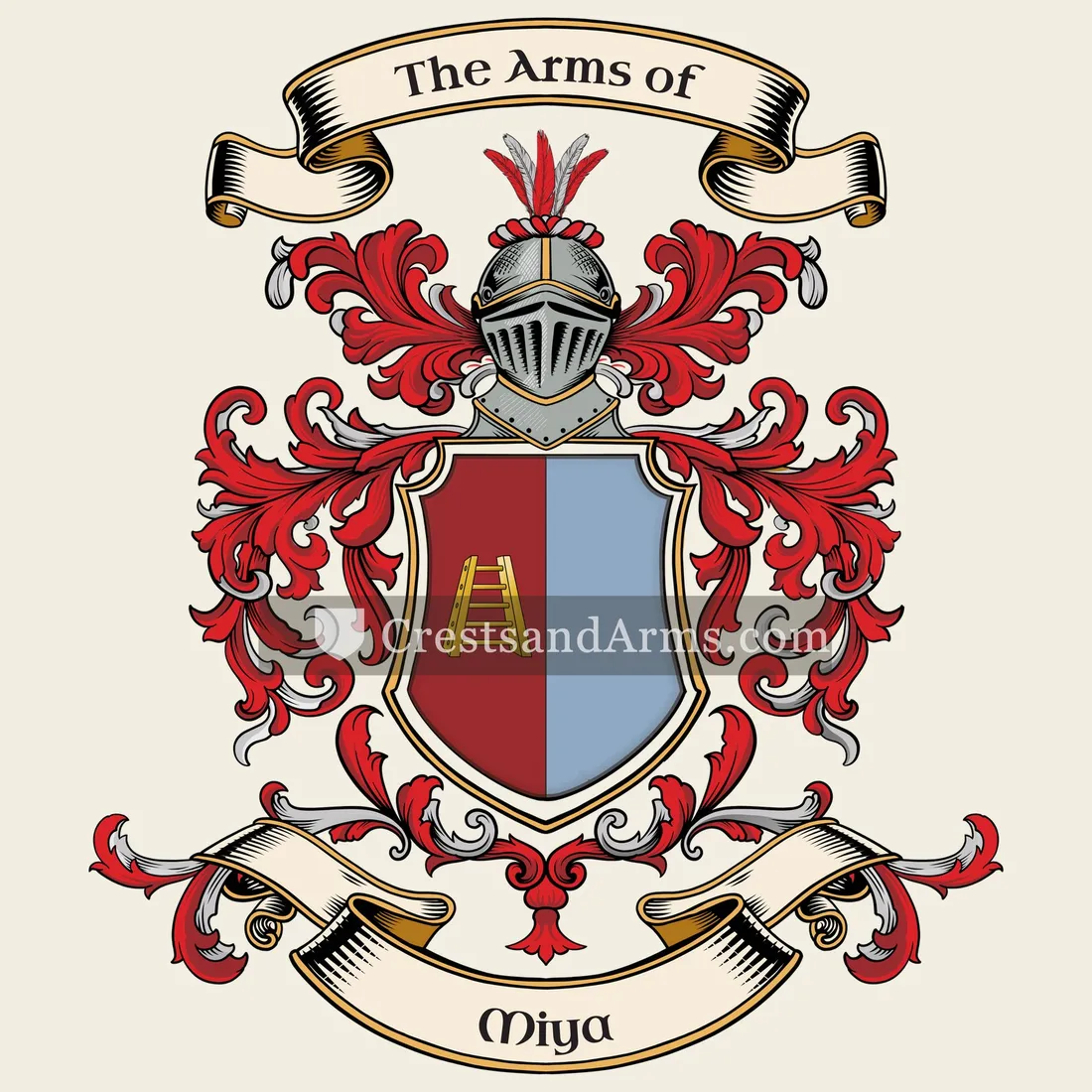
 ladderAmbition, and a fearless assault
 ladderAmbition, and a fearless assault