Map of Netherlands showing where the Moen arms are recorded
The Moen arms were recorded in Netherlands, c. 1815.
Arms such as these were typically recorded in Friesland.
Friesland was low, wet country on the northern coast of the Netherlands, farmed by families who had held the same land for centuries. Free landholders were unusually common there, and a free landholder could carry arms.
This is where the arms were entered in the register. Families often moved to other parts of the country, so the same name can turn up in more than one region.
Region
Friesland
First recorded
1815
Granting Authority for the Moen Arms
Hoge Raad van Adel
Photograph made by me · CC BY-SA 3.0
The body that granted and recorded arms in Netherlands in this period.
William I of the Netherlands
Sovereign of the period
William I of the Netherlands
1815–1840
Reigning in Netherlands when the Moen arms are first recorded.
How Arms Worked in Netherlands
In the Netherlands, coats of arms were often used by noble families and those who held specific public offices. These arms were passed down through the generations to legitimate descendants. Younger branches of a family usually kept the original design without needing to add special marks. This system ensured that the family identity remained clear and consistent over many years.
Granting authority
The Hoge Raad van Adel is the official body that regulates and manages noble titles and coats of arms in the Netherlands.
How they got arms
Families typically obtained their coats of arms through official royal grants or by proving their long-standing historical use of the symbols.
Where arms were recorded
Coats of arms are officially recorded in the registers held by the Hoge Raad van Adel, which began its work in 1814.
The family's standing
Recorded among the armigerous families of Netherlands.
Origin & History of the Moen Family in Netherlands
The surname Moen has deep roots in the northern region of the Netherlands known as Friesland. By the early 19th century, families carrying this name were well-established in the local communities of this coastal province. The name likely evolved from old Germanic or Frisian linguistic roots, often serving as a descriptive term for people who lived near specific landmarks or held certain occupations in the rural landscape. In 1815, the introduction of the civil registry in the Netherlands required citizens to formally record their surnames, which helps historians track the Moen family across generations. During this era, the Frisian people maintained a strong sense of regional identity, and the Moen family was part of the agricultural and maritime traditions that defined life in the northern provinces. These early ancestors were typically farmers or laborers who contributed to the steady growth of the Frisian population during a time of significant political change in Europe.
Meaning of the Moen family crest colors & symbols
Symbols on this shield
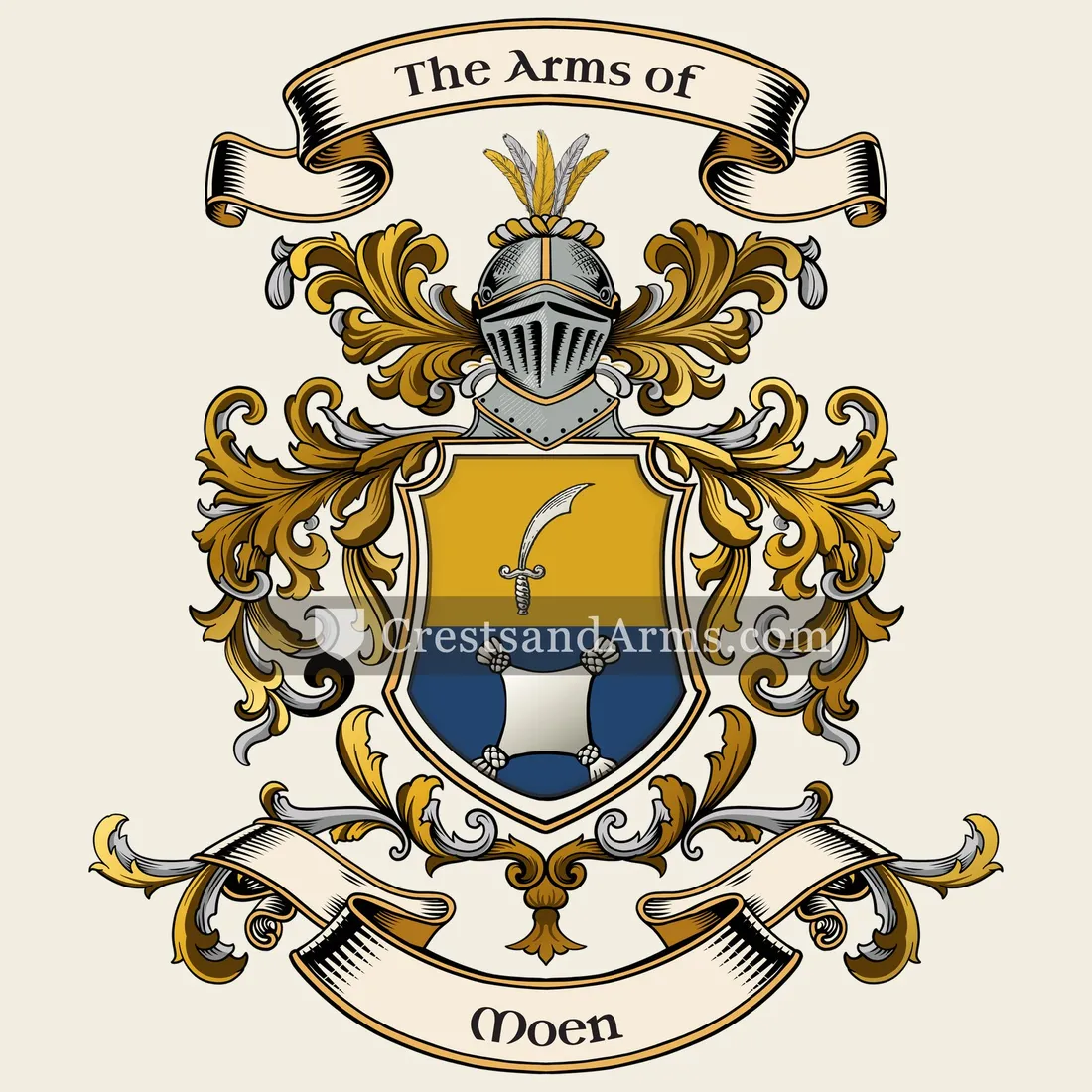
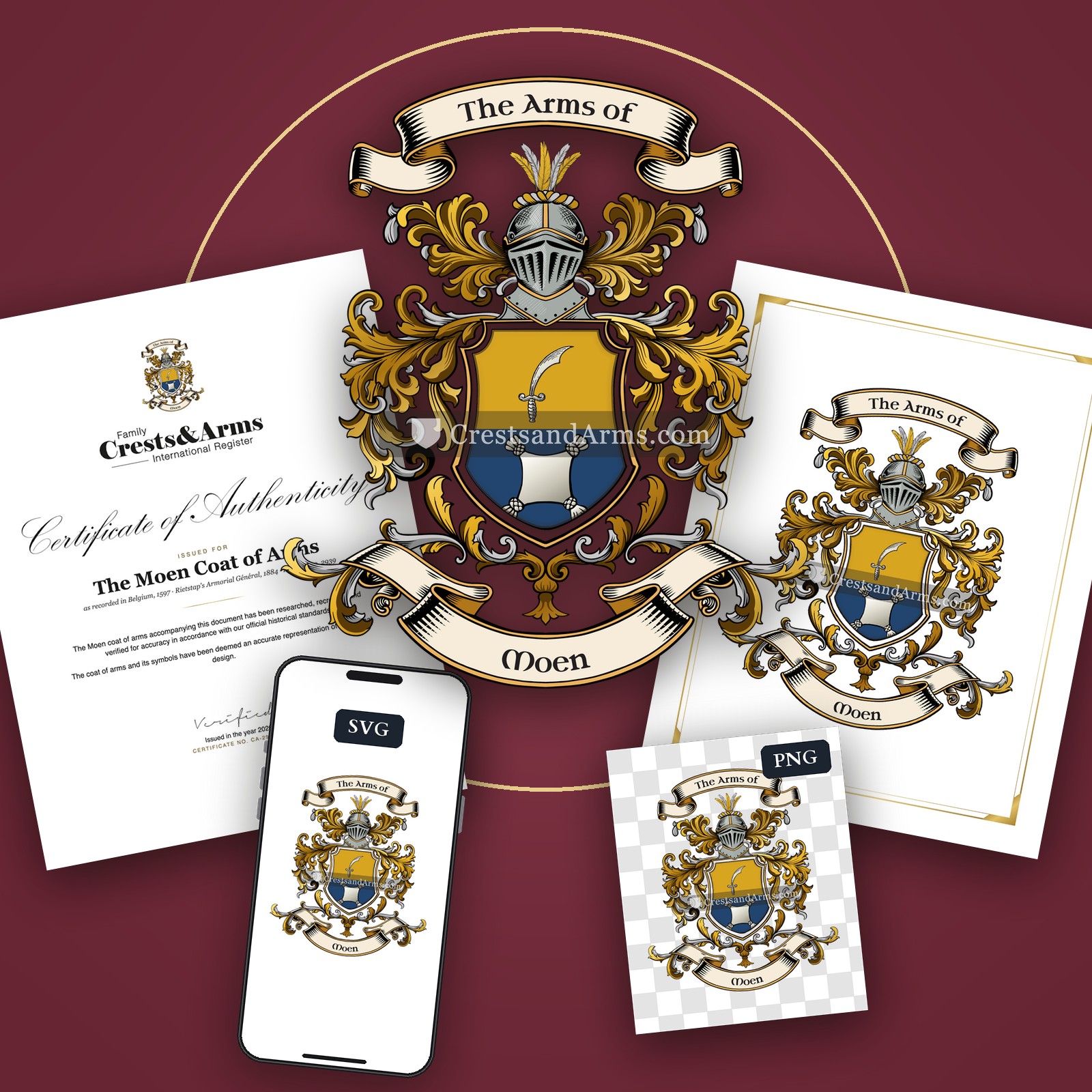
swordJustice, and military honour
pillowRest earned, and authority at ease
Colours
Gold (Or)Means: Generosity
Blue (Azure)Means: Loyalty and truth
Silver (Argent)Means: Peace and sincerity
Historical info
Source
J. B. Rietstap, Armorial Général, Gouda: G. B. van Goor Zonen, 1884–87
Blazon (the actual original written record)
“Coupé: au 1 d'or à une épée d'arg., garnie de sa.; au 2 d'azur à un oreiller carré d'arg., bordé et houppé d'or. S.: deux léopards lionnés d'or, arm. et lamp. de gu.”
FlandreFlandre, c. 1597
Digital archive packCoat of arms PNG, gold border print PDF, vector SVG and the certificate of authenticity. Sent to your email in minutes.
Map of Belgium showing where the Moen arms are recorded
The Moen arms were recorded in Flandre, c. 1597.
Flandre grew rich on cloth, and its towns were among the busiest in Europe. Merchant families bought land with their profits and took arms to go with it, so trade put as many names in the registers here as land did.
This is where the arms were entered in the register. Families often moved to other parts of the country, so the same name can turn up in more than one region.
The body that granted and recorded arms in Belgium in this period.
Philip II of Spain
Sovereign of the period
Philip II of Spain
1556–1598
Reigning in Netherlands when the Moen arms are first recorded.
How Arms Worked in Belgium
In Belgium, a coat of arms is considered personal property that is passed down through the male line to legitimate descendants. Families often use the same shield design across generations to show their shared heritage. If a branch of the family wants to change the design, they must apply for an official update to their specific version of the arms.
Granting authority
The Conseil héraldique is the official body that regulates and approves all coats of arms in Belgium.
How they got arms
Families obtain their coats of arms through formal royal grants or by confirming their historical right to use existing designs.
Where arms were recorded
All approved coats of arms are officially recorded in the public registers of the Conseil héraldique since 1844.
The family's standing
Recorded among the armigerous families of Flandre.
Origin & History of the Moen Family in Belgium
The history of the Moen family in Belgium is rooted in the fertile landscape of Flanders, where records confirm their presence as early as 1597. During this period, the name was closely tied to the geography of the region, as many families adopted surnames based on their local surroundings or specific land features. In the Flemish dialect, the name likely evolved from terms describing marshy or low-lying ground, suggesting that the earliest members of the family were farmers or laborers who worked the damp, productive soil of the countryside. Living in Flanders during the late sixteenth century meant navigating a time of significant political and religious upheaval, yet the Moen family maintained a steady presence in the local parish records. These early generations were primarily integrated into the rural community, focusing on agriculture and trade within their immediate village networks. By establishing themselves in the Flemish lowlands, the family became part of the long-standing tradition of local land stewardship that defined the social fabric of the region for centuries.
Moen Meaning & Related Branches
Root word
Moghen
A Middle Dutch term referring to a person of strength or power.
This name
MoenDerived from a nickname for a powerful or mighty individual.
also spelled
Moen
Moense
Documented Sources
J. B. Rietstap, Armorial Général, Gouda: G. B. van Goor Zonen, 1884–87
Tresoar (Fries Historisch en Letterkundig Centrum), Burgerlijke Stand van de provincie Friesland
Nederlandse Familienamenbank (Meertens Instituut), Nederlandse Familienamenbank
Van der Meer, G., Friese familienamen: een overzicht van hun oorsprong en verspreiding, 1998
Digital archive packCoat of arms PNG, gold border print PDF, vector SVG and the certificate of authenticity. Sent to your email in minutes.


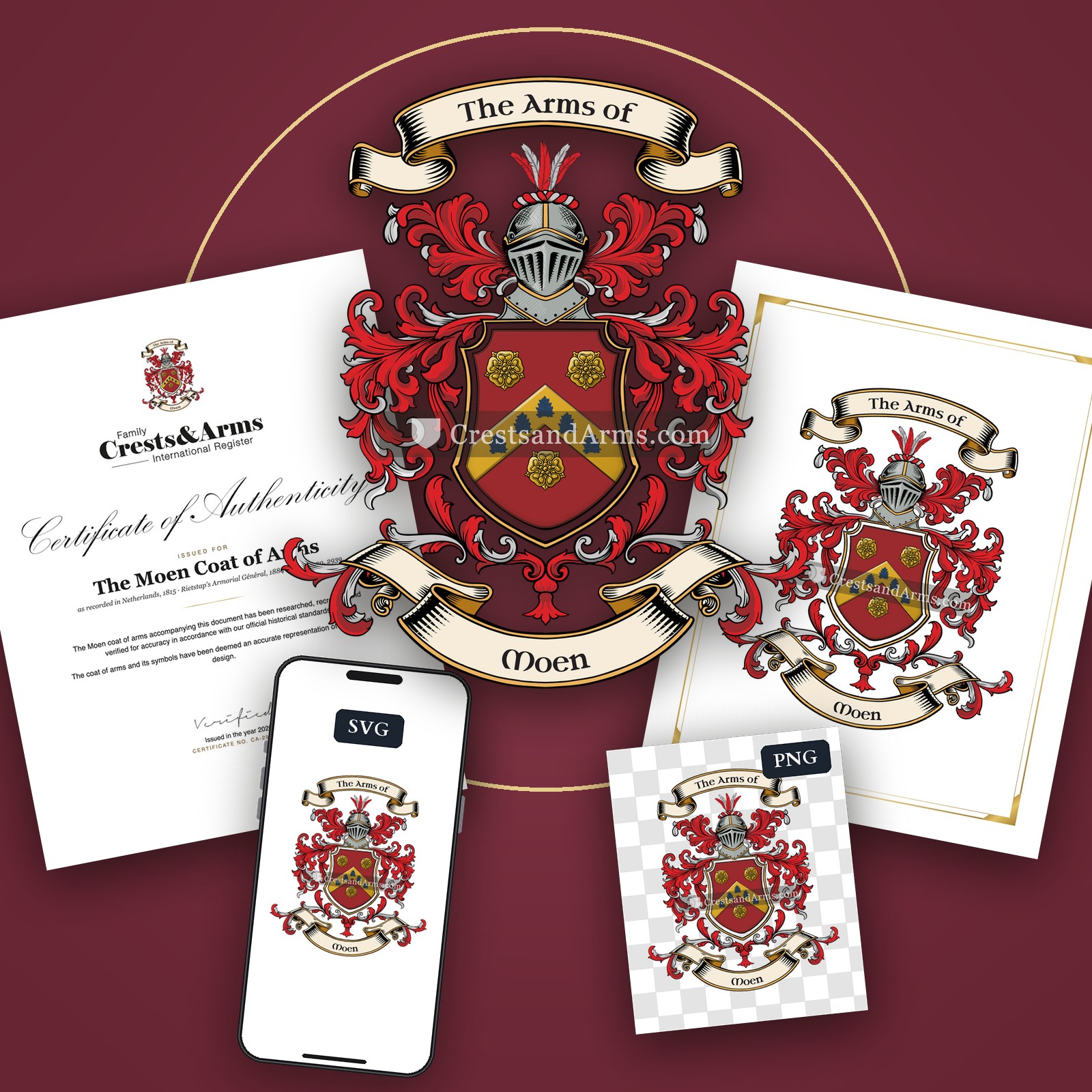
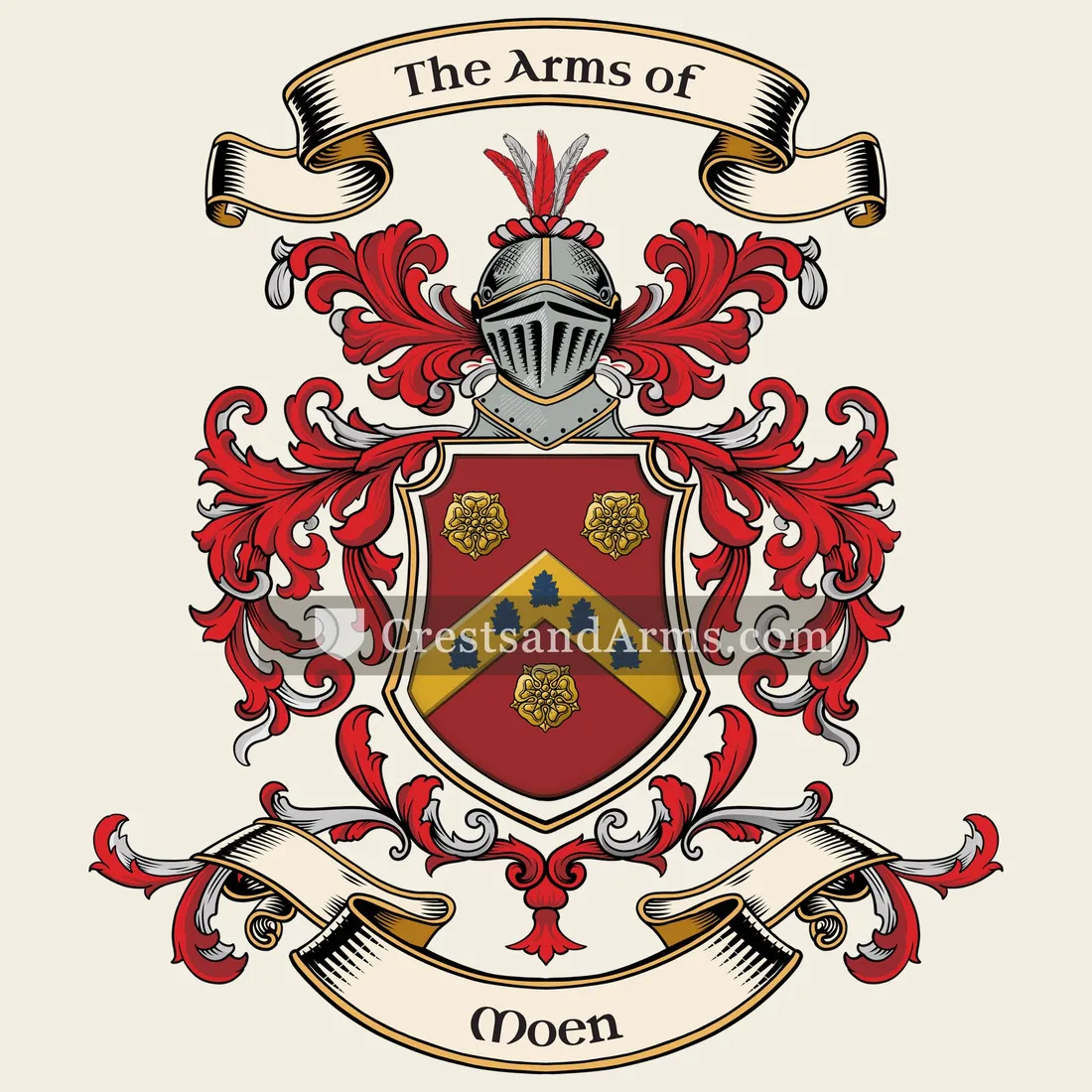
 chevronProtection, and faithful service completed
 leafHappiness and abundance
 roseThe seventh son, and beauty with grace
 chevronProtection, and faithful service completed
 leafHappiness and abundance
 roseThe seventh son, and beauty with grace


 swordJustice, and military honour
 pillowRest earned, and authority at ease