Map of Netherlands showing where the Mohs arms are recorded
The Mohs arms were recorded in Arnhem, c. 1815.
This is where the arms were entered in the register. Families often moved to other parts of the country, so the same name can turn up in more than one region.
Region
Arnhem
Town
Arnhem
First recorded
1815
Granting Authority for the Mohs Arms
Hoge Raad van Adel
Photograph made by me · CC BY-SA 3.0
The body that granted and recorded arms in Netherlands in this period.
William I of the Netherlands
Sovereign of the period
William I of the Netherlands
1815–1840
Reigning in Netherlands when the Mohs arms are first recorded.
How Arms Worked in Netherlands
In the Netherlands, coats of arms were often used by noble families and those who held specific public offices. These arms were passed down through the generations to legitimate descendants. Younger branches of a family usually kept the original design without needing to add special marks. This system ensured that the family identity remained clear and consistent over many years.
Granting authority
The Hoge Raad van Adel is the official body that regulates and manages noble titles and coats of arms in the Netherlands.
How they got arms
Families typically obtained their coats of arms through official royal grants or by proving their long-standing historical use of the symbols.
Where arms were recorded
Coats of arms are officially recorded in the registers held by the Hoge Raad van Adel, which began its work in 1814.
The family's standing
Recorded among the armigerous families of Netherlands.
Origin & History of the Mohs Family in Netherlands
The history of the Mohs family in the Netherlands is rooted in the strategic city of Arnhem, where records confirm their presence by the early nineteenth century. During this period, Arnhem served as a vital hub for trade and administration, and families like the Mohs often integrated into the local urban structure through skilled labor or merchant activities. The name itself likely evolved from regional linguistic patterns common in the borderlands between the Netherlands and Germany, reflecting a time when surnames were becoming solidified in official civil registries. By 1815, the family was part of a changing social landscape as the Netherlands transitioned into a unified kingdom. Their documented life in Arnhem suggests they were established residents who participated in the daily economic and civic rhythms of a city recovering from the Napoleonic era. This early residency highlights how the family name became woven into the local history of the Gelderland province as the nation moved toward modern record-keeping practices.
Coat of Arms & Family Crest Details
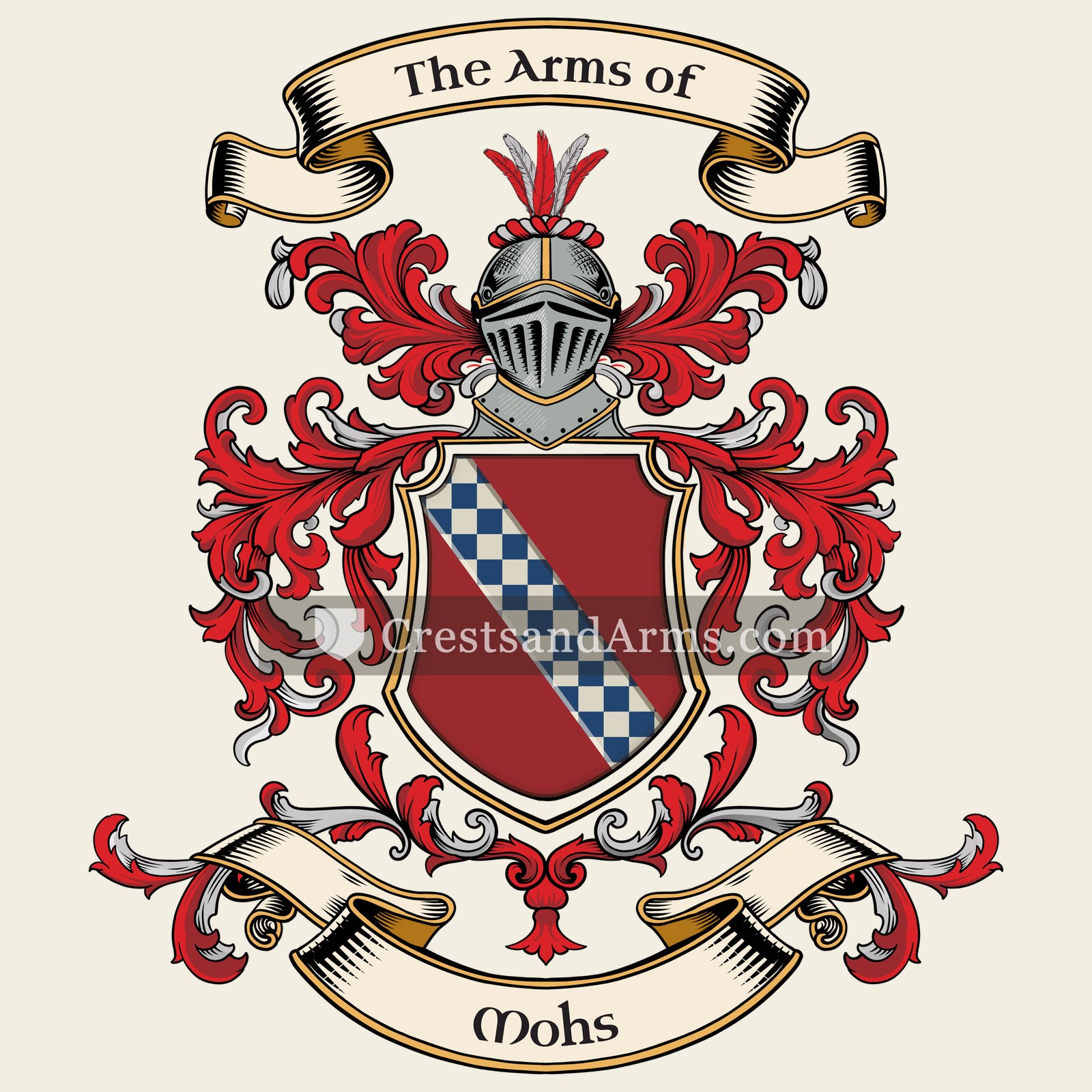
Symbols on this shield
bendDefence, and the scarf of a commander
chequyConstancy, and the counting-board
Colours
Red (Gules)Means: Military strength
Silver (Argent)Means: Peace and sincerity
Historical info
Source
J. B. Rietstap, Armorial Général, Gouda: G. B. van Goor Zonen, 1884–87
Blazon (the actual original written record)
“De gu. à la bande échiq. d'azur et d'arg. C.: un tourteau de gu. taillé à facettes, orné à l'entour de plumes d'arg.”
Switzerlandc. 1745
Digital archive packCoat of arms PNG, gold border print PDF, vector SVG and the certificate of authenticity. Sent to your email in minutes.
Map of Switzerland showing where the Mohs arms are recorded
The Mohs arms were recorded in Switzerland, c. 1745.
Arms such as these were typically recorded in Bern.
Bern was the largest of the Swiss cantons and ran itself, with its own council and its own courts. Its governing families held office for generations, and office of that kind carried a shield with it.
This is where the arms were entered in the register. Families often moved to other parts of the country, so the same name can turn up in more than one region.
The body that granted and recorded arms in Switzerland in this period.
How Arms Worked in Switzerland
In Switzerland, coats of arms were not restricted to the nobility and were often adopted by common citizens and families. These symbols were passed down through generations to show family identity. When branches of a family grew, they often changed small details of the design to distinguish their own line from the original group.
Granting authority
Cantonal and civic authorities managed the use of coats of arms within their specific regions and local jurisdictions.
How they got arms
Families typically assumed their own coats of arms based on local custom rather than receiving them from a central monarch.
Where arms were recorded
Arms were recorded in various cantonal and civic registers starting from the fourteenth century throughout the Swiss region.
The family's standing
Recorded among the armigerous families of Switzerland.
Origin & History of the Mohs Family in Switzerland
The family name Mohs carries a deep connection to the historic landscape of Switzerland, particularly within the canton of Bern. By the mid-18th century, records confirm that members of the Mohs family were established residents of this region. During this era, Bern was a powerful city-state defined by its rigid social structures and its role as a center of trade and governance. Families like the Mohs often integrated into the local economy through skilled craftsmanship or agricultural management, which allowed them to maintain a stable presence in the Swiss highlands. As the family navigated the shifting political climate of the 1700s, they became part of the enduring fabric of Bernese society. Their presence in the city during 1745 reflects a time when surnames were becoming more formalized in official registries, helping to preserve the family identity for future generations.
Related Branches & Arms
Root word
Mose
A Middle Dutch personal name derived from Moses meaning drawn from water.
This name
MohsA patronymic surname indicating descent from a person named Mose or Moses.
also spelled
Moz
Moss
Documented Sources
J. B. Rietstap, Armorial Général, Gouda: G. B. van Goor Zonen, 1884–87
Gelders Archief, Burgerlijke Stand Gelderland, Arnhem, Geboorten, Huwelijken, Overlijden (1811-1950)
P.J. Blok and P.C. Molhuysen, Nieuw Nederlandsch Biografisch Woordenboek, 1911
Centraal Bureau voor Genealogie, Nederland's Patriciaat, 1910
Digital archive packCoat of arms PNG, gold border print PDF, vector SVG and the certificate of authenticity. Sent to your email in minutes.


 grapesPlenty, and the labour of the vine
 grapesPlenty, and the labour of the vine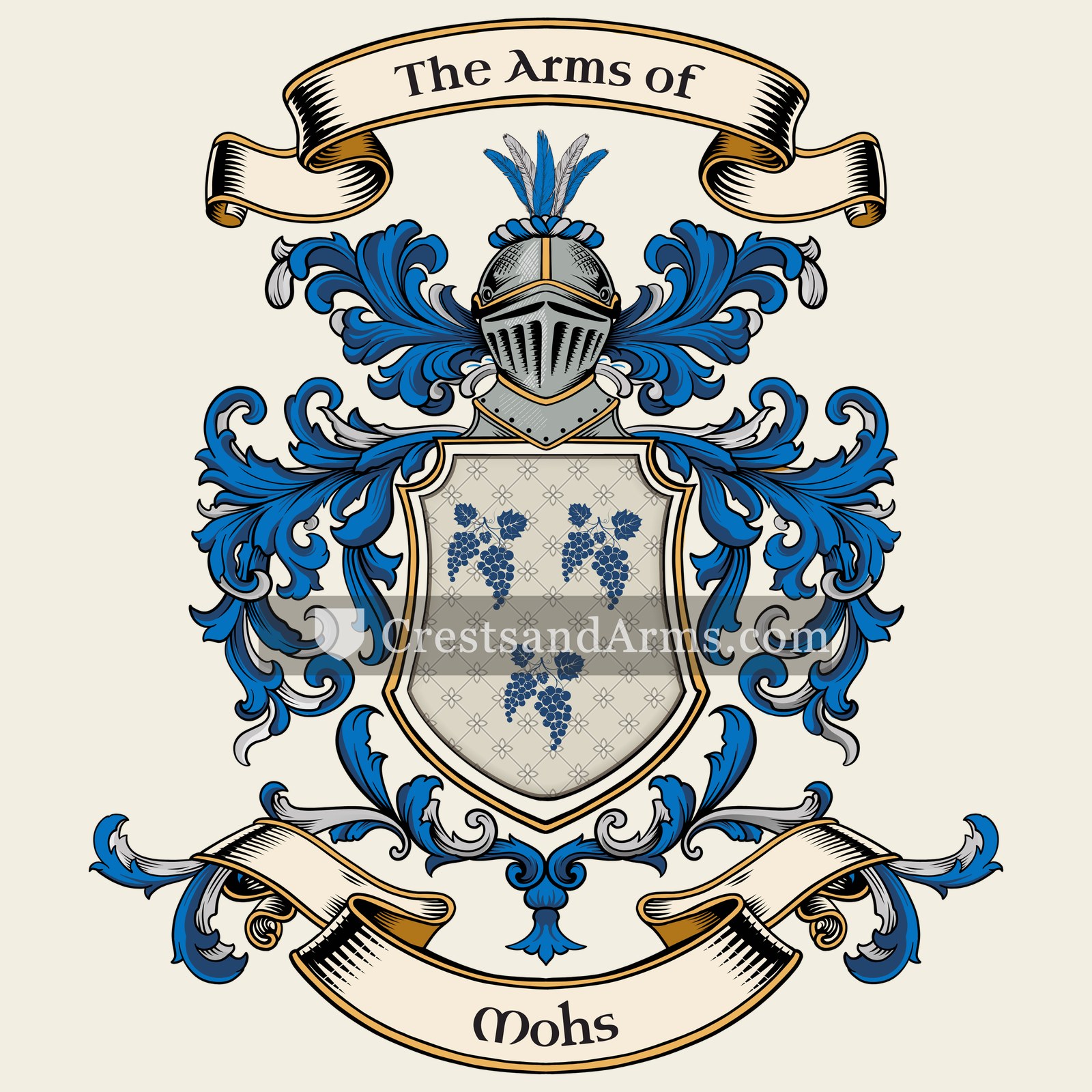


 bendDefence, and the scarf of a commander
 chequyConstancy, and the counting-board