Map of Spain showing where the Montalvo arms are recorded
The Montalvo arms were recorded in Castile, c. 1722.
Castile was the heart of Spain and the source of most of its noble families. Land won in the long wars against the Moors was granted out to fighting men, and a man granted land was granted arms along with it.
This is where the arms were entered in the register. Families often moved to other parts of the country, so the same name can turn up in more than one region.
The body that granted and recorded arms in Spain in this period.
Philip V of Spain
Sovereign of the period
Philip V of Spain
1714–1724
Reigning in Spain when the Montalvo arms are first recorded.
How Arms Worked in Spain
In Spain, a coat of arms was considered a form of property that belonged to the entire family line. These arms were passed down from a father to all his children equally. Younger branches of the family usually kept the original design without needing to add any special marks to distinguish their specific line.
Granting authority
The Cronista Rey de Armas was the official body that regulated and granted coats of arms throughout Spain.
How they got arms
Families often obtained their arms through royal grants or by proving their noble status to the official heraldic authority.
Where arms were recorded
Coats of arms were officially recorded in the registers of the Cronista Rey de Armas starting in 1496.
The family's standing
Recorded among the armigerous families of Castile.
Origin & History of the Montalvo Family in Spain
Pronunciationmon-TAL-voh/monˈtalβo/
The surname Montalvo traces its roots to the rugged landscapes of the Castile region in central Spain. The name itself is topographic, derived from the Spanish words "monte" and "albo," which translate to "white mountain" or "white hill." This suggests that the earliest ancestors likely lived near a prominent, light-colored geological feature or a peak covered in snow. By the early 18th century, the family was firmly established within the social and administrative structures of Castile. During this era, families with this name were often integrated into the local landholding classes, participating in the agricultural and civic life that defined the Spanish interior. Their presence in 1722 reflects a period when the family was well-documented in regional parish and municipal records, marking them as a stable and recognized lineage within the historic heart of the Spanish kingdom.
Coat of Arms & Family Crest Details
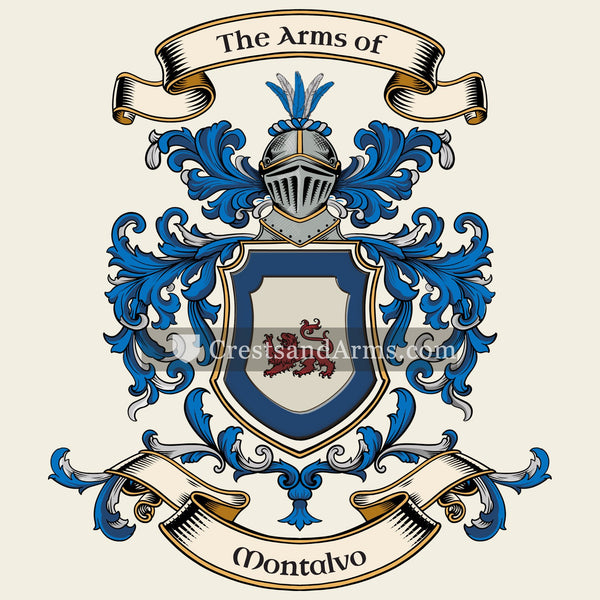
Symbols on this shield
lionCourage, strength and royalty
Colours
Silver (Argent)Means: Peace and sincerity
Blue (Azure)Means: Loyalty and truth
Red (Gules)Means: Military strength
Historical info
Source
J. B. Rietstap, Armorial Général, Gouda: G. B. van Goor Zonen, 1884–87
Blazon (the actual original written record)
“D'arg. au lion de gu., ch. de six fasces d'or; à la bord. d'azur.”
Portugalc. 1706
Digital archive packCoat of arms PNG, gold border print PDF, vector SVG and the certificate of authenticity. Sent to your email in minutes.
Map of Portugal showing where the Montalvo arms are recorded
The Montalvo arms were recorded in Portugal, c. 1706.
Arms such as these were typically recorded in Lisboa.
Lisbon was the seat of the Portuguese crown and the port its wealth came through. Families made rich by trade and by service to the king took arms, and the crown's heralds recorded them there.
This is where the arms were entered in the register. Families often moved to other parts of the country, so the same name can turn up in more than one region.
The body that granted and recorded arms in Portugal in this period.
Peter II of Portugal
Sovereign of the period
Peter II of Portugal
1683–1706
Reigning in Spain when the Montalvo arms are first recorded.
How Arms Worked in Portugal
In Portugal, a coat of arms was a family possession that passed from a father to his children. Every legitimate descendant had the right to use the family shield without needing to change it. Younger branches of the family kept the original design, though they sometimes added small symbols to distinguish their specific line from the main branch.
Granting authority
The Cartório da Nobreza acted as the official body that managed and regulated noble titles and coats of arms in Portugal.
How they got arms
Families typically inherited their arms through bloodline, though they could also receive new grants from the crown for distinguished service.
Where arms were recorded
Coats of arms were officially recorded in the books of the Cartório da Nobreza starting in the year 1512.
The family's standing
Recorded among the armigerous families of Portugal.
Origin & History of the Montalvo Family in Portugal
Pronunciationmon-TAL-voh/monˈtalβo/
The Montalvo name carries a rich history that reflects the social shifts of the Iberian Peninsula during the early eighteenth century. By 1706, members of the family were well-established in Lisboa, where they participated in the vibrant urban life of the Portuguese capital. The name itself is derived from the Spanish words for "high mountain," suggesting that the family’s ancestors likely originated from rugged, elevated regions before migrating toward the coastal influence of Portugal. During this era, families with this surname often integrated into the administrative and merchant classes of the city, taking advantage of the trade routes that connected Lisbon to the wider world. Their presence in the capital during this time indicates that they were part of a growing group of citizens who helped shape the cultural and economic landscape of the country following the restoration of the Portuguese throne.
Montalvo Meaning & Related Branches
Root word
Mons Albus
Latin for white mountain.
This name
MontalvoRefers to a person who lived near or originated from a white-colored mountain.
also spelled
Montalv
Montalvoe
Documented Sources
J. B. Rietstap, Armorial Général, Gouda: G. B. van Goor Zonen, 1884–87
Moll, Francesc de B., Els llinatges catalans, 1959
Pescador del Hoyo, María del Carmen, Apellidos en España, 1997
Archivo Histórico Nacional, Sección Nobleza, Inventario de expedientes de limpieza de sangre
Digital archive packCoat of arms PNG, gold border print PDF, vector SVG and the certificate of authenticity. Sent to your email in minutes.


 eagleNobility, strength and a keen mind
 eagleNobility, strength and a keen mind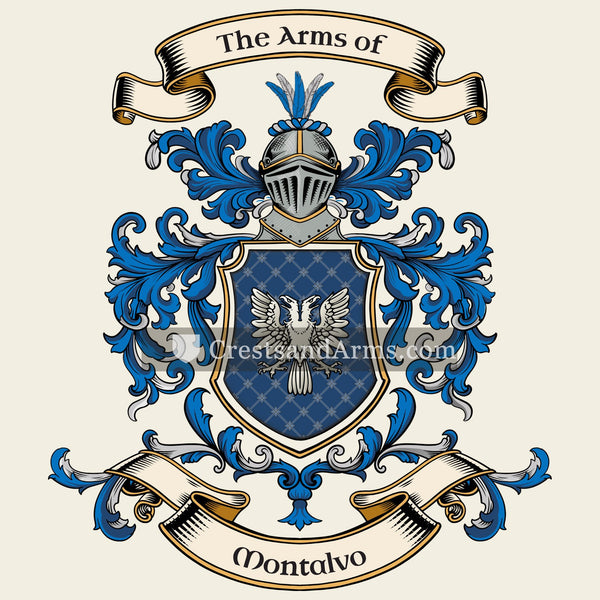


 lionCourage, strength and royalty