Map of Italy showing where the Morante arms are recorded
The Morante arms were recorded in Vérone, c. 1775.
This is where the arms were entered in the register. Families often moved to other parts of the country, so the same name can turn up in more than one region.
The body that granted and recorded arms in Italy in this period.
Alvise Giovanni Mocenigo
Sovereign of the period
Alvise Giovanni Mocenigo
1763–1778
Reigning in Italy when the Morante arms are first recorded.
How Arms Worked in Italy
In the Italian states, coats of arms were often used by noble families to show their status and history. These symbols were passed down through the generations to all legitimate male descendants. Younger branches of a family usually kept the original design but sometimes added small changes to distinguish their specific line from the main branch.
Granting authority
Various local rulers and city governments controlled the use of coats of arms across the different Italian states.
How they got arms
Families often assumed their own arms or received them as official grants from local lords, popes, or city councils.
Where arms were recorded
Arms were recorded in local city archives or private family books rather than in one single national register.
The family's standing
Recorded among the armigerous families of Italy.
Origin & History of the Morante Family in Italy
The Morante family name carries a deep history rooted in the northern regions of Italy, with significant documentation placing members of the lineage in the city of Verona by 1775. During this period, Verona served as a vital cultural and commercial crossroads, and families like the Morantes often integrated themselves into the local administrative and social fabric of the city. The name itself is thought to be a variation of descriptive terms common in the Italian peninsula, potentially linked to geographic markers or personal characteristics that helped distinguish families in a growing urban population. By the late 18th century, the Morante family was well-established within the Veronese community, participating in the daily life of a region that was then navigating the complex political shifts of the Venetian Republic and the approaching Napoleonic era. Their presence in official records from this time suggests a family that held a stable position in society, contributing to the local economy and the historical identity of Verona.
Coat of Arms & Family Crest Details
Symbols on this shield
martletA younger son, who must win his own land
Colours
Gold (Or)Means: Generosity
Black (Sable)Means: Constancy
Historical info
Source
J. B. Rietstap, Armorial Général, Gouda: G. B. van Goor Zonen, 1884–87
Blazon (the actual original written record)
“D'or à trois merlettes de sa.”
BrabantBrabant, c. 1604
Digital archive packCoat of arms PNG, gold border print PDF, vector SVG and the certificate of authenticity. Sent to your email in minutes.
Map of Belgium showing where the Morante arms are recorded
The Morante arms were recorded in Brabant, c. 1604.
Brabant lay at the heart of the Low Countries, where the trade routes met. Its towns were wealthy and its landowners many, and both kinds of family kept arms, which is why the region is so heavily represented.
This is where the arms were entered in the register. Families often moved to other parts of the country, so the same name can turn up in more than one region.
The body that granted and recorded arms in Belgium in this period.
Philip III of Spain
Sovereign of the period
Philip III of Spain
1598–1621
Reigning in Italy when the Morante arms are first recorded.
How Arms Worked in Belgium
In Belgium, a coat of arms is considered personal property that is passed down through the male line to legitimate descendants. Families often use the same shield design across generations to show their shared heritage. If a branch of the family wants to change the design, they must apply for an official update to their specific version of the arms.
Granting authority
The Conseil héraldique is the official body that regulates and approves all coats of arms in Belgium.
How they got arms
Families obtain their coats of arms through formal royal grants or by confirming their historical right to use existing designs.
Where arms were recorded
All approved coats of arms are officially recorded in the public registers of the Conseil héraldique since 1844.
The family's standing
Recorded among the armigerous families of Brabant.
Origin & History of the Morante Family in Belgium
The history of the Morante family in the region of Brabant begins with documented records dating back to 1604. During this period, the Duchy of Brabant served as a major center for trade and cultural exchange within the Southern Netherlands. Families living in this area often navigated the complex political shifts caused by the ongoing conflicts between the Spanish Crown and the local provinces. The presence of the Morante name in these early administrative documents suggests that the family was integrated into the local social fabric of the region. They likely participated in the agricultural or merchant activities that defined the economy of the Brabant countryside. Over time, these early ancestors helped establish the family roots in a landscape shaped by both rural traditions and the influence of nearby growing cities.
Coat of Arms & Family Crest Details
Symbols on this shield
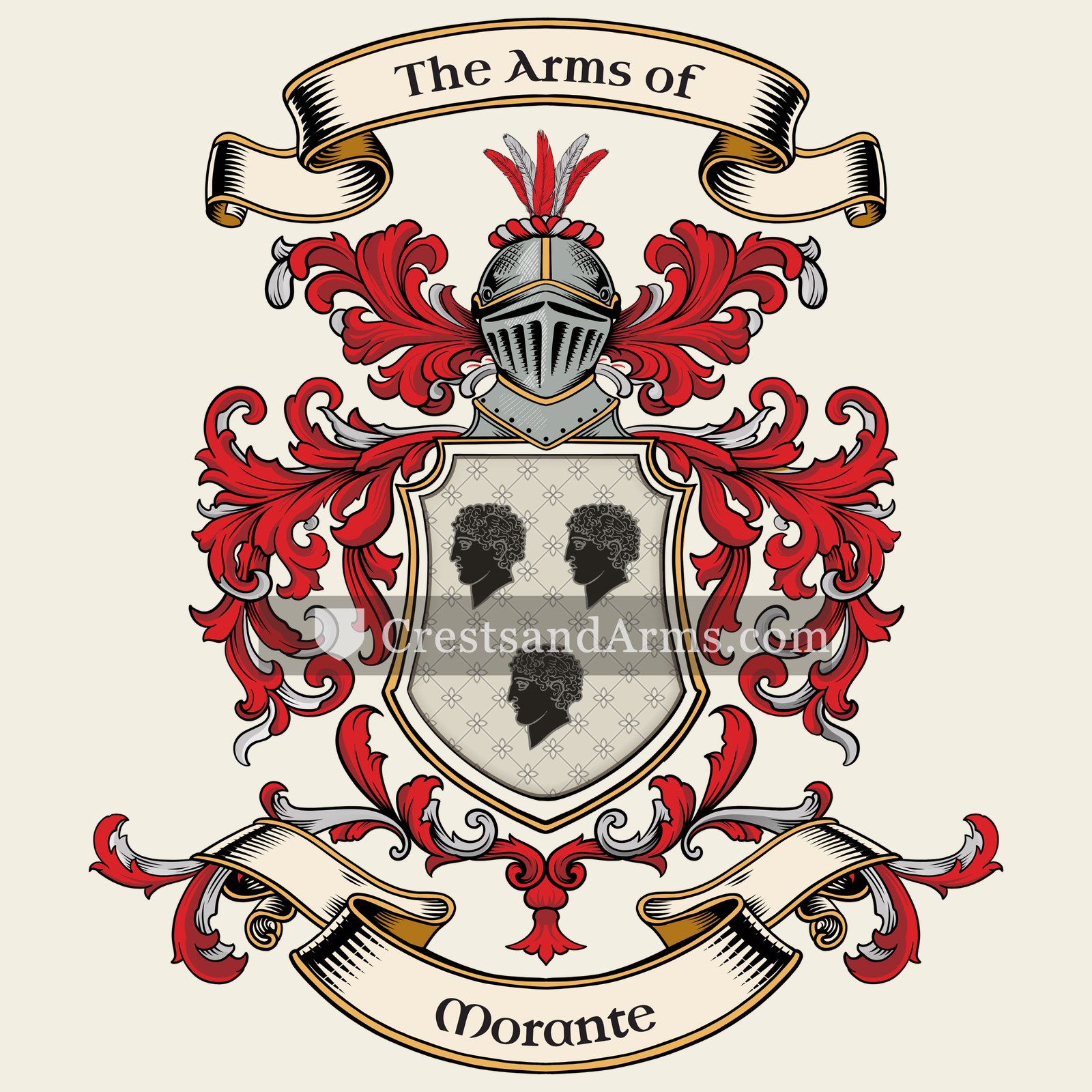
savages head affrontyAn enemy overcome
Colours
Silver (Argent)Means: Peace and sincerity
Black (Sable)Means: Constancy
Historical info
Source
J. B. Rietstap, Armorial Général, Gouda: G. B. van Goor Zonen, 1884–87
Blazon (the actual original written record)
“D'arg. à trois têtes de More, tort. d'arg.”
Francec. 1663
Digital archive packCoat of arms PNG, gold border print PDF, vector SVG and the certificate of authenticity. Sent to your email in minutes.
Map of France showing where the Morante arms are recorded
The Morante arms were recorded in France, c. 1663.
Arms such as these were typically recorded in Bretagne.
More families held coats of arms in Bretagne than anywhere else in France. The land was divided into many small estates rather than a few large ones, so far more households counted as gentry, and each needed a shield of its own to be told apart.
This is where the arms were entered in the register. Families often moved to other parts of the country, so the same name can turn up in more than one region.
The body that granted and recorded arms in France in this period.
Louis XIV of France
Sovereign of the period
Louis XIV of France
1643–1715
Reigning in Italy when the Morante arms are first recorded.
How Arms Worked in France
In France, a coat of arms was a mark of honor that passed down through the male line to all legitimate descendants. Families often used the same shield without changes to show their shared heritage. If a branch wanted to stand out, they could add a small mark to their shield to show their specific place in the family tree.
Granting authority
The Juge d'armes de France acted as the official authority that regulated and verified coats of arms across the country.
How they got arms
Families typically inherited their arms from ancestors, though they could also receive them through royal grants or by proving their noble status.
Where arms were recorded
Coats of arms were officially recorded in the Armorial Général de France, which began its main collection in the year 1696.
The family's standing
Recorded among the armigerous families of France.
Origin & History of the Morante Family in France
The family name Morante traces its roots in France to the historic province of Bretagne, where records confirm the presence of family members by the year 1663. During this period, the region was a distinct cultural hub characterized by its unique maritime traditions and strong local identity. Families living in Bretagne at that time often relied on the land or the sea for their livelihood, and the name likely emerged as a way to distinguish specific households within these tight-knit rural communities. As the family established itself in the region, they became part of the social fabric of western France, navigating the complex political and religious changes that defined the seventeenth century. By settling in this area, the early Morante ancestors contributed to the long-standing history of a province known for its resilience and deep connection to its ancestral heritage.
Related Branches & Arms
Root word
Mora
Derived from the Latin word for mulberry tree or dark-colored fruit.
This name
MoranteRefers to someone who lived near a mulberry tree or possessed dark features.
also spelled
Morrand
Morante
Moranth
Moront
Documented Sources
J. B. Rietstap, Armorial Général, Gouda: G. B. van Goor Zonen, 1884–87
Archivio di Stato di Verona, Anagrafe storica della città di Verona
Cappelletti, Giuseppe, Storia della città di Verona, 1854
Dal Pozzo, Bartolomeo, Le vite de' pittori, de gli scultori, et architetti veronesi, 1718
Digital archive packCoat of arms PNG, gold border print PDF, vector SVG and the certificate of authenticity. Sent to your email in minutes.


 treeLife, endurance and deep roots
 roseThe seventh son, and beauty with grace
 treeLife, endurance and deep roots
 roseThe seventh son, and beauty with grace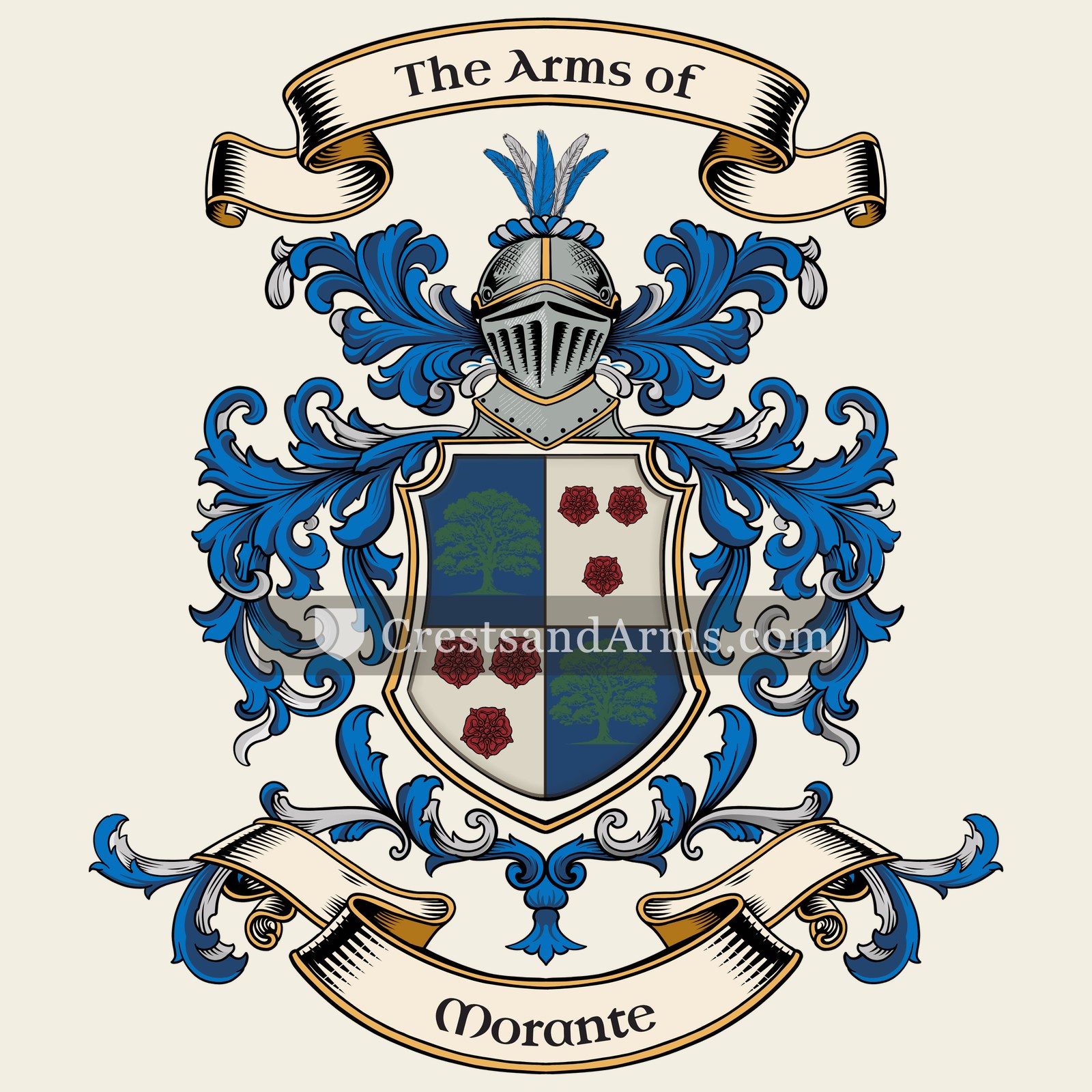


 martletA younger son, who must win his own land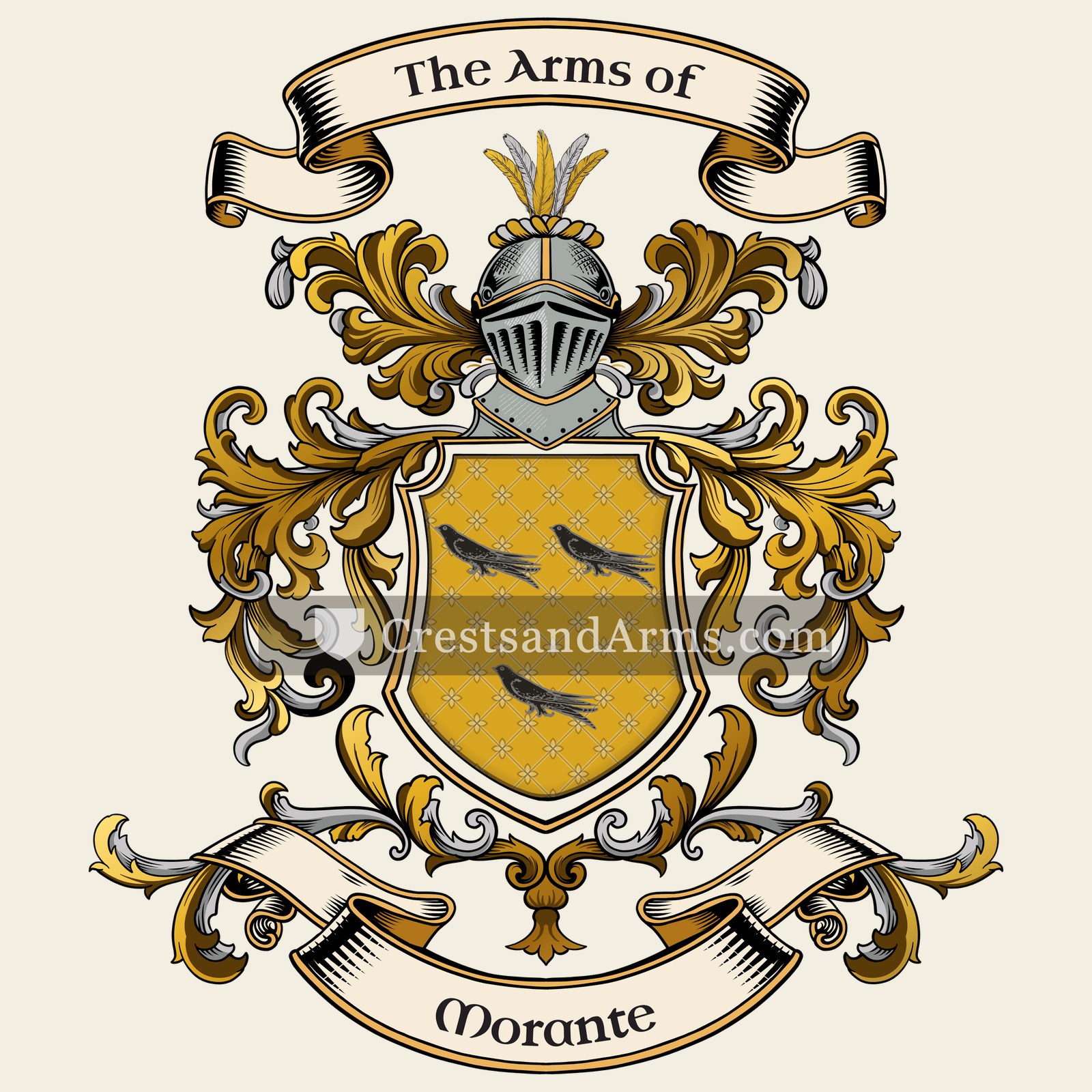


 savages head affrontyAn enemy overcome