Map of Wales showing where the Morris arms are recorded
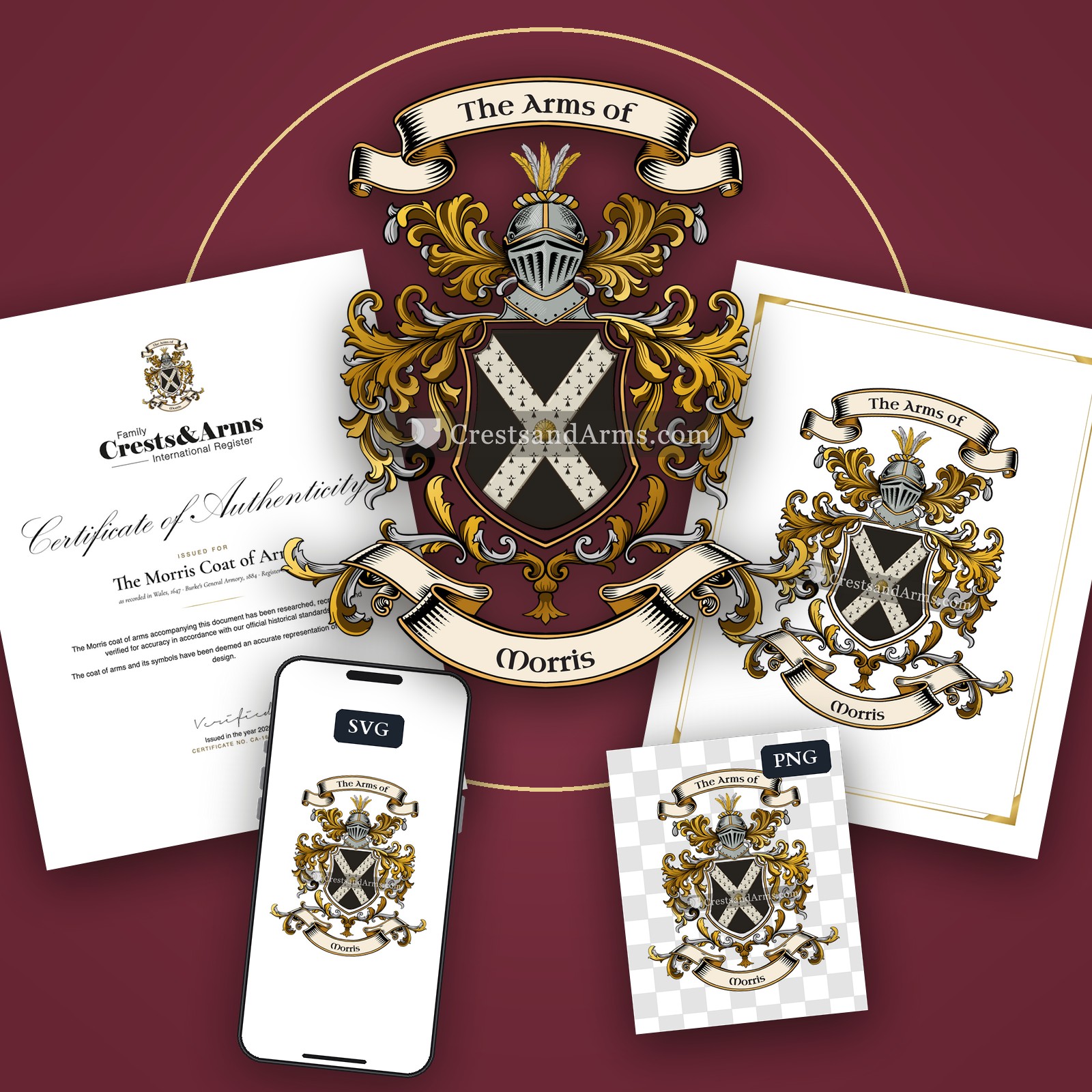
The Morris arms were recorded in Glamorgan, c. 1647.
Glamorgan was the richest part of Wales, with good coastal farmland and Norman castles along it. The families who held those castles kept their land for centuries, and long holding brought recorded arms.
This is where the arms were entered in the register. Families often moved to other parts of the country, so the same name can turn up in more than one region.
The body that granted and recorded arms in Wales in this period.
Charles I of England
Sovereign of the period
Charles I of England
1625–1649
Reigning in Wales when the Morris arms are first recorded.
How Arms Worked in Wales
English heraldry allowed arms to be shared by all legitimate descendants of the original owner. These symbols were treated as personal property that moved through the generations to all children. While the eldest son kept the original design, other family members could use the same shield without needing to change it or register their own unique versions.
Granting authority
The College of Arms in London has regulated the use of coats of arms throughout England and Wales since 1484.
How they got arms
Families typically obtained their coats of arms through a formal grant from the Crown or by proving their ancient right to them.
Where arms were recorded
All official coats of arms are recorded in the registers kept at the College of Arms, which date back to the fifteenth century.
The family's standing
Recorded among the armigerous families of Glamorgan.
Origin & History of the Morris Family in Wales
The surname Morris has deep roots in the Welsh landscape, evolving from the personal name Meurig, which was a popular choice among the Welsh nobility and common people alike. By the time the name became established in Glamorgan during the mid-17th century, it had transitioned from a first name into a hereditary surname as families began to adopt fixed last names to meet the administrative needs of the time. In 1647, the presence of the Morris family in Glamorgan placed them within a region undergoing significant social and economic shifts during the English Civil War. During this era, families with this name were often integrated into the local agricultural or merchant classes, contributing to the distinct cultural identity of South Wales. As the name spread, it reflected the linguistic transition from the traditional Welsh patronymic system, where children took their father’s first name, to the modern system of permanent family surnames that we recognize today.
Coat of Arms & Family Crest Details
Symbols on this shield
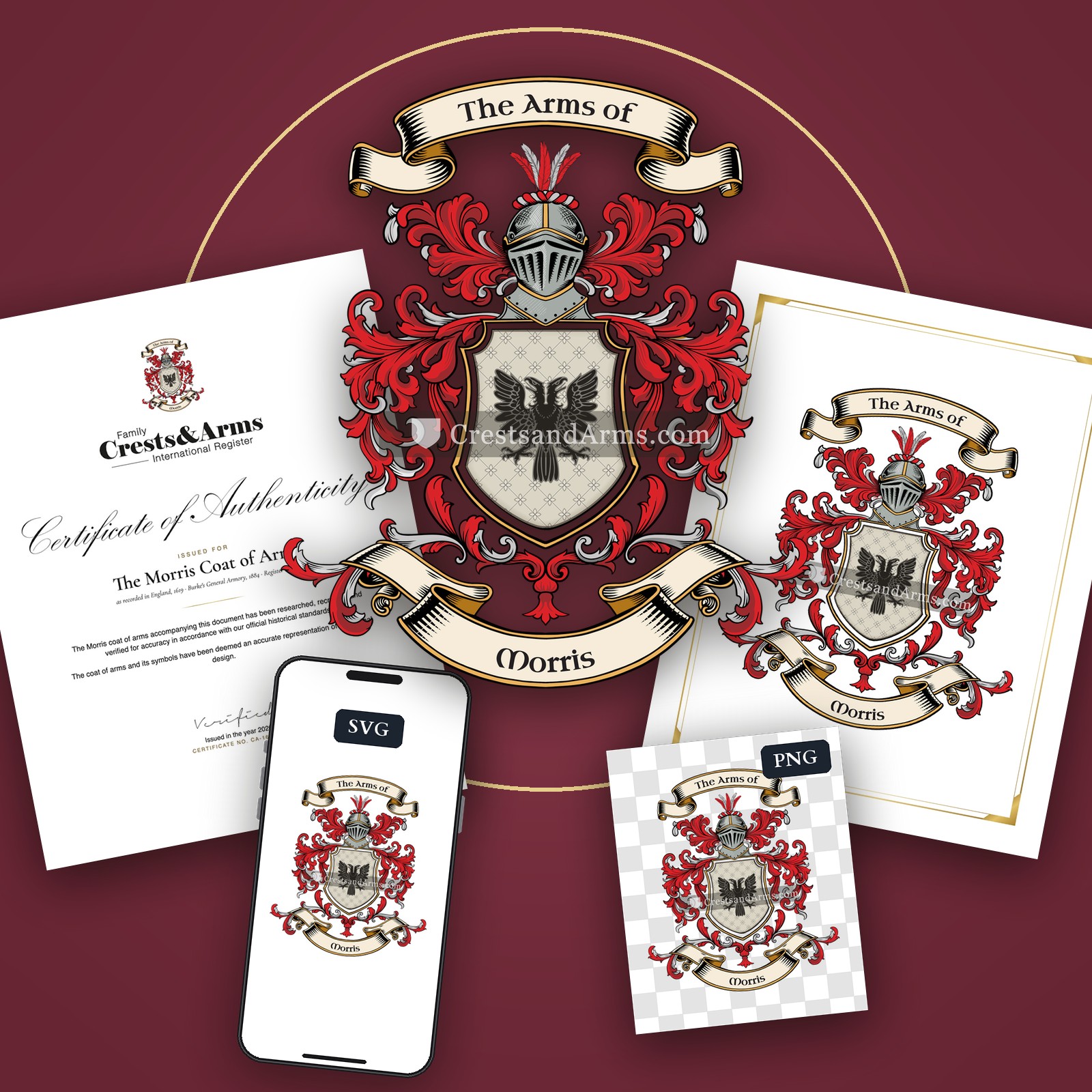
eagleNobility, strength and a keen mind
Colours
Silver (Argent)Means: Peace and sincerity
Black (Sable)Means: Constancy
Historical info
Source
Sir Bernard Burke, The General Armory of England, Scotland, Ireland and Wales, London: Harrison & Sons, 1884
Blazon (the actual original written record)
“Ar. an eagle displ. sa. beaked and legged or”
Englandc. 1619
Digital archive packCoat of arms PNG, gold border print PDF, vector SVG and the certificate of authenticity. Sent to your email in minutes.
Map of England showing where the Morris arms are recorded
The Morris arms were recorded in England, c. 1619.
Arms such as these were typically recorded in York.
Yorkshire is the largest of the English counties, and it held more gentry families than any other. Land there was split among a great many households rather than a few, so a great many of them carried arms.
This is where the arms were entered in the register. Families often moved to other parts of the country, so the same name can turn up in more than one region.
The body that granted and recorded arms in England in this period.
James VI and I
Sovereign of the period
James VI and I
1603–1625
Reigning in Wales when the Morris arms are first recorded.
How Arms Worked in England
English heraldry allowed arms to be shared by all legitimate descendants of the original owner. These symbols were treated as personal property that moved through the generations to all children. While the eldest son kept the original design, other family members could use the same shield without needing to change it or register their own unique versions.
Granting authority
The College of Arms in London has regulated the use of coats of arms throughout England and Wales since 1484.
How they got arms
Families typically obtained their coats of arms through a formal grant from the Crown or by proving their ancient right to them.
Where arms were recorded
All official coats of arms are recorded in the registers kept at the College of Arms, which date back to the fifteenth century.
The family's standing
Recorded among the armigerous families of England.
Origin & History of the Morris Family in England
The name Morris has deep roots in England, evolving from the personal name Maurice, which was brought to the British Isles following the Norman Conquest. Over several centuries, this name transitioned from a given name into a hereditary surname as families began to adopt fixed identifiers for tax and legal purposes. By the early 17th century, the name was well-established across various regions, including the historic city of York. Records confirm that members of the Morris family were living in York by 1619, a time when the city served as a vital northern center for trade and administration. These early ancestors were part of a society that was shifting from medieval traditions toward the modern era, and their presence in city records suggests they were active participants in the local community life of the Stuart period.
Coat of Arms & Family Crest Details
Symbols on this shield
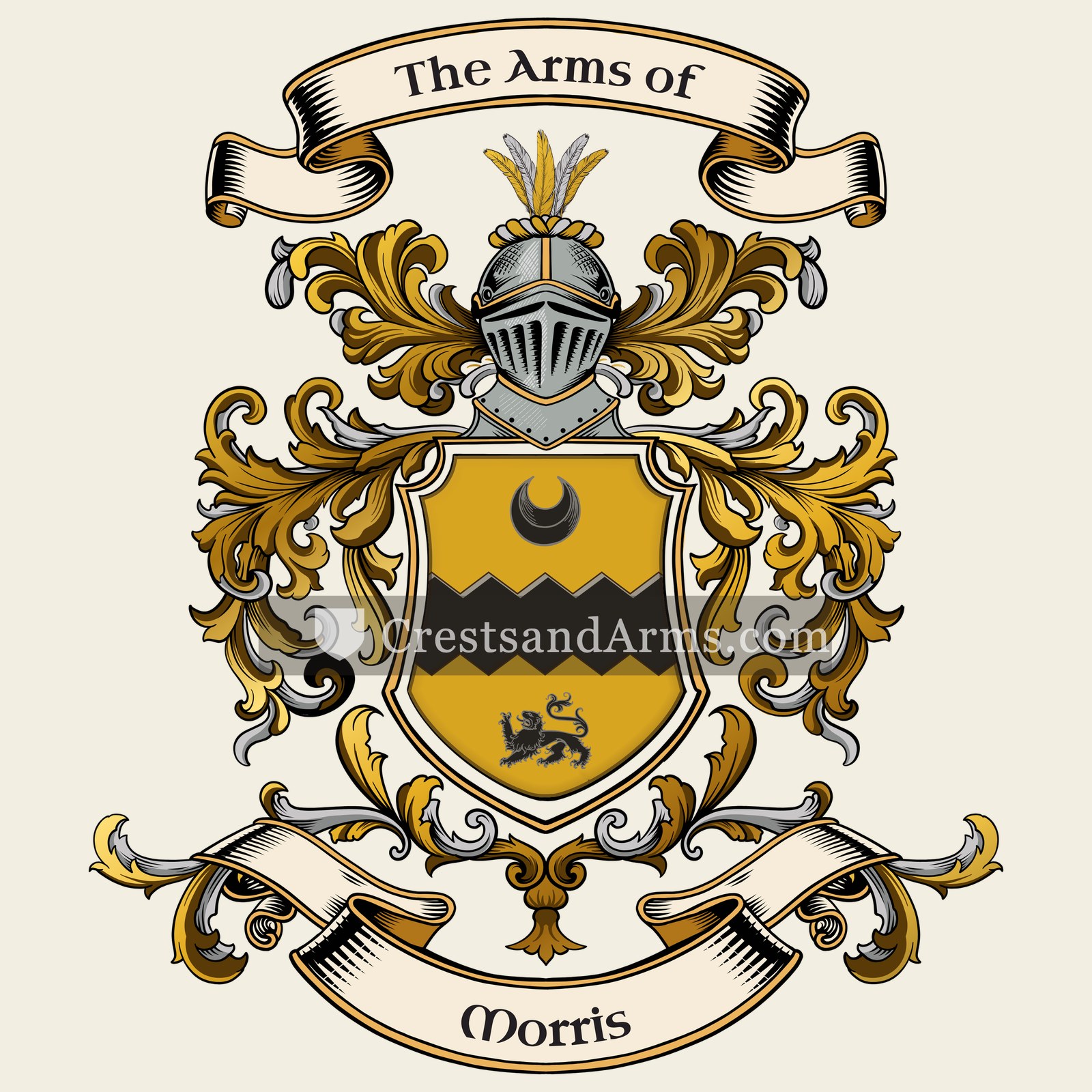
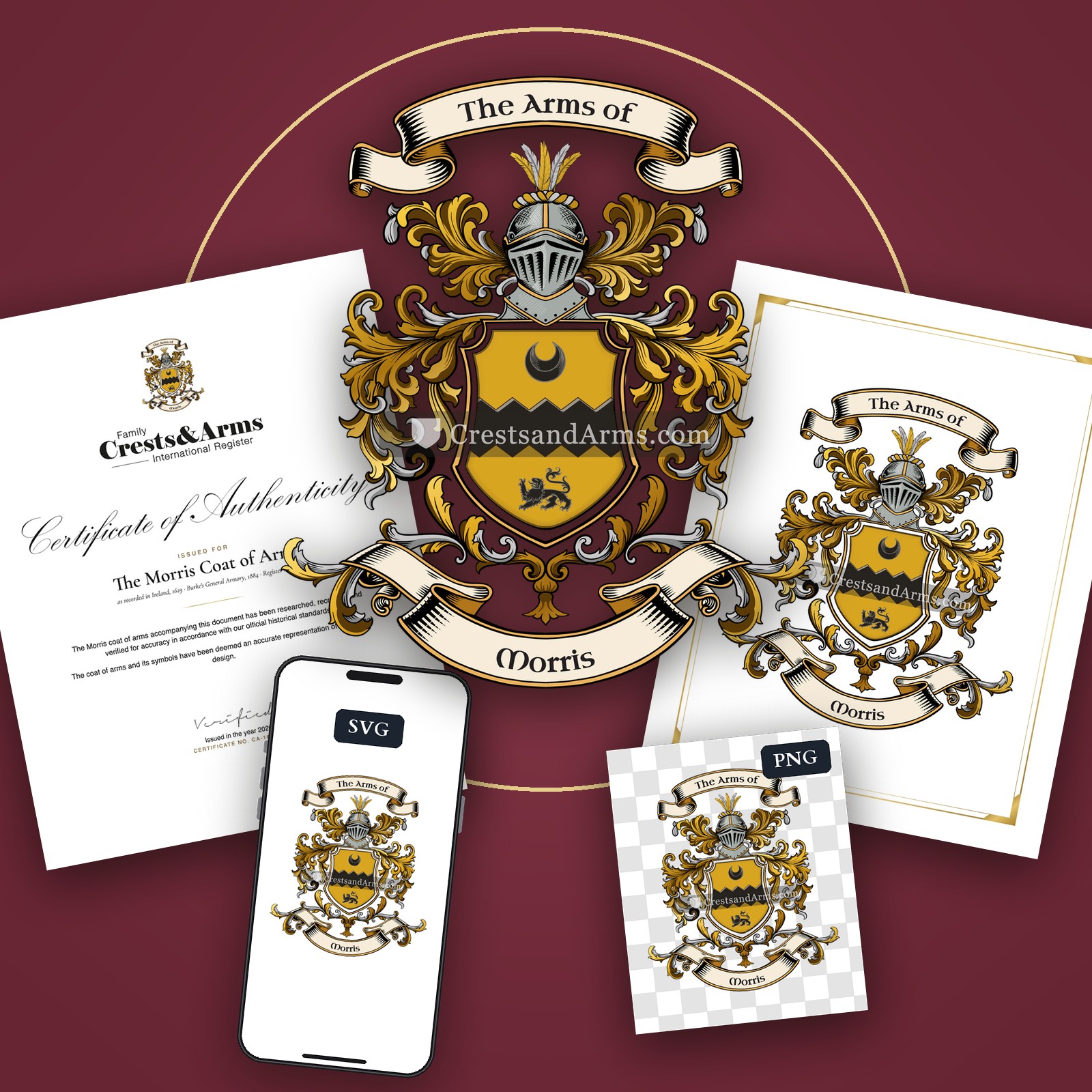
fessThe military belt, and readiness to serve
crescentHonour by the sovereign, and the second son
lionCourage, strength and royalty
Colours
Gold (Or)Means: Generosity
Black (Sable)Means: Constancy
Historical info
Source
Sir Bernard Burke, The General Armory of England, Scotland, Ireland and Wales, London: Harrison & Sons, 1884
Blazon (the actual original written record)
“Or, a fesse dancetté betw. in chief a crescent and in base a lion ramp. sa”
TipperaryTemplemore · Tipperary, c. 1629
Digital archive packCoat of arms PNG, gold border print PDF, vector SVG and the certificate of authenticity. Sent to your email in minutes.
Map of Ireland showing where the Morris arms are recorded
The Morris arms were recorded in Tipperary, c. 1629.
Tipperary was the best grazing land in Ireland, held by a small number of powerful families. Land of that value stayed in the same hands, and unbroken holding is what puts a name in the records.
This is where the arms were entered in the register. Families often moved to other parts of the country, so the same name can turn up in more than one region.
The body that granted and recorded arms in Ireland in this period.
Charles I of England
Sovereign of the period
Charles I of England
1625–1649
Reigning in Wales when the Morris arms are first recorded.
How Arms Worked in Ireland
The Ulster King of Arms granted coats of arms to individuals who proved their social standing and good character. These symbols were typically inherited by all legitimate descendants of the original holder. If a family branch wanted a unique look, they could apply for a specific change to their design through the office to ensure their identity remained distinct.
Granting authority
The Ulster King of Arms acted as the official body that regulated and issued all coats of arms throughout Ireland.
How they got arms
Families obtained their arms through formal grants issued by the office after proving their eligibility and paying the required fees.
Where arms were recorded
All official grants were recorded in the registers held by the Ulster King of Arms starting from the year 1552.
The family's standing
Recorded among the armigerous families of Tipperary.
Origin & History of the Morris Family in Ireland
The history of the Morris name in Ireland is deeply connected to the complex social shifts of the seventeenth century. While the name itself has roots in the Norman-French name Maurice, it became firmly established in the Irish landscape through centuries of settlement and integration. By 1629, records confirm that members of the Morris family were well-settled in County Tipperary. During this period, the family lived through a time of significant land transition and political upheaval as the English administration sought to solidify control over Irish territories. Families like the Morrises often held positions as landowners or local administrators, which helped them maintain a stable presence in the region despite the frequent conflicts of the era. Over time, the name became a permanent part of the local identity in Tipperary, blending the influence of their Norman origins with the unique cultural environment of rural Ireland.
Morris Meaning & Related Branches
Root word
Mauritius
Derived from the Latin word for a person from Mauretania or dark-skinned.
This name
MorrisA surname of Welsh origin meaning son of Maurice, signifying a dark-skinned or swarthy individual.
also spelled
Morrice
Morries
Morres
Morys
Related arms
Morresvariant spelling
Morricevariant spelling
Morries, or Morrysvariant spelling
Morysvariant spelling
Documented Sources
Sir Bernard Burke, The General Armory of England, Scotland, Ireland and Wales, London: Harrison & Sons, 1884
Morgan, T. J. and Morgan, Prys, Welsh Surnames, 1985
National Library of Wales, Glamorgan Quarter Sessions Records, 1647
Rowlands, John and Rowlands, Sheila, The Surnames of Wales, 1996
Digital archive packCoat of arms PNG, gold border print PDF, vector SVG and the certificate of authenticity. Sent to your email in minutes.


 saltireResolution, and St Andrew's cross
 roundelA coin, and one who has been to the crusades
 saltireResolution, and St Andrew's cross
 roundelA coin, and one who has been to the crusades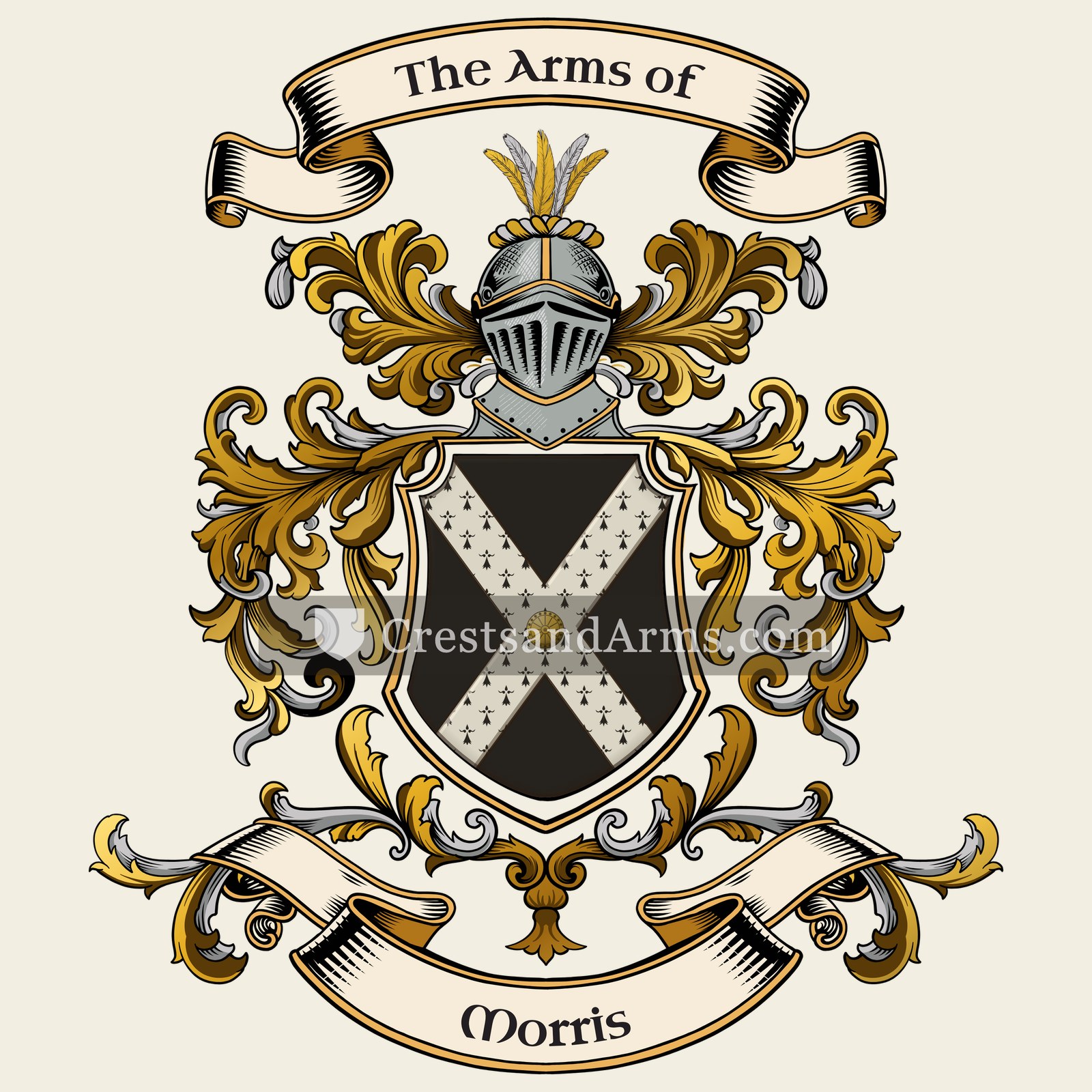


 eagleNobility, strength and a keen mind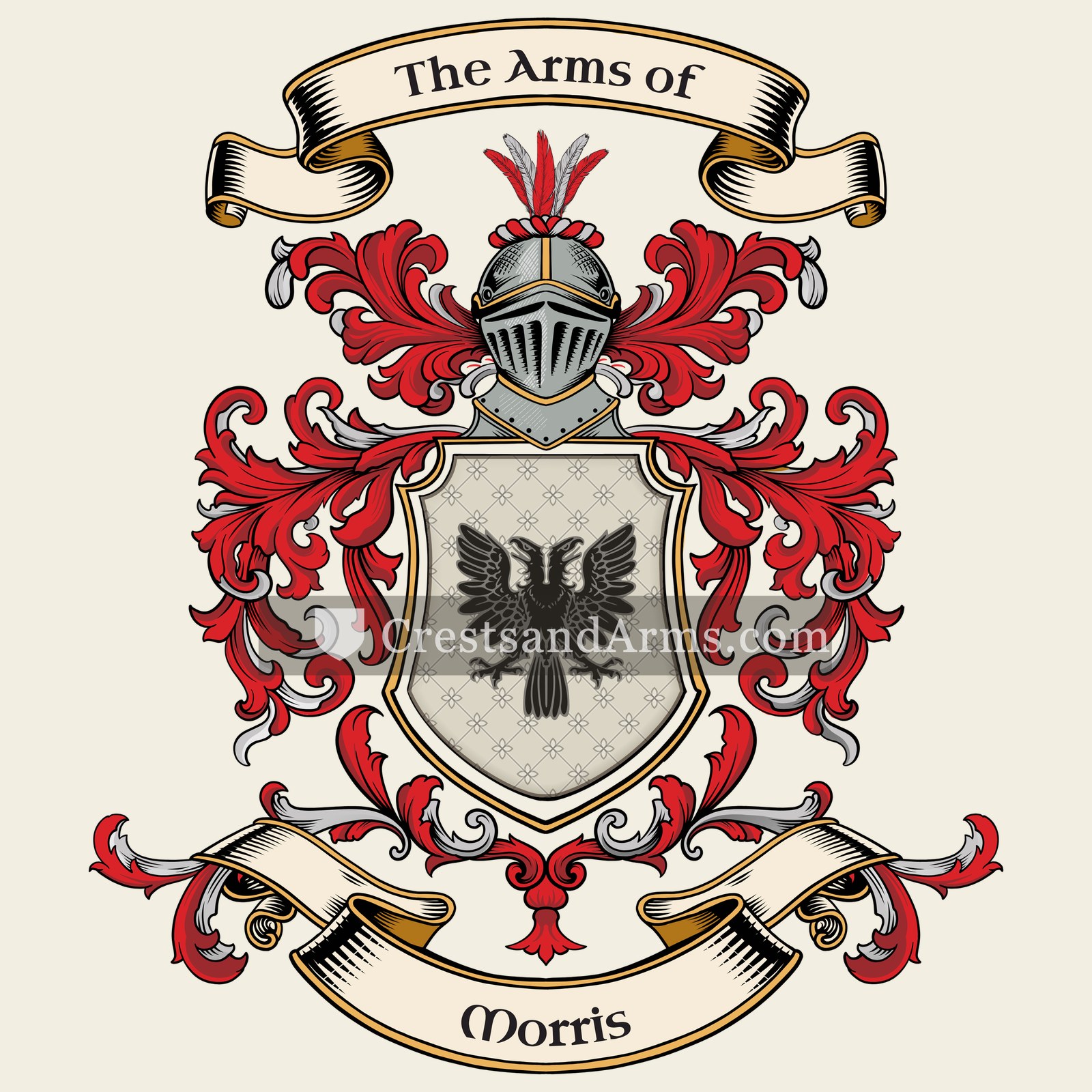

 fessThe military belt, and readiness to serve
 crescentHonour by the sovereign, and the second son
 lionCourage, strength and royalty