Map of Portugal showing where the Morua arms are recorded
The Morua arms were recorded in Portugal, c. 1706.
Arms such as these were typically recorded in Lisboa.
Lisbon was the seat of the Portuguese crown and the port its wealth came through. Families made rich by trade and by service to the king took arms, and the crown's heralds recorded them there.
This is where the arms were entered in the register. Families often moved to other parts of the country, so the same name can turn up in more than one region.
The body that granted and recorded arms in Portugal in this period.
Peter II of Portugal
Sovereign of the period
Peter II of Portugal
1683–1706
Reigning in Portugal when the Morua arms are first recorded.
How Arms Worked in Portugal
In Portugal, a coat of arms was a family possession that passed from a father to his children. Every legitimate descendant had the right to use the family shield without needing to change it. Younger branches of the family kept the original design, though they sometimes added small symbols to distinguish their specific line from the main branch.
Granting authority
The Cartório da Nobreza acted as the official body that managed and regulated noble titles and coats of arms in Portugal.
How they got arms
Families typically inherited their arms through bloodline, though they could also receive new grants from the crown for distinguished service.
Where arms were recorded
Coats of arms were officially recorded in the books of the Cartório da Nobreza starting in the year 1512.
The family's standing
Recorded among the armigerous families of Portugal.
Origin & History of the Morua Family in Portugal
The family name Morua traces its early roots in Portugal to the vibrant urban landscape of Lisbon during the dawn of the eighteenth century. By 1706, members of the family were firmly established within the capital city, a time when Lisbon was a bustling center of trade and intellectual exchange following the restoration of the Portuguese throne. Families like the Moruas often integrated into the social fabric of the city by participating in the local parish life and the growing mercantile economy that defined the era. Because Lisbon served as the primary gateway for both domestic migration and international commerce, the family likely benefited from the city's role as a hub for administrative and professional opportunities. Their presence in the capital during this period suggests that they were part of the steady growth of the urban middle class, contributing to the daily life and development of a city that was rapidly rebuilding its influence on the global stage.
Meaning of the Morua family crest colors & symbols
Symbols on this shield
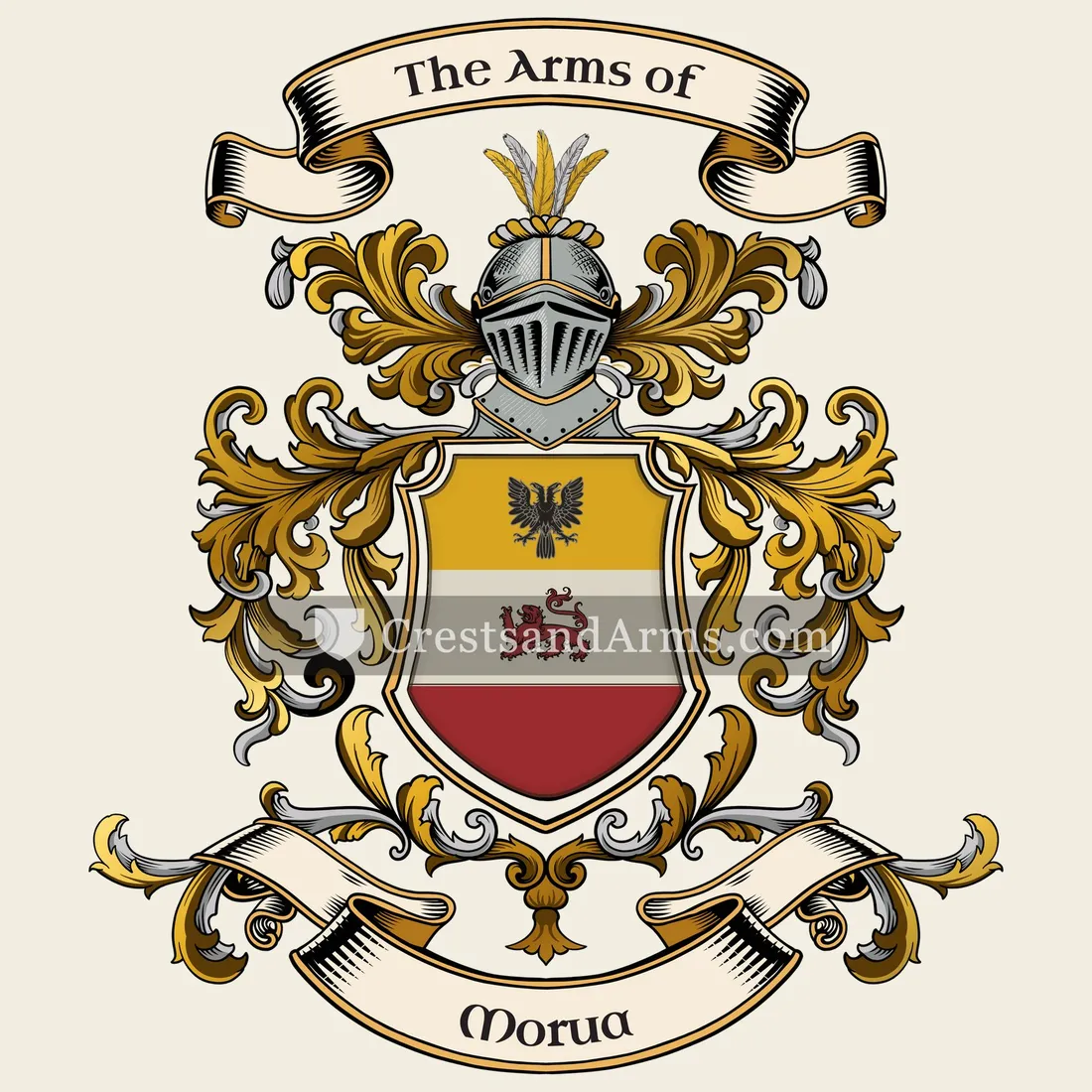
bendDefence, and the scarf of a commander
eagleNobility, strength and a keen mind
lionCourage, strength and royalty
Colours
Gold (Or)Means: Generosity
Silver (Argent)Means: Peace and sincerity
Red (Gules)Means: Military strength
Black (Sable)Means: Constancy
Historical info
Source
J. B. Rietstap, Armorial Général, Gouda: G. B. van Goor Zonen, 1884–87
Blazon (the actual original written record)
“Tiercé en fasce: au 1 d'or à l'aigle ép. de sa., chaque tête cour. du champ; au 2 d'arg. au lion léopardé de gu., tenant de sa patte dextre trois roses du même; au 3 bandé de gu. et d'arg.”
VeniceVenice, c. 1775
Digital archive packCoat of arms PNG, gold border print PDF, vector SVG and the certificate of authenticity. Sent to your email in minutes.
Map of Italy showing where the Morua arms are recorded
The Morua arms were recorded in Venice, c. 1775.
Venice ran on trade, and its great families were merchants before they were anything else. The city kept a formal list of its noble houses, and a name on that list carried arms as a matter of record.
This is where the arms were entered in the register. Families often moved to other parts of the country, so the same name can turn up in more than one region.
The body that granted and recorded arms in Italy in this period.
Alvise Giovanni Mocenigo
Sovereign of the period
Alvise Giovanni Mocenigo
1763–1778
Reigning in Portugal when the Morua arms are first recorded.
How Arms Worked in Italy
In the Italian states, coats of arms were often used by noble families to show their status and history. These symbols were passed down through the generations to all legitimate male descendants. Younger branches of a family usually kept the original design but sometimes added small changes to distinguish their specific line from the main branch.
Granting authority
Various local rulers and city governments controlled the use of coats of arms across the different Italian states.
How they got arms
Families often assumed their own arms or received them as official grants from local lords, popes, or city councils.
Where arms were recorded
Arms were recorded in local city archives or private family books rather than in one single national register.
The family's standing
Recorded among the armigerous families of Venice.
Origin & History of the Morua Family in Italy
The Morua family name has roots that trace back to the vibrant maritime culture of Venice during the late eighteenth century. By 1775, records indicate that members of the family were established residents of this influential city, which served as a major hub for trade and diplomacy between Europe and the East. During this period, Venice was a center for skilled artisans and merchants who navigated the complex social structures of the Venetian Republic. The presence of the Morua name in such a significant urban environment suggests that the family was likely integrated into the professional or commercial life of the city. As Venice underwent political shifts toward the end of the century, families like the Moruas were part of the fabric of a society defined by its unique geography and long history of international exchange. Their early history reflects the broader movement of people who contributed to the economic and social stability of the Italian peninsula during the Enlightenment era.
Meaning of the Morua family crest colors & symbols
Symbols on this shield
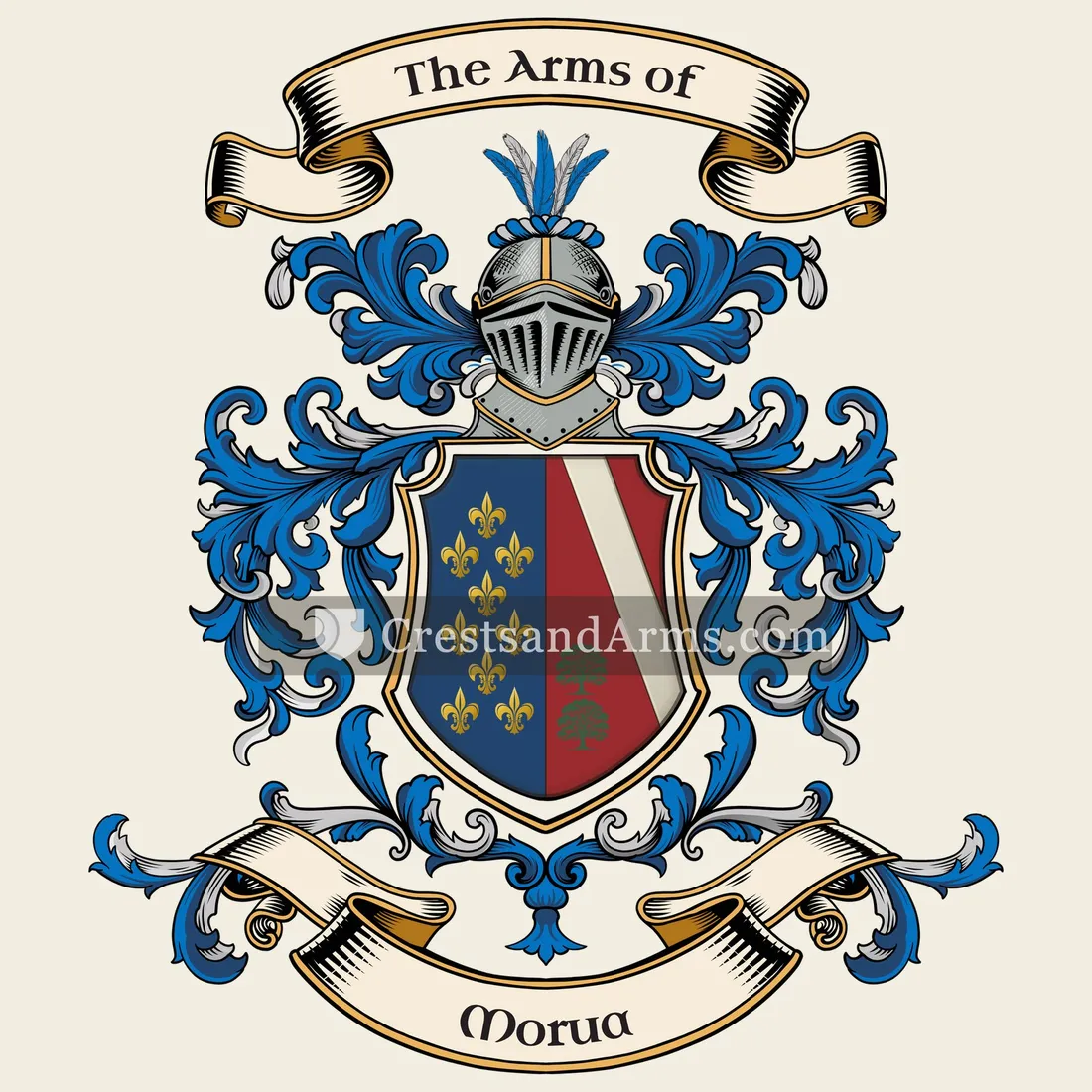
bendDefence, and the scarf of a commander
treeLife, endurance and deep roots
fleur de lisPurity, light, and the sixth son
Colours
Blue (Azure)Means: Loyalty and truth
Red (Gules)Means: Military strength
Silver (Argent)Means: Peace and sincerity
Green (Vert)Means: Hope
Gold (Or)Means: Generosity
Historical info
Source
J. B. Rietstap, Armorial Général, Gouda: G. B. van Goor Zonen, 1884–87
Blazon (the actual original written record)
“Parti: au 1 d'azur à neuf fleurs-de-lis d'or, 1, 2, 1, 2, 1 et 2; au 2 éc.: a. et d. de gu. à la bande d'arg., ch. de trois panelles de sa., posées dans le sens de la bande, les tiges en haut; b. et c. d'or à un arbre arr. de sin.”
SpainAsturies, c. 1722
Digital archive packCoat of arms PNG, gold border print PDF, vector SVG and the certificate of authenticity. Sent to your email in minutes.
Map of Spain showing where the Morua arms are recorded
The Morua arms were recorded in Asturies, c. 1722.
This is where the arms were entered in the register. Families often moved to other parts of the country, so the same name can turn up in more than one region.
The body that granted and recorded arms in Spain in this period.
Philip V of Spain
Sovereign of the period
Philip V of Spain
1714–1724
Reigning in Portugal when the Morua arms are first recorded.
How Arms Worked in Spain
In Spain, a coat of arms was considered a form of property that belonged to the entire family line. These arms were passed down from a father to all his children equally. Younger branches of the family usually kept the original design without needing to add any special marks to distinguish their specific line.
Granting authority
The Cronista Rey de Armas was the official body that regulated and granted coats of arms throughout Spain.
How they got arms
Families often obtained their arms through royal grants or by proving their noble status to the official heraldic authority.
Where arms were recorded
Coats of arms were officially recorded in the registers of the Cronista Rey de Armas starting in 1496.
The family's standing
Recorded among the armigerous families of Spain.
Origin & History of the Morua Family in Spain
The history of the Morua family in Spain is deeply rooted in the rugged landscape of Asturias, a region known for its mountainous terrain and strong local traditions. By the early 18th century, the family had established a clear presence in this northern territory, which served as a historic stronghold for many ancient lineages. During this period, life in Asturias was defined by small rural communities and a focus on land ownership and local governance. Families like the Moruas often played active roles in these village structures, contributing to the agricultural and social development of their parishes. Because Asturias remained somewhat isolated from the rest of the country due to its geography, the family likely maintained close ties to their ancestral lands for generations. This early history reflects a pattern of stability and community involvement that characterized many families living in the northern provinces during the 1700s.
Morua Meaning & Related Branches
Root word
Mouro
Derived from the Latin word maurus meaning dark or Moorish.
This name
MoruaA topographic or habitational name referring to someone who lived near or originated from Moorish-influenced regions.
also spelled
Morra
Morah
Morae
Documented Sources
J. B. Rietstap, Armorial Général, Gouda: G. B. van Goor Zonen, 1884–87
Arquivo Nacional da Torre do Tombo, Registros Paroquiais de Lisboa, 1706
Lisboa, João Augusto, A História de Lisboa no Século XVIII, 1995
Oliveira, César, História dos Municípios e do Poder Local em Portugal, 1996
Digital archive packCoat of arms PNG, gold border print PDF, vector SVG and the certificate of authenticity. Sent to your email in minutes.


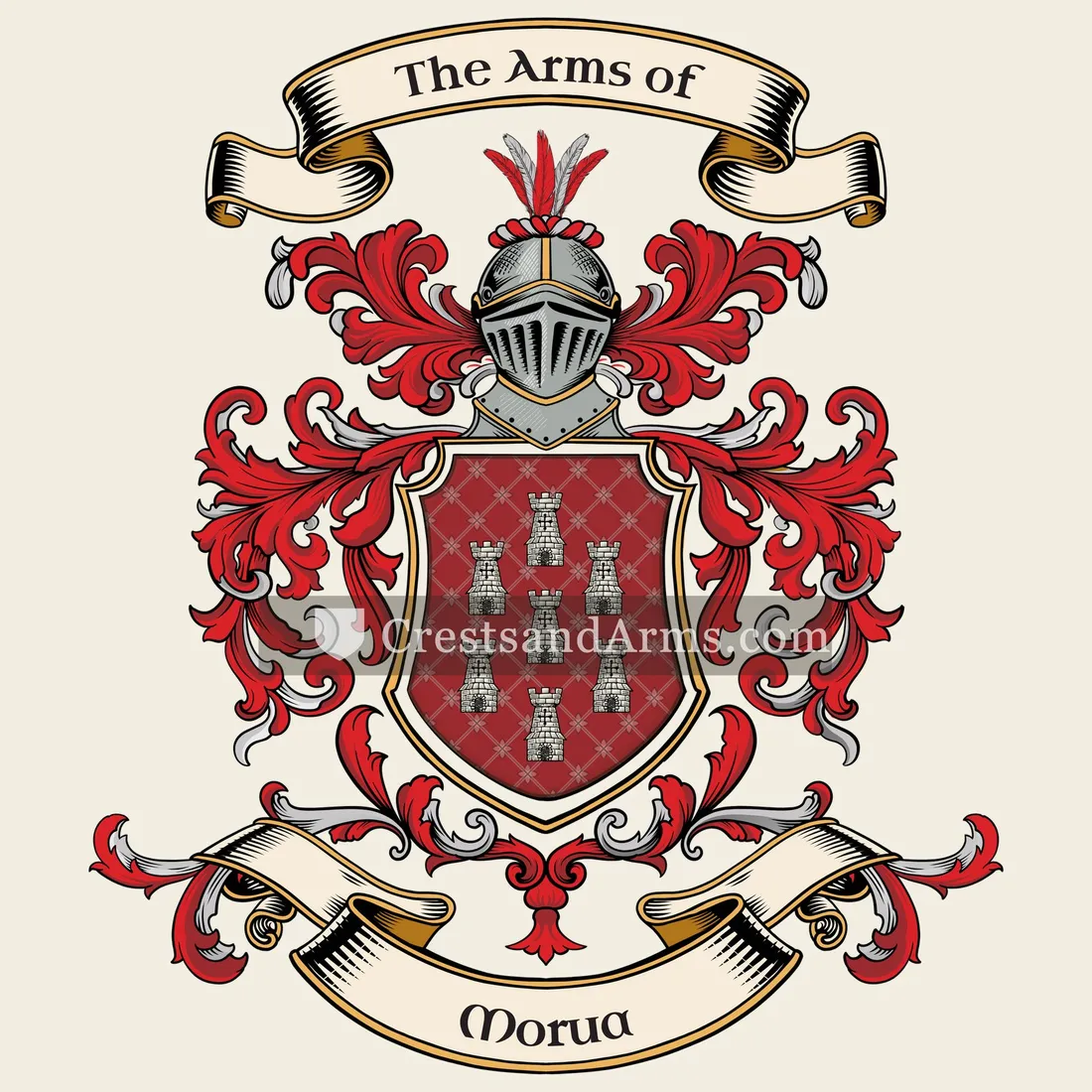
 towerGrandeur and solidity, and a stronghold defended
 towerGrandeur and solidity, and a stronghold defended


 bendDefence, and the scarf of a commander
 eagleNobility, strength and a keen mind
 lionCourage, strength and royalty


 treeLife, endurance and deep roots
 fleur de lisPurity, light, and the sixth son