Map of Belgium showing where the Moton arms are recorded
The Moton arms were recorded in Belgium, c. 1737.
Arms such as these were typically recorded in Brabant.
Brabant lay at the heart of the Low Countries, where the trade routes met. Its towns were wealthy and its landowners many, and both kinds of family kept arms, which is why the region is so heavily represented.
This is where the arms were entered in the register. Families often moved to other parts of the country, so the same name can turn up in more than one region.
The body that granted and recorded arms in Belgium in this period.
Charles VI, Holy Roman Emperor
Sovereign of the period
Charles VI, Holy Roman Emperor
1711–1740
Reigning in Belgium when the Moton arms are first recorded.
How Arms Worked in Belgium
In Belgium, a coat of arms is considered personal property that is passed down through the male line to legitimate descendants. Families often use the same shield design across generations to show their shared heritage. If a branch of the family wants to change the design, they must apply for an official update to their specific version of the arms.
Granting authority
The Conseil héraldique is the official body that regulates and approves all coats of arms in Belgium.
How they got arms
Families obtain their coats of arms through formal royal grants or by confirming their historical right to use existing designs.
Where arms were recorded
All approved coats of arms are officially recorded in the public registers of the Conseil héraldique since 1844.
The family's standing
Recorded among the armigerous families of Belgium.
Origin & History of the Moton Family in Belgium
The history of the Moton family in Belgium is rooted in the historical region of Brabant, where records confirm their presence as early as 1737. During the eighteenth century, Brabant was a center of agricultural and artisanal activity under the rule of the Austrian Netherlands. Families like the Motons were often part of the local social fabric, living in small rural communities or growing towns where they contributed to the regional economy. The name likely evolved from local dialects or occupational descriptions common to the Low Countries at the time. By settling in this area, the family became part of a long tradition of residents who navigated the complex political and social changes of the region. Their presence in the historical record suggests they were established members of the community who participated in the daily life and administrative systems of the era.
Meaning of the Moton family crest colors & symbols
Symbols on this shield
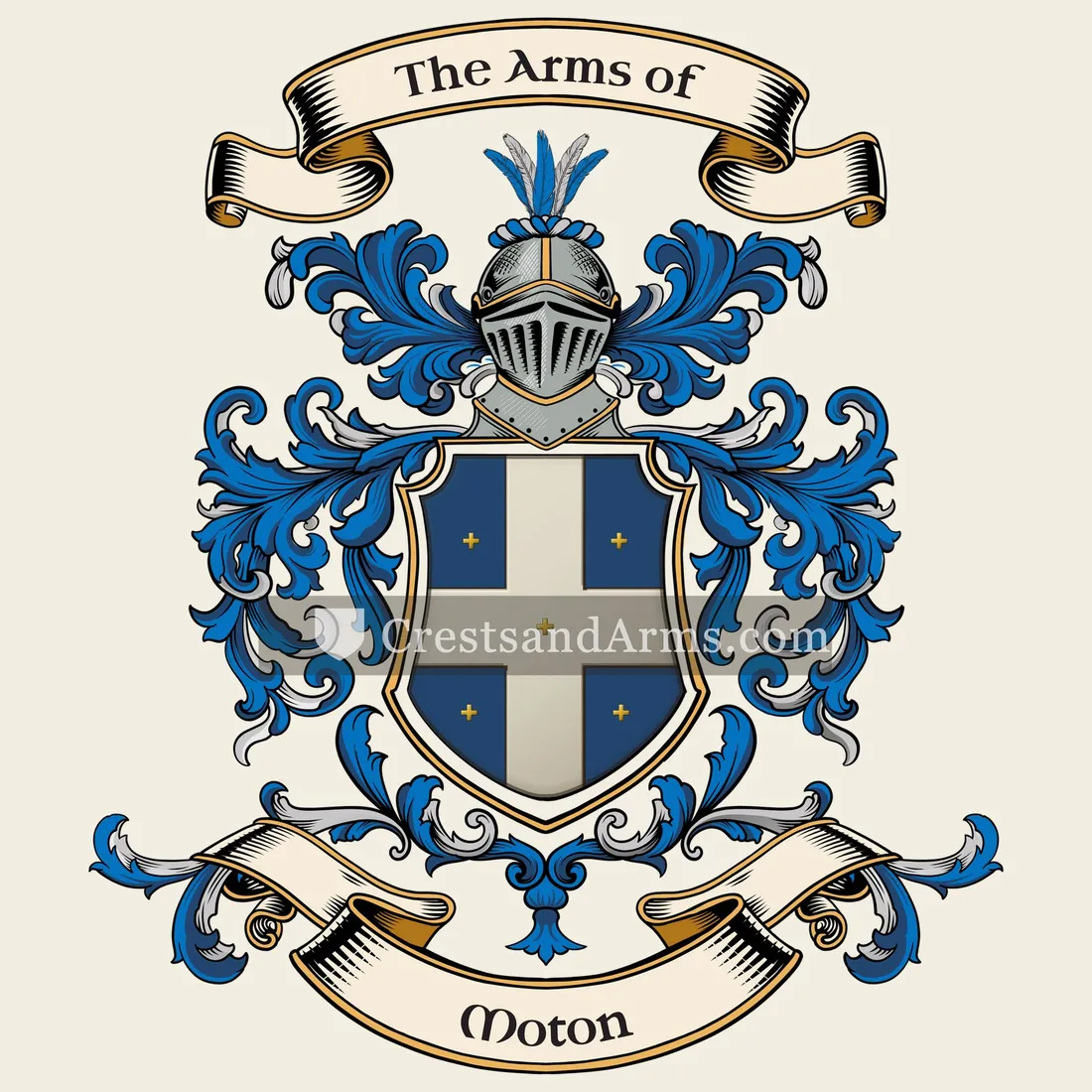
cross symbolChristian faith and service
Colours
Blue (Azure)Means: Loyalty and truth
Silver (Argent)Means: Peace and sincerity
Gold (Or)Means: Generosity
Historical info
Source
J. B. Rietstap, Armorial Général, Gouda: G. B. van Goor Zonen, 1884–87
Blazon (the actual original written record)
“D'azur à la croix d'arg., cant. de vingt croisettes au pied fiché d'or, cinq à chaque canton, 2, 1 et 2.”
Francec. 1663
Digital archive packCoat of arms PNG, gold border print PDF, vector SVG and the certificate of authenticity. Sent to your email in minutes.
Map of France showing where the Moton arms are recorded
The Moton arms were recorded in France, c. 1663.
Arms such as these were typically recorded in Bretagne.
More families held coats of arms in Bretagne than anywhere else in France. The land was divided into many small estates rather than a few large ones, so far more households counted as gentry, and each needed a shield of its own to be told apart.
This is where the arms were entered in the register. Families often moved to other parts of the country, so the same name can turn up in more than one region.
The body that granted and recorded arms in France in this period.
Louis XIV of France
Sovereign of the period
Louis XIV of France
1643–1715
Reigning in Belgium when the Moton arms are first recorded.
How Arms Worked in France
In France, a coat of arms was a mark of honor that passed down through the male line to all legitimate descendants. Families often used the same shield without changes to show their shared heritage. If a branch wanted to stand out, they could add a small mark to their shield to show their specific place in the family tree.
Granting authority
The Juge d'armes de France acted as the official authority that regulated and verified coats of arms across the country.
How they got arms
Families typically inherited their arms from ancestors, though they could also receive them through royal grants or by proving their noble status.
Where arms were recorded
Coats of arms were officially recorded in the Armorial Général de France, which began its main collection in the year 1696.
The family's standing
Recorded among the armigerous families of France.
Origin & History of the Moton Family in France
The history of the Moton family in France is deeply rooted in the rugged landscape of Bretagne, where records confirm their presence as early as 1663. The name likely originated as a descriptive term or a nickname, as was common practice in medieval French naming conventions. During the seventeenth century, families in this region were often tied closely to the land and the local parish system, which served as the primary way to track births, marriages, and deaths. Life in Bretagne at this time was defined by a distinct cultural identity and a strong connection to the Catholic Church, which acted as the main record-keeper for the population. As the Moton family established themselves in the area, they became part of the social fabric of rural French life, navigating the challenges of a changing society while maintaining their local ties. This early period in Bretagne provides a clear starting point for understanding how the family name persisted and moved through the generations in Western France.
Moton Meaning & Related Branches
Root word
Motte
A mound or small hill used for defensive fortifications.
This name
MotonDerived from a topographic location referring to someone living near a fortified mound or hill.
also spelled
Moutun
Mooton
Mutton
Documented Sources
J. B. Rietstap, Armorial Général, Gouda: G. B. van Goor Zonen, 1884–87
Archives: State Archives in Belgium (Rijksarchief in België), Parochieregisters van de provincie Brabant
Book: Warlop, Ernest, The Flemish Nobility before 1300 (Volume 1), 1975
Book: De Smet, Jos, Geschiedenis van Brabant, 1962
Digital archive packCoat of arms PNG, gold border print PDF, vector SVG and the certificate of authenticity. Sent to your email in minutes.


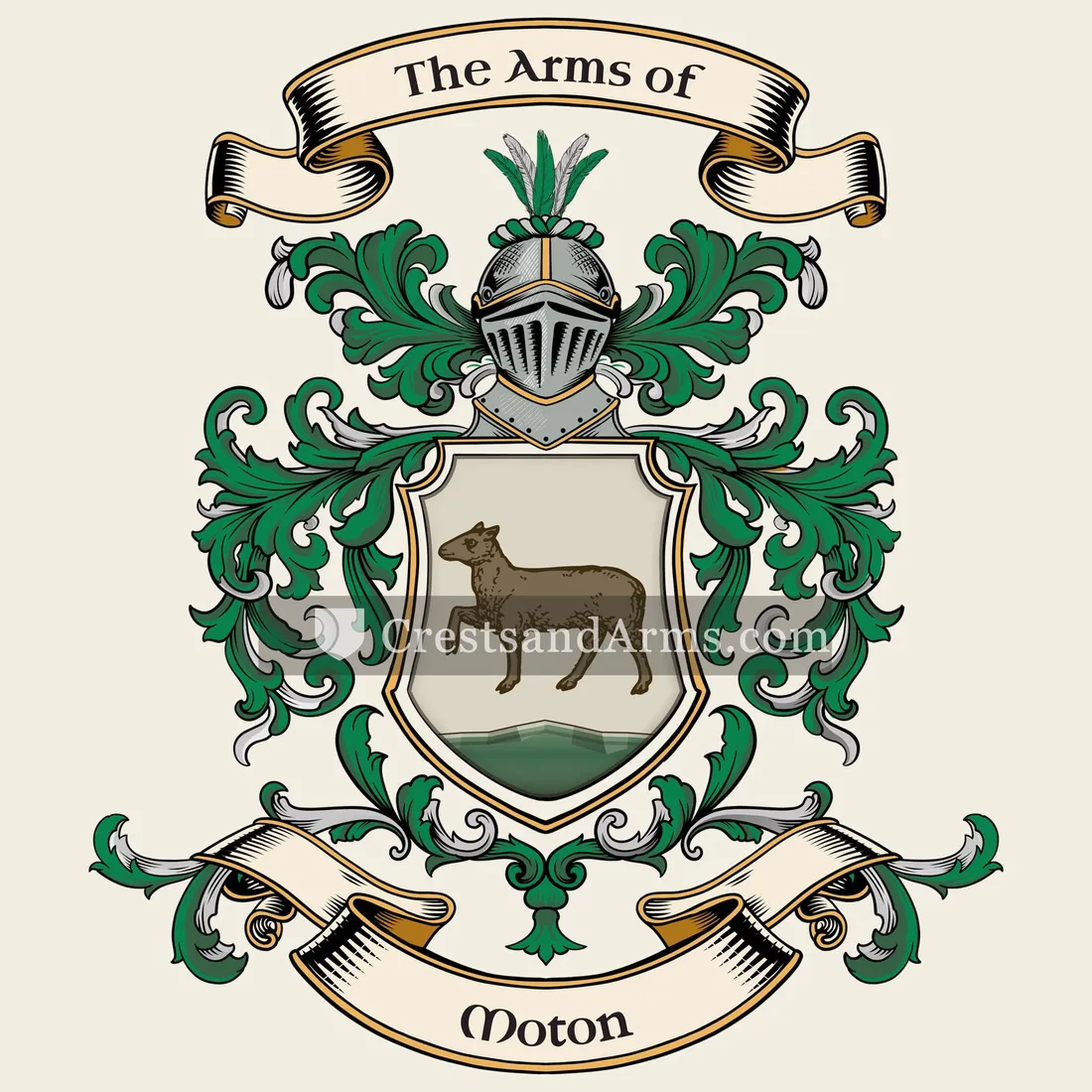
 mountThe ground held, and steadfastness upon it
 lambGentleness, patience and faith
 mountThe ground held, and steadfastness upon it
 lambGentleness, patience and faith


 cross symbolChristian faith and service