Map of Belgium showing where the Mottet arms are recorded
The Mottet arms were recorded in Belgium, c. 1737.
Arms such as these were typically recorded in Brabant.
Brabant lay at the heart of the Low Countries, where the trade routes met. Its towns were wealthy and its landowners many, and both kinds of family kept arms, which is why the region is so heavily represented.
This is where the arms were entered in the register. Families often moved to other parts of the country, so the same name can turn up in more than one region.
The body that granted and recorded arms in Belgium in this period.
Charles VI, Holy Roman Emperor
Sovereign of the period
Charles VI, Holy Roman Emperor
1711–1740
Reigning in Belgium when the Mottet arms are first recorded.
How Arms Worked in Belgium
In Belgium, a coat of arms is considered personal property that is passed down through the male line to legitimate descendants. Families often use the same shield design across generations to show their shared heritage. If a branch of the family wants to change the design, they must apply for an official update to their specific version of the arms.
Granting authority
The Conseil héraldique is the official body that regulates and approves all coats of arms in Belgium.
How they got arms
Families obtain their coats of arms through formal royal grants or by confirming their historical right to use existing designs.
Where arms were recorded
All approved coats of arms are officially recorded in the public registers of the Conseil héraldique since 1844.
The family's standing
Recorded among the armigerous families of Belgium.
Origin & History of the Mottet Family in Belgium
The family name Mottet has deep roots in the historical region of Brabant, where members were firmly established by the early eighteenth century. The name itself is a diminutive form of the Old French word "motte," which originally referred to a small mound of earth or a fortified hilltop. In the context of medieval Belgium, this suggests that the earliest ancestors likely lived near a prominent landscape feature or a small castle built upon an artificial hill. By 1737, records confirm that the Mottet family was active within the social and economic fabric of the Brabant region. During this era, families with this name were often involved in local agriculture or trade, reflecting the rural and developing urban character of the Low Countries. As the family grew, they became part of the steady demographic shifts that defined the Belgian provinces, moving between parishes and contributing to the local community life that shaped the region during the Enlightenment.
Coat of Arms & Family Crest Details
Symbols on this shield
chiefAuthority, wisdom and dominion
eagleNobility, strength and a keen mind
Colours
Red (Gules)Means: Military strength
Gold (Or)Means: Generosity
Silver (Argent)Means: Peace and sincerity
Historical info
Source
J. B. Rietstap, Armorial Général, Gouda: G. B. van Goor Zonen, 1884–87
Blazon (the actual original written record)
“De gu. à l'aigle d'arg., bq. et m. d'or; au chef du même.”
DauphineDauphine, c. 1663
Digital archive packCoat of arms PNG, gold border print PDF, vector SVG and the certificate of authenticity. Sent to your email in minutes.
Map of France showing where the Mottet arms are recorded
The Mottet arms were recorded in Dauphine, c. 1663.
Dauphine lay in the mountains of south-eastern France, a country of small estates and scattered valleys. Its gentry were many and mostly modest, and even a small landholding was enough to justify arms.
This is where the arms were entered in the register. Families often moved to other parts of the country, so the same name can turn up in more than one region.
The body that granted and recorded arms in France in this period.
Louis XIV of France
Sovereign of the period
Louis XIV of France
1643–1715
Reigning in Belgium when the Mottet arms are first recorded.
How Arms Worked in France
In France, a coat of arms was a mark of honor that passed down through the male line to all legitimate descendants. Families often used the same shield without changes to show their shared heritage. If a branch wanted to stand out, they could add a small mark to their shield to show their specific place in the family tree.
Granting authority
The Juge d'armes de France acted as the official authority that regulated and verified coats of arms across the country.
How they got arms
Families typically inherited their arms from ancestors, though they could also receive them through royal grants or by proving their noble status.
Where arms were recorded
Coats of arms were officially recorded in the Armorial Général de France, which began its main collection in the year 1696.
The family's standing
Recorded among the armigerous families of Dauphine.
Origin & History of the Mottet Family in France
The family name Mottet has deep roots in the mountainous region of Dauphiné in southeastern France. By the mid-seventeenth century, the family was already well-established in this area, with records confirming their presence there by 1663. The name itself is thought to be a diminutive form of the word motte, which refers to a small hill or a mound of earth. This suggests that the earliest ancestors likely lived near a prominent natural landmark or a fortified earthwork. During this period, families in Dauphiné often lived in close-knit rural communities where they worked the land or engaged in local trade. As the family grew, they became part of the social fabric of the Alpine valleys, adapting to the rugged landscape and the changing political climate of the French provinces. Their history reflects the broader patterns of life in old France, where a family name was tied closely to the specific geography of their home.
Coat of Arms & Family Crest Details
Symbols on this shield
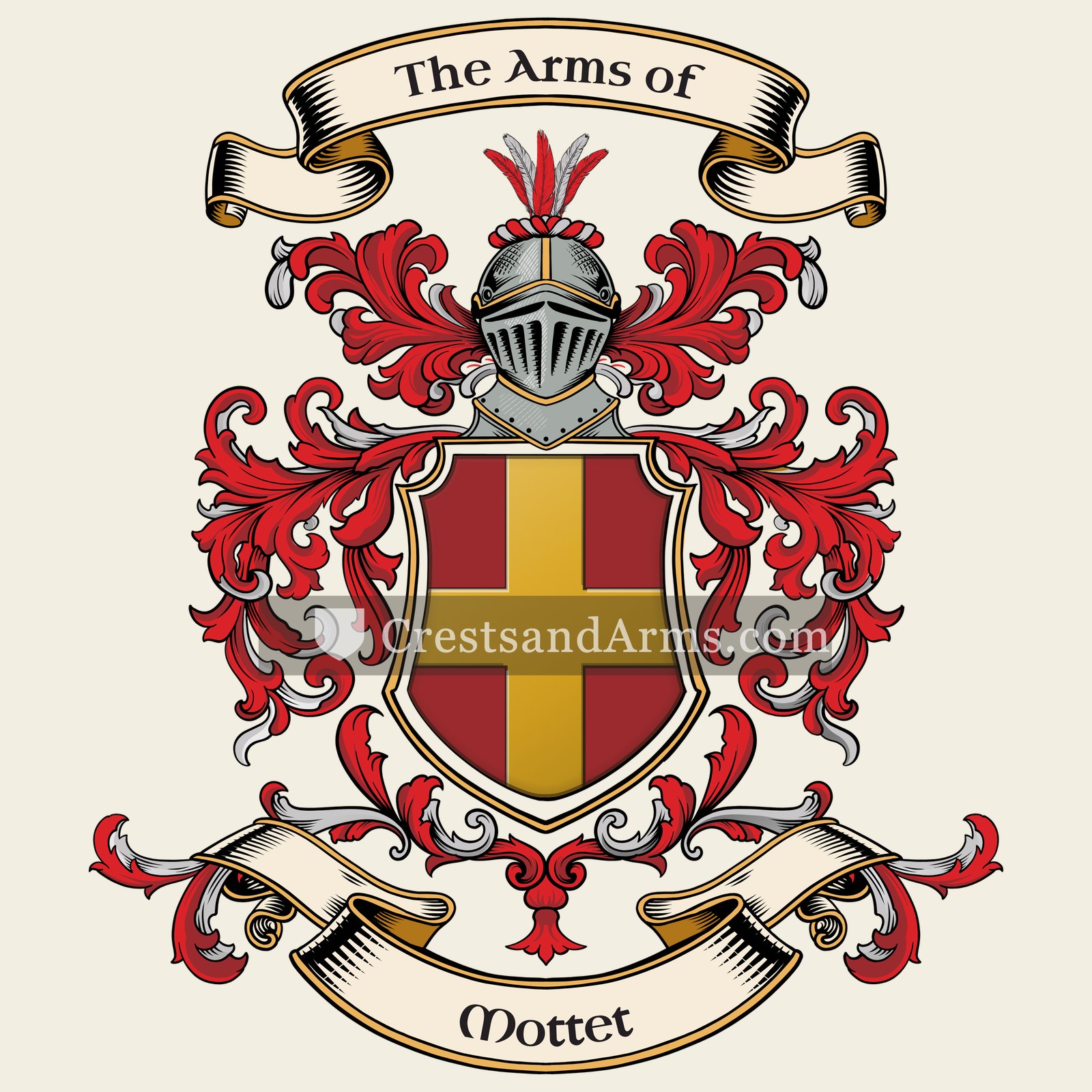
cross symbolChristian faith and service
Colours
Red (Gules)Means: Military strength
Gold (Or)Means: Generosity
Historical info
Source
J. B. Rietstap, Armorial Général, Gouda: G. B. van Goor Zonen, 1884–87
Blazon (the actual original written record)
“De gu. à la croix ancrée d'or.”
SwitzerlandFribourg, c. 1745
Digital archive packCoat of arms PNG, gold border print PDF, vector SVG and the certificate of authenticity. Sent to your email in minutes.
Map of Switzerland showing where the Mottet arms are recorded
The Mottet arms were recorded in Fribourg, c. 1745.
This is where the arms were entered in the register. Families often moved to other parts of the country, so the same name can turn up in more than one region.
The body that granted and recorded arms in Switzerland in this period.
How Arms Worked in Switzerland
In Switzerland, coats of arms were not restricted to the nobility and were often adopted by common citizens and families. These symbols were passed down through generations to show family identity. When branches of a family grew, they often changed small details of the design to distinguish their own line from the original group.
Granting authority
Cantonal and civic authorities managed the use of coats of arms within their specific regions and local jurisdictions.
How they got arms
Families typically assumed their own coats of arms based on local custom rather than receiving them from a central monarch.
Where arms were recorded
Arms were recorded in various cantonal and civic registers starting from the fourteenth century throughout the Swiss region.
The family's standing
Recorded among the armigerous families of Switzerland.
Origin & History of the Mottet Family in Switzerland
The family name Mottet has deep roots in the French-speaking regions of Switzerland, particularly within the canton of Fribourg. Historical records confirm that members of the Mottet family were established in this area by at least 1745, where they lived as part of the local agricultural and artisanal communities. The name itself is likely derived from the Old French word "motte," which refers to a small hill or a mound of earth. This suggests that the earliest ancestors to carry the name may have lived near a prominent landscape feature or on a fortified earthwork. Over the centuries, the family became integrated into the social and economic life of the Swiss plateau, often working as farmers or tradespeople who helped shape the rural landscape of the region. By settling in Fribourg, the Mottet family became part of a long tradition of Swiss families who maintained strong ties to their local parishes and community governance.
Related Branches & Arms
Root word
Motte
A mound, hillock, or fortified earthwork structure.
This name
MottetA topographic name for someone who lived near a fortified mound or castle.
also spelled
Motet
Mottay
Motay
Documented Sources
J. B. Rietstap, Armorial Général, Gouda: G. B. van Goor Zonen, 1884–87
State Archives in Belgium (Archives de l'État en Belgique), Registres paroissiaux (Parochieregisters)
State Archives in Belgium (Archives de l'État en Belgique), Fonds de la famille Mottet de Brabant
Dauzat, Albert, Dictionnaire étymologique des noms de famille et prénoms de France, 1951
Herbillon, Jules and Germain, Jean, Dictionnaire des noms de famille en Belgique romane et dans les régions limitrophes, 1996
Digital archive packCoat of arms PNG, gold border print PDF, vector SVG and the certificate of authenticity. Sent to your email in minutes.


 lionCourage, strength and royalty
 millrind / fer de molineThe mill's iron, and the grinding of grain
 lionCourage, strength and royalty
 millrind / fer de molineThe mill's iron, and the grinding of grain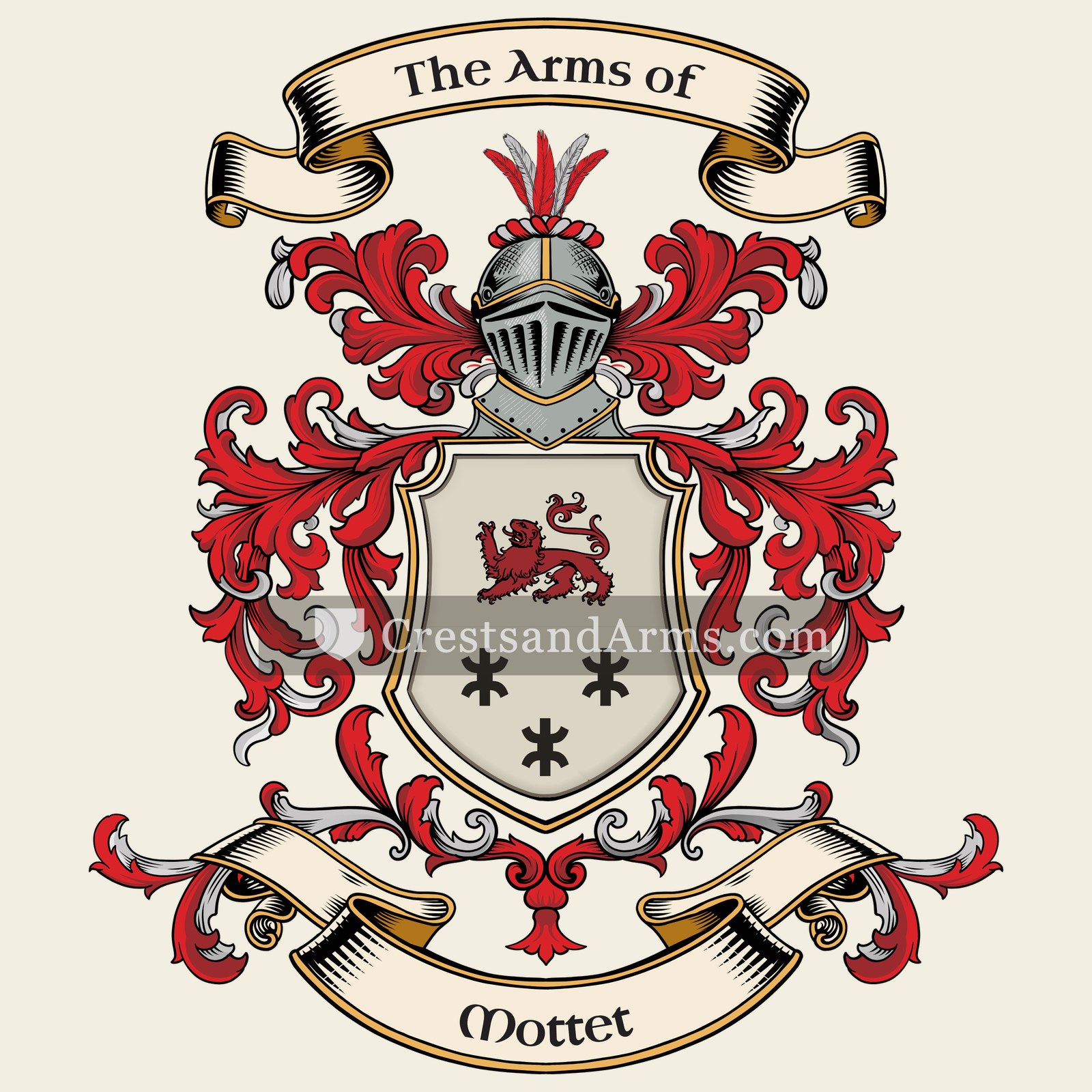


 chiefAuthority, wisdom and dominion
 eagleNobility, strength and a keen mind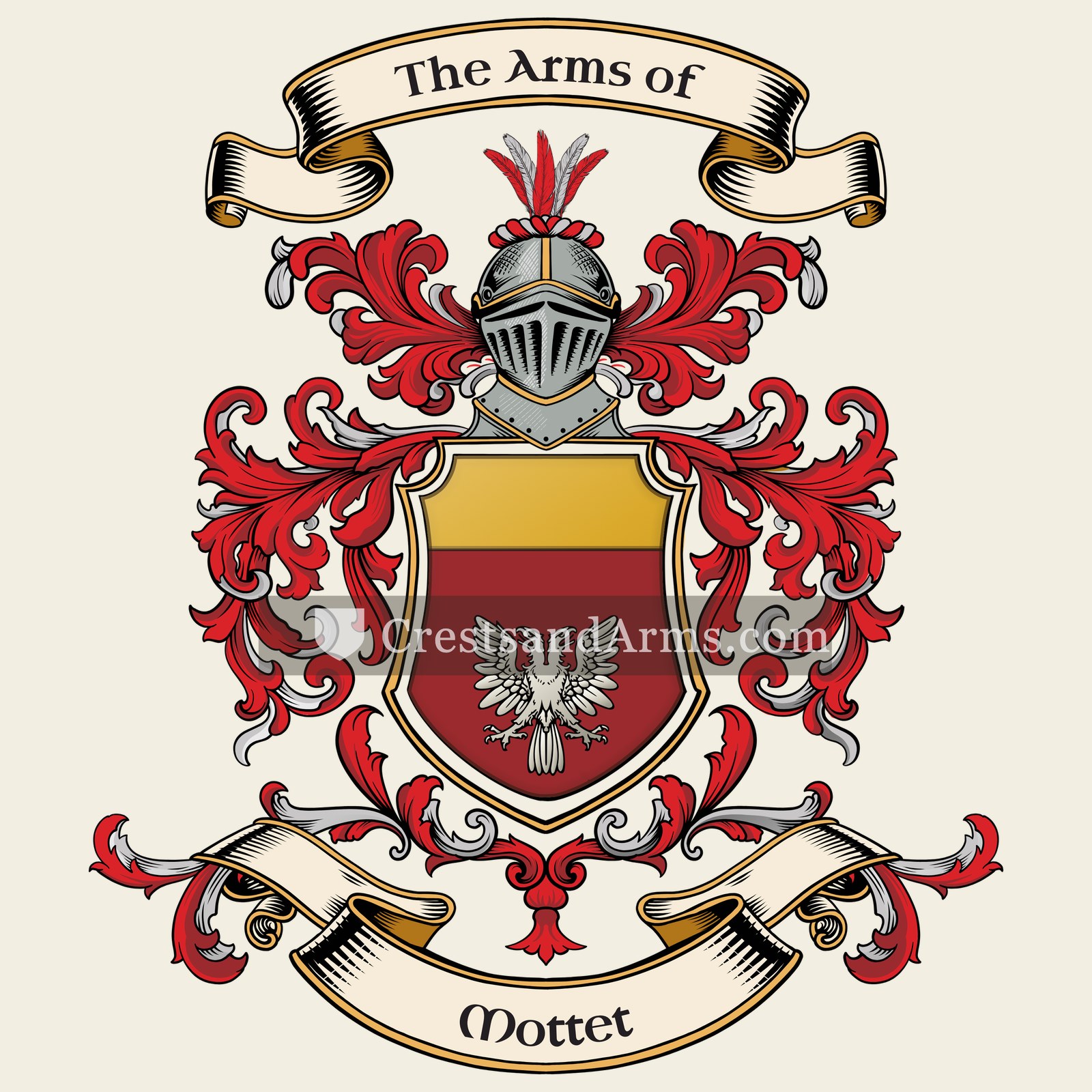


 cross symbolChristian faith and service