Map of Germany showing where the Muecke arms are recorded
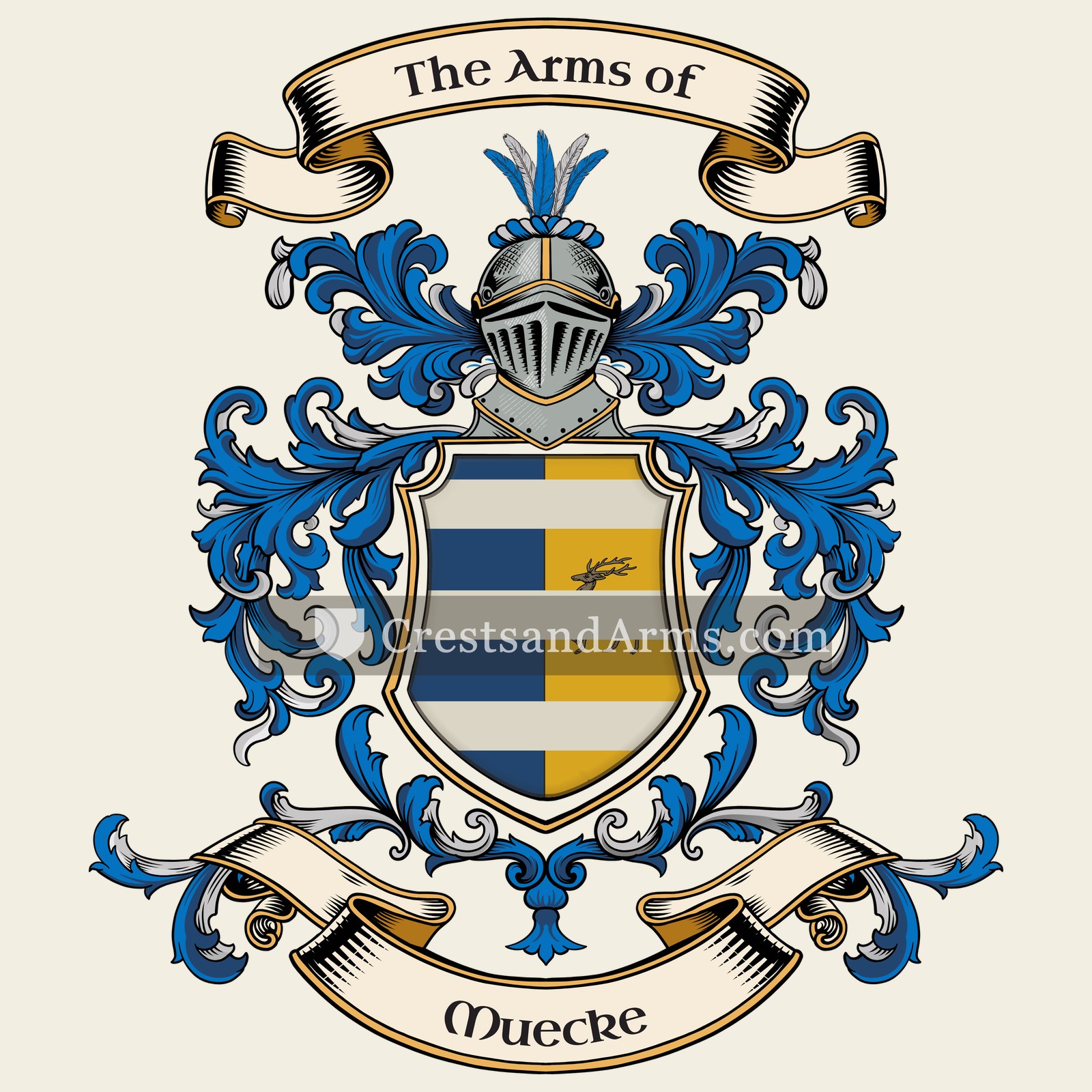
The Muecke arms were recorded in Silesia, c. 1806.
Silesia was farming country in the east of the German lands, held in large estates by families who stayed put for generations. Owning land was what entitled a family to arms, so the region fills a good deal of the register.
This is where the arms were entered in the register. Families often moved to other parts of the country, so the same name can turn up in more than one region.
The body that granted and recorded arms in Germany in this period.
Frederick William III of Prussia
Sovereign of the period
Frederick William III of Prussia
1797–1840
Reigning in Germany when the Muecke arms are first recorded.
How Arms Worked in Germany
Prussian heraldry was strictly tied to social rank and noble status rather than being a free choice for every citizen. These symbols were treated as permanent family property that moved through the generations to all legitimate heirs. If a family branch wanted to change their design to stand out, they had to apply for official permission to alter their specific version of the shield.
Granting authority
The Prussian Heroldsamt acted as the central state office that managed and strictly controlled all noble titles and coats of arms.
How they got arms
Families usually obtained their arms through formal royal grants or by proving their long-standing noble status to the state authorities.
Where arms were recorded
All official coats of arms were kept in the rolls of the Prussian Heroldsamt, which functioned from 1706 until 1918.
The family's standing
Recorded among the armigerous families of Silesia.
Origin & History of the Muecke Family in Germany
The surname Muecke originates from the German word for gnat or midge. In the Middle Ages, names like this were often given as nicknames to describe a person’s physical traits or their personality. It is likely that an early ancestor was known for being small, quick, or perhaps particularly persistent. By 1806, records confirm that the family was well-established in the region of Silesia. During this period, Silesia was a diverse area caught between shifting borders and changing political powers. The family lived through a time of great upheaval as the Napoleonic Wars reshaped the map of Europe. Because the name is rooted in common language rather than a specific location, it suggests that the family was part of the ordinary working population that helped build the social fabric of the region over many centuries.
Related Branches & Arms
Root word
Mücke
A small biting insect belonging to the gnat or mosquito family.
This name
MueckeA nickname for a small, annoying, or persistent person.
also spelled
Muecke
Muecken
Mooka
Documented Sources
J. B. Rietstap, Armorial Général, Gouda: G. B. van Goor Zonen, 1884–87
Bahlow, Hans, Deutsches Namenlexikon: Familien- und Vornamen nach Ursprung und Sinn erklärt, 1967
Heintze, Albert, Die deutschen Familien-Namen: geschichtlich, geographisch, sprachlich, 1903
State Archive in Wrocław (Archiwum Państwowe we Wrocławiu), Civil Registration Records of Silesia, 1806
Digital archive packCoat of arms PNG, gold border print PDF, vector SVG and the certificate of authenticity. Sent to your email in minutes.


 stagPeace and harmony, and one who will not fight unprovoked
 stagPeace and harmony, and one who will not fight unprovoked