Map of Belgium showing where the Murat arms are recorded
The Murat arms were recorded in Anvers, c. 1816.
This is where the arms were entered in the register. Families often moved to other parts of the country, so the same name can turn up in more than one region.
The body that granted and recorded arms in Belgium in this period.
William I of the Netherlands
Sovereign of the period
William I of the Netherlands
1815–1840
Reigning in Belgium when the Murat arms are first recorded.
How Arms Worked in Belgium
In Belgium, a coat of arms is considered personal property that is passed down through the male line to legitimate descendants. Families often use the same shield design across generations to show their shared heritage. If a branch of the family wants to change the design, they must apply for an official update to their specific version of the arms.
Granting authority
The Conseil héraldique is the official body that regulates and approves all coats of arms in Belgium.
How they got arms
Families obtain their coats of arms through formal royal grants or by confirming their historical right to use existing designs.
Where arms were recorded
All approved coats of arms are officially recorded in the public registers of the Conseil héraldique since 1844.
The family's standing
Recorded among the armigerous families of Belgium.
Origin & History of the Murat Family in Belgium
The history of the Murat family in Belgium is closely tied to the shifting political landscape of the early nineteenth century. While the name has deep roots in Mediterranean Europe, records confirm that members of the family were established in the port city of Antwerp by 1816. During this period, Antwerp was part of the United Kingdom of the Netherlands, a time when the city served as a vital hub for international trade and movement. The presence of the Murat family in this bustling commercial center suggests they were likely involved in the merchant class or the administrative shifts that followed the Napoleonic era. As the family settled into their new surroundings, they became part of the diverse social fabric of Antwerp, contributing to the city’s growth as a gateway for European commerce. Their transition into Belgian society reflects the broader patterns of migration and professional mobility that defined the region during the post-war reconstruction of Europe.
Meaning of the Murat family crest colors & symbols
Symbols on this shield
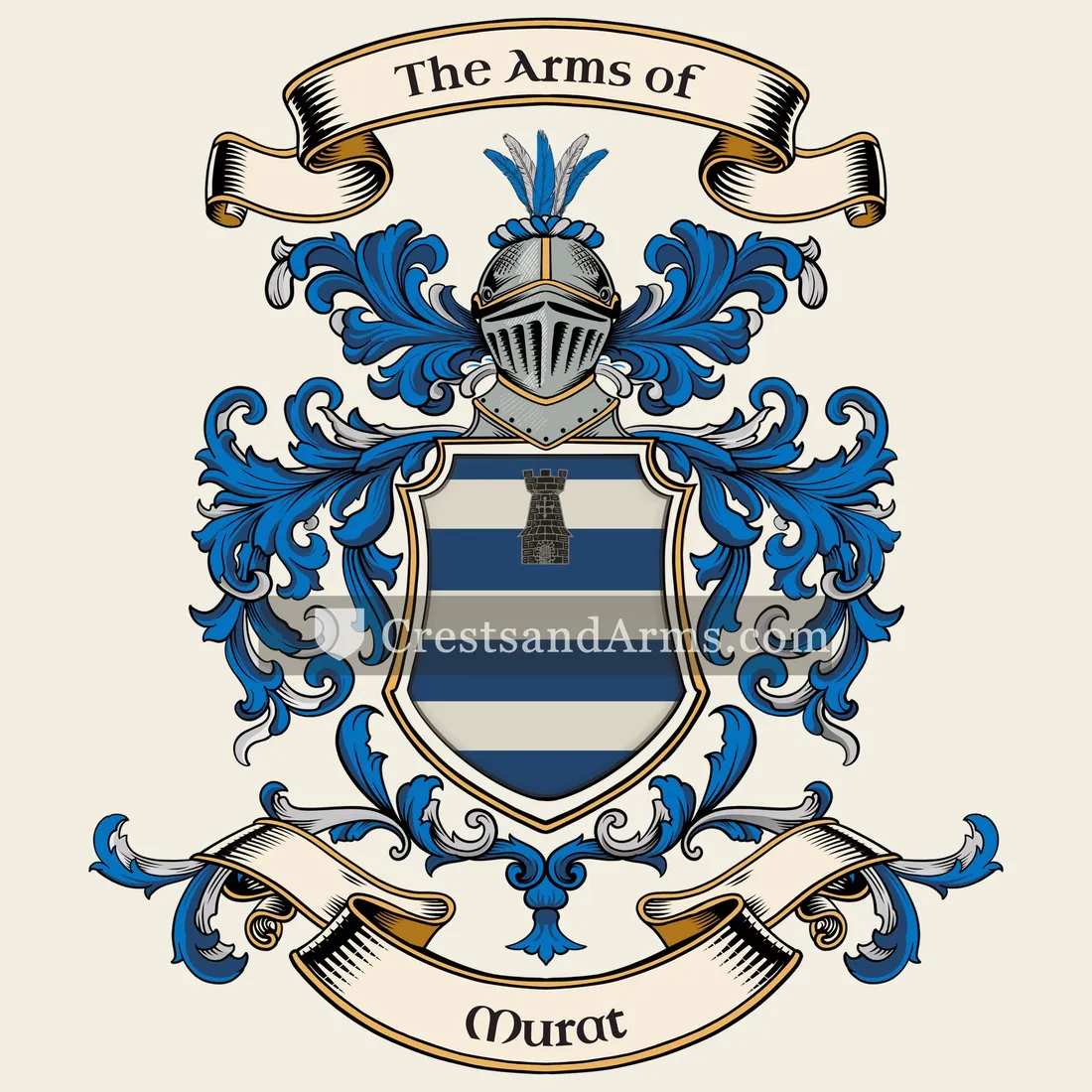
fessThe military belt, and readiness to serve
towerGrandeur and solidity, and a stronghold defended
Colours
Blue (Azure)Means: Loyalty and truth
Silver (Argent)Means: Peace and sincerity
Black (Sable)Means: Constancy
Historical info
Source
J. B. Rietstap, Armorial Général, Gouda: G. B. van Goor Zonen, 1884–87
Blazon (the actual original written record)
“D'azur à trois fasces crén. d'arg., maçonnées de sa., la première crén. de cinq pièces, la deuxième de quatre, la troisième de trois, cette dernière ouv. en porte au milieu. Cri: MURAT!”
Francec. 1643
Digital archive packCoat of arms PNG, gold border print PDF, vector SVG and the certificate of authenticity. Sent to your email in minutes.
Map of France showing where the Murat arms are recorded
The Murat arms were recorded in France, c. 1643.
Arms such as these were typically recorded in Bretagne.
More families held coats of arms in Bretagne than anywhere else in France. The land was divided into many small estates rather than a few large ones, so far more households counted as gentry, and each needed a shield of its own to be told apart.
This is where the arms were entered in the register. Families often moved to other parts of the country, so the same name can turn up in more than one region.
The body that granted and recorded arms in France in this period.
Louis XIII of France
Sovereign of the period
Louis XIII of France
1617–1643
Reigning in Belgium when the Murat arms are first recorded.
How Arms Worked in France
In France, a coat of arms was a mark of honor that passed down through the male line to all legitimate descendants. Families often used the same shield without changes to show their shared heritage. If a branch wanted to stand out, they could add a small mark to their shield to show their specific place in the family tree.
Granting authority
The Juge d'armes de France acted as the official authority that regulated and verified coats of arms across the country.
How they got arms
Families typically inherited their arms from ancestors, though they could also receive them through royal grants or by proving their noble status.
Where arms were recorded
Coats of arms were officially recorded in the Armorial Général de France, which began its main collection in the year 1696.
The family's standing
Recorded among the armigerous families of France.
Origin & History of the Murat Family in France
The history of the Murat family in France is deeply rooted in the regional traditions of Brittany, where records confirm their presence as early as 1643. During this period, the name was closely tied to the social structures of the French provinces, where families often took their identity from the specific lands they occupied or the local roles they performed. While the name later gained significant national prominence during the Napoleonic era, its origins reflect the typical experience of provincial families who lived through the shifting political landscape of the seventeenth century. By settling in the western regions of France, the early members of the family became part of a long lineage of local inhabitants who helped shape the cultural and administrative life of their community. Their transition from regional landowners to a recognized name in French history illustrates how families of that time gradually expanded their influence beyond their original home in Brittany.
Meaning of the Murat family crest colors & symbols
Symbols on this shield
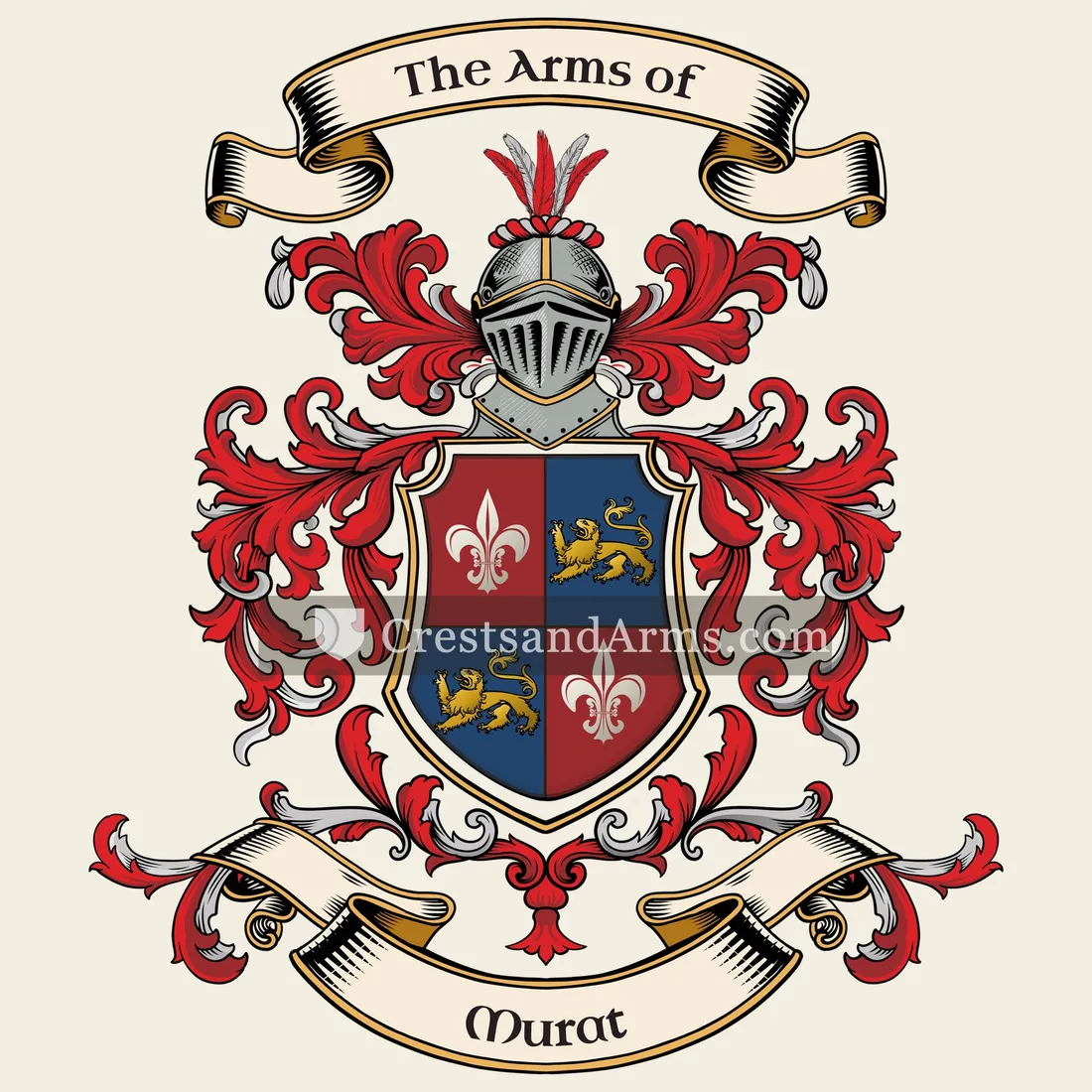
fleur de lisPurity, light, and the sixth son
lionCourage, strength and royalty
Colours
Red (Gules)Means: Military strength
Blue (Azure)Means: Loyalty and truth
Silver (Argent)Means: Peace and sincerity
Gold (Or)Means: Generosity
Historical info
Source
J. B. Rietstap, Armorial Général, Gouda: G. B. van Goor Zonen, 1884–87
Blazon (the actual original written record)
“Ec.: aux 1 et 4 de gu. à une fleur-de-lis d'arg.; aux 2 et 3 d'azur au lion d'or, tenant entre ses pattes une fleur-de-lis d'arg. Cq. cour. C.: le lion, iss. L.: à dextre d'arg. et de gu., à sen. d'or et d'azur.”
Germanyc. 1765
Digital archive packCoat of arms PNG, gold border print PDF, vector SVG and the certificate of authenticity. Sent to your email in minutes.
Map of Germany showing where the Murat arms are recorded
The Murat arms were recorded in Germany, c. 1765.
Arms such as these were typically recorded in Bavaria.
Bavaria was a country of old landed families and walled market towns. Estates passed down the same line for centuries, and both the landowners and the leading townsmen kept arms, which is why so many Bavarian names sit in the registers.
This is where the arms were entered in the register. Families often moved to other parts of the country, so the same name can turn up in more than one region.
The body that granted and recorded arms in Germany in this period.
Francis I, Holy Roman Emperor
Sovereign of the period
Francis I, Holy Roman Emperor
1745–1765
Reigning in Belgium when the Murat arms are first recorded.
How Arms Worked in Germany
In the Holy Roman Empire, coats of arms were often granted to individuals by the Emperor or his representatives. These arms were then passed down through the generations to all legitimate descendants of the original holder. Younger branches of a family usually kept the same shield design without needing to change it, as the arms belonged to the entire lineage.
Granting authority
The Holy Roman Emperor held the sole power to grant new coats of arms throughout his vast imperial territories.
How they got arms
Families typically obtained their coats of arms through a formal imperial grant or by proving their noble status to the authorities.
Where arms were recorded
These grants were officially recorded in the Imperial Chancery registers, which began keeping formal records of such honors during the Middle Ages.
The family's standing
Recorded among the armigerous families of Germany.
Origin & History of the Murat Family in Germany
The family name Murat has roots that stretch deep into the history of southern Germany, where records confirm members of the family were established in Bavaria by 1765. During this period, the name was often associated with families living in rural or semi-urban districts who were deeply integrated into the local social and economic structures of the region. While the name is frequently linked to later French history, its German presence suggests a long-standing tradition of families moving across borders for trade, military service, or agricultural opportunities. These early ancestors in Bavaria likely navigated the complex political landscape of the Holy Roman Empire, where local identity was often tied to specific parishes and regional administrative districts. By settling in Bavaria, the Murat family became part of the diverse cultural fabric of the German states, contributing to the local workforce and community life long before the name gained wider international recognition.
Murat Meaning & Related Branches
Root word
Murad
Derived from the Arabic word for desired or wished for.
This name
MuratRefers to a person who is desired, longed for, or the object of one's wishes.
also spelled
Murad
Mura
Related arms
Mouratsimilar arms
Documented Sources
J. B. Rietstap, Armorial Général, Gouda: G. B. van Goor Zonen, 1884–87
Stadsarchief Antwerpen, Bevolkingsregisters van Antwerpen, 1816
Stadsarchief Antwerpen, Registers van de Burgerlijke Stand, 1816
Digital archive packCoat of arms PNG, gold border print PDF, vector SVG and the certificate of authenticity. Sent to your email in minutes.




 fessThe military belt, and readiness to serve
 towerGrandeur and solidity, and a stronghold defended


 fleur de lisPurity, light, and the sixth son
 lionCourage, strength and royalty