Map of Belgium showing where the Murata arms are recorded
The Murata arms were recorded in Anvers, c. 1816.
This is where the arms were entered in the register. Families often moved to other parts of the country, so the same name can turn up in more than one region.
The body that granted and recorded arms in Belgium in this period.
William I of the Netherlands
Sovereign of the period
William I of the Netherlands
1815–1840
Reigning in Belgium when the Murata arms are first recorded.
How Arms Worked in Belgium
In Belgium, a coat of arms is considered personal property that is passed down through the male line to legitimate descendants. Families often use the same shield design across generations to show their shared heritage. If a branch of the family wants to change the design, they must apply for an official update to their specific version of the arms.
Granting authority
The Conseil héraldique is the official body that regulates and approves all coats of arms in Belgium.
How they got arms
Families obtain their coats of arms through formal royal grants or by confirming their historical right to use existing designs.
Where arms were recorded
All approved coats of arms are officially recorded in the public registers of the Conseil héraldique since 1844.
The family's standing
Recorded among the armigerous families of Belgium.
Origin & History of the Murata Family in Belgium
The history of the Murata family in Belgium begins with their documented presence in the port city of Antwerp in 1816. During this period, Antwerp served as a bustling hub for international trade and maritime activity following the end of the Napoleonic Wars. The arrival of individuals bearing this name suggests early connections to the global merchant networks that defined the city’s economic revival under the United Kingdom of the Netherlands. While the name itself carries deep roots in Japanese history, its appearance in Belgian civil records during the early nineteenth century highlights the diverse demographic shifts occurring in major European trade centers at the time. These early family members likely integrated into the urban fabric of Antwerp, participating in the commercial life of a city that acted as a gateway between continental Europe and the wider world.
Meaning of the Murata family crest colors & symbols
Symbols on this shield
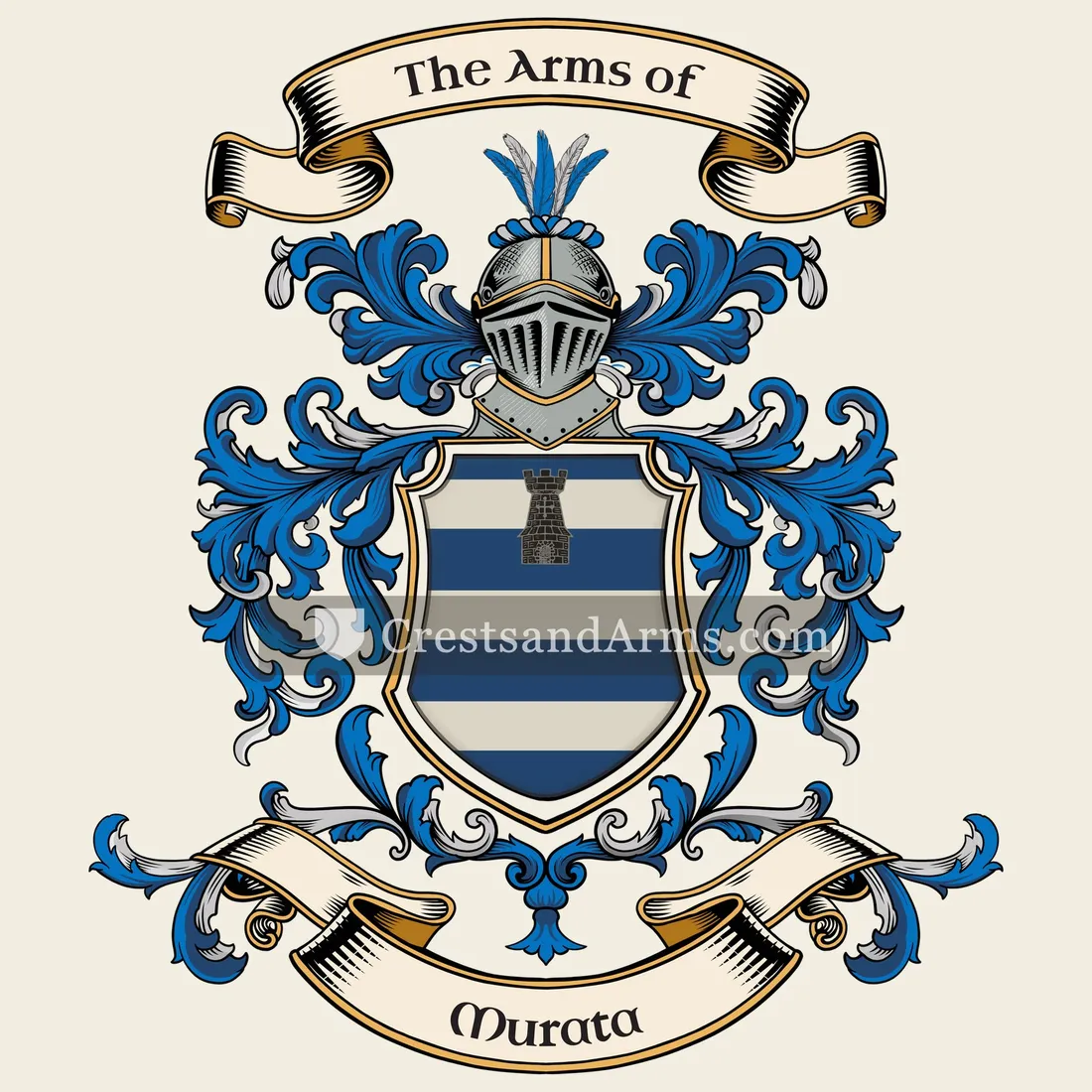
fessThe military belt, and readiness to serve
towerGrandeur and solidity, and a stronghold defended
Colours
Blue (Azure)Means: Loyalty and truth
Silver (Argent)Means: Peace and sincerity
Black (Sable)Means: Constancy
Historical info
Source
J. B. Rietstap, Armorial Général, Gouda: G. B. van Goor Zonen, 1884–87
Blazon (the actual original written record)
“D'azur à trois fasces crén. d'arg., maçonnées de sa., la première crén. de cinq pièces, la deuxième de quatre, la troisième de trois, cette dernière ouv. en porte au milieu. Cri: MURAT!”
Francec. 1643
Digital archive packCoat of arms PNG, gold border print PDF, vector SVG and the certificate of authenticity. Sent to your email in minutes.
Map of France showing where the Murata arms are recorded
The Murata arms were recorded in France, c. 1643.
Arms such as these were typically recorded in Bretagne.
More families held coats of arms in Bretagne than anywhere else in France. The land was divided into many small estates rather than a few large ones, so far more households counted as gentry, and each needed a shield of its own to be told apart.
This is where the arms were entered in the register. Families often moved to other parts of the country, so the same name can turn up in more than one region.
The body that granted and recorded arms in France in this period.
Louis XIII of France
Sovereign of the period
Louis XIII of France
1617–1643
Reigning in Belgium when the Murata arms are first recorded.
How Arms Worked in France
In France, a coat of arms was a mark of honor that passed down through the male line to all legitimate descendants. Families often used the same shield without changes to show their shared heritage. If a branch wanted to stand out, they could add a small mark to their shield to show their specific place in the family tree.
Granting authority
The Juge d'armes de France acted as the official authority that regulated and verified coats of arms across the country.
How they got arms
Families typically inherited their arms from ancestors, though they could also receive them through royal grants or by proving their noble status.
Where arms were recorded
Coats of arms were officially recorded in the Armorial Général de France, which began its main collection in the year 1696.
The family's standing
Recorded among the armigerous families of France.
Origin & History of the Murata Family in France
The history of the Murata name in France begins in the rugged coastal region of Brittany, where records confirm the family was established by 1643. During the seventeenth century, families in this area often lived in small, tight-knit maritime communities that relied heavily on trade and local agriculture. The name likely arrived in the region through migration patterns common to the era, as individuals moved between coastal ports for work or military service. Life in Brittany at this time was defined by a strong sense of regional identity and a deep connection to the Atlantic landscape. By settling in this province, the early members of the Murata family became part of a distinct cultural environment that valued local traditions and community ties. Over time, these early settlers integrated into the social fabric of the region, leaving behind a legacy that is preserved in the administrative and parish records of the period.
Meaning of the Murata family crest colors & symbols
Symbols on this shield
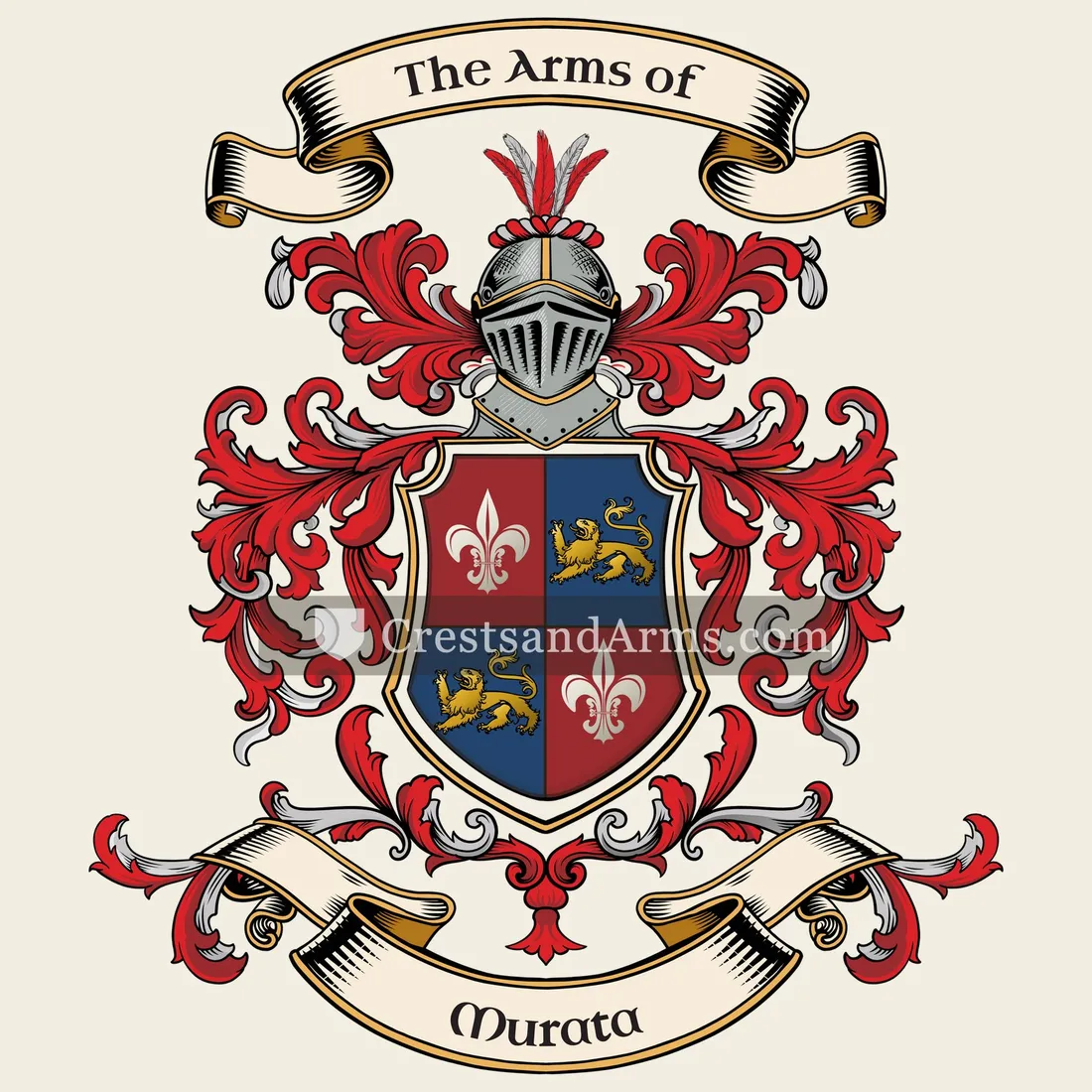
fleur de lisPurity, light, and the sixth son
lionCourage, strength and royalty
Colours
Red (Gules)Means: Military strength
Blue (Azure)Means: Loyalty and truth
Silver (Argent)Means: Peace and sincerity
Gold (Or)Means: Generosity
Historical info
Source
J. B. Rietstap, Armorial Général, Gouda: G. B. van Goor Zonen, 1884–87
Blazon (the actual original written record)
“Ec.: aux 1 et 4 de gu. à une fleur-de-lis d'arg.; aux 2 et 3 d'azur au lion d'or, tenant entre ses pattes une fleur-de-lis d'arg. Cq. cour. C.: le lion, iss. L.: à dextre d'arg. et de gu., à sen. d'or et d'azur.”
Germanyc. 1765
Digital archive packCoat of arms PNG, gold border print PDF, vector SVG and the certificate of authenticity. Sent to your email in minutes.
Map of Germany showing where the Murata arms are recorded
The Murata arms were recorded in Germany, c. 1765.
Arms such as these were typically recorded in Bavaria.
Bavaria was a country of old landed families and walled market towns. Estates passed down the same line for centuries, and both the landowners and the leading townsmen kept arms, which is why so many Bavarian names sit in the registers.
This is where the arms were entered in the register. Families often moved to other parts of the country, so the same name can turn up in more than one region.
The body that granted and recorded arms in Germany in this period.
Francis I, Holy Roman Emperor
Sovereign of the period
Francis I, Holy Roman Emperor
1745–1765
Reigning in Belgium when the Murata arms are first recorded.
How Arms Worked in Germany
In the Holy Roman Empire, coats of arms were often granted to individuals by the Emperor or his representatives. These arms were then passed down through the generations to all legitimate descendants of the original holder. Younger branches of a family usually kept the same shield design without needing to change it, as the arms belonged to the entire lineage.
Granting authority
The Holy Roman Emperor held the sole power to grant new coats of arms throughout his vast imperial territories.
How they got arms
Families typically obtained their coats of arms through a formal imperial grant or by proving their noble status to the authorities.
Where arms were recorded
These grants were officially recorded in the Imperial Chancery registers, which began keeping formal records of such honors during the Middle Ages.
The family's standing
Recorded among the armigerous families of Germany.
Origin & History of the Murata Family in Germany
The history of the Murata name in Germany is a unique story of migration and adaptation within the Bavarian region. By the year 1765, records confirm that members of the family were already established residents in southern Germany. During this period, Bavaria was a center for trade and agricultural development, and families often settled in rural villages to work the land or participate in local craft guilds. While the name itself is often associated with Japanese origins, its presence in 18th-century Germany suggests that early ancestors may have arrived through complex trade routes or as part of the movement of skilled laborers across Europe. These early Muratas integrated into the local community by adopting the customs and language of their neighbors while maintaining their family identity. Over time, they became part of the social fabric of the region, contributing to the local economy and the growth of their specific parish communities.
Murata Meaning & Related Branches
Root word
Mura
A Japanese term referring to a village or settlement.
This name
MurataA topographical surname denoting someone who lived in or near a village.
also spelled
Murad
Mura
Documented Sources
J. B. Rietstap, Armorial Général, Gouda: G. B. van Goor Zonen, 1884–87
Stadsarchief Antwerpen, Bevolkingsregisters van de stad Antwerpen, 1816
Digital archive packCoat of arms PNG, gold border print PDF, vector SVG and the certificate of authenticity. Sent to your email in minutes.


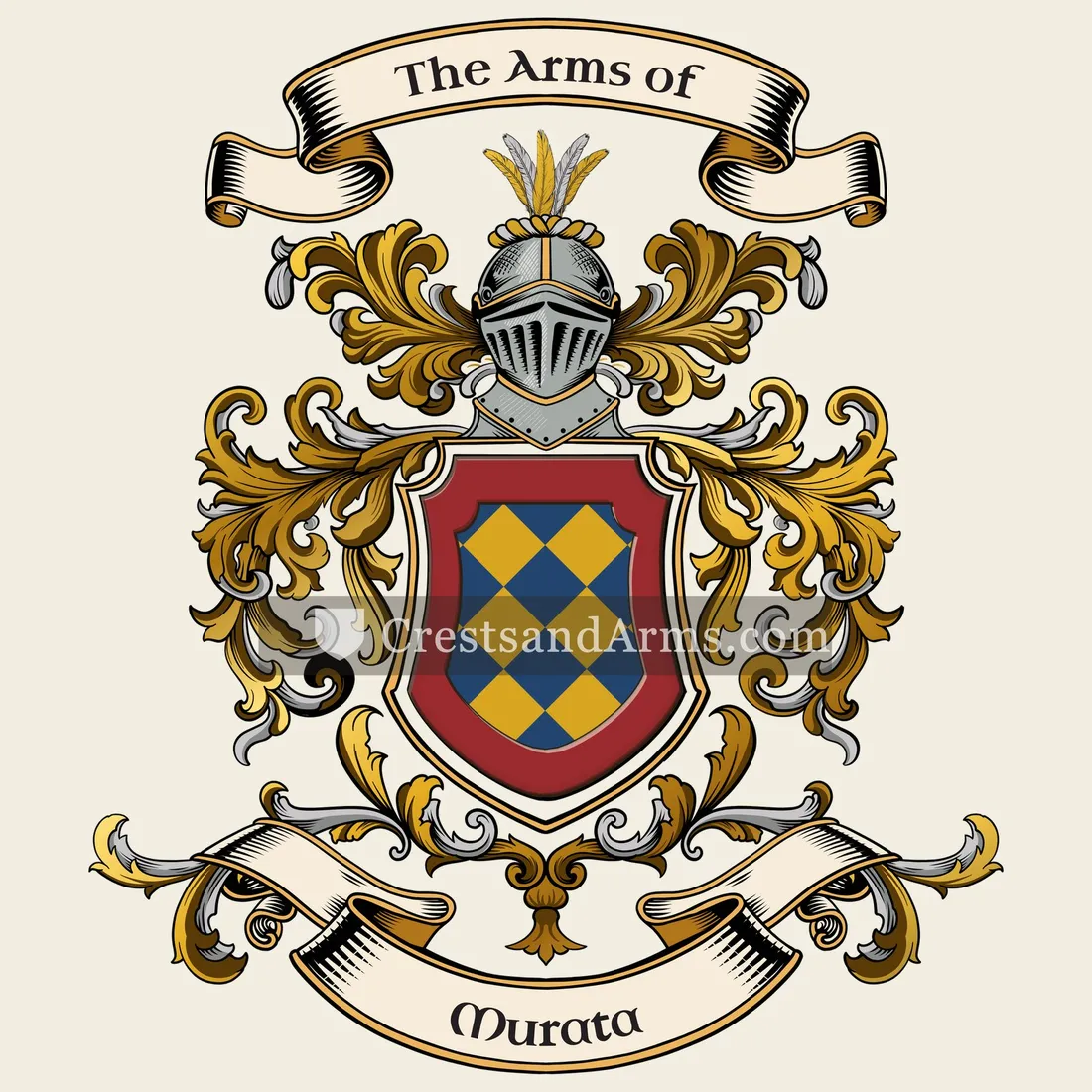


 fessThe military belt, and readiness to serve
 towerGrandeur and solidity, and a stronghold defended


 fleur de lisPurity, light, and the sixth son
 lionCourage, strength and royalty