Map of England showing where the Murley arms are recorded
The Murley arms were recorded in Lancaster, c. 1620.
Lancashire was divided among a great many small landed families, more than most northern counties. Estates were passed down whole rather than split up, so the same names hold the same ground for centuries in the records.
This is where the arms were entered in the register. Families often moved to other parts of the country, so the same name can turn up in more than one region.
The body that granted and recorded arms in England in this period.
James VI and I
Sovereign of the period
James VI and I
1603–1625
Reigning in England when the Murley arms are first recorded.
How Arms Worked in England
English heraldry allowed arms to be shared by all legitimate descendants of the original owner. These symbols were treated as personal property that moved through the generations to all children. While the eldest son kept the original design, other family members could use the same shield without needing to change it or register their own unique versions.
Granting authority
The College of Arms in London has regulated the use of coats of arms throughout England and Wales since 1484.
How they got arms
Families typically obtained their coats of arms through a formal grant from the Crown or by proving their ancient right to them.
Where arms were recorded
All official coats of arms are recorded in the registers kept at the College of Arms, which date back to the fifteenth century.
The family's standing
Recorded among the armigerous families of Lancaster.
Origin & History of the Murley Family in England
The family name Murley has deep roots in the English landscape, with historical records confirming the presence of the family in the county of Lancashire by the early 17th century. During this period, the name was likely linked to the geography of the region, as many surnames of that era were derived from local landmarks or specific plots of land. Living in Lancashire during the 1620s placed the family in a region undergoing significant social and economic shifts, as the area moved toward becoming a major hub for trade and industry. Families like the Murleys often lived in small rural communities where they contributed to the local agricultural economy. Over time, the name persisted through generations, reflecting the steady movement and settlement patterns of families across Northern England. By maintaining a presence in these historic parishes, the early members of the Murley family helped establish the name as a permanent part of the local history of Lancashire.
Meaning of the Murley family crest colors & symbols
Symbols on this shield
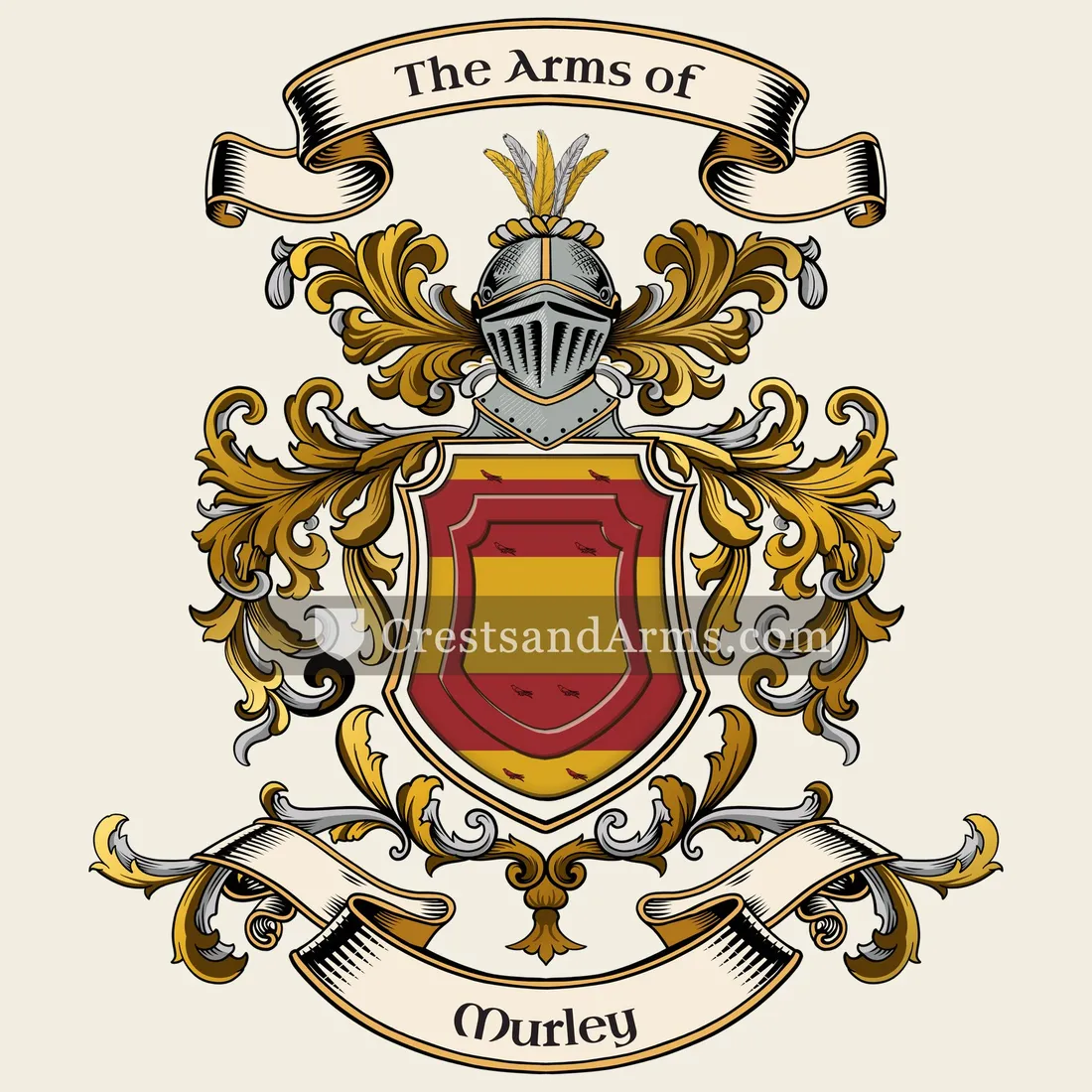
orlePreservation, and protection in battle
martletA younger son, who must win his own land
Colours
Gold (Or)Means: Generosity
Red (Gules)Means: Military strength
Historical info
Source
Sir Bernard Burke, The General Armory of England, Scotland, Ireland and Wales, London: Harrison & Sons, 1884
Blazon (the actual original written record)
“Or, two bars gu. an orle of martlets of the last”
Francec. 1663
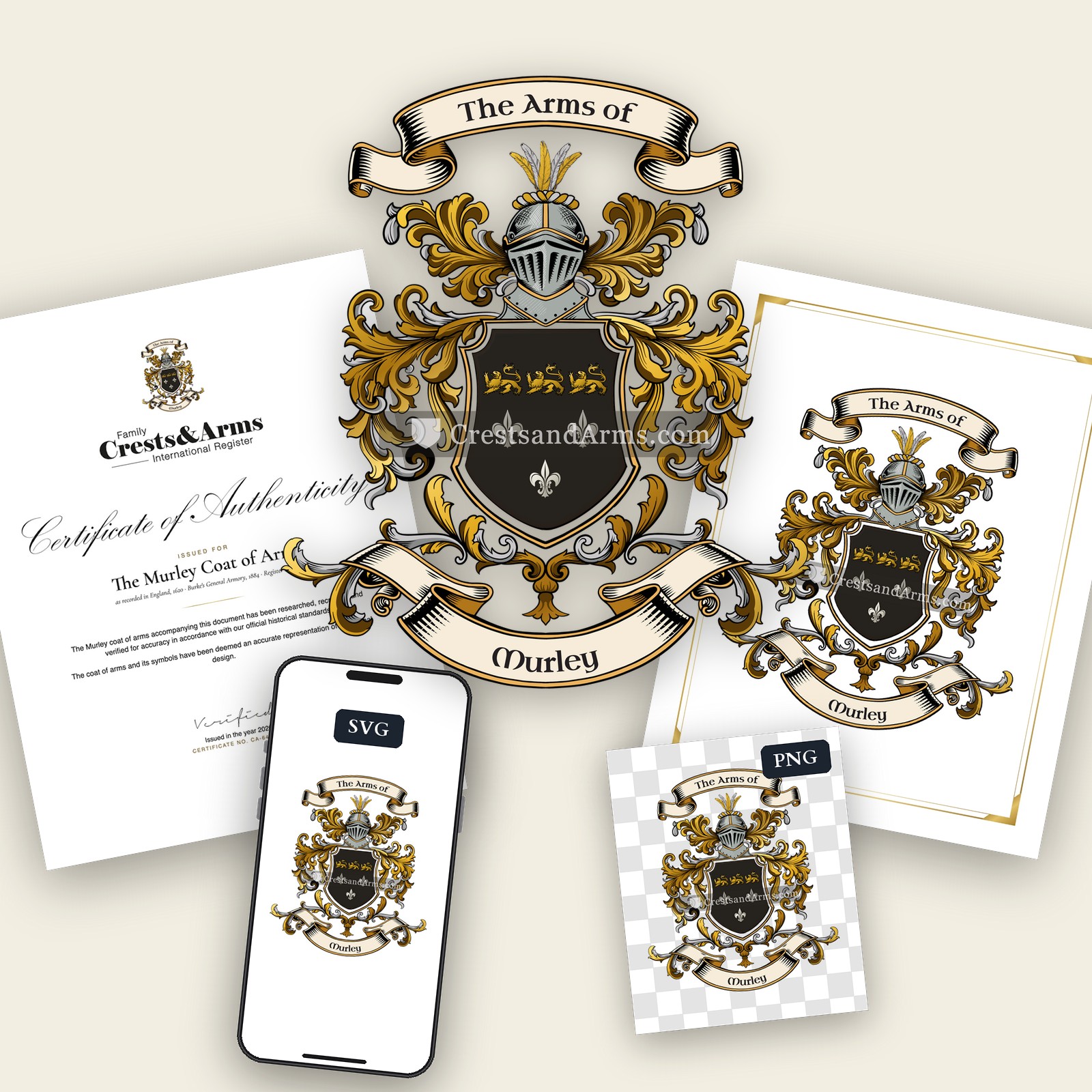
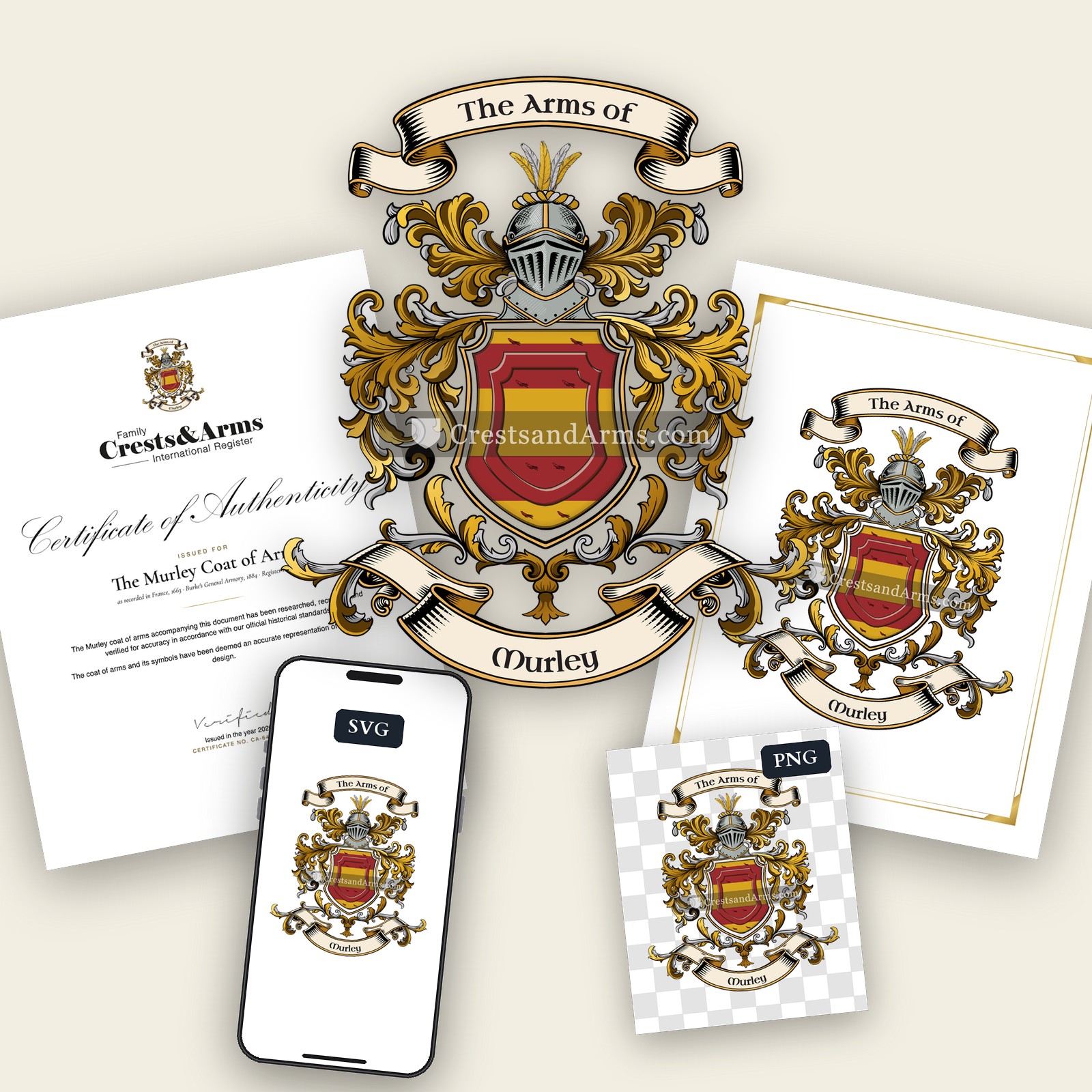
Digital archive packCoat of arms PNG, gold border print PDF, vector SVG and the certificate of authenticity. Sent to your email in minutes.
Map of France showing where the Murley arms are recorded
The Murley arms were recorded in France, c. 1663.
Arms such as these were typically recorded in Bretagne.
More families held coats of arms in Bretagne than anywhere else in France. The land was divided into many small estates rather than a few large ones, so far more households counted as gentry, and each needed a shield of its own to be told apart.
This is where the arms were entered in the register. Families often moved to other parts of the country, so the same name can turn up in more than one region.
The body that granted and recorded arms in France in this period.
Louis XIV of France
Sovereign of the period
Louis XIV of France
1643–1715
Reigning in England when the Murley arms are first recorded.
How Arms Worked in France
In France, a coat of arms was a mark of honor that passed down through the male line to all legitimate descendants. Families often used the same shield without changes to show their shared heritage. If a branch wanted to stand out, they could add a small mark to their shield to show their specific place in the family tree.
Granting authority
The Juge d'armes de France acted as the official authority that regulated and verified coats of arms across the country.
How they got arms
Families typically inherited their arms from ancestors, though they could also receive them through royal grants or by proving their noble status.
Where arms were recorded
Coats of arms were officially recorded in the Armorial Général de France, which began its main collection in the year 1696.
The family's standing
Recorded among the armigerous families of France.
Origin & History of the Murley Family in France
The family name Murley traces its roots to the rugged landscape of Bretagne, where records confirm the presence of family members as early as 1663. During this period, the region was a distinct cultural hub with its own linguistic traditions and social structures. Families in this area often lived in close-knit rural communities that relied on agriculture and maritime trade. The name likely evolved as a way to identify individuals based on their specific village or local geographic landmarks within the Breton countryside. As the seventeenth century progressed, these early ancestors navigated the complex social changes of the French provinces while maintaining their regional identity. Their presence in the historical record during the mid-1600s highlights a long-standing connection to the traditions and daily life of northwestern France.
Murley Meaning & Related Branches
Root word
Moor-leah
A clearing or meadow located on or near a moorland.
This name
MurleyDerived from a topographical location describing someone who lived near a clearing on a moor.
also spelled
Morle
Morleigh
Morlay
Documented Sources
Sir Bernard Burke, The General Armory of England, Scotland, Ireland and Wales, London: Harrison & Sons, 1884
Bardsley, Charles Wareing, A Dictionary of English and Welsh Surnames, 1901
Lancashire Archives, Bishop's Transcripts of Parish Registers, 1620
Reaney, P.H., A Dictionary of British Surnames, 1958
Digital archive packCoat of arms PNG, gold border print PDF, vector SVG and the certificate of authenticity. Sent to your email in minutes.


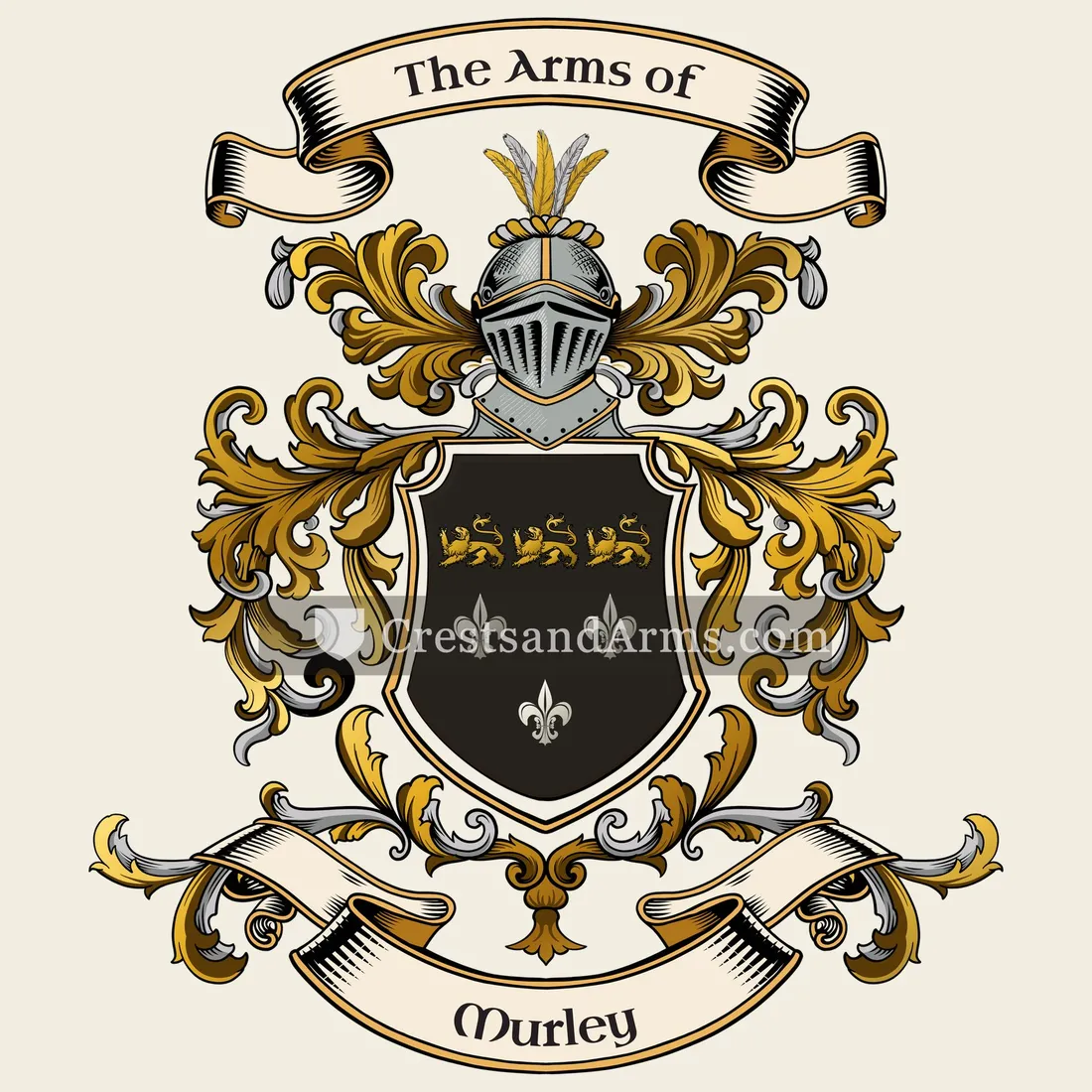
 lionCourage, strength and royalty
 fleur de lisPurity, light, and the sixth son
 lionCourage, strength and royalty
 fleur de lisPurity, light, and the sixth son


 orlePreservation, and protection in battle
 martletA younger son, who must win his own land