Map of Netherlands showing where the My arms are recorded
The My arms were recorded in Leyde, c. 1815.
This is where the arms were entered in the register. Families often moved to other parts of the country, so the same name can turn up in more than one region.
Region
Leyde
Town
Leyde
First recorded
1815
Granting Authority for the My Arms
Hoge Raad van Adel
Photograph made by me · CC BY-SA 3.0
The body that granted and recorded arms in Netherlands in this period.
William I of the Netherlands
Sovereign of the period
William I of the Netherlands
1815–1840
Reigning in Netherlands when the My arms are first recorded.
How Arms Worked in Netherlands
In the Netherlands, coats of arms were often used by noble families and those who held specific public offices. These arms were passed down through the generations to legitimate descendants. Younger branches of a family usually kept the original design without needing to add special marks. This system ensured that the family identity remained clear and consistent over many years.
Granting authority
The Hoge Raad van Adel is the official body that regulates and manages noble titles and coats of arms in the Netherlands.
How they got arms
Families typically obtained their coats of arms through official royal grants or by proving their long-standing historical use of the symbols.
Where arms were recorded
Coats of arms are officially recorded in the registers held by the Hoge Raad van Adel, which began its work in 1814.
The family's standing
Recorded among the armigerous families of Netherlands.
Origin & History of the My Family in Netherlands
The family name My has roots that trace back to the early nineteenth century in the city of Leiden. By 1815, records confirm that members of the family were established residents within this historic Dutch university town. During this period, Leiden was transitioning from the effects of the Napoleonic era and beginning a new chapter as part of the United Kingdom of the Netherlands. Families living in the city at this time often navigated the complex bureaucratic changes introduced by the civil registration system, which required citizens to formally document their births, marriages, and deaths. The presence of the My family in Leiden suggests they were part of the urban population that contributed to the local economy and social fabric of the city during the post-Napoleonic reconstruction. As the family settled into life in Leiden, they became part of the long tradition of Dutch civic history that defined the region during the early modern era.
Coat of Arms & Family Crest Details
Symbols on this shield
escallopThe pilgrim's shell, and a long journey made
Colours
Silver (Argent)Means: Peace and sincerity
Red (Gules)Means: Military strength
Historical info
Source
J. B. Rietstap, Armorial Général, Gouda: G. B. van Goor Zonen, 1884–87
Blazon (the actual original written record)
“D'arg. à trois coquilles de gu.”
BrabantBrabant, c. 1737
Digital archive packCoat of arms PNG, gold border print PDF, vector SVG and the certificate of authenticity. Sent to your email in minutes.
Map of Belgium showing where the My arms are recorded
The My arms were recorded in Brabant, c. 1737.
Brabant lay at the heart of the Low Countries, where the trade routes met. Its towns were wealthy and its landowners many, and both kinds of family kept arms, which is why the region is so heavily represented.
This is where the arms were entered in the register. Families often moved to other parts of the country, so the same name can turn up in more than one region.
The body that granted and recorded arms in Belgium in this period.
Charles VI, Holy Roman Emperor
Sovereign of the period
Charles VI, Holy Roman Emperor
1711–1740
Reigning in Netherlands when the My arms are first recorded.
How Arms Worked in Belgium
In Belgium, a coat of arms is considered personal property that is passed down through the male line to legitimate descendants. Families often use the same shield design across generations to show their shared heritage. If a branch of the family wants to change the design, they must apply for an official update to their specific version of the arms.
Granting authority
The Conseil héraldique is the official body that regulates and approves all coats of arms in Belgium.
How they got arms
Families obtain their coats of arms through formal royal grants or by confirming their historical right to use existing designs.
Where arms were recorded
All approved coats of arms are officially recorded in the public registers of the Conseil héraldique since 1844.
The family's standing
Recorded among the armigerous families of Brabant.
Origin & History of the My Family in Belgium
The family name My has deep roots in the historical region of Brabant, where records confirm members of the family were established by 1737. During the eighteenth century, Brabant was a central hub of the Austrian Netherlands, characterized by a complex mix of agricultural life and growing urban trade. Families living in this area often found themselves navigating the transition between traditional rural customs and the administrative changes brought on by foreign rule. Because the name is short and distinct, it likely emerged from a specific local nickname or a geographic reference unique to the Brabant landscape. As the family settled into this region, they became part of the local social fabric, likely participating in the parish life and community labor that defined the era. By tracing their presence back to this period, we see a family that was firmly planted in the heart of what would eventually become modern Belgium, surviving through generations of regional shifts and cultural evolution.
Coat of Arms & Family Crest Details
Symbols on this shield
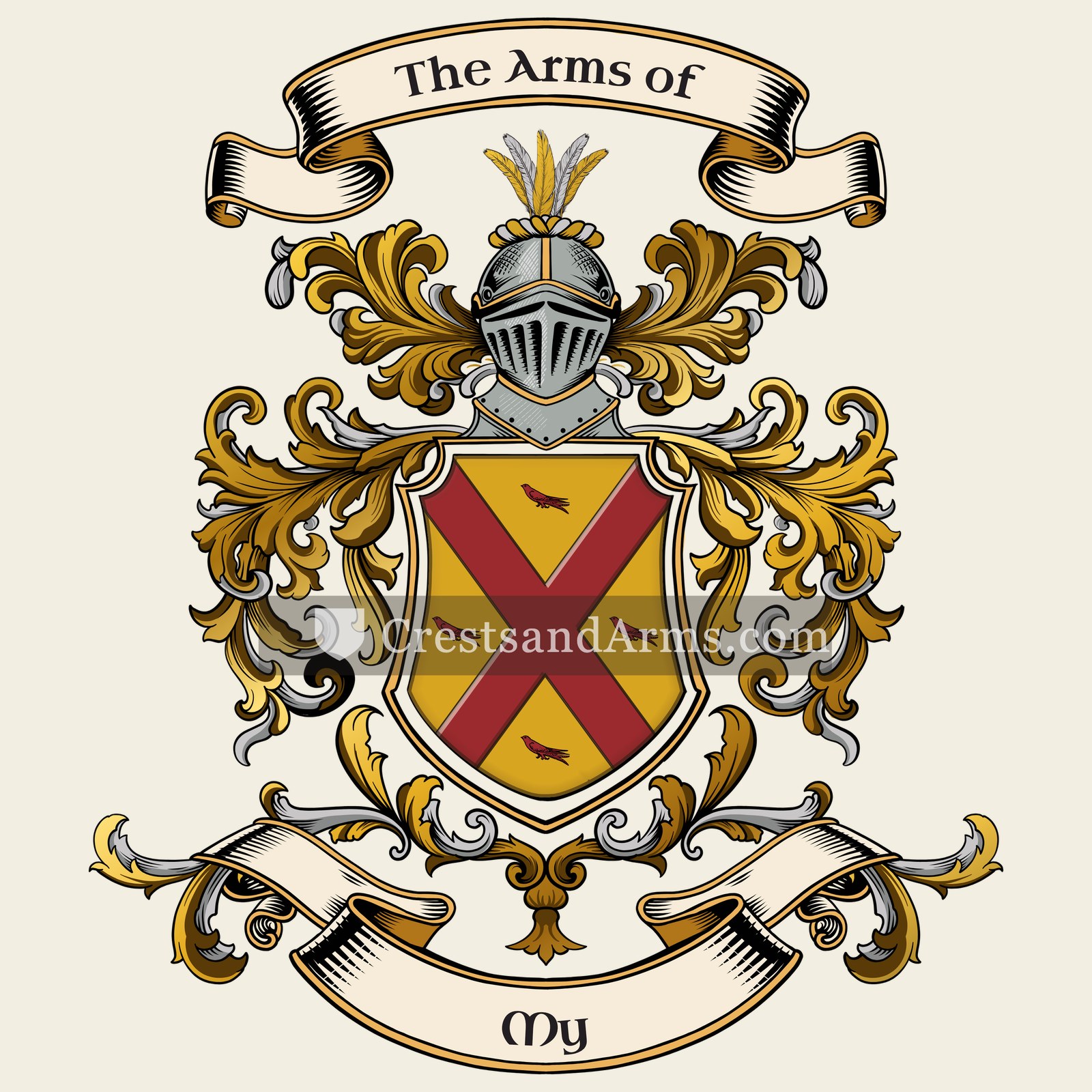
saltireResolution, and St Andrew's cross
martletA younger son, who must win his own land
Colours
Gold (Or)Means: Generosity
Red (Gules)Means: Military strength
Historical info
Source
Sir Bernard Burke, The General Armory of England, Scotland, Ireland and Wales, London: Harrison & Sons, 1884
Blazon (the actual original written record)
“Or, a saltire betw. four martlets gu”
Francec. 1663
Digital archive packCoat of arms PNG, gold border print PDF, vector SVG and the certificate of authenticity. Sent to your email in minutes.
Map of France showing where the My arms are recorded
The My arms were recorded in France, c. 1663.
Arms such as these were typically recorded in Bretagne.
More families held coats of arms in Bretagne than anywhere else in France. The land was divided into many small estates rather than a few large ones, so far more households counted as gentry, and each needed a shield of its own to be told apart.
This is where the arms were entered in the register. Families often moved to other parts of the country, so the same name can turn up in more than one region.
The body that granted and recorded arms in France in this period.
Louis XIV of France
Sovereign of the period
Louis XIV of France
1643–1715
Reigning in Netherlands when the My arms are first recorded.
How Arms Worked in France
In France, a coat of arms was a mark of honor that passed down through the male line to all legitimate descendants. Families often used the same shield without changes to show their shared heritage. If a branch wanted to stand out, they could add a small mark to their shield to show their specific place in the family tree.
Granting authority
The Juge d'armes de France acted as the official authority that regulated and verified coats of arms across the country.
How they got arms
Families typically inherited their arms from ancestors, though they could also receive them through royal grants or by proving their noble status.
Where arms were recorded
Coats of arms were officially recorded in the Armorial Général de France, which began its main collection in the year 1696.
The family's standing
Recorded among the armigerous families of France.
Origin & History of the My Family in France
The family name My is deeply rooted in the historical landscape of Brittany, a region in northwestern France known for its distinct cultural identity and maritime traditions. By the year 1663, records confirm that members of the family were already established within this province, living through a period marked by the consolidation of royal power under King Louis XIV. During the seventeenth century, families in Brittany often lived in close-knit rural communities where they were deeply connected to the local parish system. Life for the My family at this time would have revolved around the agricultural cycles of the Breton countryside or the bustling trade routes along the Atlantic coast. As the name appears in regional documentation during this era, it reflects the steady growth of families who helped shape the social fabric of the province long before the major political shifts of the French Revolution.
Related Branches & Arms
Root word
Maria
A Hebrew name of uncertain meaning, possibly beloved or bitter.
This name
MyA Dutch diminutive or short form derived from the name Maria.
also spelled
Moye
Moys
Moyy
Moyse
Documented Sources
J. B. Rietstap, Armorial Général, Gouda: G. B. van Goor Zonen, 1884–87
Regionaal Archief Leiden, Burgerlijke Stand van Leiden (1811–1940)
Digital archive packCoat of arms PNG, gold border print PDF, vector SVG and the certificate of authenticity. Sent to your email in minutes.


 shipEnterprise, and a great voyage undertaken
 mulletThe third son, and a divine quality from above
 shipEnterprise, and a great voyage undertaken
 mulletThe third son, and a divine quality from above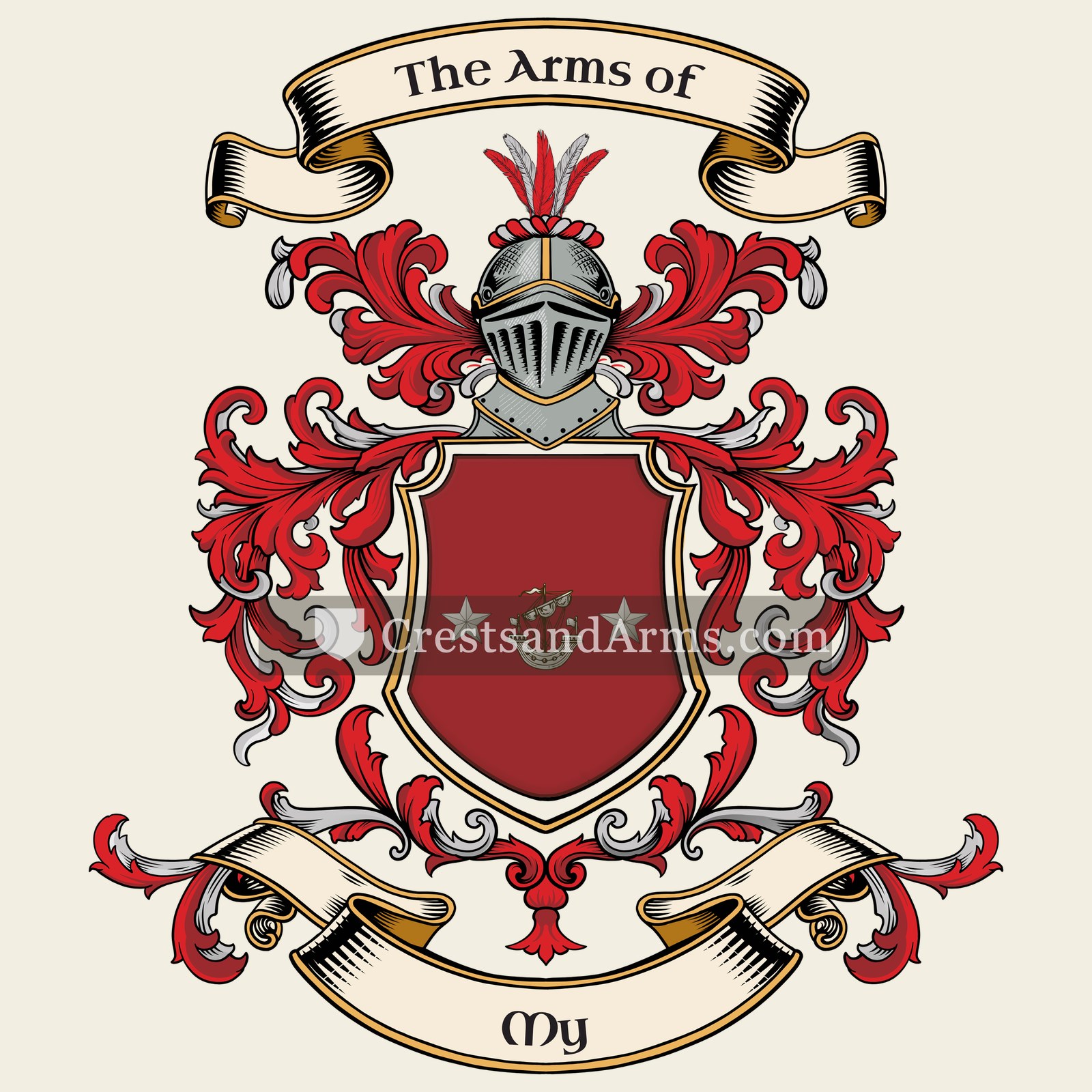


 escallopThe pilgrim's shell, and a long journey made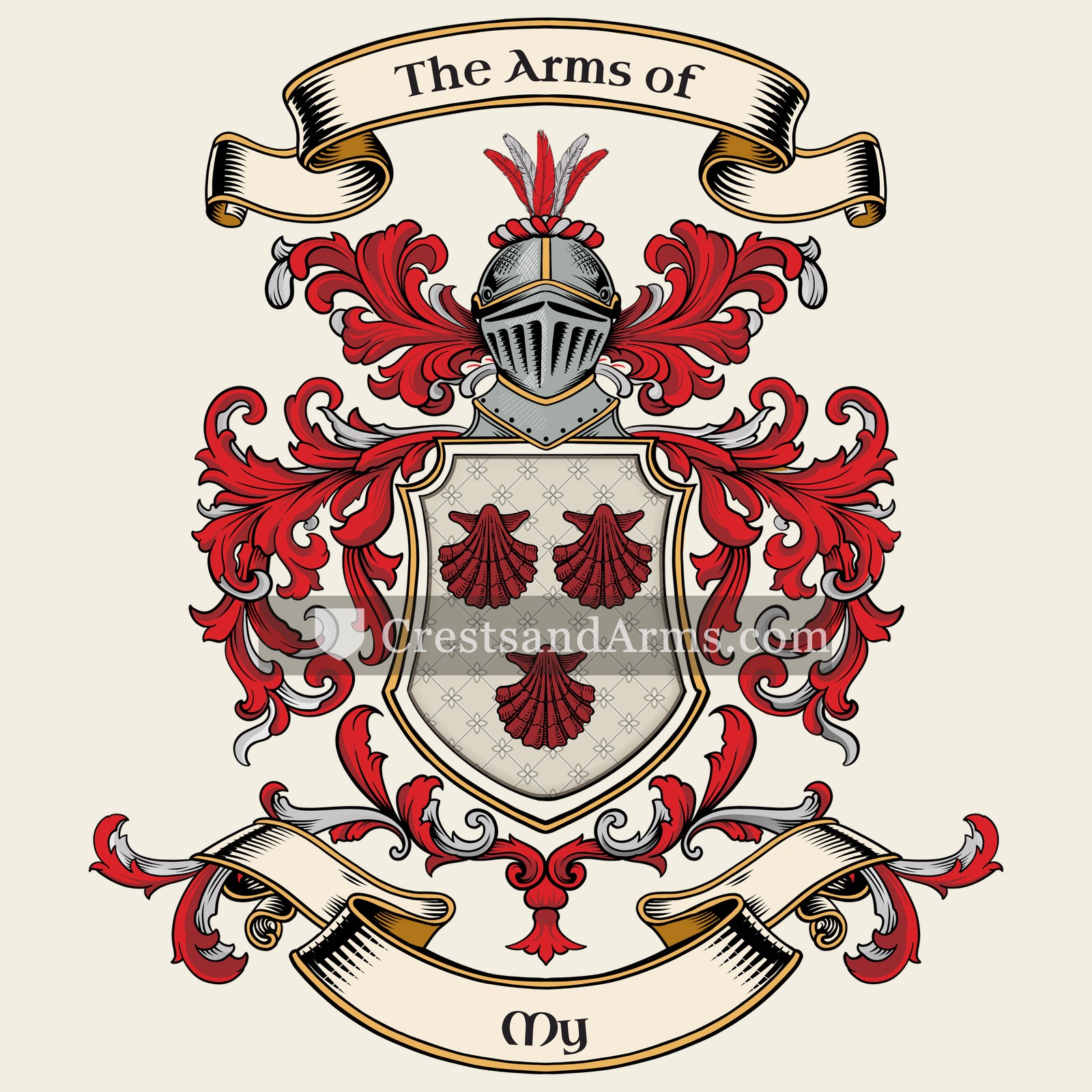


 saltireResolution, and St Andrew's cross
 martletA younger son, who must win his own land