Map of Italy showing where the Naidoo arms are recorded
The Naidoo arms were recorded in Naples, c. 1775.
Naples was the largest city in Italy and the seat of a kingdom. Its noble houses were numerous, and the kingdom kept formal lists of the families entitled to arms, which is why so many appear in the records.
This is where the arms were entered in the register. Families often moved to other parts of the country, so the same name can turn up in more than one region.
The body that granted and recorded arms in Italy in this period.
Alvise Giovanni Mocenigo
Sovereign of the period
Alvise Giovanni Mocenigo
1763–1778
Reigning in Italy when the Naidoo arms are first recorded.
How Arms Worked in Italy
In the Italian states, coats of arms were often used by noble families to show their status and history. These symbols were passed down through the generations to all legitimate male descendants. Younger branches of a family usually kept the original design but sometimes added small changes to distinguish their specific line from the main branch.
Granting authority
Various local rulers and city governments controlled the use of coats of arms across the different Italian states.
How they got arms
Families often assumed their own arms or received them as official grants from local lords, popes, or city councils.
Where arms were recorded
Arms were recorded in local city archives or private family books rather than in one single national register.
The family's standing
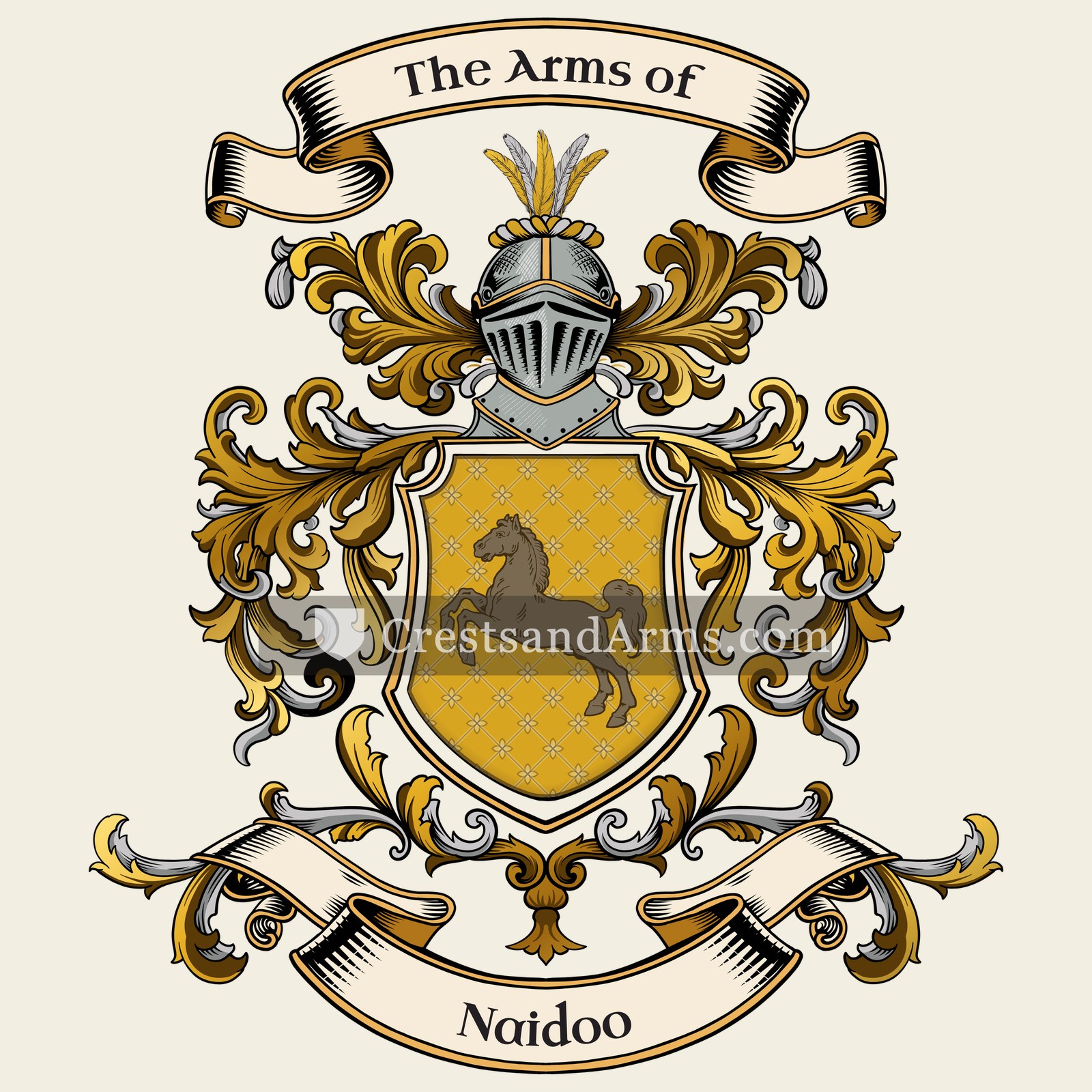
Recorded among the armigerous families of Naples.
Origin & History of the Naidoo Family in Italy
The history of the Naidoo family name is deeply connected to the movement of people across the Indian Ocean and the Mediterranean during the eighteenth century. While the name is widely recognized today as being of South Indian origin, historical records confirm that family members were established in the Italian city of Naples by 1775. During this period, Naples served as a major maritime hub where merchants and travelers from distant lands often settled to participate in trade. The presence of the family in such a prominent European port suggests that early ancestors were likely involved in international commerce or maritime logistics. This migration pattern highlights the long history of global connectivity that defined the lives of the family well before the modern era. By settling in Italy, these early members integrated into the local society while maintaining the unique identity associated with their name.
Related Branches & Arms
Root word
Nadu
Derived from the Tamil word for land or country.
This name
NaidooA surname of South Indian origin often meaning person from the land or country.
also spelled
Niddo
Needo
Documented Sources
J. B. Rietstap, Armorial Général, Gouda: G. B. van Goor Zonen, 1884–87
Archivio di Stato di Napoli, Stato Civile della Restaurazione, Quartiere Porto
De Seta, Cesare, Storia della città di Napoli, 2008
Gallo, Marco, I forestieri a Napoli nel Settecento, 1995
Digital archive packCoat of arms PNG, gold border print PDF, vector SVG and the certificate of authenticity. Sent to your email in minutes.


 horseReadiness to serve king and country
 horseReadiness to serve king and country