A record of documented arms, meaning and origin, researched for the Nath family lines. Documented in 2 countries.
Reg. 2402 · Austrian, M–O
Meaning of the Nath family crest colors & symbols
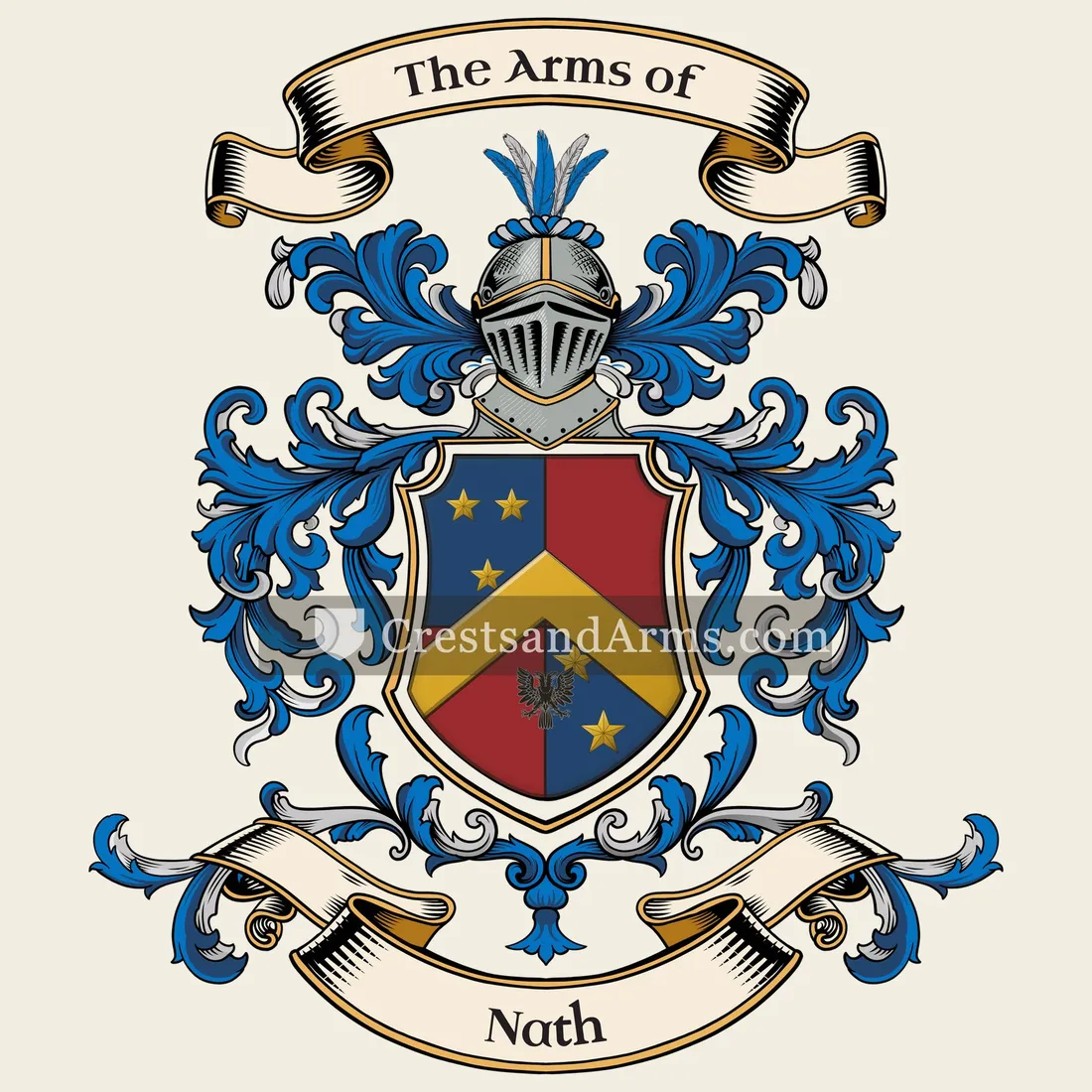
Symbols on this shield
chevronProtection, and faithful service completed
eagleNobility, strength and a keen mind
mulletThe third son, and a divine quality from above
Colours
Blue (Azure)Means: Loyalty and truth
Red (Gules)Means: Military strength
Gold (Or)Means: Generosity
Black (Sable)Means: Constancy
Historical info
Source
J. B. Rietstap, Armorial Général, Gouda: G. B. van Goor Zonen, 1884–87
Blazon (the actual original written record)
“Ec.: aux 1 et 4 d'azur au chev. d'or, acc. de trois étoiles du même (van der Nath); aux 2 et 3 parti-émanché de gu. et d'or, de dix pièces (Duiveland). Sur le tout d'or à l'aigle ép. de sa. S.: deux lions d'or.”
Austriac. 1772
Digital archive packCoat of arms PNG, gold border print PDF, vector SVG and the certificate of authenticity. Sent to your email in minutes.
Map of Austria showing where the Nath arms are recorded
The Nath arms were recorded in Austria, c. 1772.
Arms such as these were typically recorded in Tyrol.
Tyrol was mountain country in western Austria, where the valleys were held by families who had been there a very long time. Old tenure counted for more than money, and old families carried arms.
This is where the arms were entered in the register. Families often moved to other parts of the country, so the same name can turn up in more than one region.
Region
Tyrol
First recorded
1772
Granting Authority for the Nath Arms
Imperial and Royal chancery
Sodacan · CC BY-SA 3.0
The body that granted and recorded arms in Austria in this period.
Joseph II, Holy Roman Emperor
Sovereign of the period
Joseph II, Holy Roman Emperor
1765–1790
Reigning in Austria when the Nath arms are first recorded.
How Arms Worked in Austria
Austrian coats of arms were often linked directly to noble titles granted by the Emperor. These symbols belonged to the entire family line rather than just one individual. When a family grew, new branches kept the original design without needing to change it. This system allowed all members of a noble house to share the same identity across many generations.
Granting authority
The Imperial and Royal chancery managed all heraldic matters and controlled the official granting of arms throughout the Austrian lands.
How they got arms
Families typically received their arms through a formal imperial decree that often accompanied the elevation of a person to noble status.
Where arms were recorded
Official records of these grants were kept in the Imperial Register of Nobility which began its formal documentation process in 1453.
The family's standing
Recorded among the armigerous families of Austria.
Origin & History of the Nath Family in Austria
The family name Nath has deep roots in the mountainous landscape of the Austrian Tyrol, where records confirm members of the family were established by 1772. During this period, the Tyrol region was a rugged and isolated area where family identities were often tied closely to the specific alpine valleys they inhabited. The name likely functioned as a descriptor or a localized identifier within these tight-knit mountain communities, serving to distinguish families as they navigated the transition from rural agricultural life to the more structured administrative systems of the Habsburg Empire. Because the Tyrol served as a vital crossroads for trade routes connecting northern and southern Europe, the Nath family would have lived in a region defined by constant cultural exchange and the steady growth of local village governance. By the late 18th century, the presence of the family in these records suggests they were integrated into the social fabric of the region, participating in the local customs and economic activities that defined life in the high Alps.
Meaning of the Nath family crest colors & symbols
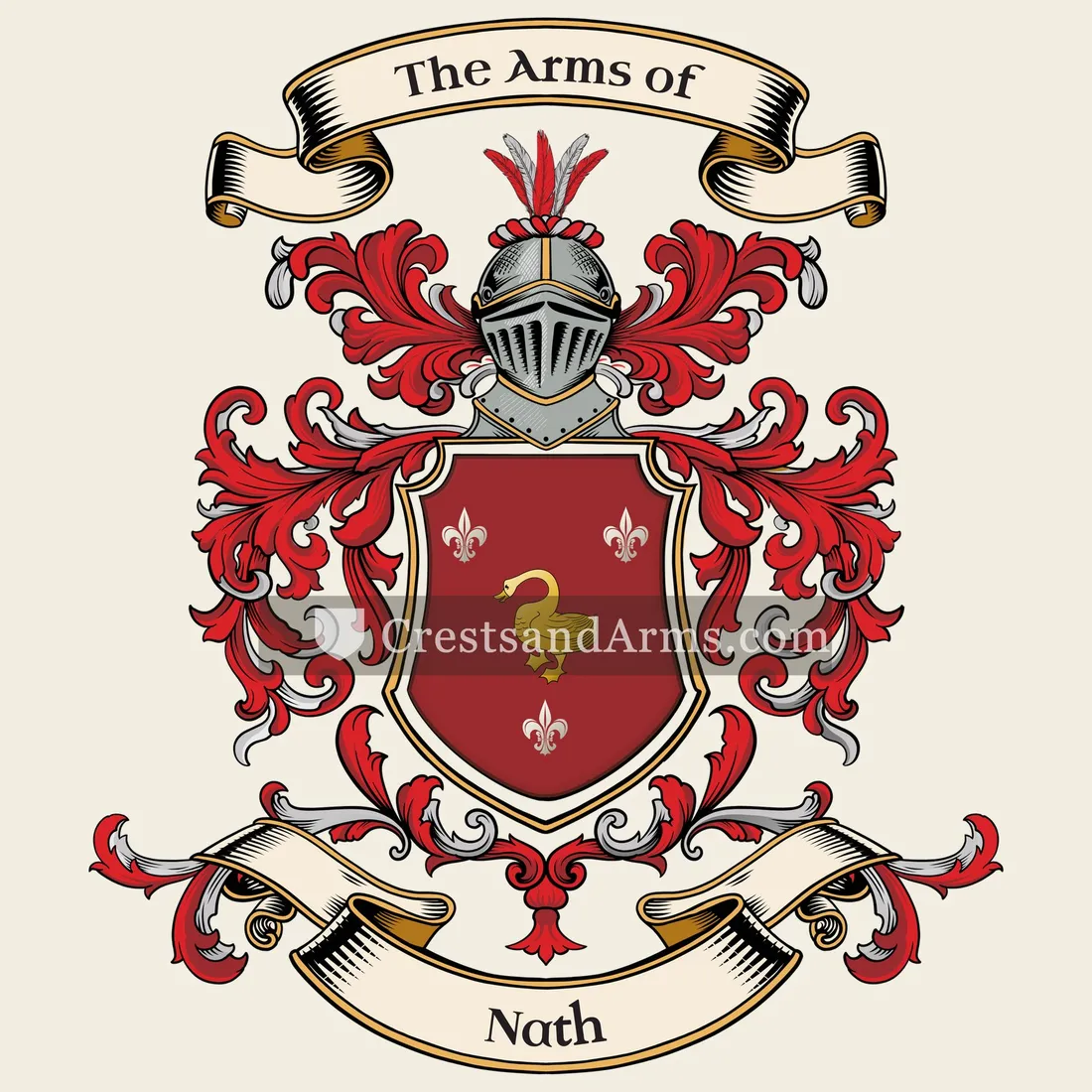
Symbols on this shield
swanGrace, light and the poet's art
fleur de lisPurity, light, and the sixth son
Colours
Red (Gules)Means: Military strength
Gold (Or)Means: Generosity
Silver (Argent)Means: Peace and sincerity
Historical info
Source
J. B. Rietstap, Armorial Général, Gouda: G. B. van Goor Zonen, 1884–87
Blazon (the actual original written record)
“De gu. à un cygne d'or, acc. de trois fleurs-de-lis d'arg.”
Netherlandsc. 1815
Digital archive packCoat of arms PNG, gold border print PDF, vector SVG and the certificate of authenticity. Sent to your email in minutes.
Map of Netherlands showing where the Nath arms are recorded
The Nath arms were recorded in Netherlands, c. 1815.
Arms such as these were typically recorded in Friesland.
Friesland was low, wet country on the northern coast of the Netherlands, farmed by families who had held the same land for centuries. Free landholders were unusually common there, and a free landholder could carry arms.
This is where the arms were entered in the register. Families often moved to other parts of the country, so the same name can turn up in more than one region.
Region
Friesland
First recorded
1815
Granting Authority for the Nath Arms
Hoge Raad van Adel
Photograph made by me · CC BY-SA 3.0
The body that granted and recorded arms in Netherlands in this period.
William I of the Netherlands
Sovereign of the period
William I of the Netherlands
1815–1840
Reigning in Austria when the Nath arms are first recorded.
How Arms Worked in Netherlands
In the Netherlands, coats of arms were often used by noble families and those who held specific public offices. These arms were passed down through the generations to legitimate descendants. Younger branches of a family usually kept the original design without needing to add special marks. This system ensured that the family identity remained clear and consistent over many years.
Granting authority
The Hoge Raad van Adel is the official body that regulates and manages noble titles and coats of arms in the Netherlands.
How they got arms
Families typically obtained their coats of arms through official royal grants or by proving their long-standing historical use of the symbols.
Where arms were recorded
Coats of arms are officially recorded in the registers held by the Hoge Raad van Adel, which began its work in 1814.
The family's standing
Recorded among the armigerous families of Netherlands.
Origin & History of the Nath Family in Netherlands
The family name Nath has roots in the northern province of Friesland, where records confirm members of the family were living by 1815. During this period, the Netherlands underwent a significant transition regarding how citizens recorded their identities. In 1811, under the rule of Napoleon, the Dutch government passed a law requiring all families to register a formal surname to improve tax collection and military conscription. Before this time, many families in rural areas like Friesland used patronymics, which were names based on their father’s first name. The appearance of the name Nath in the early 19th century suggests that the family chose to solidify this specific name during the mandatory registration process. This choice likely reflected a long-standing local identity or a specific ancestral nickname that had been passed down through generations in the Frisian countryside. By choosing to record their name officially, the family ensured that their history and lineage would be preserved in the national civil registries that remain accessible to researchers today.
Nath Meaning & Related Branches
Root word
Nathan
Hebrew origin meaning God has given.
This name
NathA patronymic surname derived from the given name indicating descent from a person named Nathan.
also spelled
vanNath
Nath
vanderNat
Documented Sources
J. B. Rietstap, Armorial Général, Gouda: G. B. van Goor Zonen, 1884–87
Tiroler Landesarchiv, Tiroler Steuerkataster 1772
Huter, Franz, Tiroler Urkundenbuch, 1937
Digital archive packCoat of arms PNG, gold border print PDF, vector SVG and the certificate of authenticity. Sent to your email in minutes.


 chevronProtection, and faithful service completed
 eagleNobility, strength and a keen mind
 mulletThe third son, and a divine quality from above
 chevronProtection, and faithful service completed
 eagleNobility, strength and a keen mind
 mulletThe third son, and a divine quality from above


 swanGrace, light and the poet's art
 fleur de lisPurity, light, and the sixth son