Map of England showing where the Neace arms are recorded
The Neace arms were recorded in Oxford, c. 1620.
Oxfordshire was farming country with the university at its centre, and both produced families of standing. Scholars and lawyers who did well bought manors nearby, and holding a manor was the ordinary route to a coat of arms.
This is where the arms were entered in the register. Families often moved to other parts of the country, so the same name can turn up in more than one region.
The body that granted and recorded arms in England in this period.
James VI and I
Sovereign of the period
James VI and I
1603–1625
Reigning in England when the Neace arms are first recorded.
How Arms Worked in England
English heraldry allowed arms to be shared by all legitimate descendants of the original owner. These symbols were treated as personal property that moved through the generations to all children. While the eldest son kept the original design, other family members could use the same shield without needing to change it or register their own unique versions.
Granting authority
The College of Arms in London has regulated the use of coats of arms throughout England and Wales since 1484.
How they got arms
Families typically obtained their coats of arms through a formal grant from the Crown or by proving their ancient right to them.
Where arms were recorded
All official coats of arms are recorded in the registers kept at the College of Arms, which date back to the fifteenth century.
The family's standing
Recorded among the armigerous families of Oxford.
Origin & History of the Neace Family in England
The family name Neace carries a history rooted in the academic and social landscape of seventeenth-century England. Records confirm that members of the family were established in the city of Oxford by 1620, a time when the city was a major center for scholars, merchants, and craftsmen. During this era, Oxford was a hub of intellectual life, and families living there were often connected to the university system or the growing trade networks that supported the city. While the name likely evolved from regional dialects or occupational descriptions common to the English Midlands, its presence in such a prominent location suggests that the early Neace family was part of the stable middle class that helped sustain the city’s economy. Over the following decades, these early residents navigated the social shifts of the English Civil War and the subsequent restoration of the monarchy, eventually laying the groundwork for the family’s later migration and expansion.
Meaning of the Neace family crest colors & symbols
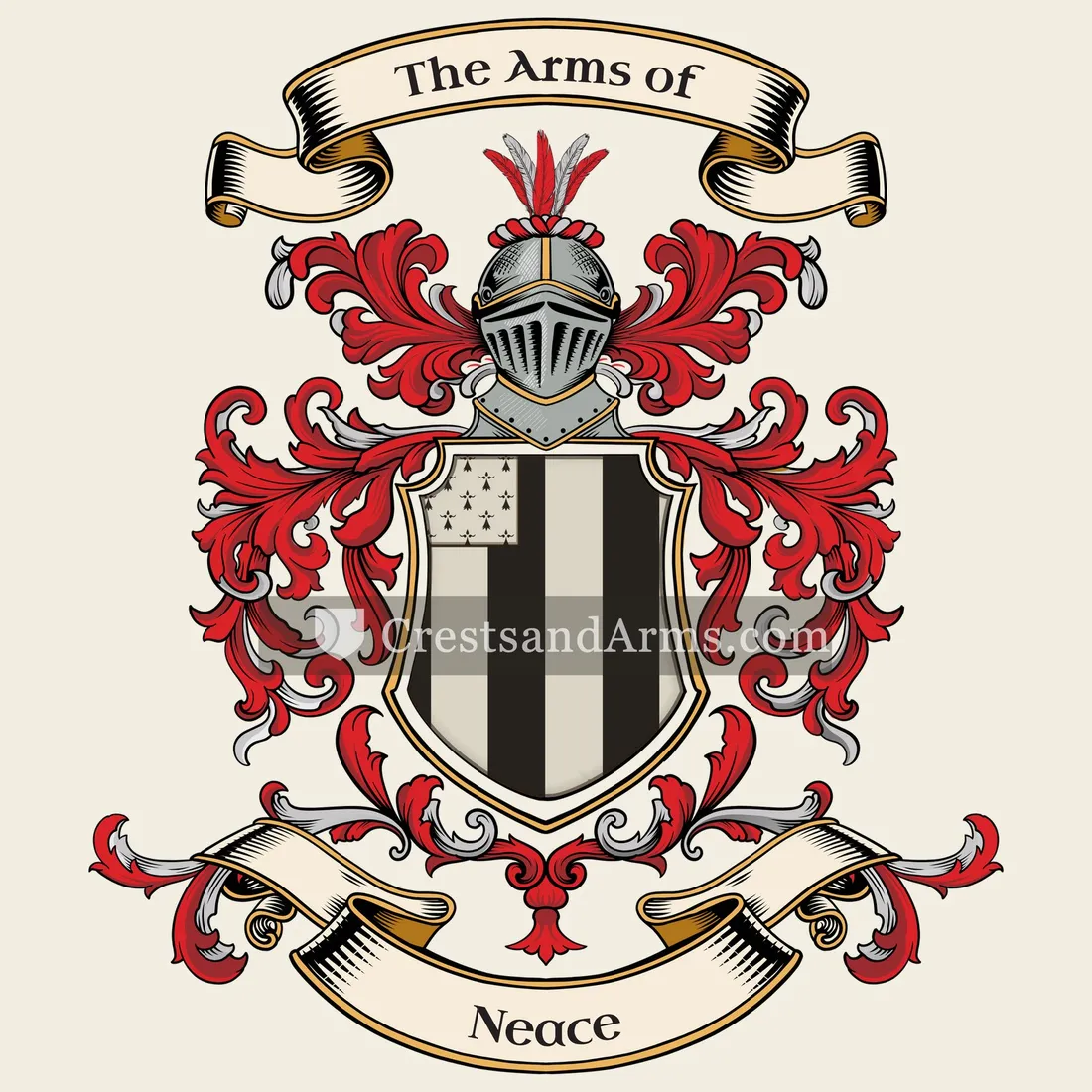
Symbols on this shield
cantonA mark of honour granted by the sovereign
Colours
Silver (Argent)Means: Peace and sincerity
ErmineMeans: Dignity
Black (Sable)Means: Constancy
Historical info
Source
Sir Bernard Burke, The General Armory of England, Scotland, Ireland and Wales, London: Harrison & Sons, 1884
Blazon (the actual original written record)
“Paly of four ar. and sa. a canton erm”
IrelandMunster, c. 1625
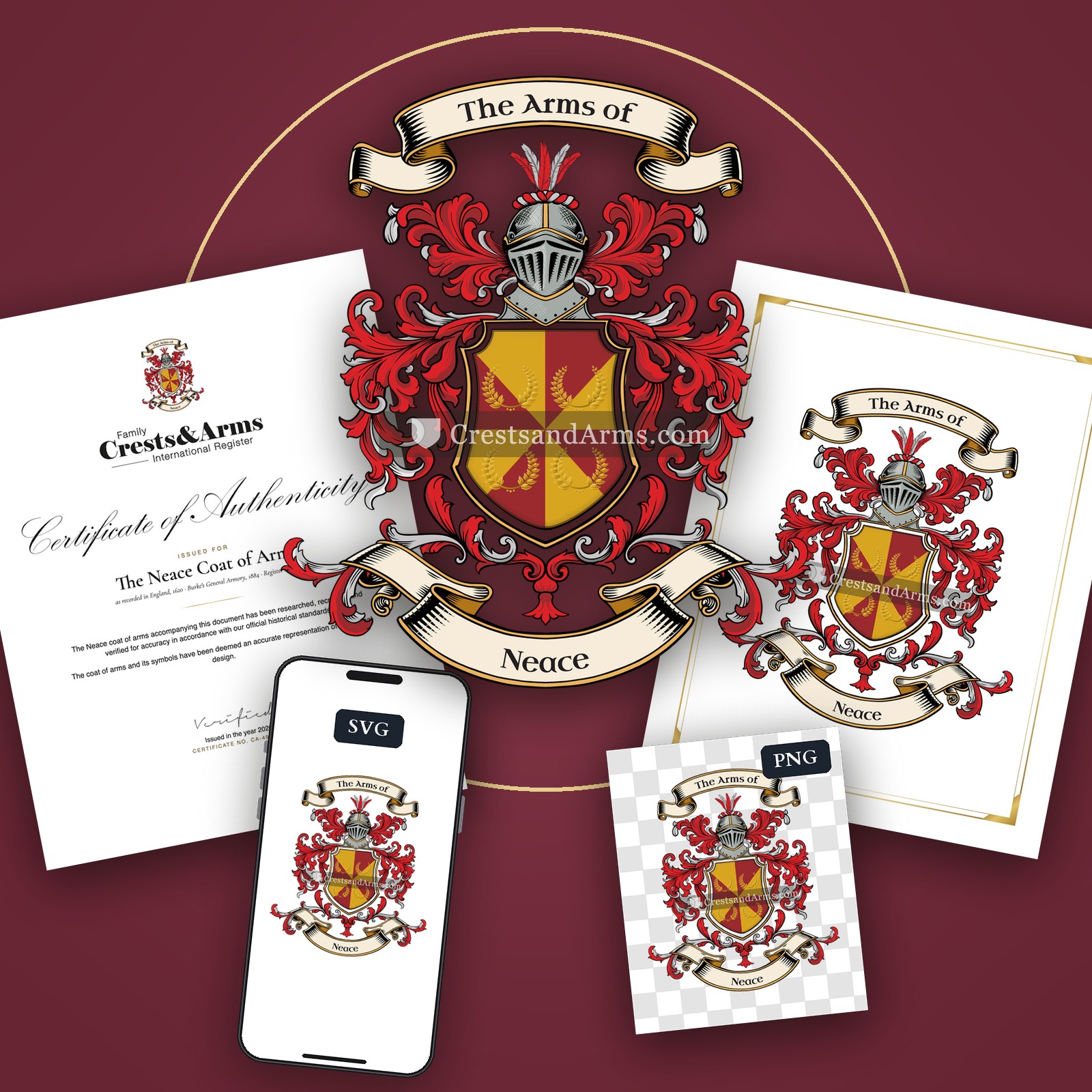
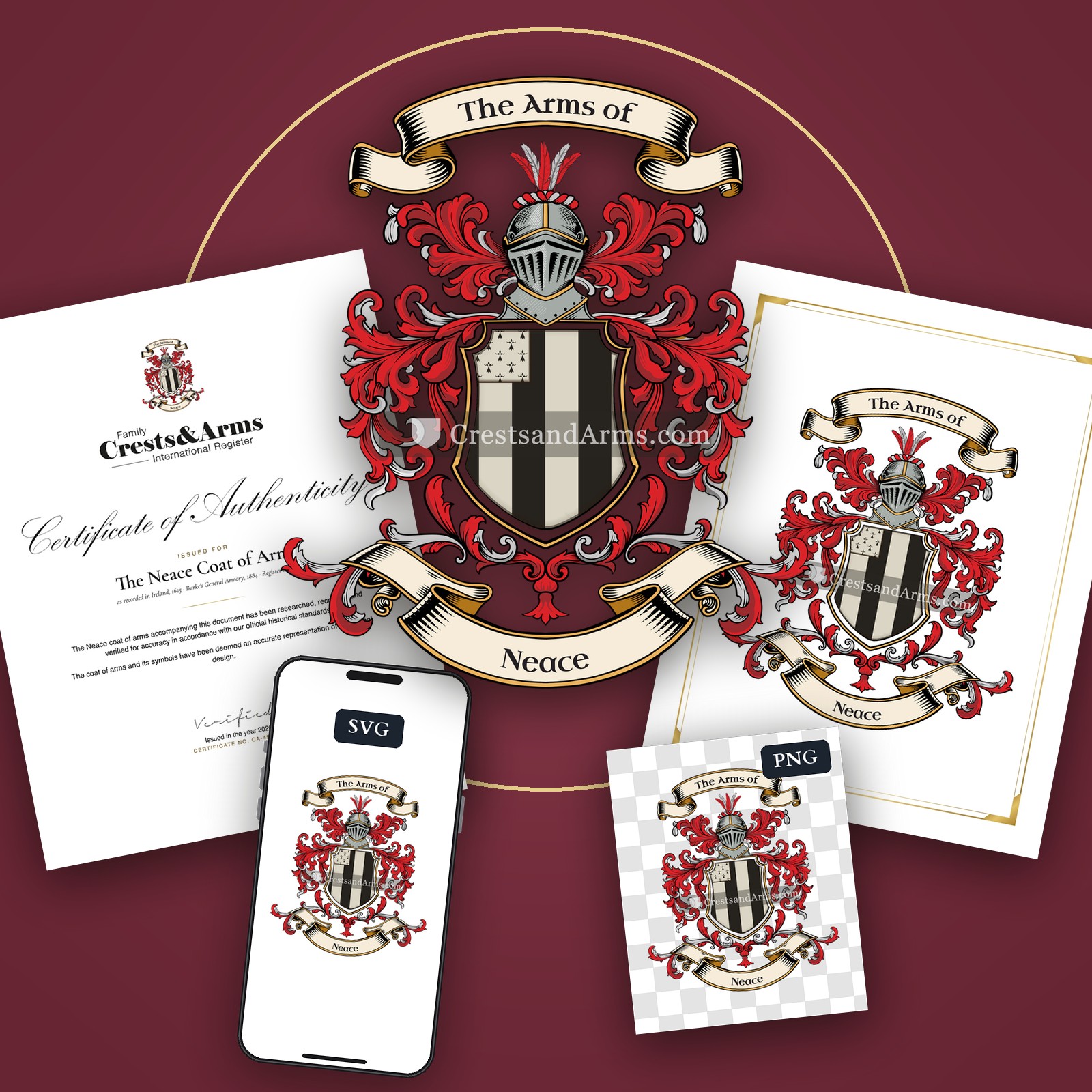
Digital archive packCoat of arms PNG, gold border print PDF, vector SVG and the certificate of authenticity. Sent to your email in minutes.
Map of Ireland showing where the Neace arms are recorded
The Neace arms were recorded in Munster, c. 1625.
This is where the arms were entered in the register. Families often moved to other parts of the country, so the same name can turn up in more than one region.
The body that granted and recorded arms in Ireland in this period.
James VI and I
Sovereign of the period
James VI and I
1603–1625
Reigning in England when the Neace arms are first recorded.
How Arms Worked in Ireland
The Ulster King of Arms granted coats of arms to individuals who proved their social standing and good character. These symbols were typically inherited by all legitimate descendants of the original holder. If a family branch wanted a unique look, they could apply for a specific change to their design through the office to ensure their identity remained distinct.
Granting authority
The Ulster King of Arms acted as the official body that regulated and issued all coats of arms throughout Ireland.
How they got arms
Families obtained their arms through formal grants issued by the office after proving their eligibility and paying the required fees.
Where arms were recorded
All official grants were recorded in the registers held by the Ulster King of Arms starting from the year 1552.
The family's standing
Recorded among the armigerous families of Ireland.
Origin & History of the Neace Family in Ireland
The history of the Neace family in Ireland is deeply connected to the turbulent political landscape of the seventeenth century, particularly within the province of Munster. By 1625, records indicate that members of the family were already established in this region, a time when Ireland was undergoing significant social and land-based shifts due to the ongoing plantation policies. The name likely evolved from older Gaelic or Hiberno-Norman roots, reflecting the complex blending of cultures that defined Munster during this era. As the family navigated the transition from traditional clan structures to the more rigid legal systems introduced by the English administration, they remained rooted in the rural landscapes of the south. These early ancestors lived through a period of immense change, where the survival of a family name often depended on their ability to adapt to new land ownership laws and shifting local allegiances.
Neace Meaning & Related Branches
Root word
Niece
Derived from the Old French word for a relative or descendant.
This name
NeaceAn occupational or descriptive surname historically used to identify a kinsman or relative.
also spelled
Newse
Documented Sources
Sir Bernard Burke, The General Armory of England, Scotland, Ireland and Wales, London: Harrison & Sons, 1884
Oxfordshire Archives, Oxford City Council Records: Quarter Sessions and Mayor’s Court, 1620
Foster, Joseph, Alumni Oxonienses: The Members of the University of Oxford, 1500–1714, 1891
Digital archive packCoat of arms PNG, gold border print PDF, vector SVG and the certificate of authenticity. Sent to your email in minutes.


 wreathHonour, and a victory crowned
 wreathHonour, and a victory crowned
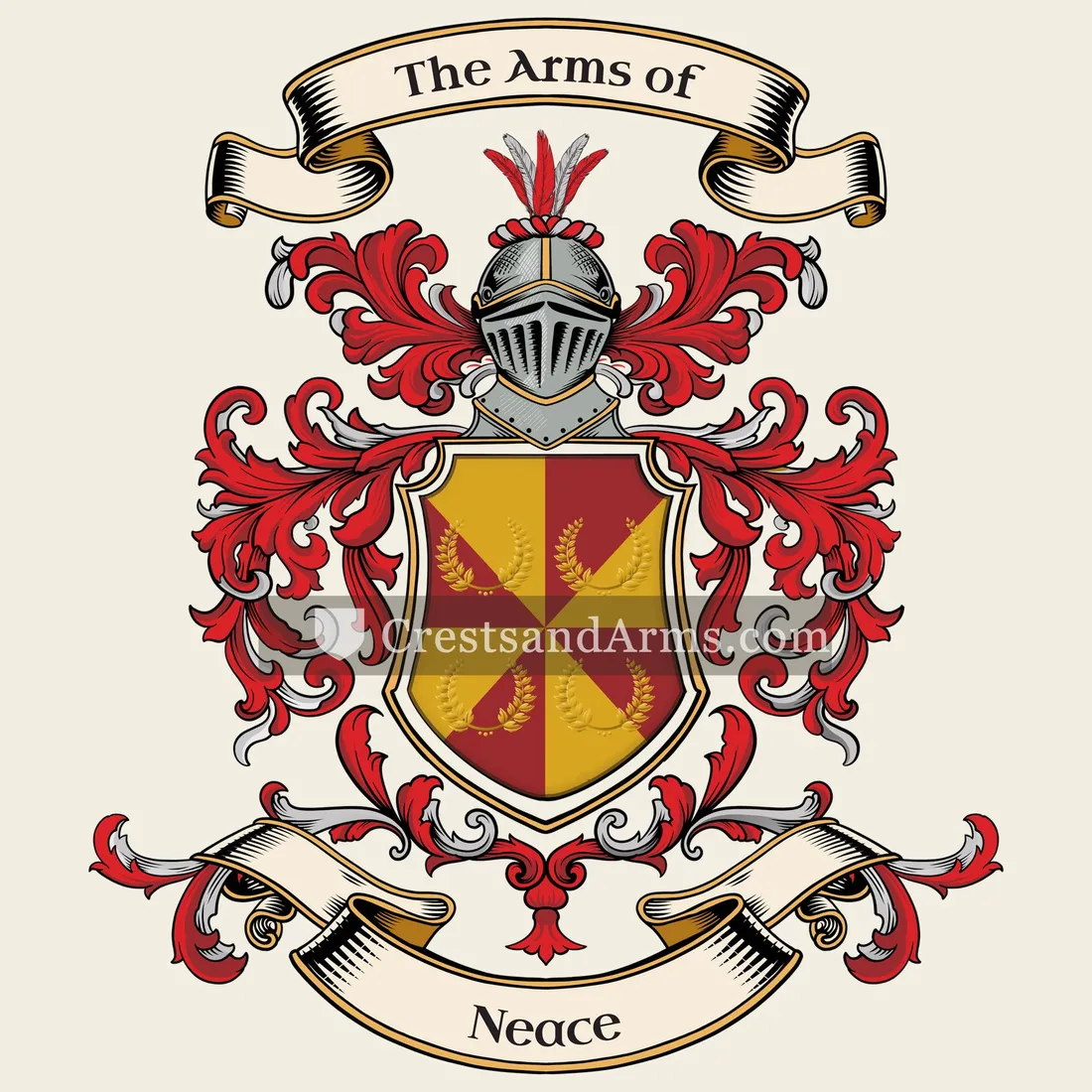


 cantonA mark of honour granted by the sovereign