Map of Germany showing where the Nesselroad arms are recorded
The Nesselroad arms were recorded in Germany, c. 1765.
Arms such as these were typically recorded in Bavaria.
Bavaria was a country of old landed families and walled market towns. Estates passed down the same line for centuries, and both the landowners and the leading townsmen kept arms, which is why so many Bavarian names sit in the registers.
This is where the arms were entered in the register. Families often moved to other parts of the country, so the same name can turn up in more than one region.
The body that granted and recorded arms in Germany in this period.
Francis I, Holy Roman Emperor
Sovereign of the period
Francis I, Holy Roman Emperor
1745–1765
Reigning in Germany when the Nesselroad arms are first recorded.
How Arms Worked in Germany
In the Holy Roman Empire, coats of arms were often granted to individuals by the Emperor or his representatives. These arms were then passed down through the generations to all legitimate descendants of the original holder. Younger branches of a family usually kept the same shield design without needing to change it, as the arms belonged to the entire lineage.
Granting authority
The Holy Roman Emperor held the sole power to grant new coats of arms throughout his vast imperial territories.
How they got arms
Families typically obtained their coats of arms through a formal imperial grant or by proving their noble status to the authorities.
Where arms were recorded
These grants were officially recorded in the Imperial Chancery registers, which began keeping formal records of such honors during the Middle Ages.
The family's standing
Recorded among the armigerous families of Germany.
Origin & History of the Nesselroad Family in Germany
The Nesselroad family name originates from the German regions, where it likely evolved as a descriptive term linked to the local landscape. The name is rooted in the German words "Nessel," meaning nettle, and "Rod," which refers to a piece of land cleared for farming or settlement. This suggests that the earliest ancestors were likely farmers who established their homesteads in areas where nettles grew near newly cleared forest plots. By 1765, records confirm that members of the family were well-established in Bavaria. During this period, families in the region were often tied to specific agricultural communities, and their surname served as a practical way to identify their family’s connection to a particular patch of land. This deep connection to the soil reflects the broader history of rural German families who defined their identities through the work they performed on the land they cultivated.
Coat of Arms & Family Crest Details
Symbols on this shield
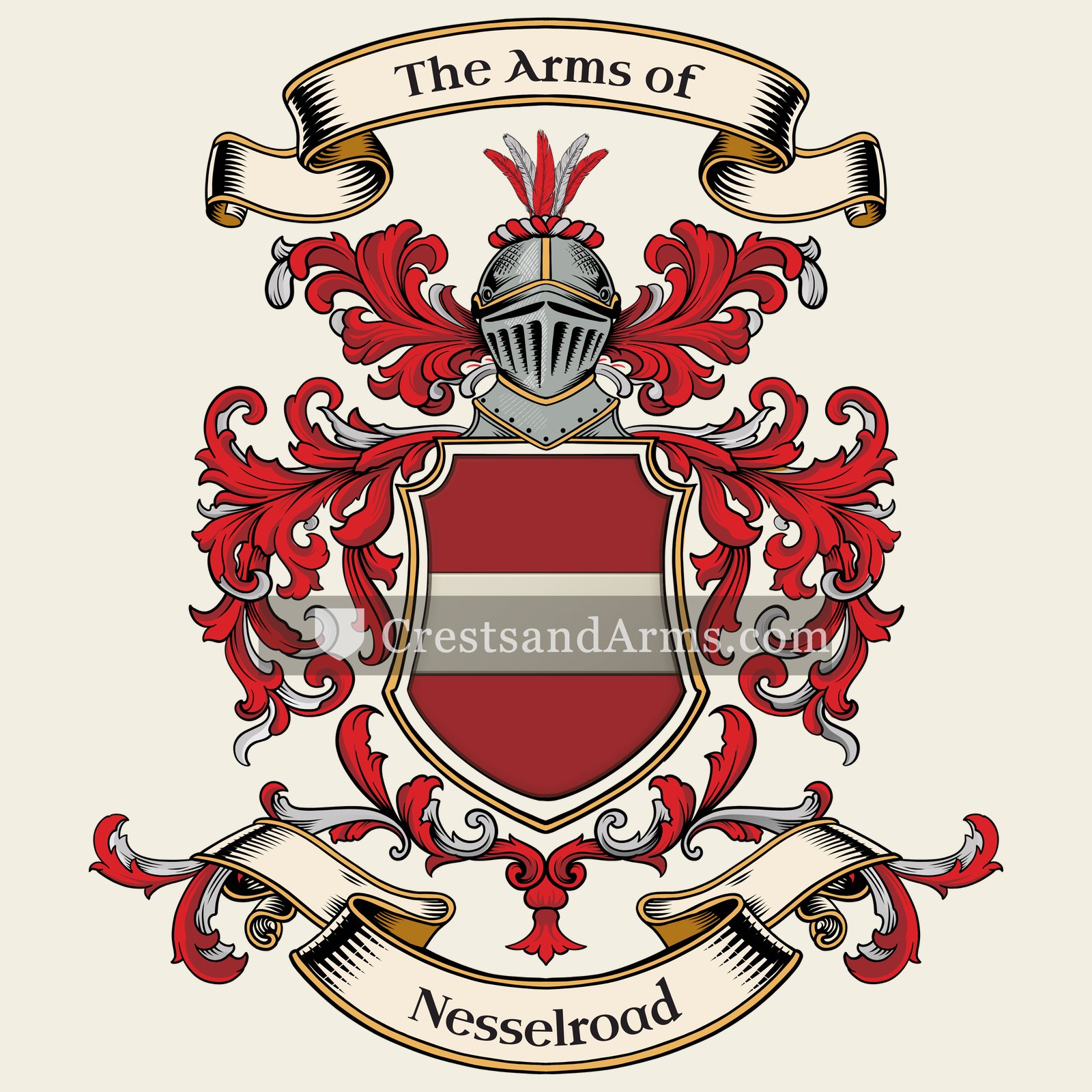
fessThe military belt, and readiness to serve
Colours
Red (Gules)Means: Military strength
Silver (Argent)Means: Peace and sincerity
Historical info
Source
J. B. Rietstap, Armorial Général, Gouda: G. B. van Goor Zonen, 1884–87
Blazon (the actual original written record)
“De gu. à la fasce brét. et c.-brét. d'arg. Cq. cour. C.: un chien braque iss. de gu., coll. de la fasce de l'écu.”
Francec. 1663
Digital archive packCoat of arms PNG, gold border print PDF, vector SVG and the certificate of authenticity. Sent to your email in minutes.
Map of France showing where the Nesselroad arms are recorded
The Nesselroad arms were recorded in France, c. 1663.
Arms such as these were typically recorded in Bretagne.
More families held coats of arms in Bretagne than anywhere else in France. The land was divided into many small estates rather than a few large ones, so far more households counted as gentry, and each needed a shield of its own to be told apart.
This is where the arms were entered in the register. Families often moved to other parts of the country, so the same name can turn up in more than one region.
The body that granted and recorded arms in France in this period.
Louis XIV of France
Sovereign of the period
Louis XIV of France
1643–1715
Reigning in Germany when the Nesselroad arms are first recorded.
How Arms Worked in France
In France, a coat of arms was a mark of honor that passed down through the male line to all legitimate descendants. Families often used the same shield without changes to show their shared heritage. If a branch wanted to stand out, they could add a small mark to their shield to show their specific place in the family tree.
Granting authority
The Juge d'armes de France acted as the official authority that regulated and verified coats of arms across the country.
How they got arms
Families typically inherited their arms from ancestors, though they could also receive them through royal grants or by proving their noble status.
Where arms were recorded
Coats of arms were officially recorded in the Armorial Général de France, which began its main collection in the year 1696.
The family's standing
Recorded among the armigerous families of France.
Origin & History of the Nesselroad Family in France
The Nesselroad family name traces its roots to the coastal region of Bretagne, France, where records confirm the presence of family members as early as 1663. During this period, the name was likely associated with the local landscape and the agricultural traditions of the northwestern French countryside. Families in this region often lived in small, tight-knit communities where they contributed to the local economy through farming or maritime trade. As the seventeenth century progressed, the family became part of the social fabric of the province, navigating the complex political and religious shifts that defined life under the French monarchy. While the name evolved in spelling and pronunciation over the following generations, its origins remain firmly tied to the distinct culture and history of the Breton people.
Related Branches & Arms
Root word
Nessel and Rode
Nettle plant and a forest clearing or land cleared for cultivation.
This name
NesselroadRefers to a person who lived near a clearing overgrown with stinging nettles.
also spelled
Nesselrod
Nesselrodt
Nesselroed
Neselrod
Documented Sources
J. B. Rietstap, Armorial Général, Gouda: G. B. van Goor Zonen, 1884–87
Bahlow, Hans, Deutsches Namenlexikon: Familien- und Vornamen nach Ursprung und Sinn erklärt, 1967


 treeLife, endurance and deep roots
 treeLife, endurance and deep roots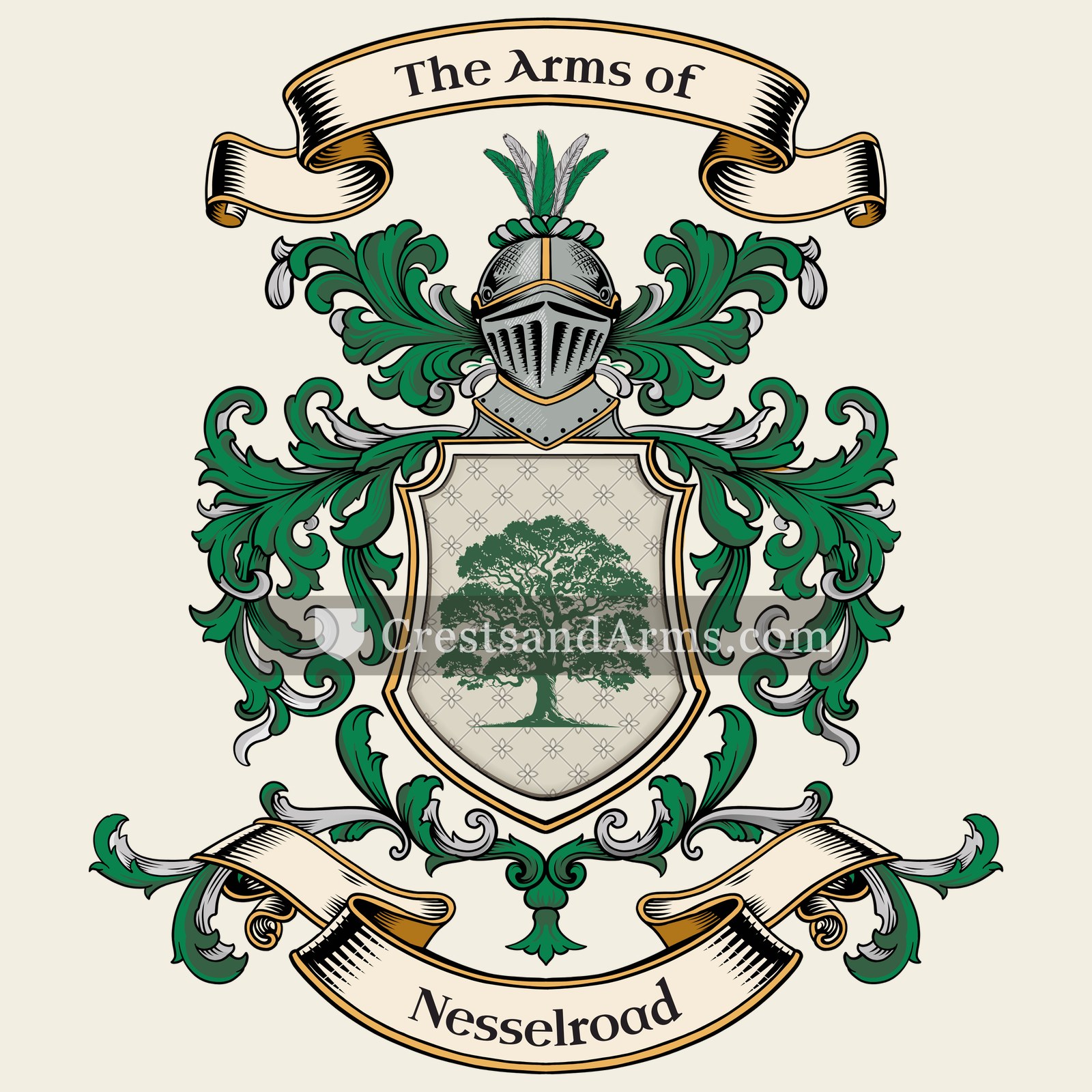


 fessThe military belt, and readiness to serve