Map of Netherlands showing where the Nikolai arms are recorded
The Nikolai arms were recorded in Delft, c. 1815.
This is where the arms were entered in the register. Families often moved to other parts of the country, so the same name can turn up in more than one region.
Region
Delft
Town
Delft
First recorded
1815
Granting Authority for the Nikolai Arms
Hoge Raad van Adel
Photograph made by me · CC BY-SA 3.0
The body that granted and recorded arms in Netherlands in this period.
William I of the Netherlands
Sovereign of the period
William I of the Netherlands
1815–1840
Reigning in Netherlands when the Nikolai arms are first recorded.
How Arms Worked in Netherlands
In the Netherlands, coats of arms were often used by noble families and those who held specific public offices. These arms were passed down through the generations to legitimate descendants. Younger branches of a family usually kept the original design without needing to add special marks. This system ensured that the family identity remained clear and consistent over many years.
Granting authority
The Hoge Raad van Adel is the official body that regulates and manages noble titles and coats of arms in the Netherlands.
How they got arms
Families typically obtained their coats of arms through official royal grants or by proving their long-standing historical use of the symbols.
Where arms were recorded
Coats of arms are officially recorded in the registers held by the Hoge Raad van Adel, which began its work in 1814.
The family's standing
Recorded among the armigerous families of Netherlands.
Origin & History of the Nikolai Family in Netherlands
The family name Nikolai first appears in the historical records of Delft around 1815, marking a period of significant transition for the Netherlands. During the early 19th century, the Dutch government began enforcing strict civil registration laws that required all citizens to adopt and formalize permanent surnames. The name Nikolai likely arrived in the region through migration patterns or maritime trade, as Delft was a bustling center for commerce and industry. Families living in the city at this time were often part of a changing social landscape where traditional naming customs were replaced by standardized records. By settling in Delft, the early members of the Nikolai family became part of a growing urban population that helped shape the city’s identity during the post-Napoleonic era. Their presence in the 1815 registers provides a clear starting point for tracing the family's integration into Dutch society.
Coat of Arms & Family Crest Details
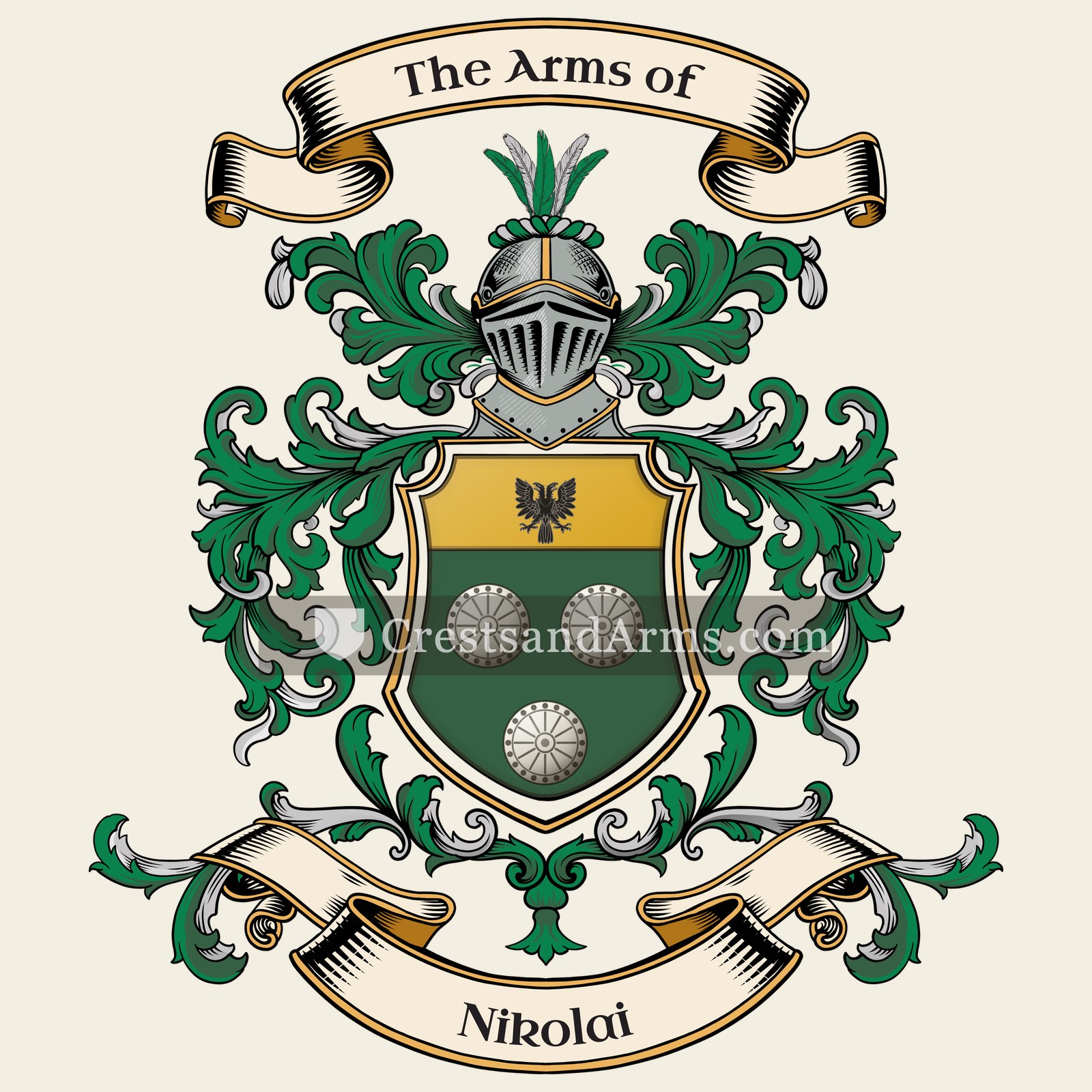
Symbols on this shield
pileWell-doing, and a mark of distinction
eagleNobility, strength and a keen mind
fleur de lisPurity, light, and the sixth son
Colours
Gold (Or)Means: Generosity
Black (Sable)Means: Constancy
Silver (Argent)Means: Peace and sincerity
Historical info
Source
J. B. Rietstap, Armorial Général, Gouda: G. B. van Goor Zonen, 1884–87
Blazon (the actual original written record)
“D'or à l'aigle naiss. de sa.; à la pile raccourcie du même, ch. de neuf fleurs-de-lis d'arg., posées 2, 4 et 3. C.: un membre d'aigle d'or, la serre en bas.”
FlandreFlandre, c. 1663
Digital archive packCoat of arms PNG, gold border print PDF, vector SVG and the certificate of authenticity. Sent to your email in minutes.
Map of France showing where the Nikolai arms are recorded
The Nikolai arms were recorded in Flandre, c. 1663.
Flandre grew rich on cloth, and its towns were among the busiest in Europe. Merchant families bought land with their profits and took arms to go with it, so trade put as many names in the registers here as land did.
This is where the arms were entered in the register. Families often moved to other parts of the country, so the same name can turn up in more than one region.
The body that granted and recorded arms in France in this period.
Louis XIV of France
Sovereign of the period
Louis XIV of France
1643–1715
Reigning in Netherlands when the Nikolai arms are first recorded.
How Arms Worked in France
In France, a coat of arms was a mark of honor that passed down through the male line to all legitimate descendants. Families often used the same shield without changes to show their shared heritage. If a branch wanted to stand out, they could add a small mark to their shield to show their specific place in the family tree.
Granting authority
The Juge d'armes de France acted as the official authority that regulated and verified coats of arms across the country.
How they got arms
Families typically inherited their arms from ancestors, though they could also receive them through royal grants or by proving their noble status.
Where arms were recorded
Coats of arms were officially recorded in the Armorial Général de France, which began its main collection in the year 1696.
The family's standing
Recorded among the armigerous families of Flandre.
Origin & History of the Nikolai Family in France
The family name Nikolai traces its roots in France to the northern region of Flandre, where records confirm members of the family were established by 1663. During this period, the name functioned primarily as a patronymic, meaning it was derived from the given name Nicolas to identify a person as the son or descendant of someone bearing that name. In the cultural landscape of 17th-century Flandre, which was a crossroads of French and Flemish influences, families often moved between rural villages and growing urban centers to work in trades or agriculture. The presence of the Nikolai name in these historical records suggests that the family was part of the local social fabric during a time of significant territorial shifts and administrative changes in the region. As the name spread through the generations, it remained deeply connected to the linguistic traditions of northern France, serving as a lasting marker of the family’s long-standing presence in the area.
Coat of Arms & Family Crest Details
Symbols on this shield
chiefAuthority, wisdom and dominion
roundelA coin, and one who has been to the crusades
eagleNobility, strength and a keen mind
Colours
Green (Vert)Means: Hope
Gold (Or)Means: Generosity
Silver (Argent)Means: Peace and sincerity
Black (Sable)Means: Constancy
Historical info
Source
J. B. Rietstap, Armorial Général, Gouda: G. B. van Goor Zonen, 1884–87
Blazon (the actual original written record)
“De sin. à trois bes. d'arg., ch. chacun d'une tête de More, tort. d'arg.; au chef d'or, ch. d'une aigle iss. de sa., diadémée d'or. C.: un buste de femme moresque, tort. d'arg.; entre un vol à l'antique du même. L.: à dextre d'or et de sa., à sen. d'arg. et de sin.”
Austriac. 1550
Digital archive packCoat of arms PNG, gold border print PDF, vector SVG and the certificate of authenticity. Sent to your email in minutes.
Map of Austria showing where the Nikolai arms are recorded
The Nikolai arms were recorded in Austria, c. 1550.
Arms such as these were typically recorded in Tyrol.
Tyrol was mountain country in western Austria, where the valleys were held by families who had been there a very long time. Old tenure counted for more than money, and old families carried arms.
This is where the arms were entered in the register. Families often moved to other parts of the country, so the same name can turn up in more than one region.
Region
Tyrol
First recorded
1550
Granting Authority for the Nikolai Arms
Imperial and Royal chancery
Sodacan · CC BY-SA 3.0
The body that granted and recorded arms in Austria in this period.
Charles V
Sovereign of the period
Charles V
1519–1556
Reigning in Netherlands when the Nikolai arms are first recorded.
How Arms Worked in Austria
Austrian coats of arms were often linked directly to noble titles granted by the Emperor. These symbols belonged to the entire family line rather than just one individual. When a family grew, new branches kept the original design without needing to change it. This system allowed all members of a noble house to share the same identity across many generations.
Granting authority
The Imperial and Royal chancery managed all heraldic matters and controlled the official granting of arms throughout the Austrian lands.
How they got arms
Families typically received their arms through a formal imperial decree that often accompanied the elevation of a person to noble status.
Where arms were recorded
Official records of these grants were kept in the Imperial Register of Nobility which began its formal documentation process in 1453.
The family's standing
Recorded among the armigerous families of Austria.
Origin & History of the Nikolai Family in Austria
The family name Nikolai has deep roots in the mountainous landscape of Tyrol, where records confirm members of the family were established by the year 1550. During this period, the region served as a vital crossroads for trade and cultural exchange between the Italian peninsula and the German-speaking lands. Families living in Tyrol often found their names evolving as they interacted with diverse populations moving through the Alpine passes. The name Nikolai likely originated as a patronymic, meaning it was derived from the given name Nicholas, which was widely popular across Europe due to the influence of Saint Nicholas. As the family settled into the local communities of Tyrol, they became part of a society defined by mining, agriculture, and the strict social hierarchies of the Holy Roman Empire. Their presence in the region during the mid-sixteenth century suggests they were integrated into the local economy, likely participating in the vibrant craft and merchant networks that defined Tyrolean life long before the modern era.
Related Branches & Arms
Root word
Nikolaos
Derived from Greek words for victory and people.
This name
NikolaiA name signifying the victory of the people.
also spelled
Nicolay
Nikolai
Documented Sources
J. B. Rietstap, Armorial Général, Gouda: G. B. van Goor Zonen, 1884–87
Nationaal Archief, Burgerlijke Stand in Nederland 1811-1942
Stadsarchief Delft, Bevolkingsregister Delft 1815
Fokkens, A., De burgerlijke stand in Nederland, 1995
Van Driel, L., Geschiedenis van Delft, 2002
Digital archive packCoat of arms PNG, gold border print PDF, vector SVG and the certificate of authenticity. Sent to your email in minutes.


 trefoilPerpetuity, and the Trinity
 trefoilPerpetuity, and the Trinity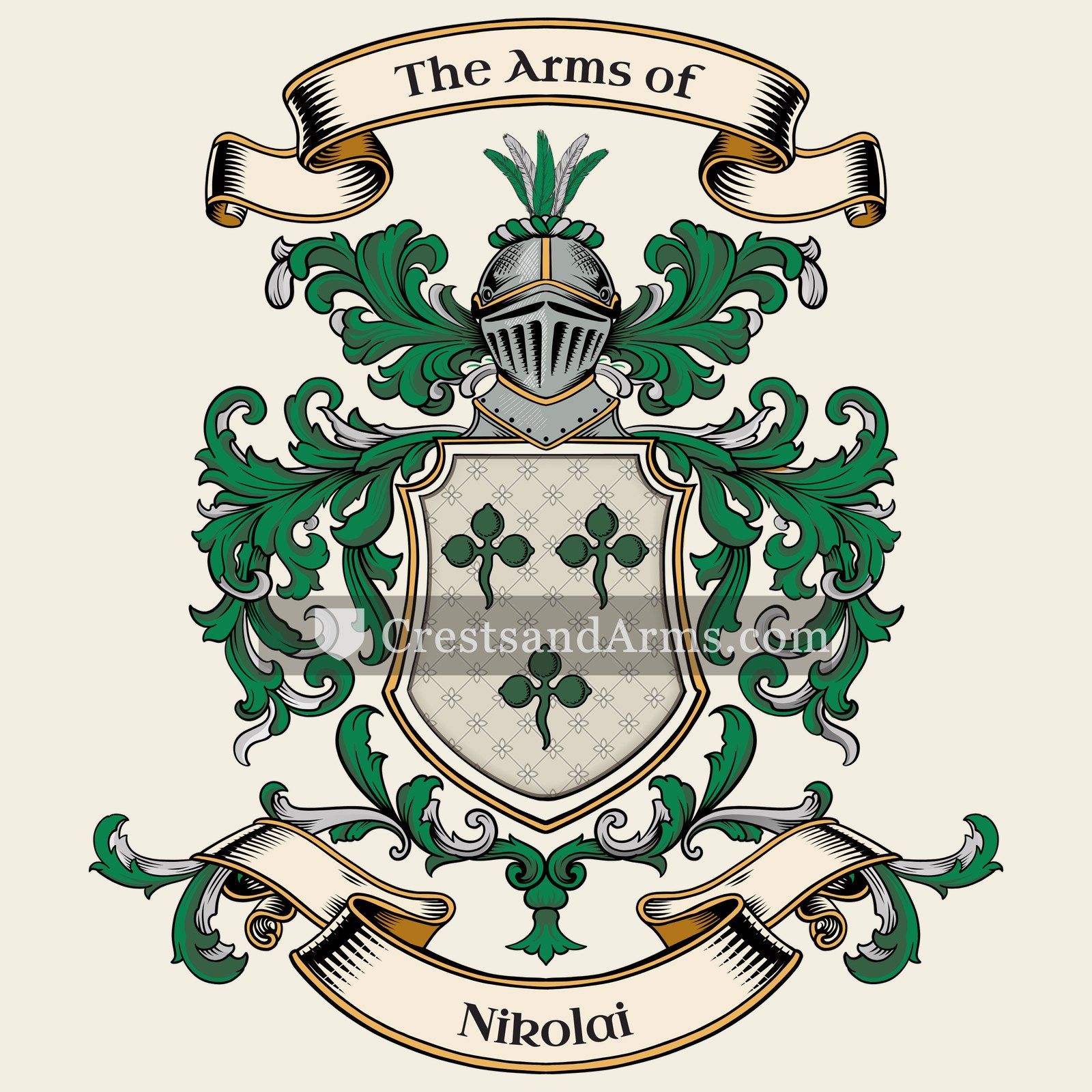


 pileWell-doing, and a mark of distinction
 eagleNobility, strength and a keen mind
 fleur de lisPurity, light, and the sixth son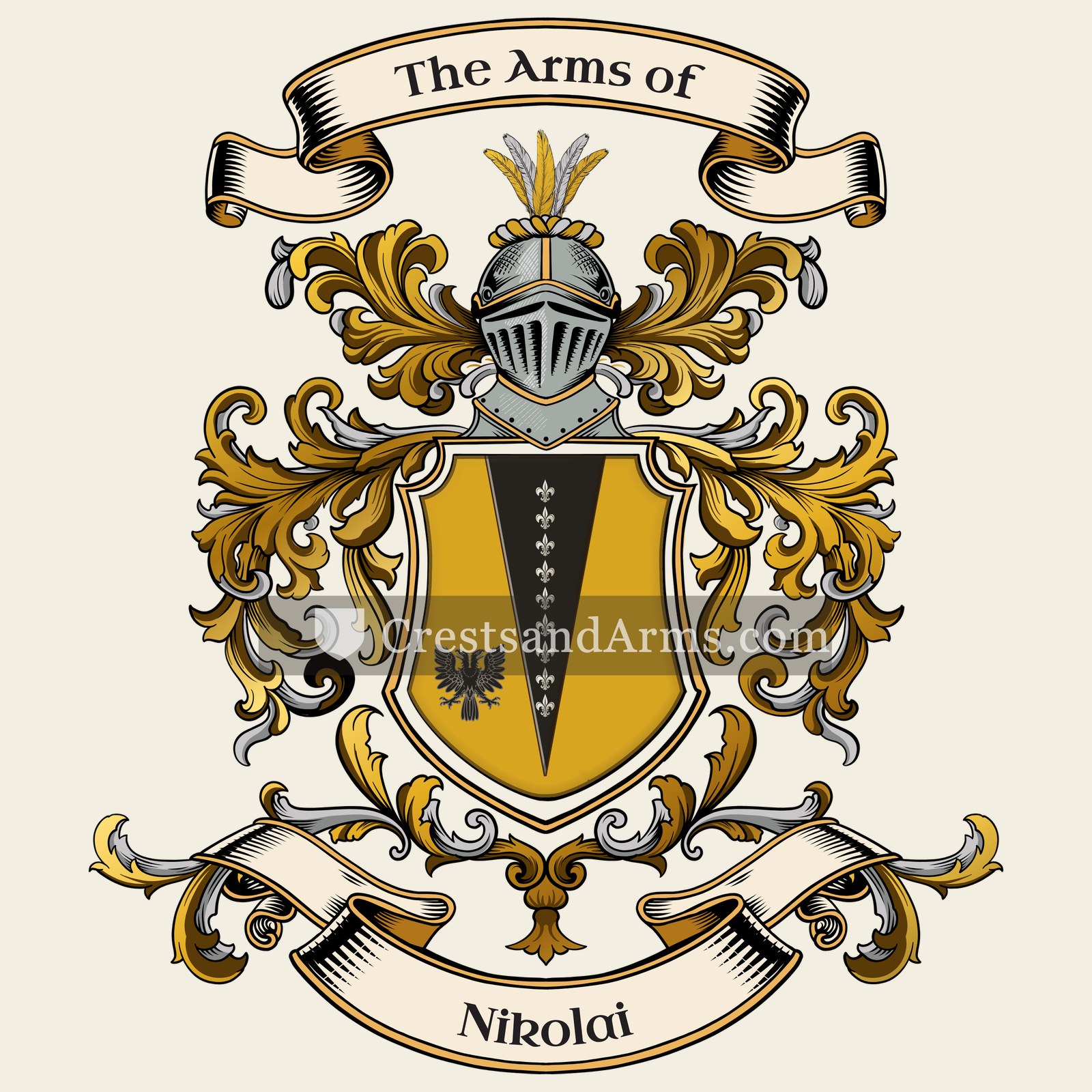


 chiefAuthority, wisdom and dominion
 roundelA coin, and one who has been to the crusades