Map of France showing where the Nolet arms are recorded
The Nolet arms were recorded in Toulouse, c. 1663.
This is where the arms were entered in the register. Families often moved to other parts of the country, so the same name can turn up in more than one region.
The body that granted and recorded arms in France in this period.
Louis XIV of France
Sovereign of the period
Louis XIV of France
1643–1715
Reigning in France when the Nolet arms are first recorded.
How Arms Worked in France
In France, a coat of arms was a mark of honor that passed down through the male line to all legitimate descendants. Families often used the same shield without changes to show their shared heritage. If a branch wanted to stand out, they could add a small mark to their shield to show their specific place in the family tree.
Granting authority
The Juge d'armes de France acted as the official authority that regulated and verified coats of arms across the country.
How they got arms
Families typically inherited their arms from ancestors, though they could also receive them through royal grants or by proving their noble status.
Where arms were recorded
Coats of arms were officially recorded in the Armorial Général de France, which began its main collection in the year 1696.
The family's standing
Recorded among the armigerous families of France.
Origin & History of the Nolet Family in France
The Nolet family name has deep roots in the historical landscape of southern France, particularly within the vibrant city of Toulouse. By the year 1663, records confirm that members of the family were already established residents in this region. During the seventeenth century, Toulouse served as a major center for trade and legal administration, which likely provided a stable environment for the family to grow and participate in local society. The name itself is thought to be a variation of terms related to small hills or mounds, suggesting that the family’s ancestors may have originally lived near a distinct geographical feature in the French countryside. As the family became integrated into the life of the city, they contributed to the local culture and economy that defined the Languedoc province during the reign of King Louis XIV. Their presence in the city archives during this era reflects a period of transition where families were increasingly documented through parish registers and tax records as the French state expanded its bureaucratic reach.
Meaning of the Nolet family crest colors & symbols
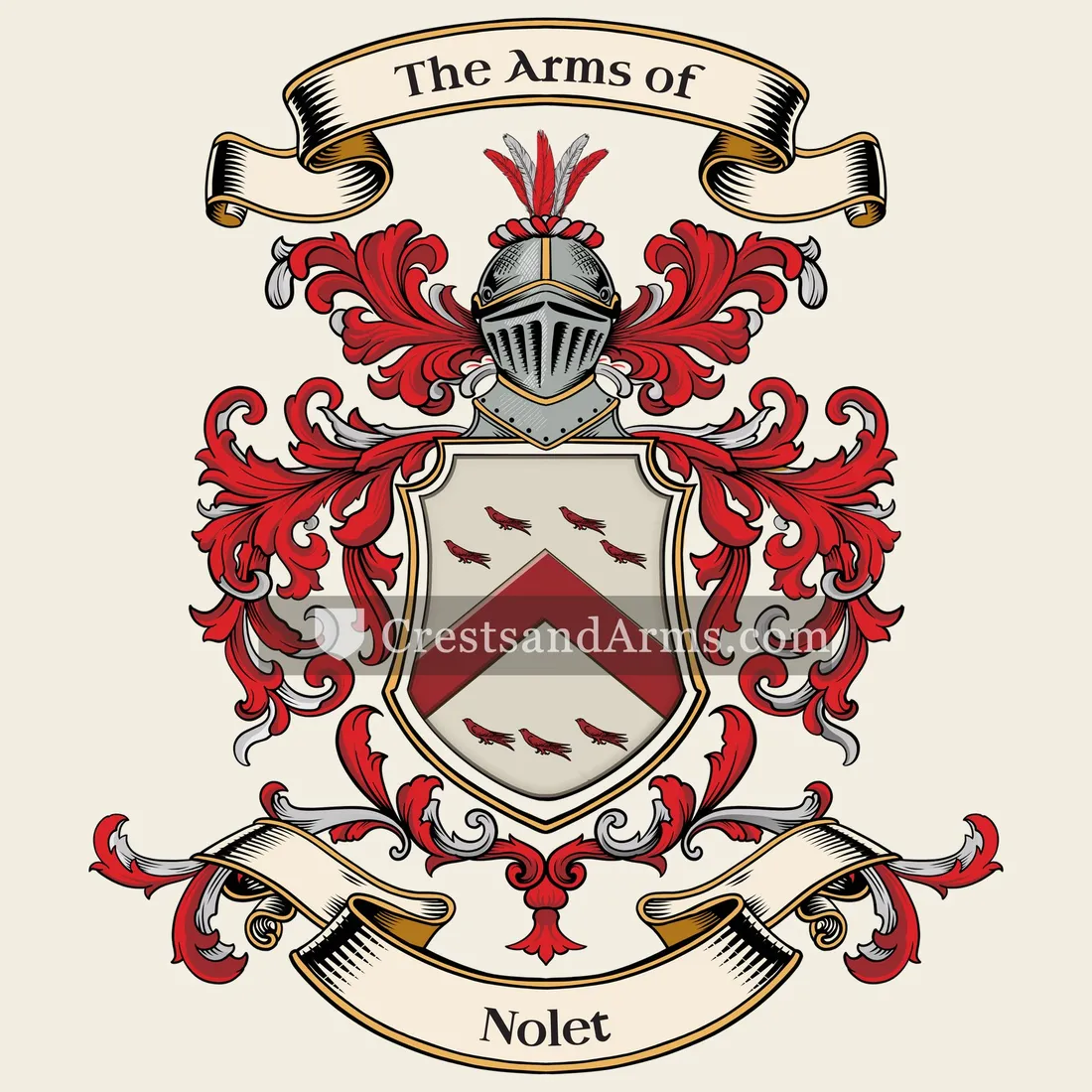
Symbols on this shield
chevronProtection, and faithful service completed
martletA younger son, who must win his own land
Colours
Silver (Argent)Means: Peace and sincerity
Red (Gules)Means: Military strength
Historical info
Source
J. B. Rietstap, Armorial Général, Gouda: G. B. van Goor Zonen, 1884–87
Blazon (the actual original written record)
“D'arg. au chev., acc. en chef de quatre merlettes, 2 et 2, et en p. de trois autres merlettes mal-ordonnées, le tout de gu. C.: une merlette de gu.”
FlandreFlandre, c. 1663
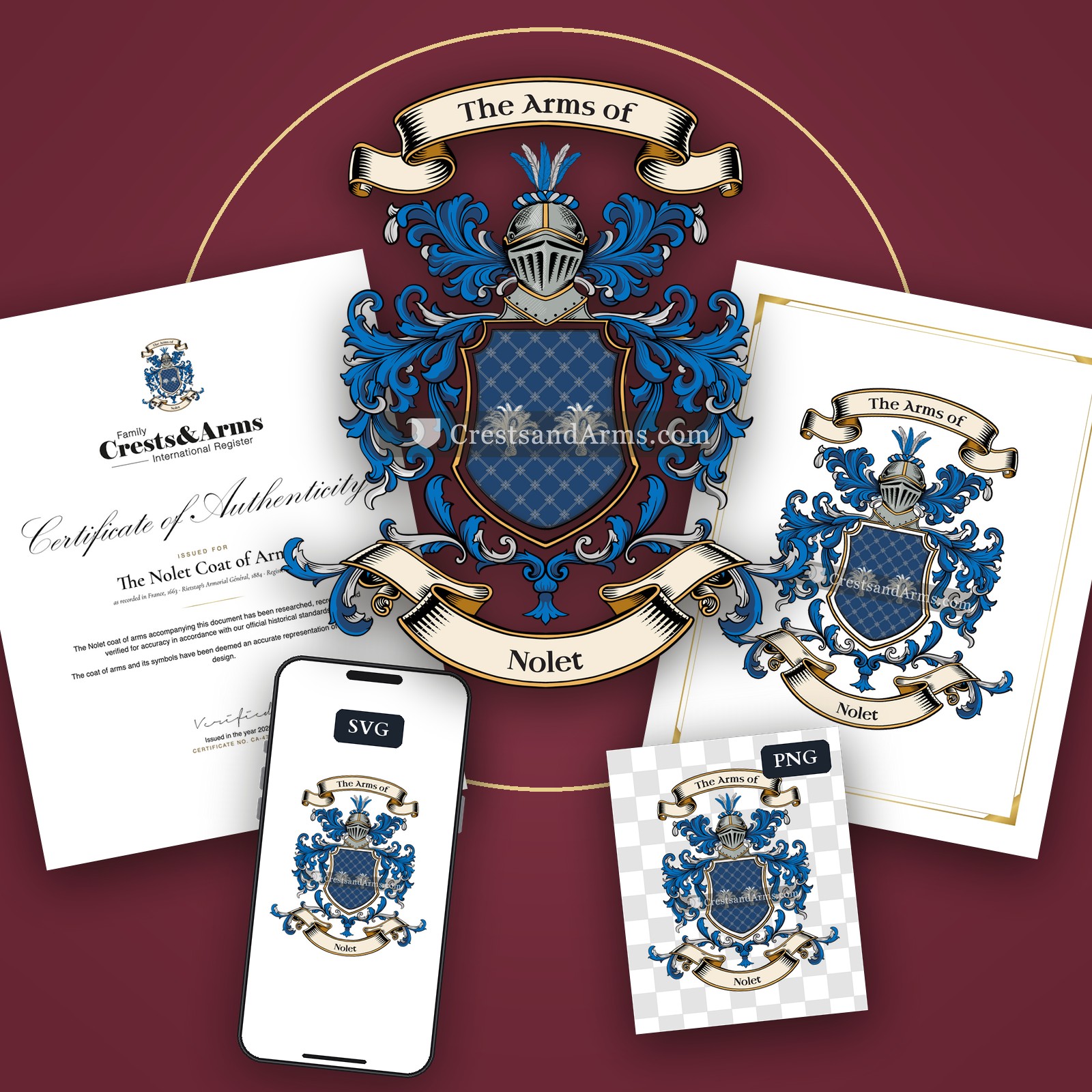
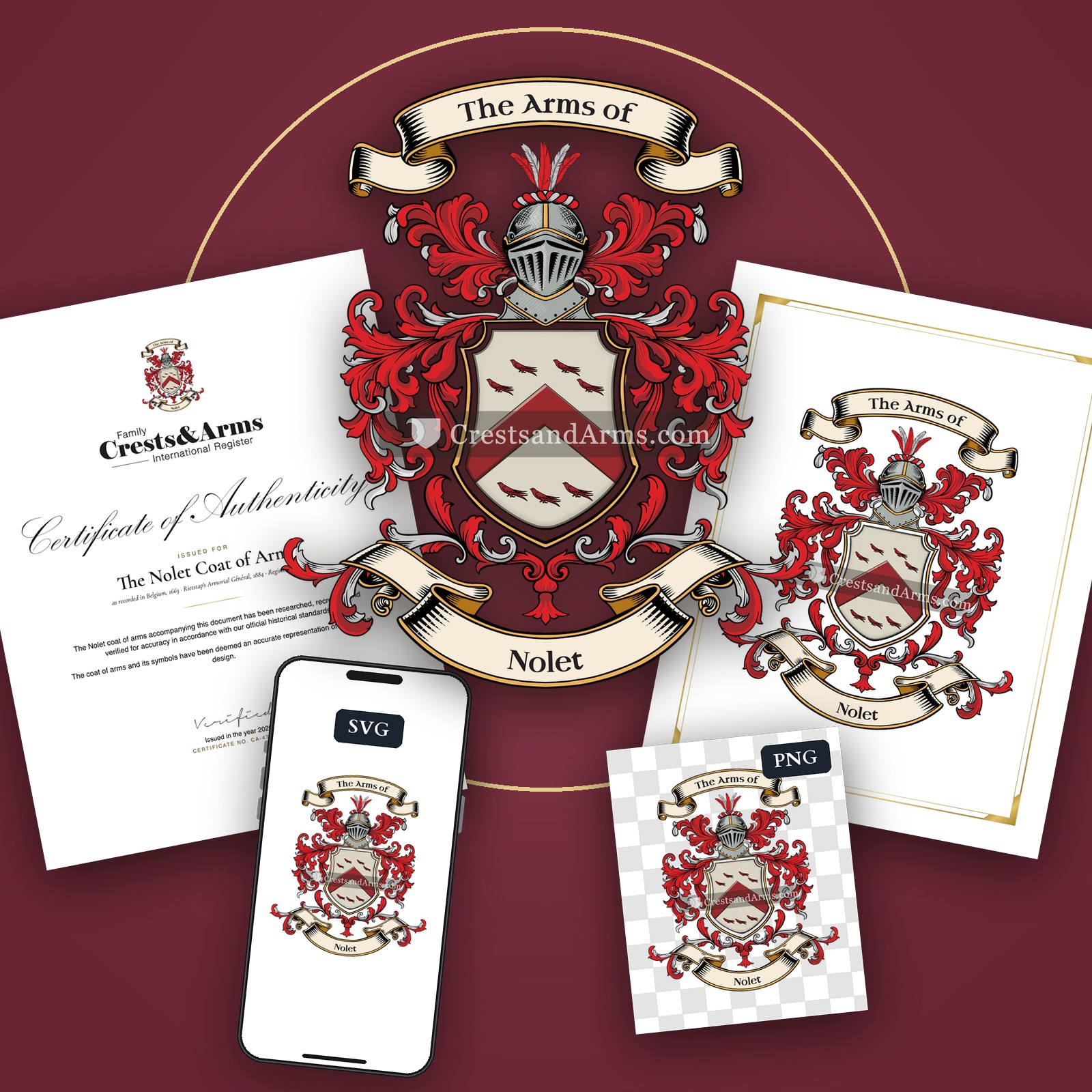
Digital archive packCoat of arms PNG, gold border print PDF, vector SVG and the certificate of authenticity. Sent to your email in minutes.
Map of Belgium showing where the Nolet arms are recorded
The Nolet arms were recorded in Flandre, c. 1663.
Flandre grew rich on cloth, and its towns were among the busiest in Europe. Merchant families bought land with their profits and took arms to go with it, so trade put as many names in the registers here as land did.
This is where the arms were entered in the register. Families often moved to other parts of the country, so the same name can turn up in more than one region.
The body that granted and recorded arms in Belgium in this period.
Philip IV of Spain
Sovereign of the period
Philip IV of Spain
1621–1665
Reigning in France when the Nolet arms are first recorded.
How Arms Worked in Belgium
In Belgium, a coat of arms is considered personal property that is passed down through the male line to legitimate descendants. Families often use the same shield design across generations to show their shared heritage. If a branch of the family wants to change the design, they must apply for an official update to their specific version of the arms.
Granting authority
The Conseil héraldique is the official body that regulates and approves all coats of arms in Belgium.
How they got arms
Families obtain their coats of arms through formal royal grants or by confirming their historical right to use existing designs.
Where arms were recorded
All approved coats of arms are officially recorded in the public registers of the Conseil héraldique since 1844.
The family's standing
Recorded among the armigerous families of Flandre.
Origin & History of the Nolet Family in Belgium
The Nolet family name has deep roots in the region of Flanders, with documented evidence confirming their presence in the area by 1663. During this period, the Low Countries were a hub of intense trade and agricultural development, and families like the Nolets were often integrated into the local social fabric of Flemish towns. Historical records suggest that the name likely evolved from regional dialects, reflecting the linguistic blend of Dutch and French that characterized the borderlands of Belgium. As the family established themselves in the 17th century, they participated in the typical life of the era, which often revolved around local commerce and community governance. By settling in Flanders, the early Nolets became part of a resilient population that navigated the complex political shifts of the 17th century, helping to shape the cultural identity of the region for generations to come.
Nolet Meaning & Related Branches
Root word
Nol
A diminutive form of the name Noel meaning Christmas or born.
This name
NoletA topographic name for someone living near a small hill or knoll.
also spelled
Nolay
Nolett
Related arms
Barbierrecorded with Nolet, same area
Brestrecorded with Nolet, same area
Duboisrecorded with Nolet, same area
Leroyrecorded with Nolet, same area
Documented Sources
J. B. Rietstap, Armorial Général, Gouda: G. B. van Goor Zonen, 1884–87
Archives départementales de la Haute-Garonne, Registres paroissiaux de Toulouse
Dauzat, Albert, Dictionnaire étymologique des noms de famille et prénoms de France, 1951
Nègre, Ernest, Les noms de lieux du Tarn, 1958
Digital archive packCoat of arms PNG, gold border print PDF, vector SVG and the certificate of authenticity. Sent to your email in minutes.


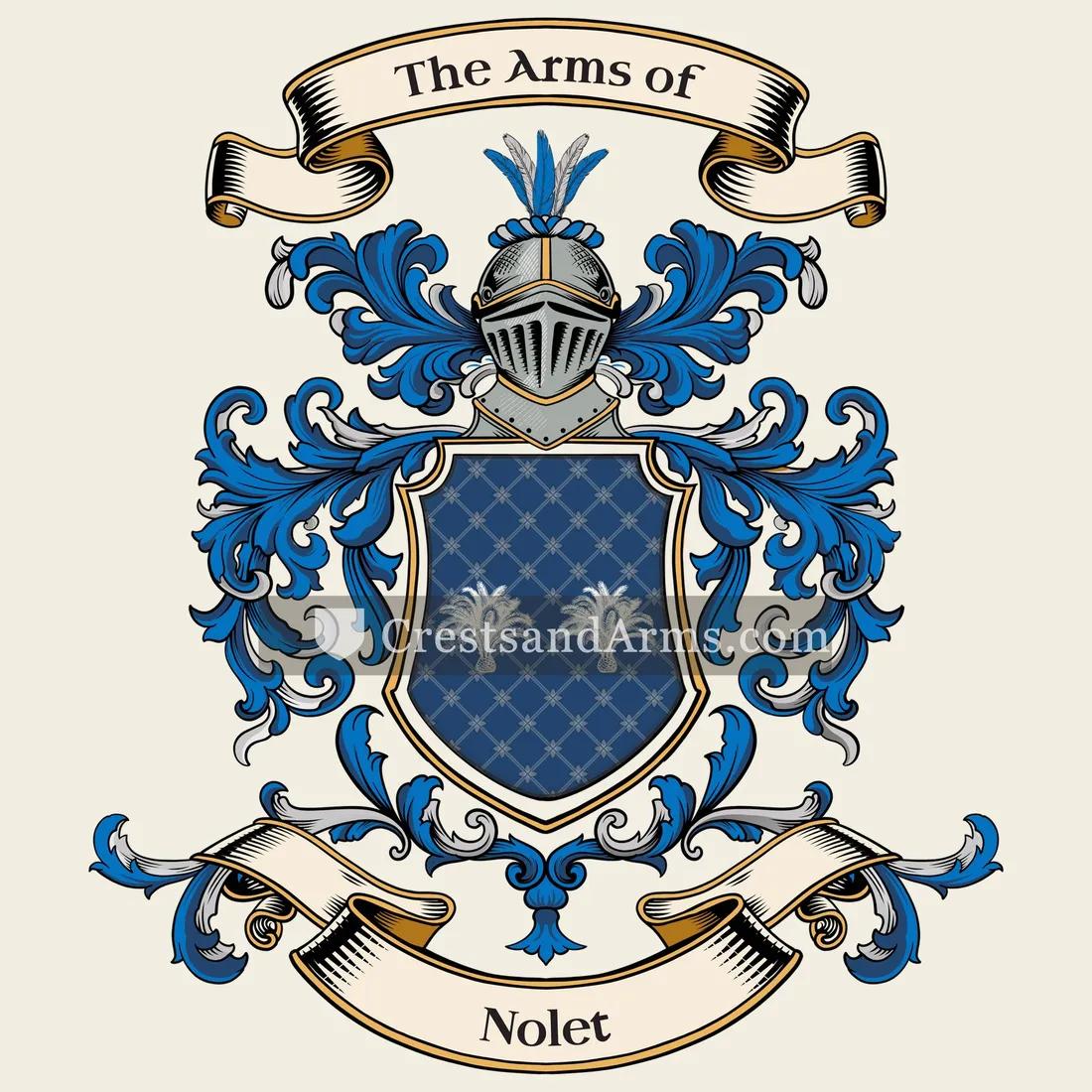
 palm treeVictory, and righteousness that flourishes
 palm treeVictory, and righteousness that flourishes


 chevronProtection, and faithful service completed
 martletA younger son, who must win his own land