A record of documented arms, meaning and origin, researched for the Noteboom family lines. Documented in 3 countries.
Reg. 7482 · Dutch, M–O
Meaning of the Noteboom family crest colors & symbols
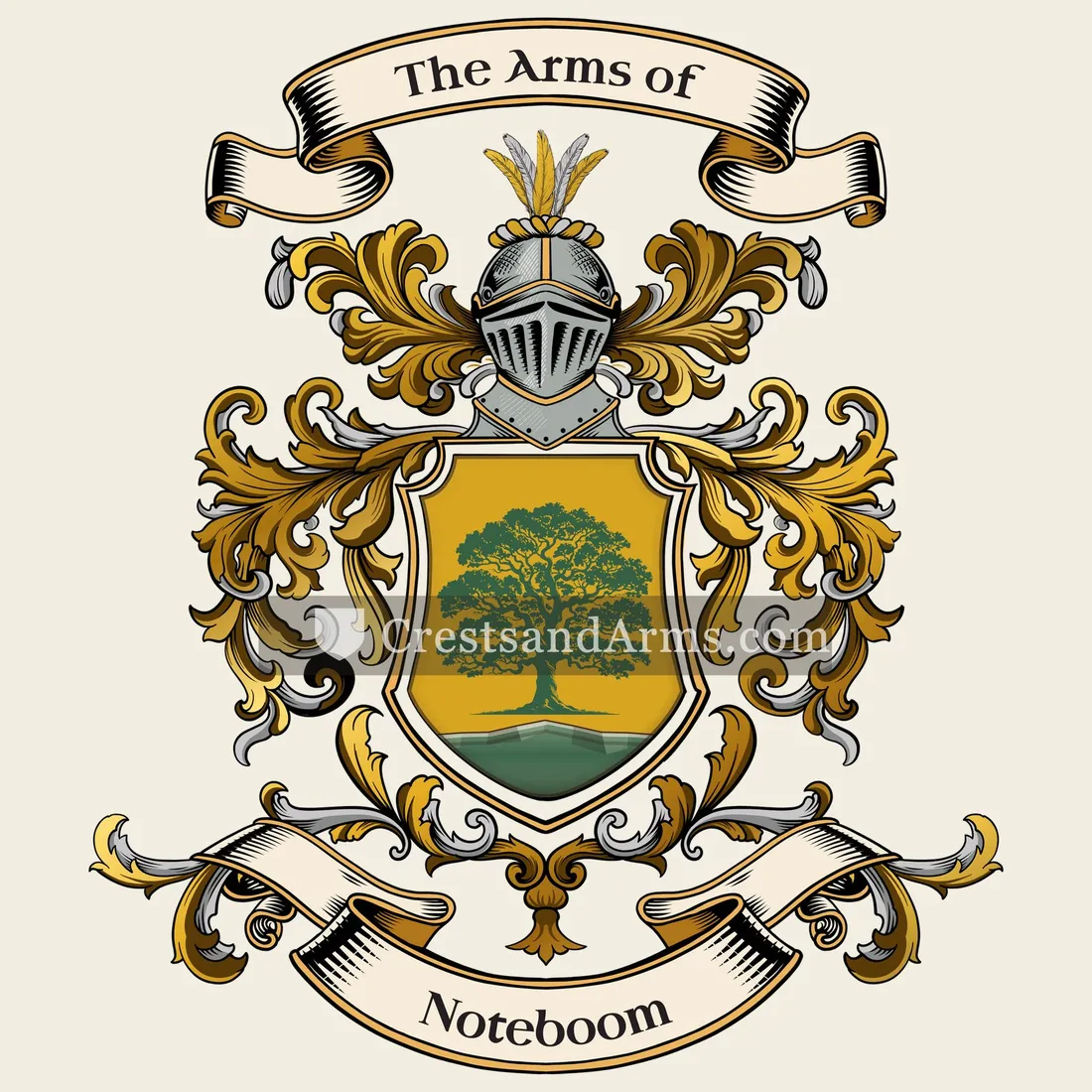
Symbols on this shield
starThe celestial goddess, and nobility
treeLife, endurance and deep roots
eagleNobility, strength and a keen mind
Colours
Gold (Or)Means: Generosity
Blue (Azure)Means: Loyalty and truth
Historical info
Source
J. B. Rietstap, Armorial Général, Gouda: G. B. van Goor Zonen, 1884–87
Blazon (the actual original written record)
“Coupé : au 1 d'or à un noyer arr. et triplement étagé, au nat. ; au 2 parti : a. d'azur à la demi-aigle d'or, languée de gu., mouv. du parti ; b. d'azur à trois étoiles d'or, 2 et 1. Brl. d'or et d'azur. C. : une aigle iss. d'arg. L. d'or et de sin.”
NetherlandsRotterdam, c. 1815
Digital archive packCoat of arms PNG, gold border print PDF, vector SVG and the certificate of authenticity. Sent to your email in minutes.
Map of Netherlands showing where the Noteboom arms are recorded
The Noteboom arms were recorded in Rotterdam, c. 1815.
This is where the arms were entered in the register. Families often moved to other parts of the country, so the same name can turn up in more than one region.
Region
Rotterdam
Town
Rotterdam
First recorded
1815
Granting Authority for the Noteboom Arms
Hoge Raad van Adel
Photograph made by me · CC BY-SA 3.0
The body that granted and recorded arms in Netherlands in this period.
William I of the Netherlands
Sovereign of the period
William I of the Netherlands
1815–1840
Reigning in Netherlands when the Noteboom arms are first recorded.
How Arms Worked in Netherlands
In the Netherlands, coats of arms were often used by noble families and those who held specific public offices. These arms were passed down through the generations to legitimate descendants. Younger branches of a family usually kept the original design without needing to add special marks. This system ensured that the family identity remained clear and consistent over many years.
Granting authority
The Hoge Raad van Adel is the official body that regulates and manages noble titles and coats of arms in the Netherlands.
How they got arms
Families typically obtained their coats of arms through official royal grants or by proving their long-standing historical use of the symbols.
Where arms were recorded
Coats of arms are officially recorded in the registers held by the Hoge Raad van Adel, which began its work in 1814.
The family's standing
Recorded among the armigerous families of Netherlands.
Origin & History of the Noteboom Family in Netherlands
The surname Noteboom is a descriptive Dutch name that literally translates to "nut tree." In the early 19th century, the family was well-established in the bustling port city of Rotterdam. During this period, Rotterdam was a vital center for trade and maritime activity, which likely influenced the lives and occupations of the early Noteboom ancestors. Because the name is rooted in the landscape, it suggests that the family’s original ancestors were likely farmers or landowners who lived near a prominent nut tree, which served as a landmark for their home. By 1815, the family had integrated into the urban fabric of Rotterdam, participating in the growth of a city that was rapidly becoming one of the most important commercial hubs in the Netherlands. This transition from a rural origin to a city-dwelling family reflects the broader movement of Dutch people toward urban centers during the early modern era.
Meaning of the Noteboom family crest colors & symbols
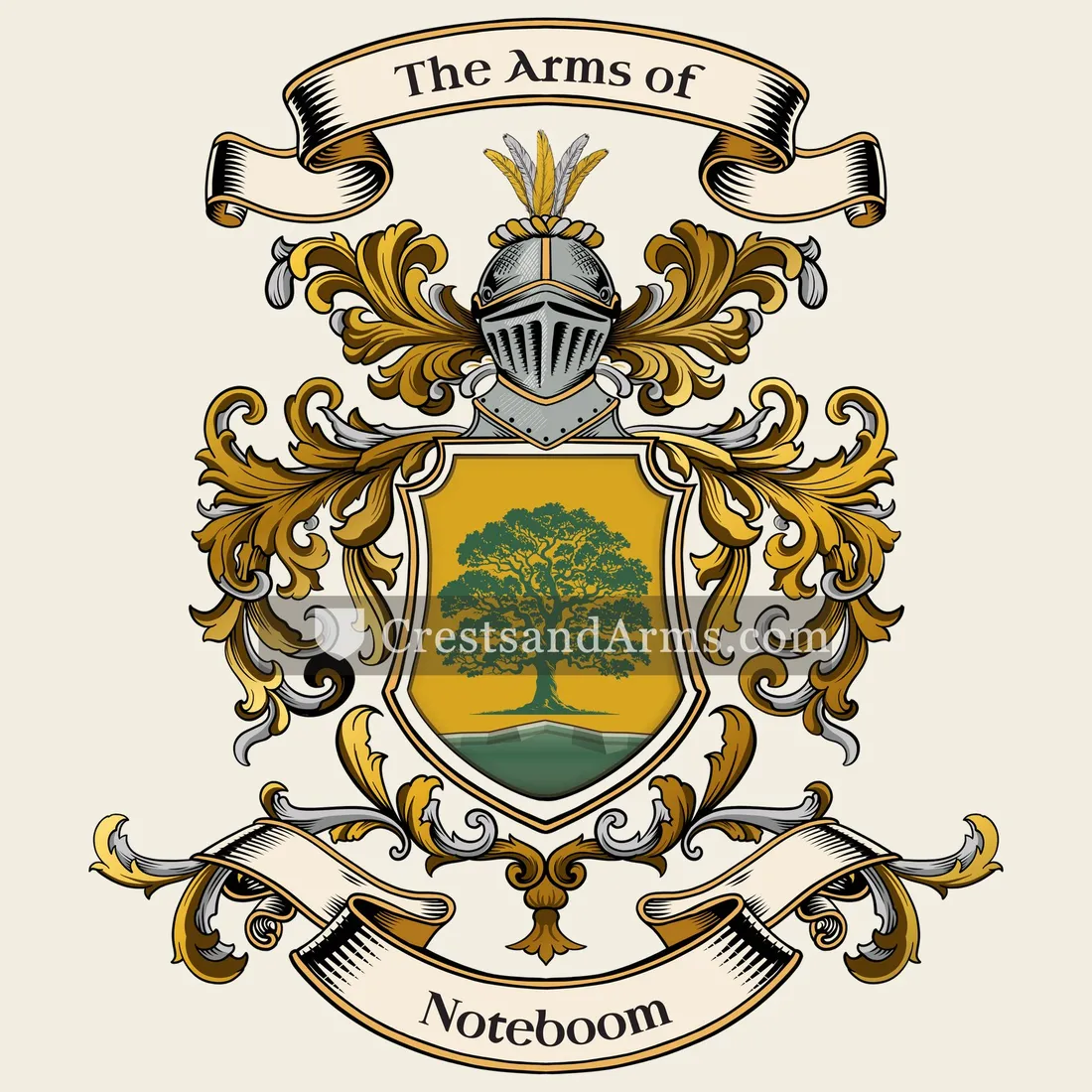
Symbols on this shield
mountThe ground held, and steadfastness upon it
treeLife, endurance and deep roots
Colours
Gold (Or)Means: Generosity
Green (Vert)Means: Hope
Historical info
Source
J. B. Rietstap, Armorial Général, Gouda: G. B. van Goor Zonen, 1884–87
Blazon (the actual original written record)
“D'or à un noyer de sin., terrassé du même. C. : le noyer. S. : deux léopards lionnés au nat. D. : REDDET SEMINA SEGES.”
BelgiumAnvers, c. 1861
Digital archive packCoat of arms PNG, gold border print PDF, vector SVG and the certificate of authenticity. Sent to your email in minutes.
Map of Belgium showing where the Noteboom arms are recorded
The Noteboom arms were recorded in Anvers, c. 1861.
This is where the arms were entered in the register. Families often moved to other parts of the country, so the same name can turn up in more than one region.
The body that granted and recorded arms in Belgium in this period.
Leopold I of Belgium
Sovereign of the period
Leopold I of Belgium
1831–1865
Reigning in Netherlands when the Noteboom arms are first recorded.
How Arms Worked in Belgium
In Belgium, a coat of arms is considered personal property that is passed down through the male line to legitimate descendants. Families often use the same shield design across generations to show their shared heritage. If a branch of the family wants to change the design, they must apply for an official update to their specific version of the arms.
Granting authority
The Conseil héraldique is the official body that regulates and approves all coats of arms in Belgium.
How they got arms
Families obtain their coats of arms through formal royal grants or by confirming their historical right to use existing designs.
Where arms were recorded
All approved coats of arms are officially recorded in the public registers of the Conseil héraldique since 1844.
The family's standing
Recorded among the armigerous families of Belgium.
Origin & History of the Noteboom Family in Belgium
The family name Noteboom, which translates literally from Dutch as "nut tree," finds its historical roots in the Low Countries, where surnames often reflected the natural landscape or local landmarks. By the mid-19th century, records confirm the presence of the Noteboom family in the bustling port city of Antwerp, known locally as Anvers. During the 1860s, Antwerp was a rapidly expanding center of international trade and industry, drawing families into its urban core to participate in the growing maritime economy. The family likely settled in this region during a time of significant social and economic transition in Belgium, as the nation solidified its industrial identity. Their presence in such a major commercial hub suggests that early members of the family were integrated into the vibrant professional and civic life of the city during this formative period of Belgian history.
Meaning of the Noteboom family crest colors & symbols
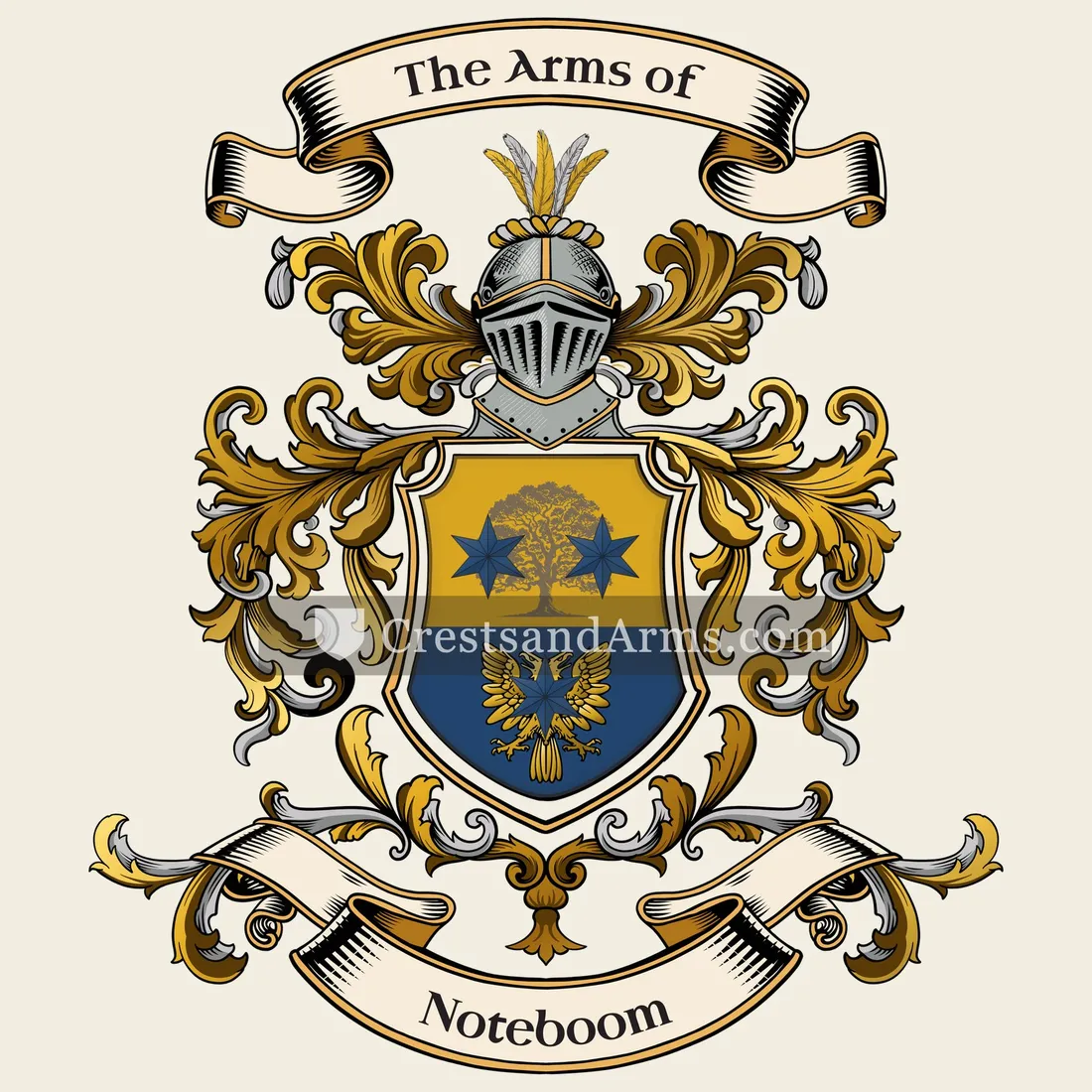
Symbols on this shield
mountThe ground held, and steadfastness upon it
treeLife, endurance and deep roots
Colours
Gold (Or)Means: Generosity
Green (Vert)Means: Hope
Historical info
Source
J. B. Rietstap, Armorial Général, Gouda: G. B. van Goor Zonen, 1884–87
Blazon (the actual original written record)
“D'or à un noyer de sin., terrassé du même.”
Germanyc. 1765
Digital archive packCoat of arms PNG, gold border print PDF, vector SVG and the certificate of authenticity. Sent to your email in minutes.
Map of Germany showing where the Noteboom arms are recorded
The Noteboom arms were recorded in Germany, c. 1765.
Arms such as these were typically recorded in Bavaria.
Bavaria was a country of old landed families and walled market towns. Estates passed down the same line for centuries, and both the landowners and the leading townsmen kept arms, which is why so many Bavarian names sit in the registers.
This is where the arms were entered in the register. Families often moved to other parts of the country, so the same name can turn up in more than one region.
The body that granted and recorded arms in Germany in this period.
Francis I, Holy Roman Emperor
Sovereign of the period
Francis I, Holy Roman Emperor
1745–1765
Reigning in Netherlands when the Noteboom arms are first recorded.
How Arms Worked in Germany
In the Holy Roman Empire, coats of arms were often granted to individuals by the Emperor or his representatives. These arms were then passed down through the generations to all legitimate descendants of the original holder. Younger branches of a family usually kept the same shield design without needing to change it, as the arms belonged to the entire lineage.
Granting authority
The Holy Roman Emperor held the sole power to grant new coats of arms throughout his vast imperial territories.
How they got arms
Families typically obtained their coats of arms through a formal imperial grant or by proving their noble status to the authorities.
Where arms were recorded
These grants were officially recorded in the Imperial Chancery registers, which began keeping formal records of such honors during the Middle Ages.
The family's standing
Recorded among the armigerous families of Germany.
Origin & History of the Noteboom Family in Germany
The surname Noteboom is deeply rooted in the Germanic linguistic tradition, where it functions as a topographic or descriptive name. In the Low German dialect, the name translates literally to "nut tree," suggesting that the earliest ancestors likely lived near a prominent walnut tree or managed an orchard that served as a local landmark. By the mid-18th century, members of the family were well-established in the region of Bavaria. Life in Bavaria during the 1760s was defined by a transition toward more centralized administrative record-keeping, as the local parish and civil authorities began to track families with greater precision for tax and census purposes. During this era, the Noteboom family would have been part of a rural or semi-rural social structure, likely engaged in agriculture or local trade, as they navigated the complex social hierarchies of the Holy Roman Empire. Their presence in the 1765 records marks a period of stability, reflecting a time when families were increasingly tied to specific plots of land and local community identities.
Noteboom Meaning & Related Branches
Root word
Noot en Boom
Nut and tree
This name
NoteboomRefers to a person who lived near a prominent nut tree or orchard.
also spelled
Nottebom
Notebom
Documented Sources
J. B. Rietstap, Armorial Général, Gouda: G. B. van Goor Zonen, 1884–87
Centraal Bureau voor Genealogie, Nederlandse Familienamen Databank


 starThe celestial goddess, and nobility
 treeLife, endurance and deep roots
 eagleNobility, strength and a keen mind
 starThe celestial goddess, and nobility
 treeLife, endurance and deep roots
 eagleNobility, strength and a keen mind


 mountThe ground held, and steadfastness upon it