Map of Austria showing where the Nugent arms are recorded
The Nugent arms were recorded in Austria, c. 1772.
Arms such as these were typically recorded in Tyrol.
Tyrol was mountain country in western Austria, where the valleys were held by families who had been there a very long time. Old tenure counted for more than money, and old families carried arms.
This is where the arms were entered in the register. Families often moved to other parts of the country, so the same name can turn up in more than one region.
Region
Tyrol
First recorded
1772
Granting Authority for the Nugent Arms
Imperial and Royal chancery
Sodacan · CC BY-SA 3.0
The body that granted and recorded arms in Austria in this period.
Joseph II, Holy Roman Emperor
Sovereign of the period
Joseph II, Holy Roman Emperor
1765–1790
Reigning in Austria when the Nugent arms are first recorded.
How Arms Worked in Austria
Austrian coats of arms were often linked directly to noble titles granted by the Emperor. These symbols belonged to the entire family line rather than just one individual. When a family grew, new branches kept the original design without needing to change it. This system allowed all members of a noble house to share the same identity across many generations.
Granting authority
The Imperial and Royal chancery managed all heraldic matters and controlled the official granting of arms throughout the Austrian lands.
How they got arms
Families typically received their arms through a formal imperial decree that often accompanied the elevation of a person to noble status.
Where arms were recorded
Official records of these grants were kept in the Imperial Register of Nobility which began its formal documentation process in 1453.
The family's standing
Recorded among the armigerous families of Austria.
Origin & History of the Nugent Family in Austria
The Nugent family established a significant presence in the Austrian Empire during the late eighteenth century, primarily through their integration into the military and administrative circles of the Habsburg monarchy. While the family originated from Irish nobility, their transition into the region of Tyrol by 1772 marked a pivotal shift in their political identity. By settling in this mountainous territory, the Nugents aligned themselves with the interests of the Austrian crown and quickly rose to prominence within the local aristocracy. Their status allowed them to serve as influential figures in the regional government and the imperial army. This period of relocation solidified their reputation as loyal subjects who successfully navigated the complex social structures of Central Europe. Through strategic marriages and dedicated service to the state, the family transitioned from foreign arrivals to essential members of the Austrian landed gentry.
Coat of Arms & Family Crest Details
Colours
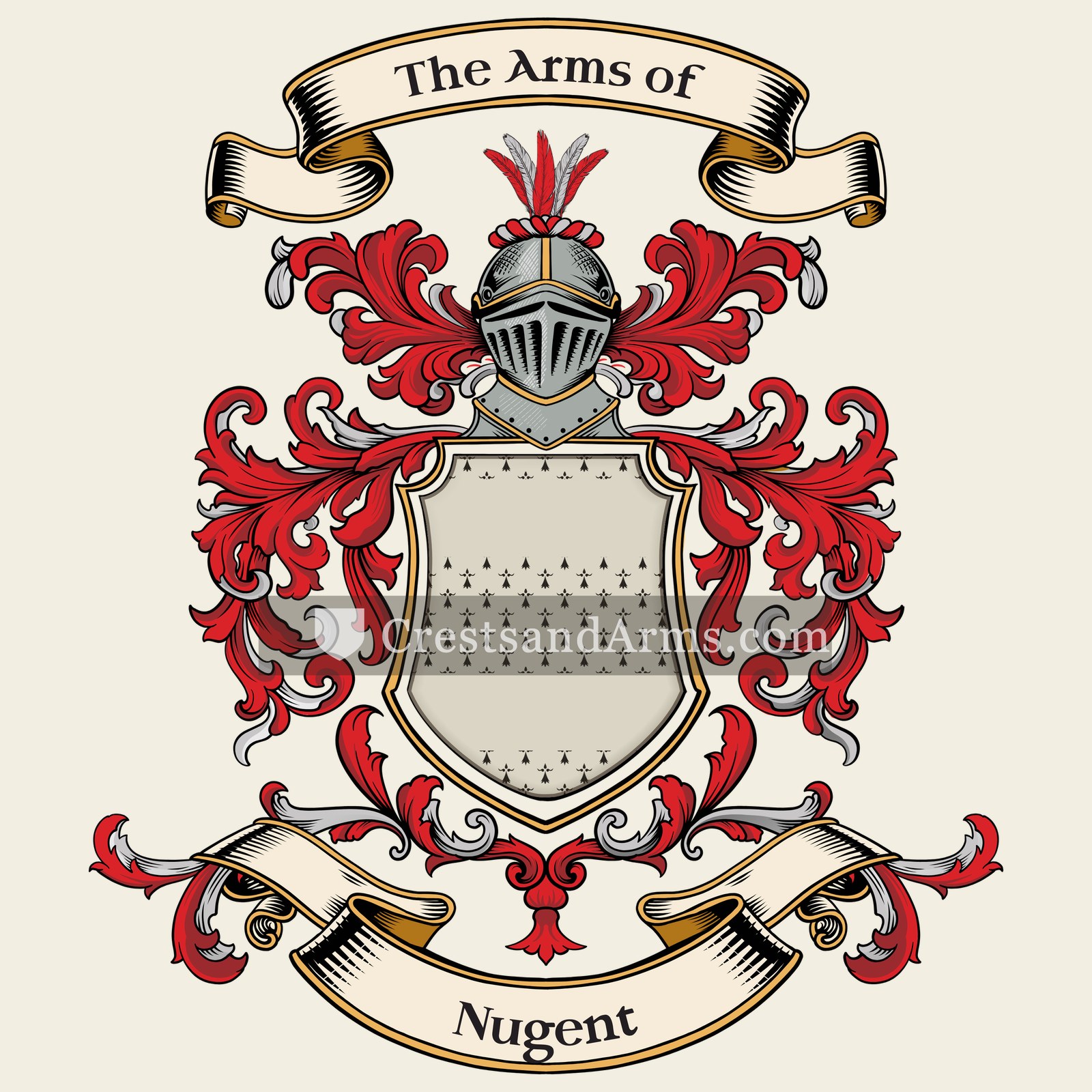
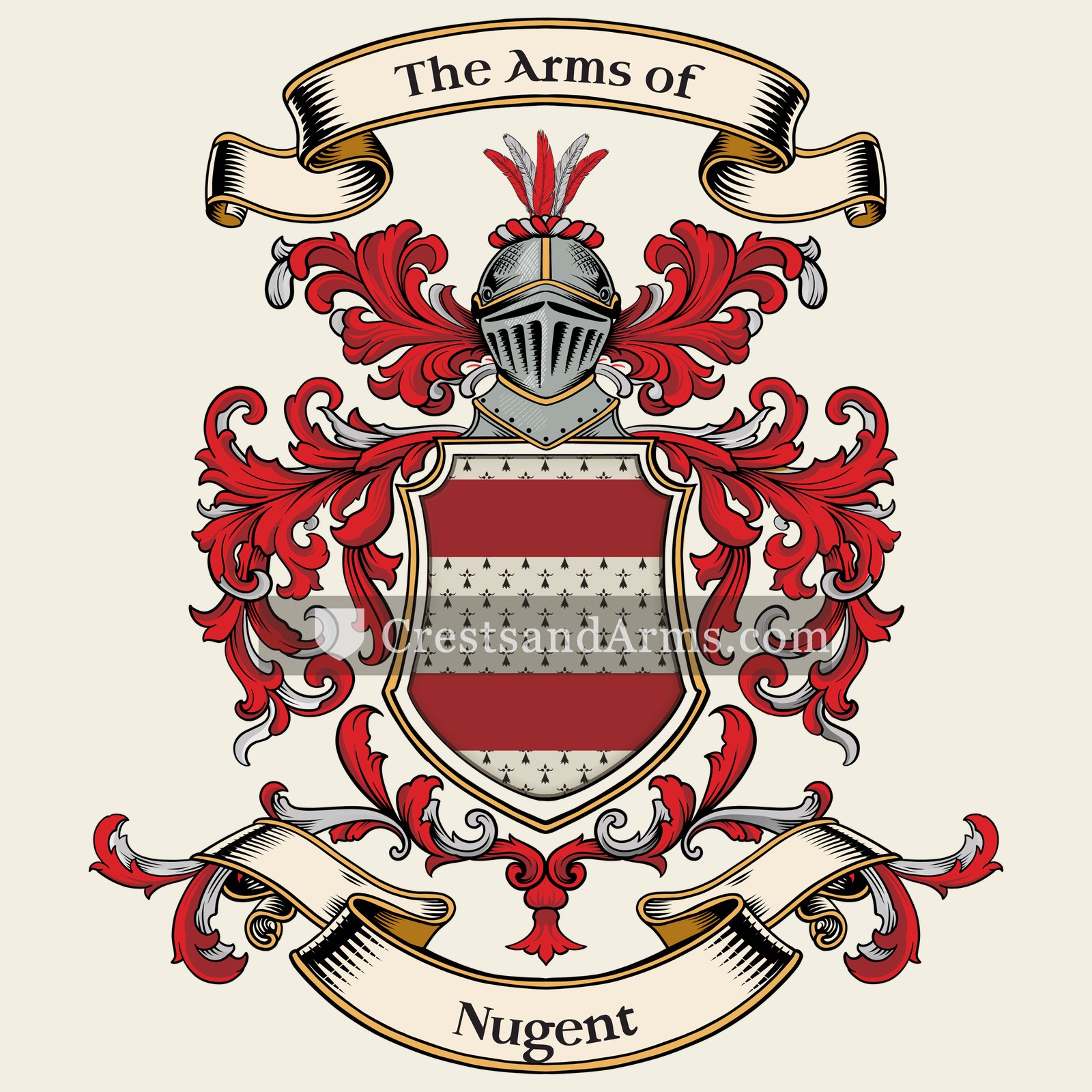
ErmineMeans: Dignity
Red (Gules)Means: Military strength
Historical info
Source
Sir Bernard Burke, The General Armory of England, Scotland, Ireland and Wales, London: Harrison & Sons, 1884
Blazon (the actual original written record)
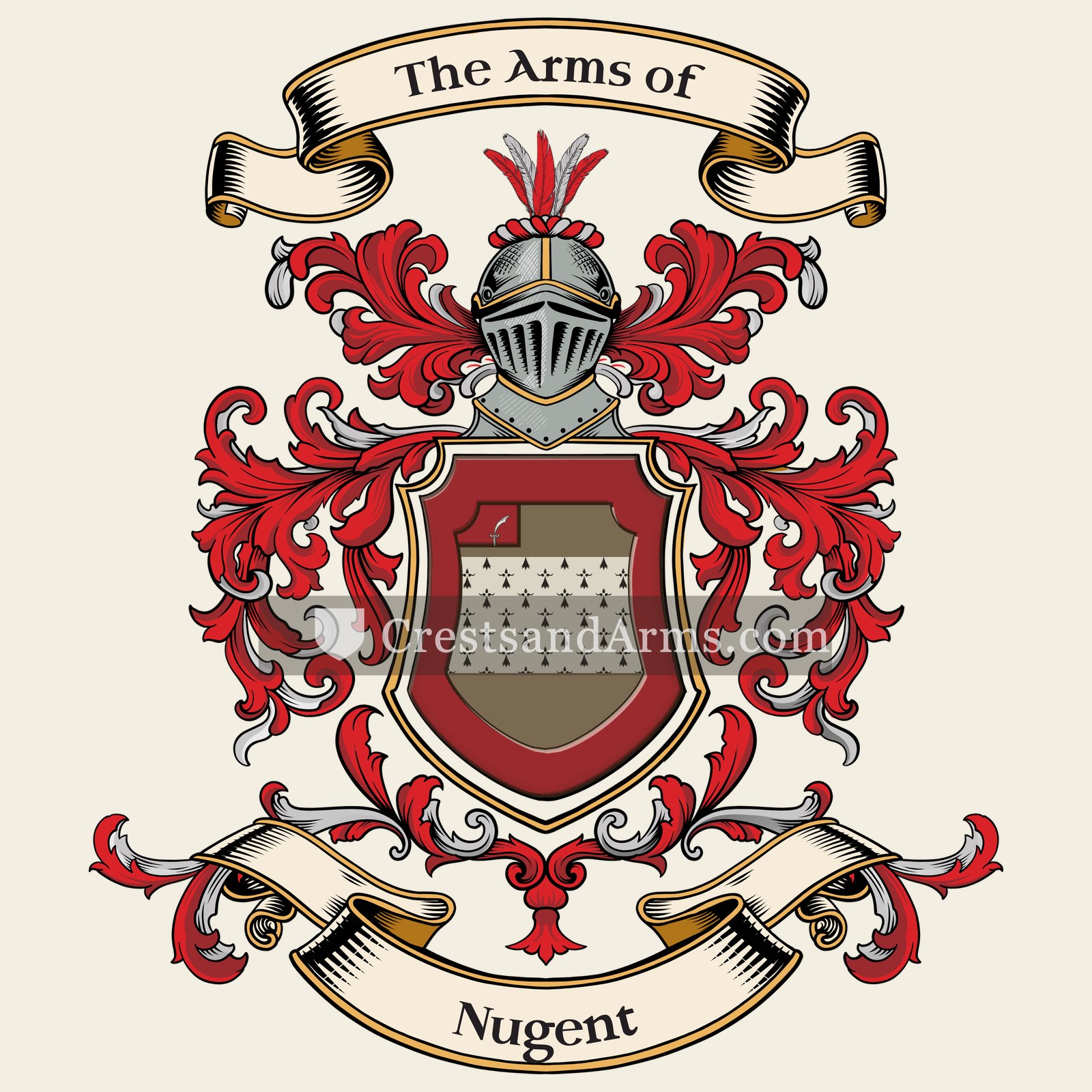
“Erm. two bars gu. (In a funeral entry preserved in Ulster's Office, 1620, the arms of the fourteenth Baron Delvin are thus marshalled:—Quarterly, 1st, NUGENT: Erm. two bars gu.; 2nd, FITZJOHN: Quarterly, or and gu. a bordure vair; 3rd, DRAKE: Ar. a wyvern, tail nowed gu.; 4th, ar. a chev. sa. betw. three daws close az.; 5th, gu. seven mascles conjoined, three, three, and one or; 6th, or, a fret gu.)”
WestmeathWestmeath, c. 1620
Digital archive packCoat of arms PNG, gold border print PDF, vector SVG and the certificate of authenticity. Sent to your email in minutes.
Map of Ireland showing where the Nugent arms are recorded
The Nugent arms were recorded in Westmeath, c. 1620.
Westmeath was midland grazing country in Ireland, taken by Norman families and held for centuries. Its estates were large and passed down whole, and unbroken tenure brought arms with it.
This is where the arms were entered in the register. Families often moved to other parts of the country, so the same name can turn up in more than one region.
The body that granted and recorded arms in Ireland in this period.
James VI and I
Sovereign of the period
James VI and I
1603–1625
Reigning in Austria when the Nugent arms are first recorded.
How Arms Worked in Ireland
The Ulster King of Arms granted coats of arms to individuals who proved their social standing and good character. These symbols were typically inherited by all legitimate descendants of the original holder. If a family branch wanted a unique look, they could apply for a specific change to their design through the office to ensure their identity remained distinct.
Granting authority
The Ulster King of Arms acted as the official body that regulated and issued all coats of arms throughout Ireland.
How they got arms
Families obtained their arms through formal grants issued by the office after proving their eligibility and paying the required fees.
Where arms were recorded
All official grants were recorded in the registers held by the Ulster King of Arms starting from the year 1552.
The family's standing
Recorded among the armigerous families of Westmeath.
Origin & History of the Nugent Family in Ireland
The Nugent family name arrived in Ireland during the Anglo-Norman invasion of the twelfth century, originating from the French place name Nogent-le-Rotrou. Sir Gilbert de Nugent was one of the early settlers who received land grants in the region of Westmeath as a reward for his service to Hugh de Lacy. By the year 1620, the family had firmly established itself as a prominent landed dynasty within that same county. Over the centuries, they integrated deeply into Irish society, transitioning from foreign settlers into a powerful local influence. They played a significant role in the political and social life of the Irish Midlands, often serving in administrative positions and managing large estates. Their history reflects the broader movement of families who moved to Ireland during the medieval period and gradually became part of the local landscape.
Coat of Arms & Family Crest Details
Symbols on this shield
bordureA difference between branches of one family
cantonA mark of honour granted by the sovereign
swordJustice, and military honour
Colours
ErmineMeans: Dignity
Red (Gules)Means: Military strength
Historical info
Source
Sir Bernard Burke, The General Armory of England, Scotland, Ireland and Wales, London: Harrison & Sons, 1884
Blazon (the actual original written record)
“Erm. two bars within a border engr. gu., on a canton of the last a dagger erect ppr. pommel and hilt or”
BerksWaddesdon · Berks, c. 1806
Digital archive packCoat of arms PNG, gold border print PDF, vector SVG and the certificate of authenticity. Sent to your email in minutes.
Map of England showing where the Nugent arms are recorded
The Nugent arms were recorded in Berks, c. 1806.
Berkshire sat on the road west from London with the royal castle at Windsor in the middle of it. Court families bought estates within reach, and an estate near the court almost always came with a coat of arms.
This is where the arms were entered in the register. Families often moved to other parts of the country, so the same name can turn up in more than one region.
The body that granted and recorded arms in England in this period.
George III of Great Britain
Sovereign of the period
George III of Great Britain
1801–1820
Reigning in Austria when the Nugent arms are first recorded.
How Arms Worked in England
English heraldry allowed arms to be shared by all legitimate descendants of the original owner. These symbols were treated as personal property that moved through the generations to all children. While the eldest son kept the original design, other family members could use the same shield without needing to change it or register their own unique versions.
Granting authority
The College of Arms in London has regulated the use of coats of arms throughout England and Wales since 1484.
How they got arms
Families typically obtained their coats of arms through a formal grant from the Crown or by proving their ancient right to them.
Where arms were recorded
All official coats of arms are recorded in the registers kept at the College of Arms, which date back to the fifteenth century.
The family's standing
Recorded among the armigerous families of Berks.
Origin & History of the Nugent Family in England
The family name Nugent has deep roots that stretch back to the arrival of the Normans in the British Isles. While the name is famously associated with the conquest of Ireland, branches of the family established themselves in England over many centuries. By the early 19th century, records confirm that members of the Nugent family were well-settled in the county of Berkshire. These early English residents were often involved in local community life, trade, or land management, which helped them integrate into the social fabric of the region. As the family grew in Berkshire, they became part of the local history of the area, contributing to the development of their parishes through their daily work and civic participation. This transition from their historical origins to established life in Berkshire reflects the broader movement of families across England during the Georgian era.
Nugent Meaning & Related Branches
Root word
Nogent
Derived from the Latin Novigentum meaning a new settlement or village.
This name
NugentAn anglicized form of an aristocratic family name originating from a French place name.
also spelled
Nugentt
Nugente
Nugents
Nujent
Nugint
Related arms
Grevillesimilar arms
Newgentvariant spelling
Burghrecorded with Nugent, same area
Smythrecorded with Nugent, same area
Documented Sources
J. B. Rietstap, Armorial Général, Gouda: G. B. van Goor Zonen, 1884–87
Franz Gall, Österreichische Wappenkunde: Handbuch der Wappenwissenschaft, 1977
Constantin von Wurzbach, Biographisches Lexikon des Kaiserthums Oesterreich, 1868
Austrian State Archives (Österreichisches Staatsarchiv), Adelsarchiv
Tyrol State Archives (Tiroler Landesarchiv), Tiroler Adelsmatrikel
Digital archive packCoat of arms PNG, gold border print PDF, vector SVG and the certificate of authenticity. Sent to your email in minutes.


 fessThe military belt, and readiness to serve
 fessThe military belt, and readiness to serve




 bordureA difference between branches of one family
 cantonA mark of honour granted by the sovereign
 swordJustice, and military honour