Map of France showing where the Oberst arms are recorded
The Oberst arms were recorded in France, c. 1663.
Arms such as these were typically recorded in Bretagne.
More families held coats of arms in Bretagne than anywhere else in France. The land was divided into many small estates rather than a few large ones, so far more households counted as gentry, and each needed a shield of its own to be told apart.
This is where the arms were entered in the register. Families often moved to other parts of the country, so the same name can turn up in more than one region.
The body that granted and recorded arms in France in this period.
Louis XIV of France
Sovereign of the period
Louis XIV of France
1643–1715
Reigning in France when the Oberst arms are first recorded.
How Arms Worked in France
In France, a coat of arms was a mark of honor that passed down through the male line to all legitimate descendants. Families often used the same shield without changes to show their shared heritage. If a branch wanted to stand out, they could add a small mark to their shield to show their specific place in the family tree.
Granting authority
The Juge d'armes de France acted as the official authority that regulated and verified coats of arms across the country.
How they got arms
Families typically inherited their arms from ancestors, though they could also receive them through royal grants or by proving their noble status.
Where arms were recorded
Coats of arms were officially recorded in the Armorial Général de France, which began its main collection in the year 1696.
The family's standing
Recorded among the armigerous families of France.
Origin & History of the Oberst Family in France
The surname Oberst carries a distinct history that reflects the movement of people across European borders during the seventeenth century. While the name is often associated with Germanic roots, historical records confirm that members of the family were firmly established in the Bretagne region of France by 1663. During this era, Bretagne served as a vital maritime hub, and families often settled there to participate in the growing trade and administrative networks of the French kingdom. The presence of the Oberst name in these coastal communities suggests that the family integrated into local life through agriculture, craftsmanship, or regional commerce. By maintaining their identity while adapting to the French social structure, these early settlers helped weave the name into the diverse cultural tapestry of western France. Their transition into the Breton landscape highlights how families moved and evolved long before the rise of modern national borders.
Meaning of the Oberst family crest colors & symbols
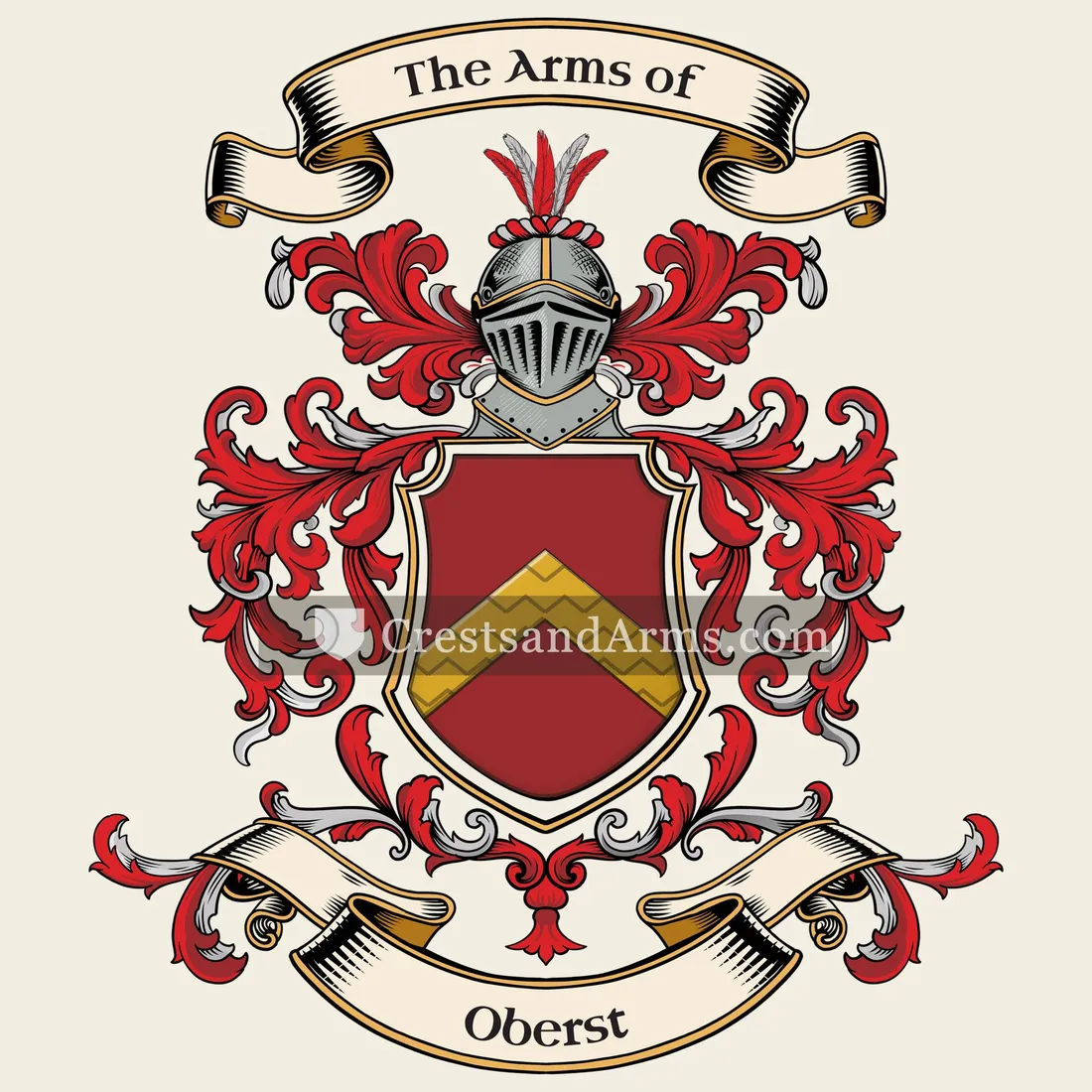
Symbols on this shield
chevronProtection, and faithful service completed
Colours
Red (Gules)Means: Military strength
Gold (Or)Means: Generosity
Historical info
Source
J. B. Rietstap, Armorial Général, Gouda: G. B. van Goor Zonen, 1884–87
Blazon (the actual original written record)
“De gu. à deux chev. entrelacés d'or, et un troisième chev. renv. du même, le tout entrelacé.”
WestphaliaWestphalia, c. 1765
Digital archive packCoat of arms PNG, gold border print PDF, vector SVG and the certificate of authenticity. Sent to your email in minutes.
Map of Germany showing where the Oberst arms are recorded
The Oberst arms were recorded in Westphalia, c. 1765.
Westphalia was a land of small estates and fortified farmhouses in western Germany. Its families were numerous and not especially rich, but each held its own ground, and holding ground was what brought arms.
This is where the arms were entered in the register. Families often moved to other parts of the country, so the same name can turn up in more than one region.
The body that granted and recorded arms in Germany in this period.
Francis I, Holy Roman Emperor
Sovereign of the period
Francis I, Holy Roman Emperor
1745–1765
Reigning in France when the Oberst arms are first recorded.
How Arms Worked in Germany
In the Holy Roman Empire, coats of arms were often granted to individuals by the Emperor or his representatives. These arms were then passed down through the generations to all legitimate descendants of the original holder. Younger branches of a family usually kept the same shield design without needing to change it, as the arms belonged to the entire lineage.
Granting authority
The Holy Roman Emperor held the sole power to grant new coats of arms throughout his vast imperial territories.
How they got arms
Families typically obtained their coats of arms through a formal imperial grant or by proving their noble status to the authorities.
Where arms were recorded
These grants were officially recorded in the Imperial Chancery registers, which began keeping formal records of such honors during the Middle Ages.
The family's standing
Recorded among the armigerous families of Westphalia.
Origin & History of the Oberst Family in Germany
The surname Oberst originates from the German language and carries a clear connection to military and social hierarchy. The word itself translates to "colonel" or "highest," which suggests that the earliest ancestors to bear this name likely held positions of authority or served as prominent leaders within their local communities. By the mid-eighteenth century, historical records confirm that the family was well-established in the Westphalia region of Germany. During this era, Westphalia was a landscape defined by agricultural traditions and a growing administrative structure, where families often identified themselves by their professional roles or their status within the village hierarchy. As the name became a permanent family identifier, it reflected the importance of these early members who were recognized by their neighbors for their leadership or their specific duties in the local government or military service.
Oberst Meaning & Related Branches
Root word
Ober
Germanic term meaning upper, higher, or superior in rank.
This name
OberstAn occupational title for a military officer or a person of high rank.
also spelled
Obersteyn
Overstein
Oberstine
Documented Sources
J. B. Rietstap, Armorial Général, Gouda: G. B. van Goor Zonen, 1884–87
Archives départementales d'Ille-et-Vilaine, Registres paroissiaux et d'état civil
Poter, Jean-Yves, Histoire de la Bretagne, 1996
Le Moyne de La Borderie, Arthur, Histoire de Bretagne, 1896
Digital archive packCoat of arms PNG, gold border print PDF, vector SVG and the certificate of authenticity. Sent to your email in minutes.


 lionCourage, strength and royalty
 lionCourage, strength and royalty
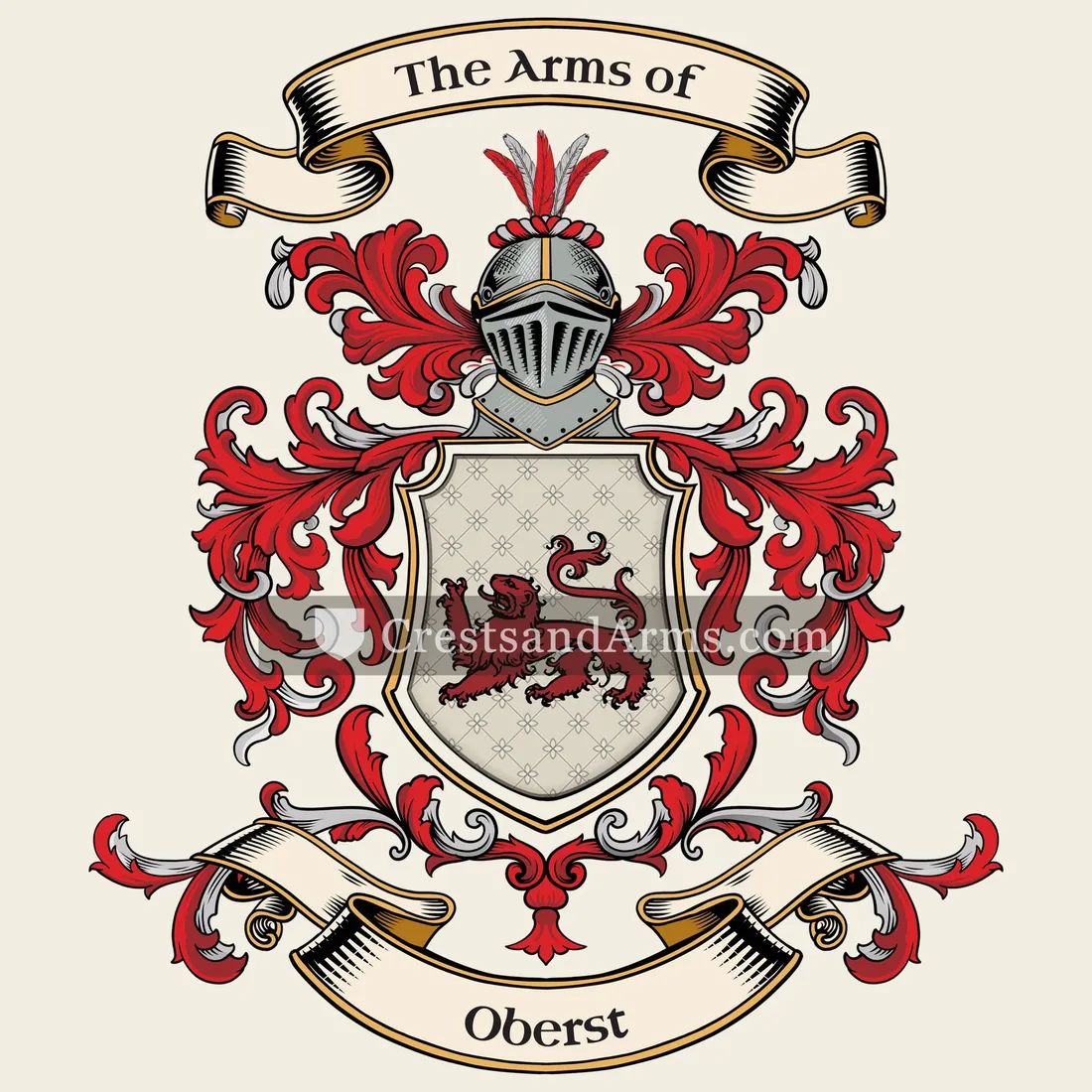


 chevronProtection, and faithful service completed