A record of documented arms, meaning and origin, researched for the Olden family lines. Documented in 2 countries.
Reg. 3086 · Dutch, M–O
Coat of Arms & Family Crest Details
Symbols on this shield
fessThe military belt, and readiness to serve
mulletThe third son, and a divine quality from above
Colours
Gold (Or)Means: Generosity
Blue (Azure)Means: Loyalty and truth
Red (Gules)Means: Military strength
Historical info
Source
J. B. Rietstap, Armorial Général, Gouda: G. B. van Goor Zonen, 1884–87
Blazon (the actual original written record)
“D'or à la fasce d'azur, acc. en chef de deux huppes au nat. et en p. de trois étoiles renv. (5) de gu., 2 et 1. Brl. d'azur et d'or. C.: un bras arm., tenant une épée; entre un vol, d'azur et d'or. L. d'azur, de gu. et d'or. D.: FAMA NOCET [Une branche cadette de cette fam. porte en cimier l'une des huppes, entre ledit vol.]”
NetherlandsLeyde, c. 1815
Digital archive packCoat of arms PNG, gold border print PDF, vector SVG and the certificate of authenticity. Sent to your email in minutes.
Map of Netherlands showing where the Olden arms are recorded
The Olden arms were recorded in Leyde, c. 1815.
This is where the arms were entered in the register. Families often moved to other parts of the country, so the same name can turn up in more than one region.
Region
Leyde
Town
Leyde
First recorded
1815
Granting Authority for the Olden Arms
Hoge Raad van Adel
Photograph made by me · CC BY-SA 3.0
The body that granted and recorded arms in Netherlands in this period.
William I of the Netherlands
Sovereign of the period
William I of the Netherlands
1815–1840
Reigning in Netherlands when the Olden arms are first recorded.
How Arms Worked in Netherlands
In the Netherlands, coats of arms were often used by noble families and those who held specific public offices. These arms were passed down through the generations to legitimate descendants. Younger branches of a family usually kept the original design without needing to add special marks. This system ensured that the family identity remained clear and consistent over many years.
Granting authority
The Hoge Raad van Adel is the official body that regulates and manages noble titles and coats of arms in the Netherlands.
How they got arms
Families typically obtained their coats of arms through official royal grants or by proving their long-standing historical use of the symbols.
Where arms were recorded
Coats of arms are officially recorded in the registers held by the Hoge Raad van Adel, which began its work in 1814.
The family's standing
Recorded among the armigerous families of Netherlands.
Origin & History of the Olden Family in Netherlands
The family name Olden carries a history deeply rooted in the cultural landscape of the Netherlands, particularly within the historic city of Leiden. By the early nineteenth century, records confirm that members of the family were well-established residents of this academic and industrial hub. The name itself is thought to derive from the Old Dutch word for old or ancient, suggesting that the family may have originally been identified by their long-standing presence in a specific village or their role as elders within a local community. During the year 1815, Leiden was navigating a period of significant transition as the Netherlands emerged as a sovereign kingdom following the Napoleonic Wars. Families living in the city at this time often participated in the revival of the local textile trade or the intellectual life surrounding the famous University of Leiden. While the name Olden is relatively rare, its presence in these official municipal documents highlights a lineage that was integrated into the urban fabric of the Dutch Republic’s successor state.
Coat of Arms & Family Crest Details
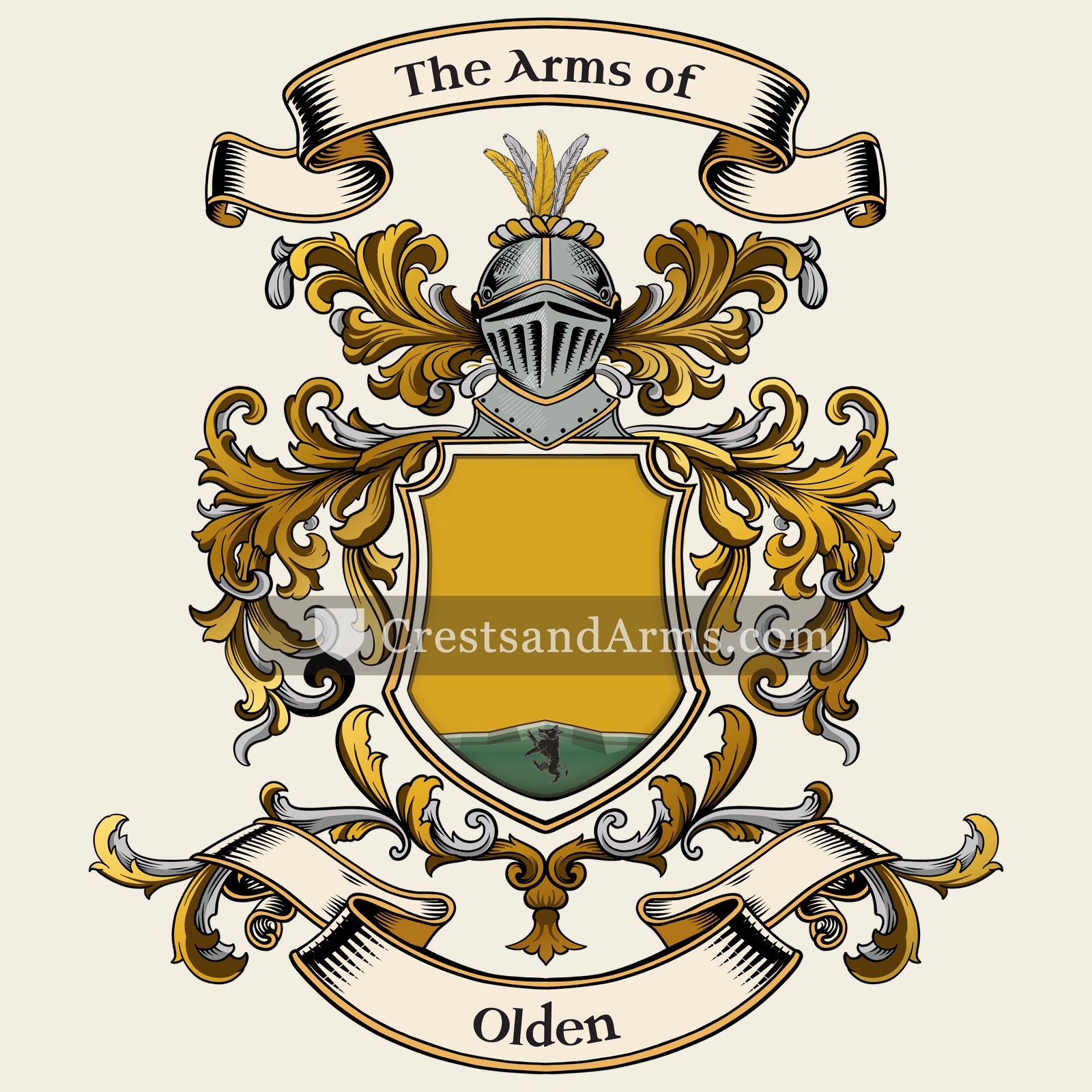
Symbols on this shield
mountThe ground held, and steadfastness upon it
boarA fierce fighter who battles to the end
Colours
Gold (Or)Means: Generosity
Green (Vert)Means: Hope
Black (Sable)Means: Constancy
Historical info
Source
Sir Bernard Burke, The General Armory of England, Scotland, Ireland and Wales, London: Harrison & Sons, 1884
Blazon (the actual original written record)
“Or, on a mount vert a boar pass. sa”
Englandc. 1620
Digital archive packCoat of arms PNG, gold border print PDF, vector SVG and the certificate of authenticity. Sent to your email in minutes.
Map of England showing where the Olden arms are recorded
The Olden arms were recorded in England, c. 1620.
Arms such as these were typically recorded in York.
Yorkshire is the largest of the English counties, and it held more gentry families than any other. Land there was split among a great many households rather than a few, so a great many of them carried arms.
This is where the arms were entered in the register. Families often moved to other parts of the country, so the same name can turn up in more than one region.
The body that granted and recorded arms in England in this period.
James VI and I
Sovereign of the period
James VI and I
1603–1625
Reigning in Netherlands when the Olden arms are first recorded.
How Arms Worked in England
English heraldry allowed arms to be shared by all legitimate descendants of the original owner. These symbols were treated as personal property that moved through the generations to all children. While the eldest son kept the original design, other family members could use the same shield without needing to change it or register their own unique versions.
Granting authority
The College of Arms in London has regulated the use of coats of arms throughout England and Wales since 1484.
How they got arms
Families typically obtained their coats of arms through a formal grant from the Crown or by proving their ancient right to them.
Where arms were recorded
All official coats of arms are recorded in the registers kept at the College of Arms, which date back to the fifteenth century.
The family's standing
Recorded among the armigerous families of England.
Origin & History of the Olden Family in England
The history of the Olden name in England is deeply rooted in the northern landscape, with documented evidence placing the family in the city of York by the year 1620. During this period, York served as a vital hub for trade and administration, and families like the Oldens were often integrated into the local merchant or artisan classes that defined the city’s social fabric. The name itself likely originated as a descriptive term, potentially identifying individuals who were considered elders within their community or those who hailed from long-established settlements. As the family navigated the social and economic shifts of the seventeenth century, their presence in such a prominent historical center suggests they were part of the steady growth of England’s urban population. By maintaining a home in York, the early members of this family were positioned at the heart of regional life, contributing to the local culture and the evolving identity of the northern English people.
Related Branches & Arms
Root word
Ald
Old or ancient
This name
OldenDerived from a topographic reference to someone living near an old or ancient landmark.
also spelled
van Olde
Olden
van Old
Documented Sources
J. B. Rietstap, Armorial Général, Gouda: G. B. van Goor Zonen, 1884–87
Nationaal Archief, Bevolkingsregister Leiden 1815
Gemeente Leiden, Archief van de Burgerlijke Stand 1811-1815
Van der Aa, A.J., Biographisch Woordenboek der Nederlanden, 1852
Digital archive packCoat of arms PNG, gold border print PDF, vector SVG and the certificate of authenticity. Sent to your email in minutes.


 fessThe military belt, and readiness to serve
 mulletThe third son, and a divine quality from above
 fessThe military belt, and readiness to serve
 mulletThe third son, and a divine quality from above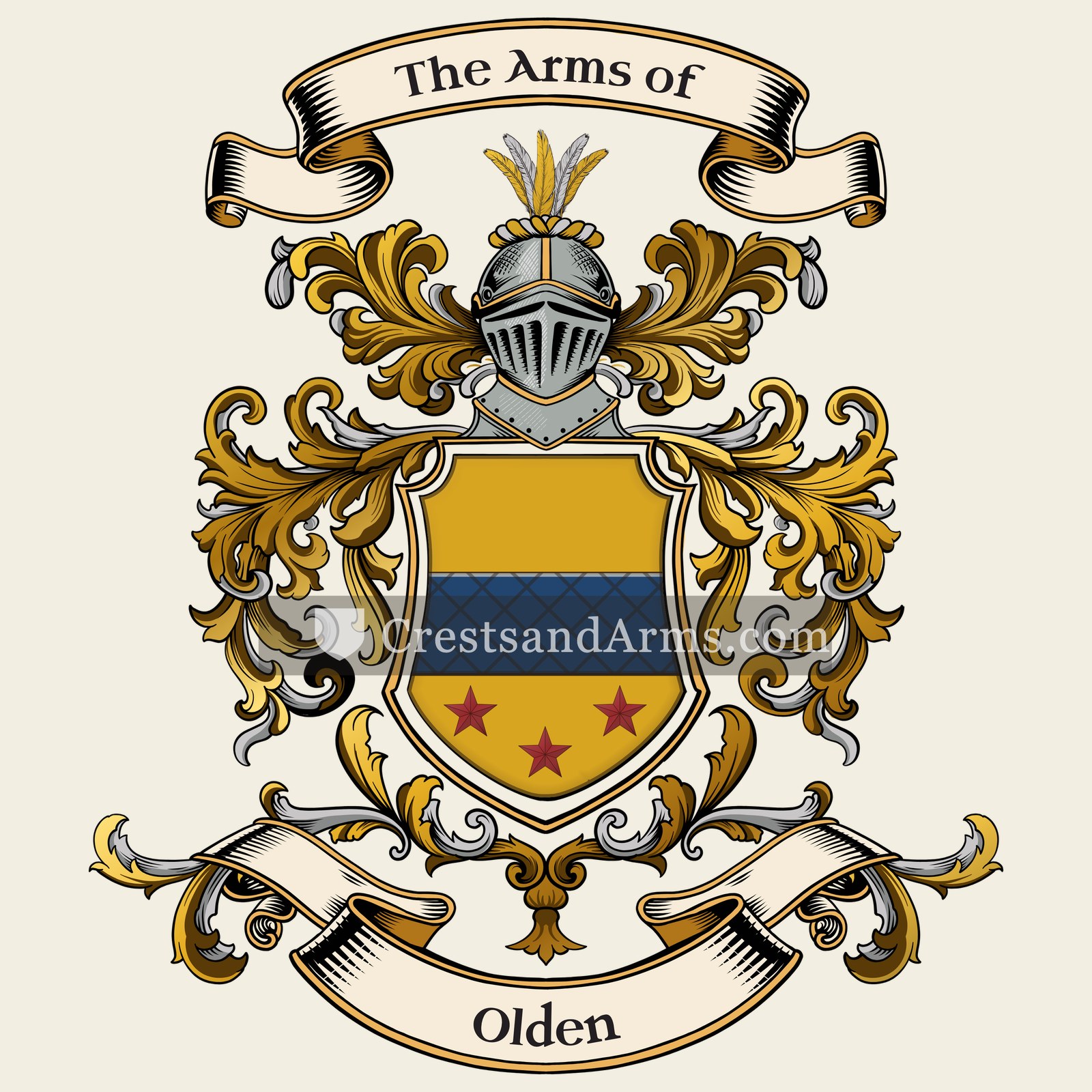


 mountThe ground held, and steadfastness upon it
 boarA fierce fighter who battles to the end