A record of documented arms, meaning and origin, researched for the Olivarez family lines. Documented in 2 countries.
Reg. 5837 · German, M–O
Coat of Arms & Family Crest Details
Symbols on this shield
mountThe ground held, and steadfastness upon it
wreathHonour, and a victory crowned
serpentWisdom, healing and prudence
Colours
Gold (Or)Means: Generosity
Green (Vert)Means: Hope
Historical info
Source
J. B. Rietstap, Armorial Général, Gouda: G. B. van Goor Zonen, 1884–87
Blazon (the actual original written record)
“D'or à un olivier de sin., terrassé du même, et accolé de deux couleuvres affr. de sin. Cq. cour. C.: les meubles de l'écu, surm. de la D.: FRUSTRA. L.: à dextre d'or et de sa., à sen. d'arg. et de gu.”
Germanyc. 1765
Digital archive packCoat of arms PNG, gold border print PDF, vector SVG and the certificate of authenticity. Sent to your email in minutes.
Map of Germany showing where the Olivarez arms are recorded
The Olivarez arms were recorded in Germany, c. 1765.
Arms such as these were typically recorded in Bavaria.
Bavaria was a country of old landed families and walled market towns. Estates passed down the same line for centuries, and both the landowners and the leading townsmen kept arms, which is why so many Bavarian names sit in the registers.
This is where the arms were entered in the register. Families often moved to other parts of the country, so the same name can turn up in more than one region.
The body that granted and recorded arms in Germany in this period.
Francis I, Holy Roman Emperor
Sovereign of the period
Francis I, Holy Roman Emperor
1745–1765
Reigning in Germany when the Olivarez arms are first recorded.
How Arms Worked in Germany
In the Holy Roman Empire, coats of arms were often granted to individuals by the Emperor or his representatives. These arms were then passed down through the generations to all legitimate descendants of the original holder. Younger branches of a family usually kept the same shield design without needing to change it, as the arms belonged to the entire lineage.
Granting authority
The Holy Roman Emperor held the sole power to grant new coats of arms throughout his vast imperial territories.
How they got arms
Families typically obtained their coats of arms through a formal imperial grant or by proving their noble status to the authorities.
Where arms were recorded
These grants were officially recorded in the Imperial Chancery registers, which began keeping formal records of such honors during the Middle Ages.
The family's standing
Recorded among the armigerous families of Germany.
Origin & History of the Olivarez Family in Germany
The family name Olivarez, while often associated with Mediterranean regions, established a notable presence in the Bavarian region of Germany by the mid-eighteenth century. Historical records confirm that members of the family were living in Bavaria as early as 1765, likely arriving as part of the complex migration patterns that defined Central Europe during the Enlightenment. At this time, Bavaria was a hub for trade and craftsmanship, and families with foreign-sounding names often integrated into local guilds or agricultural communities. These early settlers likely navigated the social structures of the Electorate of Bavaria by adapting their professional skills to the needs of the local economy. Their presence in the region suggests a history of mobility and resilience, as they maintained their family identity while becoming part of the fabric of German society during a period of significant regional change.
Coat of Arms & Family Crest Details
Symbols on this shield
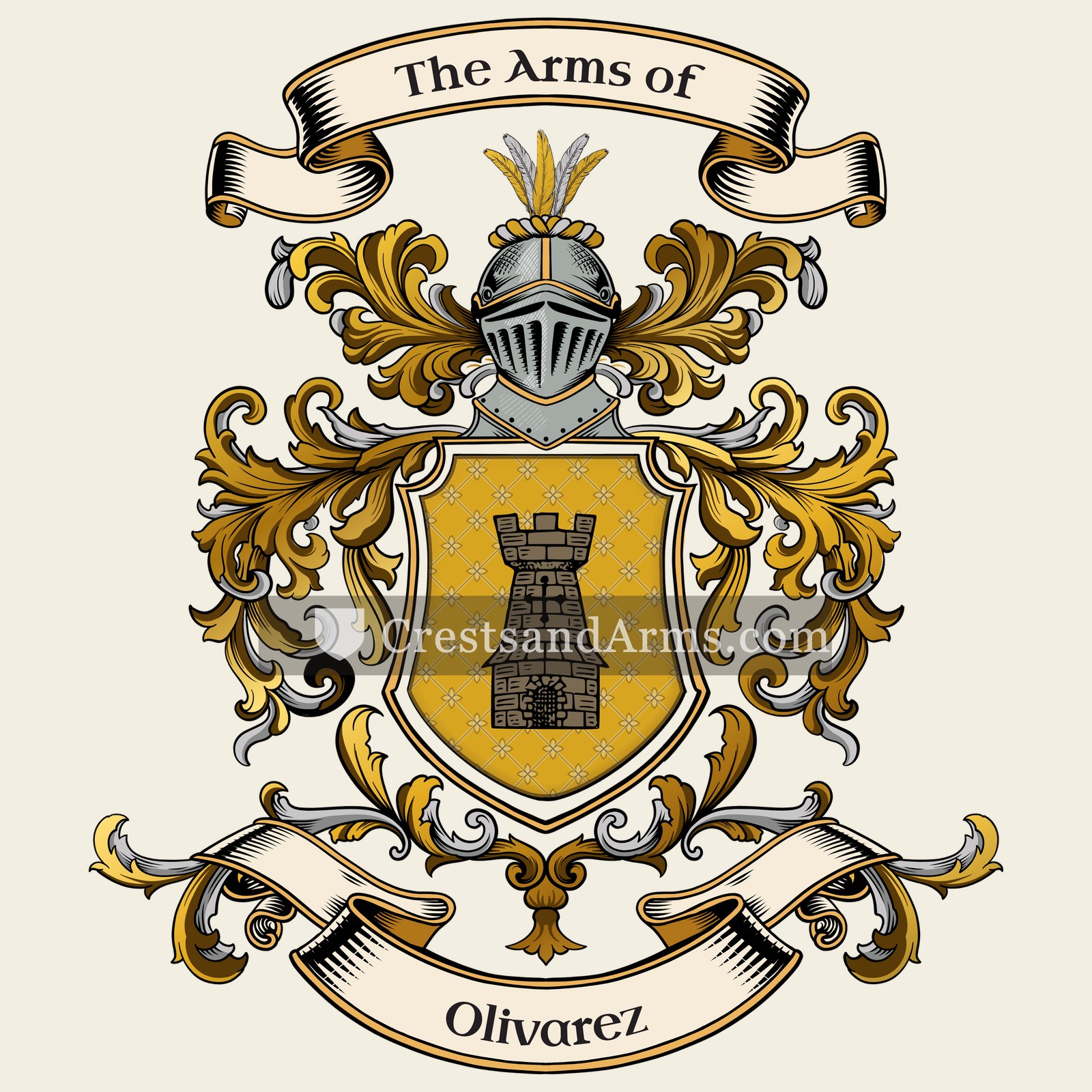
towerGrandeur and solidity, and a stronghold defended
Colours
Gold (Or)Means: Generosity
Historical info
Source
J. B. Rietstap, Armorial Général, Gouda: G. B. van Goor Zonen, 1884–87
Blazon (the actual original written record)
“D'or à une tour sommée d'une tourelle au nat., sommée d'un olivier de sin.”
CastileCastile, c. 1722
Digital archive packCoat of arms PNG, gold border print PDF, vector SVG and the certificate of authenticity. Sent to your email in minutes.
Map of Spain showing where the Olivarez arms are recorded
The Olivarez arms were recorded in Castile, c. 1722.
Castile was the heart of Spain and the source of most of its noble families. Land won in the long wars against the Moors was granted out to fighting men, and a man granted land was granted arms along with it.
This is where the arms were entered in the register. Families often moved to other parts of the country, so the same name can turn up in more than one region.
The body that granted and recorded arms in Spain in this period.
Philip V of Spain
Sovereign of the period
Philip V of Spain
1714–1724
Reigning in Germany when the Olivarez arms are first recorded.
How Arms Worked in Spain
In Spain, a coat of arms was considered a form of property that belonged to the entire family line. These arms were passed down from a father to all his children equally. Younger branches of the family usually kept the original design without needing to add any special marks to distinguish their specific line.
Granting authority
The Cronista Rey de Armas was the official body that regulated and granted coats of arms throughout Spain.
How they got arms
Families often obtained their arms through royal grants or by proving their noble status to the official heraldic authority.
Where arms were recorded
Coats of arms were officially recorded in the registers of the Cronista Rey de Armas starting in 1496.
The family's standing
Recorded among the armigerous families of Castile.
Origin & History of the Olivarez Family in Spain
The surname Olivarez traces its linguistic roots to the Spanish word for olive tree, suggesting that the family’s earliest ancestors likely lived near an olive grove or worked in the production of olive oil. By the early 18th century, the family had established a notable presence in the region of Castile, a central plateau that served as the historical heart of the Spanish kingdom. During this period, families in Castile often lived in tight-knit rural communities where their identity was closely tied to the specific land they cultivated. The presence of the Olivarez name in 1722 indicates that the family was part of the foundational social fabric of the Spanish interior, living through an era of significant agricultural development and local governance. As the family grew, they became part of the broader demographic shifts that defined the Castilian landscape, contributing to the local culture and economy of the Spanish heartland for generations.
Related Branches & Arms
Root word
oliva
Latin term for the olive tree or its fruit.
This name
OlivarezA habitational or occupational name referring to someone who lived near or cultivated olive groves.
also spelled
Olivarez
Documented Sources
J. B. Rietstap, Armorial Général, Gouda: G. B. van Goor Zonen, 1884–87


 mountThe ground held, and steadfastness upon it
 wreathHonour, and a victory crowned
 serpentWisdom, healing and prudence
 mountThe ground held, and steadfastness upon it
 wreathHonour, and a victory crowned
 serpentWisdom, healing and prudence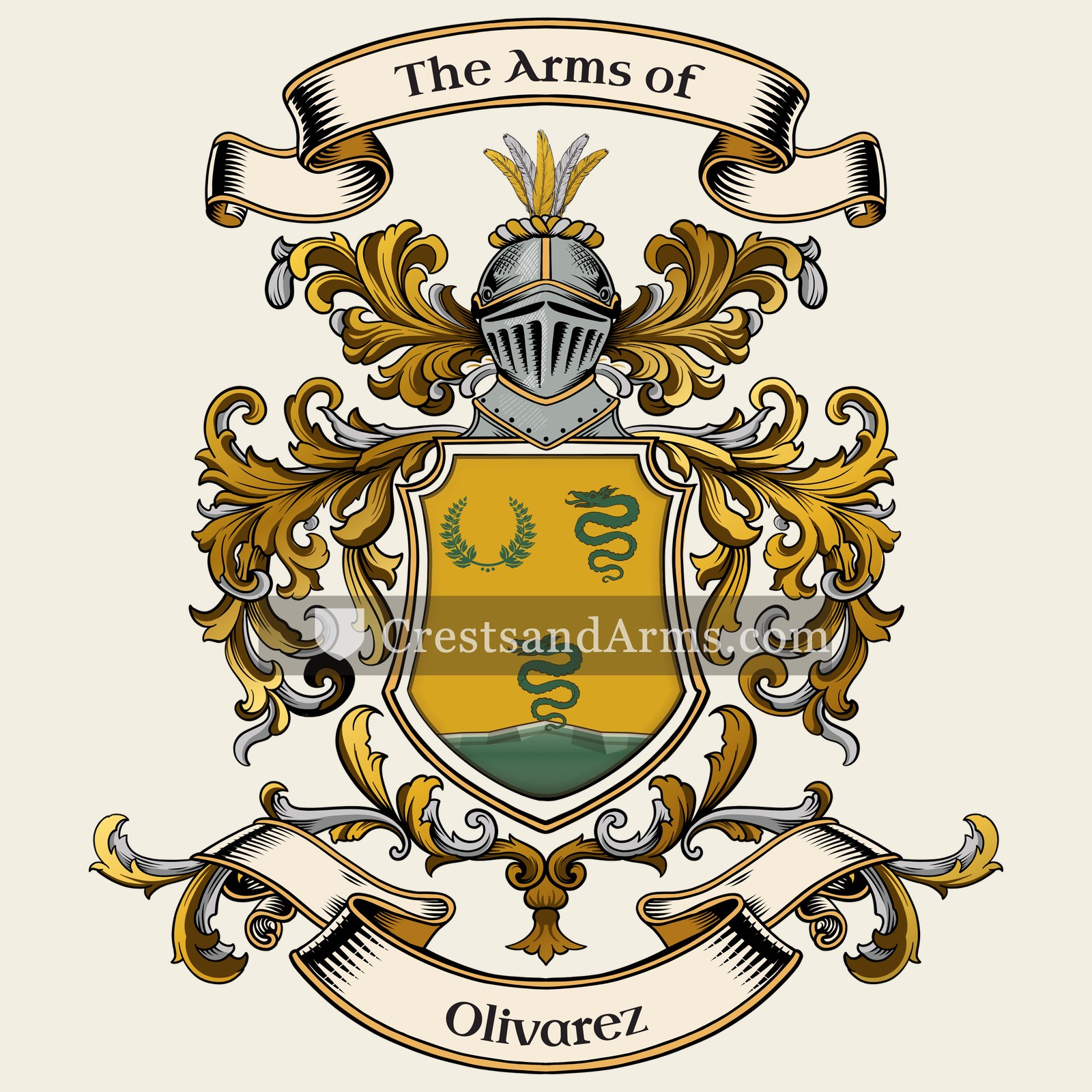


 towerGrandeur and solidity, and a stronghold defended