A record of documented arms, meaning and origin, researched for the Oppenheimer family lines. Documented in 2 countries.
Reg. 4251 · French, M–O
Coat of Arms & Family Crest Details
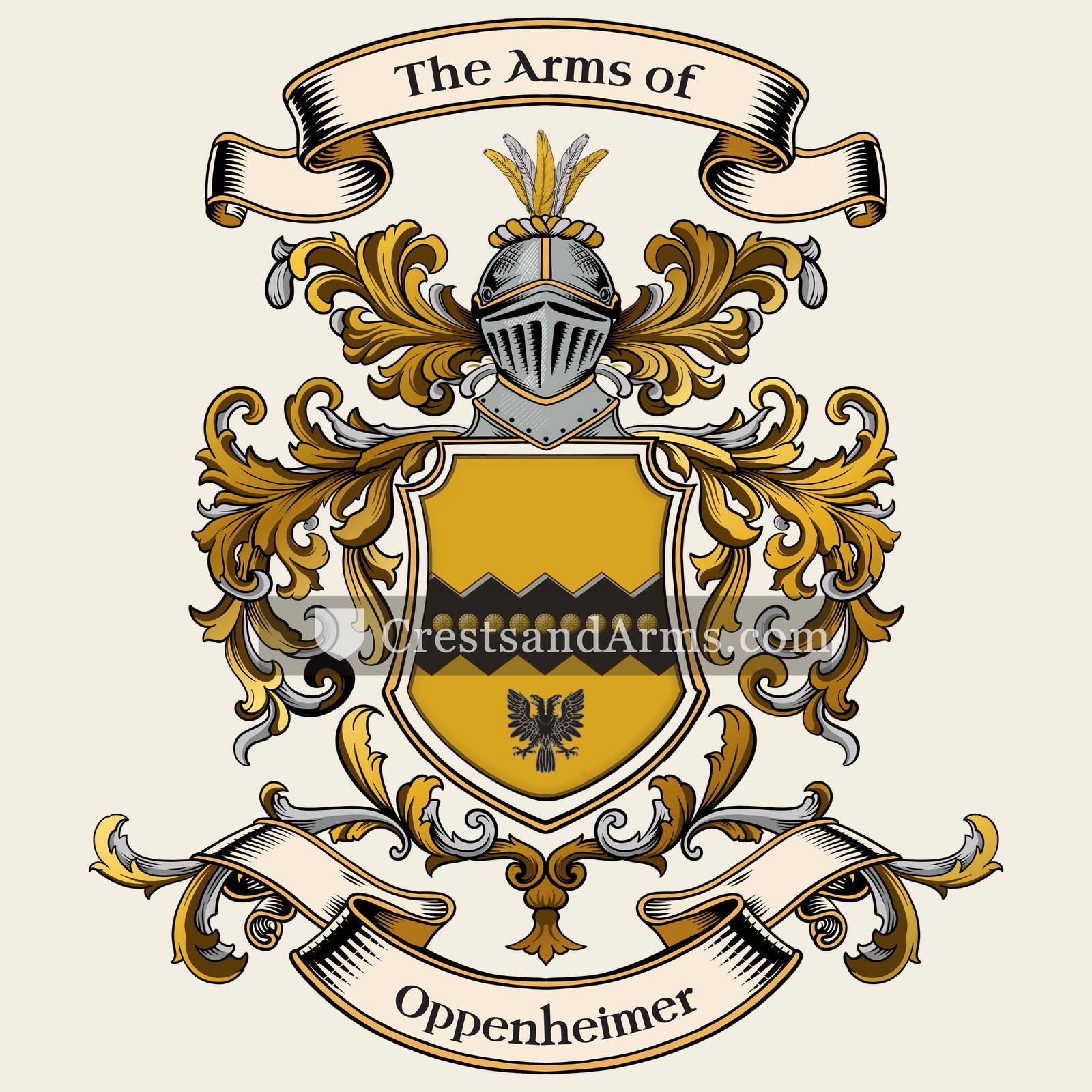
Symbols on this shield
chiefAuthority, wisdom and dominion
anchorHope, and steadfastness in trouble
mulletThe third son, and a divine quality from above
Colours
Black (Sable)Means: Constancy
Blue (Azure)Means: Loyalty and truth
Silver (Argent)Means: Peace and sincerity
Historical info
Source
J. B. Rietstap, Armorial Général, Gouda: G. B. van Goor Zonen, 1884–87
Blazon (the actual original written record)
“De sa. à une ancre d'arg. avec sa gumène du même; le champ chapé-ployé de gu., à deux couronnes à l'antique d'or; au chef d'azur, ch. d'une étoile d'arg., hérissée d'or. Cq. cour. C.: un vol, de sa. et de gu., chaque aile ch. d'un demi-cercle treflé d'or. L.: à dextre d'arg. et de sa., à sen. d'arg. et de gu. T.: à dextre une femme représentant l'Intégrité, posée sur un serpent et tenant un bouclier; à sen. une femme représentant l'Industrie, posée sur une branche de chêne et tenant une roue à dents. D.: INTEGRITAS, CONCORDIA, INDUSTRIA.”
Francec. 1867
Digital archive packCoat of arms PNG, gold border print PDF, vector SVG and the certificate of authenticity. Sent to your email in minutes.
Map of France showing where the Oppenheimer arms are recorded
The Oppenheimer arms were recorded in France, c. 1867.
Arms such as these were typically recorded in Bretagne.
More families held coats of arms in Bretagne than anywhere else in France. The land was divided into many small estates rather than a few large ones, so far more households counted as gentry, and each needed a shield of its own to be told apart.
This is where the arms were entered in the register. Families often moved to other parts of the country, so the same name can turn up in more than one region.
The body that granted and recorded arms in France in this period.
Napoleon III
Sovereign of the period
Napoleon III
1852–1870
Reigning in France when the Oppenheimer arms are first recorded.
How Arms Worked in France
In France, a coat of arms was a mark of honor that passed down through the male line to all legitimate descendants. Families often used the same shield without changes to show their shared heritage. If a branch wanted to stand out, they could add a small mark to their shield to show their specific place in the family tree.
Granting authority
The Juge d'armes de France acted as the official authority that regulated and verified coats of arms across the country.
How they got arms
Families typically inherited their arms from ancestors, though they could also receive them through royal grants or by proving their noble status.
Where arms were recorded
Coats of arms were officially recorded in the Armorial Général de France, which began its main collection in the year 1696.
The family's standing
Recorded among the armigerous families of France.
Origin & History of the Oppenheimer Family in France
The name Oppenheimer originates from the German town of Oppenheim, meaning "home of the Oppen family," and it historically identifies families who migrated from this region across Europe. While the name is deeply rooted in German history, its presence in France became documented during the nineteenth century as families moved for trade and new opportunities. By 1867, records confirm that members of the family had established themselves in the Bretagne region of France. This period was a time of significant movement for many families across borders, and the Oppenheimers who settled in the coastal towns of Bretagne integrated into the local economy while maintaining their unique ancestral identity. Their arrival in this specific part of France highlights the broader trend of European families relocating to find stability and growth during the mid-1800s.
Coat of Arms & Family Crest Details
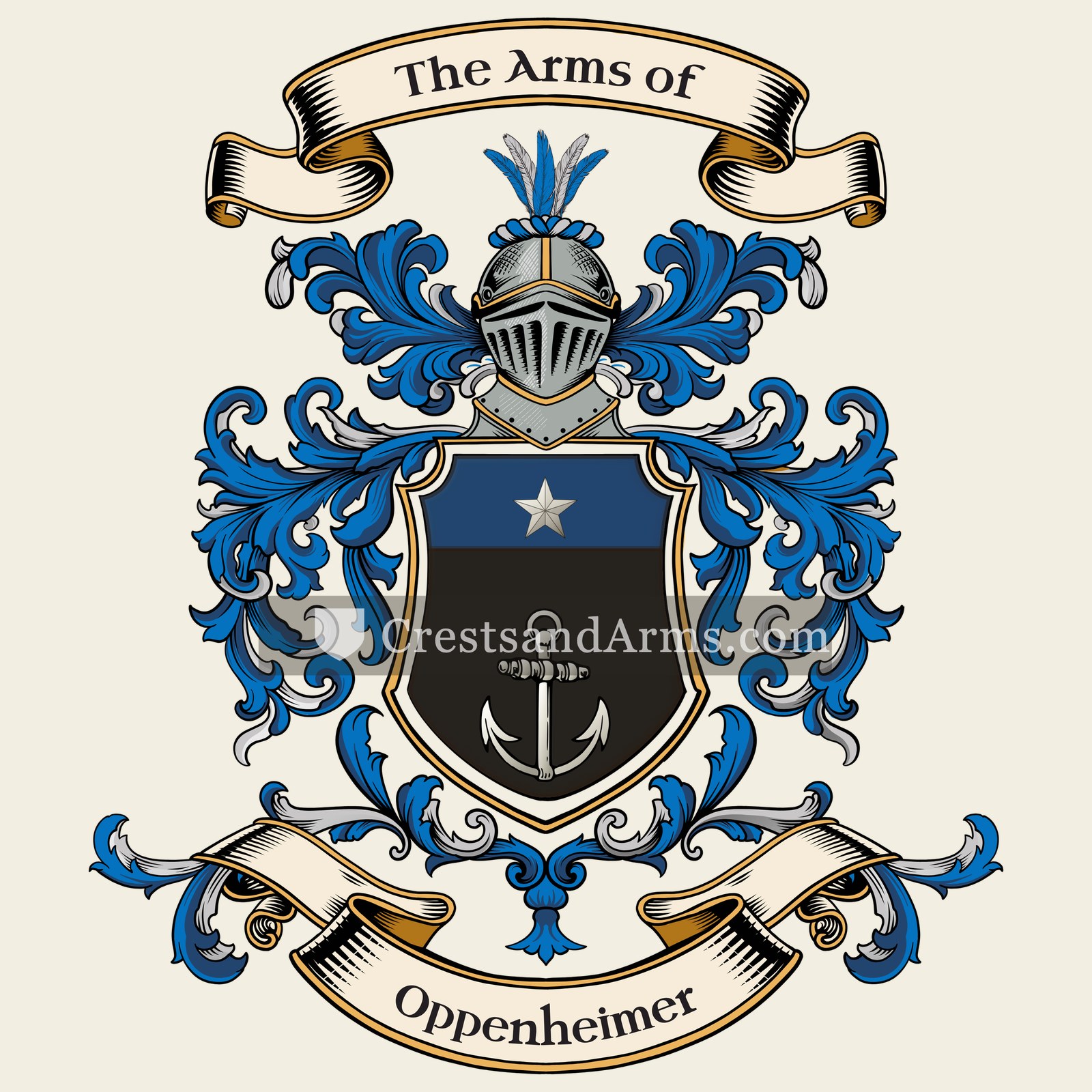
Symbols on this shield
fessThe military belt, and readiness to serve
roundelA coin, and one who has been to the crusades
eagleNobility, strength and a keen mind
Colours
Gold (Or)Means: Generosity
Black (Sable)Means: Constancy
Historical info
Source
J. B. Rietstap, Armorial Général, Gouda: G. B. van Goor Zonen, 1884–87
Blazon (the actual original written record)
“D'or à la fasce vivrée de gu. ch. de neuf bes. d'or, et acc. en chef d'un sphynx de sa. et en p. d'une aigle du même.”
GermanyWindeck Allem, c. 1765
Digital archive packCoat of arms PNG, gold border print PDF, vector SVG and the certificate of authenticity. Sent to your email in minutes.
Map of Germany showing where the Oppenheimer arms are recorded
The Oppenheimer arms were recorded in Windeck Allem, c. 1765.
Arms such as these were typically recorded in Bavaria.
Bavaria was a country of old landed families and walled market towns. Estates passed down the same line for centuries, and both the landowners and the leading townsmen kept arms, which is why so many Bavarian names sit in the registers.
This is where the arms were entered in the register. Families often moved to other parts of the country, so the same name can turn up in more than one region.
The body that granted and recorded arms in Germany in this period.
Francis I, Holy Roman Emperor
Sovereign of the period
Francis I, Holy Roman Emperor
1745–1765
Reigning in France when the Oppenheimer arms are first recorded.
How Arms Worked in Germany
In the Holy Roman Empire, coats of arms were often granted to individuals by the Emperor or his representatives. These arms were then passed down through the generations to all legitimate descendants of the original holder. Younger branches of a family usually kept the same shield design without needing to change it, as the arms belonged to the entire lineage.
Granting authority
The Holy Roman Emperor held the sole power to grant new coats of arms throughout his vast imperial territories.
How they got arms
Families typically obtained their coats of arms through a formal imperial grant or by proving their noble status to the authorities.
Where arms were recorded
These grants were officially recorded in the Imperial Chancery registers, which began keeping formal records of such honors during the Middle Ages.
The family's standing
Recorded among the armigerous families of Germany.
Origin & History of the Oppenheimer Family in Germany
The surname Oppenheimer is a classic example of a locative name, meaning it was originally adopted by families to identify their place of origin. The name refers to the town of Oppenheim, which is located in the Rhineland region of Germany. During the Middle Ages, many Jewish families moved throughout German territories to escape persecution or to seek new economic opportunities. By the time the family was firmly established in Bavaria in 1765, the name served as a permanent link to their ancestral roots in the west. As the family settled into Bavarian life, they became part of the complex social and legal structures that governed Jewish communities in the eighteenth century. This transition from being identified by a specific town to using that town as a hereditary family name reflects a broader trend in German history where surnames became essential for tax records, legal identification, and community organization.
Oppenheimer Meaning & Related Branches
Root word
Oppenheim
A place name derived from the German words for open and home.
This name
OppenheimerA habitational surname referring to someone who originated from the town of Oppenheim in Germany.
also spelled
Oppenheym
Oppenhym
Oppenhime
Documented Sources
J. B. Rietstap, Armorial Général, Gouda: G. B. van Goor Zonen, 1884–87
Archives: Archives départementales d'Ille-et-Vilaine, État civil et recensements de population
Books: Friedenberg, Albert M., The Jews of Germany: A Historical Study, 1916
Books: Lowenstein, Steven M., The Jewish Cultural Tapestry: International Jewish Folk Traditions, 2000
Digital archive packCoat of arms PNG, gold border print PDF, vector SVG and the certificate of authenticity. Sent to your email in minutes.


 chiefAuthority, wisdom and dominion
 anchorHope, and steadfastness in trouble
 mulletThe third son, and a divine quality from above
 chiefAuthority, wisdom and dominion
 anchorHope, and steadfastness in trouble
 mulletThe third son, and a divine quality from above


 fessThe military belt, and readiness to serve
 roundelA coin, and one who has been to the crusades
 eagleNobility, strength and a keen mind