A record of documented arms, meaning and origin, researched for the Osterman family lines. Documented in 3 countries.
Reg. 7574 · Polish, M–O
Coat of Arms & Family Crest Details
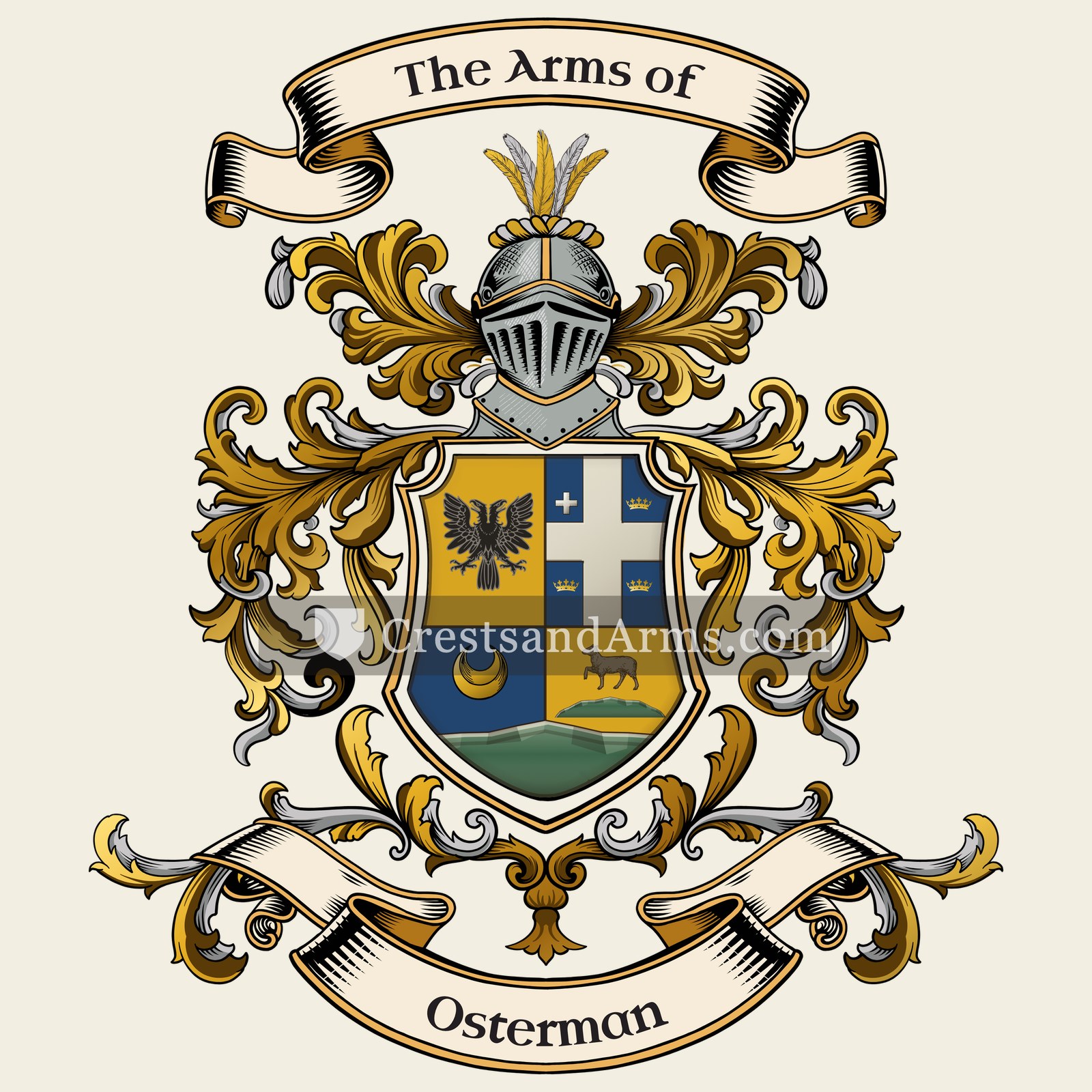
Symbols on this shield
mountThe ground held, and steadfastness upon it
chiefAuthority, wisdom and dominion
fessThe military belt, and readiness to serve
palm treeVictory, and righteousness that flourishes
mulletThe third son, and a divine quality from above
eagleNobility, strength and a keen mind
Colours
Gold (Or)Means: Generosity
Blue (Azure)Means: Loyalty and truth
Silver (Argent)Means: Peace and sincerity
Green (Vert)Means: Hope
Black (Sable)Means: Constancy
Historical info
Source
J. B. Rietstap, Armorial Général, Gouda: G. B. van Goor Zonen, 1884–87
Blazon (the actual original written record)
“D'or à un palmier terrassé de sin., au chef d'arg., soutenu d'une fasce d'azur, chargée de trois étoiles d'or, le chef d'arg. ch. d'une aigle ép. iss. de sa., bq. d'or, chaque tête sommée d'une couronne impériale. Trois cq., le 2 cour. C.: 1° un palmier de sin.; 2° une aigle ép. de sa., bq. et m. d'or, chaque tête sommée d'une couronne impériale; 3° trois pl. d'aut. d'arg. L.: d'arg. et d'azur. S.: deux autruches au nat. D.: NEC SOL NEC FRIGORA MUTANT.”
LivoniaEsthonie · Livonia, c. 1772
Digital archive packCoat of arms PNG, gold border print PDF, vector SVG and the certificate of authenticity. Sent to your email in minutes.
Map of Poland showing where the Osterman arms are recorded
The Osterman arms were recorded in Livonia, c. 1772.
Livonia was Baltic country held by a small number of landed families who kept their estates for centuries. Land there passed down whole rather than being divided, and long unbroken tenure is what fills a register.
This is where the arms were entered in the register. Families often moved to other parts of the country, so the same name can turn up in more than one region.
Region
Livonia
Town
Esthonie
First recorded
1772
Granting Authority for the Osterman Arms
Ennoblement by the Sejm
Author: Olek Remesz · CC BY-SA 3.0
The body that granted and recorded arms in Poland in this period.
Stanisław August Poniatowski
Sovereign of the period
Stanisław August Poniatowski
1764–1795
Reigning in Poland when the Osterman arms are first recorded.
How Arms Worked in Poland
Polish noble families shared a single coat of arms across many different surnames, creating large clans rather than individual designs. These symbols were held collectively by all members of the clan regardless of their specific family name. When a new family joined the nobility, they were adopted into an existing clan and began using that group's established shield.
Granting authority
The Sejm, which was the Polish parliament, held the power to grant noble status and the right to bear arms.
How they got arms
Families typically received their coat of arms through a formal act of ennoblement granted by the Sejm for distinguished service.
Where arms were recorded
These grants were officially recorded in the Crown Metrica, which served as the central archive for state documents starting in the sixteenth century.
The family's standing
Recorded among the armigerous families of Livonia.
Origin & History of the Osterman Family in Poland
The name Osterman carries a history deeply connected to the shifting borders of Northern and Eastern Europe. While the family name has roots in Germanic languages, its presence in the region of Livonia by 1772 places the family within the complex social landscape of the Polish-Lithuanian Commonwealth and the surrounding Baltic territories. During this era, many families with similar names moved across these lands due to trade, military service, or the movement of administrative officials. Because Livonia was a crossroads for different cultures, the Osterman name likely belonged to people who served as merchants or local administrators. These individuals often moved between the urban centers of the Baltic coast and the interior regions of Poland. By the late 18th century, the family was well-established in the social fabric of the region, participating in the local economy and the evolving political life of the territories that were then under significant imperial influence.
Coat of Arms & Family Crest Details
Symbols on this shield
flag / pennantA command held, and a following kept
Colours
Silver (Argent)Means: Peace and sincerity
Blue (Azure)Means: Loyalty and truth
Historical info
Source
J. B. Rietstap, Armorial Général, Gouda: G. B. van Goor Zonen, 1884–87
Blazon (the actual original written record)
“D'arg. à un gonfanon d'azur, frangé d'or.”
BavariaBavaria, c. 1765
Digital archive packCoat of arms PNG, gold border print PDF, vector SVG and the certificate of authenticity. Sent to your email in minutes.
Map of Germany showing where the Osterman arms are recorded
The Osterman arms were recorded in Bavaria, c. 1765.
Bavaria was a country of old landed families and walled market towns. Estates passed down the same line for centuries, and both the landowners and the leading townsmen kept arms, which is why so many Bavarian names sit in the registers.
This is where the arms were entered in the register. Families often moved to other parts of the country, so the same name can turn up in more than one region.
The body that granted and recorded arms in Germany in this period.
Francis I, Holy Roman Emperor
Sovereign of the period
Francis I, Holy Roman Emperor
1745–1765
Reigning in Poland when the Osterman arms are first recorded.
How Arms Worked in Germany
In the Holy Roman Empire, coats of arms were often granted to individuals by the Emperor or his representatives. These arms were then passed down through the generations to all legitimate descendants of the original holder. Younger branches of a family usually kept the same shield design without needing to change it, as the arms belonged to the entire lineage.
Granting authority
The Holy Roman Emperor held the sole power to grant new coats of arms throughout his vast imperial territories.
How they got arms
Families typically obtained their coats of arms through a formal imperial grant or by proving their noble status to the authorities.
Where arms were recorded
These grants were officially recorded in the Imperial Chancery registers, which began keeping formal records of such honors during the Middle Ages.
The family's standing
Recorded among the armigerous families of Bavaria.
Origin & History of the Osterman Family in Germany
The surname Osterman is a classic example of a topographic name, which was common in the German-speaking regions of Europe during the Middle Ages. The name is derived from the Middle High German words "ost" and "man," literally translating to "eastern man." It was originally used to identify someone who lived to the east of a specific village or someone who had migrated from an eastern territory. By the time members of the family were documented in Bavaria in 1765, the name had already been established for generations as a way to track the movement and origins of local residents. In the social structure of eighteenth-century Bavaria, such names helped officials distinguish between long-term inhabitants and those who had recently arrived from neighboring regions. This naming tradition reflects the way early German society organized itself based on geography and the physical landscape of the local community.
Coat of Arms & Family Crest Details
Symbols on this shield
cross symbolChristian faith and service
mountThe ground held, and steadfastness upon it
eagleNobility, strength and a keen mind
crownSovereignty, authority and just reward
crescentHonour by the sovereign, and the second son
lambGentleness, patience and faith
Colours
Gold (Or)Means: Generosity
Blue (Azure)Means: Loyalty and truth
Green (Vert)Means: Hope
Silver (Argent)Means: Peace and sincerity
Black (Sable)Means: Constancy
Historical info
Source
J. B. Rietstap, Armorial Général, Gouda: G. B. van Goor Zonen, 1884–87
Blazon (the actual original written record)
“Ec.: au 1 d'or à l'aigle de sa.; au 2 d'azur à la croix patriarcale d'arg., surm. de trois couronnes à l'antique d'or, mal-ordonnées; au 3 d'azur à un croiss. figuré montant d'or, surm. d'une fleur-de-lis du même; au 4 d'or à un agneau pascal au nat., pass. sur une terrasse de sin. Deux cq. cour. C.: 1° l'aigle du 1; l. d'or et de sa.; 2° une croix patriarcale d'arg., entre un vol de sa.; l. d'or et d'azur.”
GaliciaGalicia, c. 1772
Digital archive packCoat of arms PNG, gold border print PDF, vector SVG and the certificate of authenticity. Sent to your email in minutes.
Map of Austria showing where the Osterman arms are recorded
The Osterman arms were recorded in Galicia, c. 1772.
Galicia was eastern country of large estates and small farming villages, held by families who had been there for a very long time. Land was what entitled a family to arms, and land there rarely changed hands.
This is where the arms were entered in the register. Families often moved to other parts of the country, so the same name can turn up in more than one region.
Region
Galicia
First recorded
1772
Granting Authority for the Osterman Arms
Imperial and Royal chancery
Sodacan · CC BY-SA 3.0
The body that granted and recorded arms in Austria in this period.
Joseph II, Holy Roman Emperor
Sovereign of the period
Joseph II, Holy Roman Emperor
1765–1790
Reigning in Poland when the Osterman arms are first recorded.
How Arms Worked in Austria
Austrian coats of arms were often linked directly to noble titles granted by the Emperor. These symbols belonged to the entire family line rather than just one individual. When a family grew, new branches kept the original design without needing to change it. This system allowed all members of a noble house to share the same identity across many generations.
Granting authority
The Imperial and Royal chancery managed all heraldic matters and controlled the official granting of arms throughout the Austrian lands.
How they got arms
Families typically received their arms through a formal imperial decree that often accompanied the elevation of a person to noble status.
Where arms were recorded
Official records of these grants were kept in the Imperial Register of Nobility which began its formal documentation process in 1453.
The family's standing
Recorded among the armigerous families of Galicia.
Origin & History of the Osterman Family in Austria
The name Osterman carries deep roots in the historical landscape of the Austrian Empire, particularly following the First Partition of Poland in 1772. When the Habsburg monarchy annexed the region of Galicia, families bearing this name were already established as part of the diverse social fabric of the territory. The name itself is derived from the Germanic term for an easterner, which likely identified ancestors who had migrated toward the eastern frontiers of the German-speaking lands. During the late 18th century, the Austrian administration began formalizing civil records to better track the population of its new provinces. Members of the Osterman family were integrated into these systems as the empire sought to organize its bureaucracy across the Galician crown land. This era marked a transition where the family became subjects of the Austrian crown, settling into roles that supported the agricultural and administrative growth of the region under the rule of Empress Maria Theresa and her successors.
Osterman Meaning & Related Branches
Root word
Oster
Germanic term for east or related to the spring season.
This name
OstermanA person who lived in the east or a man associated with the spring.
also spelled
Osterman
Ostermane
Documented Sources
J. B. Rietstap, Armorial Général, Gouda: G. B. van Goor Zonen, 1884–87
Kappeler, Andreas. Rußland als Vielvölkerreich: Entstehung, Geschichte, Zerfall. 1992
Plakans, Andrejs. The Kinship of the Baltic Peoples. 1984
Raun, Toivo U. Estonia and the Estonians. 2001
Latvian State Historical Archives (Latvijas Valsts vēstures arhīvs), Fond 235 (Livonian Consistory records)
Estonian Historical Archives (Eesti Ajalooarhiiv), Fond 854 (Livonian nobility and land records)
Digital archive packCoat of arms PNG, gold border print PDF, vector SVG and the certificate of authenticity. Sent to your email in minutes.


 mountThe ground held, and steadfastness upon it
 chiefAuthority, wisdom and dominion
 fessThe military belt, and readiness to serve
 palm treeVictory, and righteousness that flourishes
 mulletThe third son, and a divine quality from above
 eagleNobility, strength and a keen mind
 mountThe ground held, and steadfastness upon it
 chiefAuthority, wisdom and dominion
 fessThe military belt, and readiness to serve
 palm treeVictory, and righteousness that flourishes
 mulletThe third son, and a divine quality from above
 eagleNobility, strength and a keen mind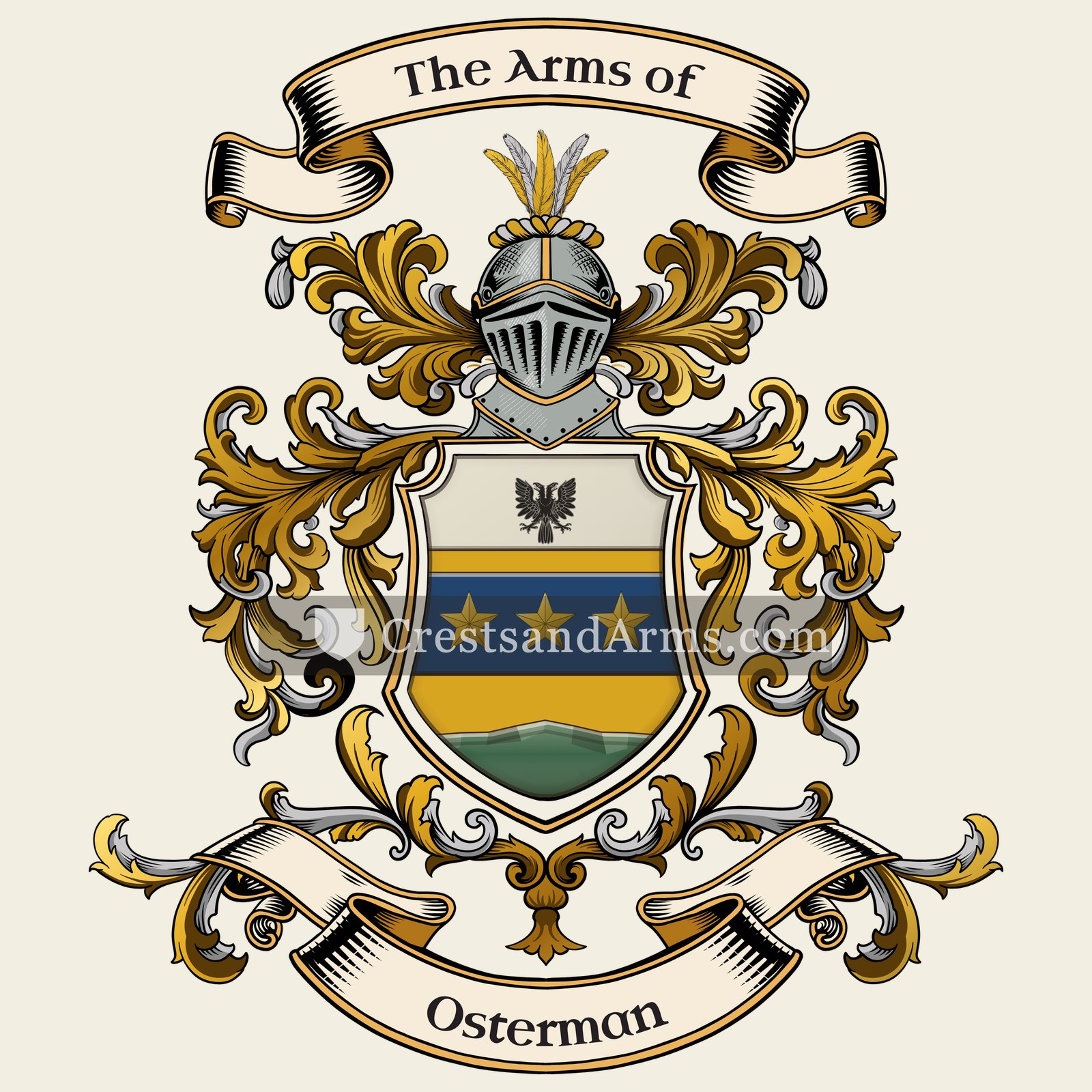


 flag / pennantA command held, and a following kept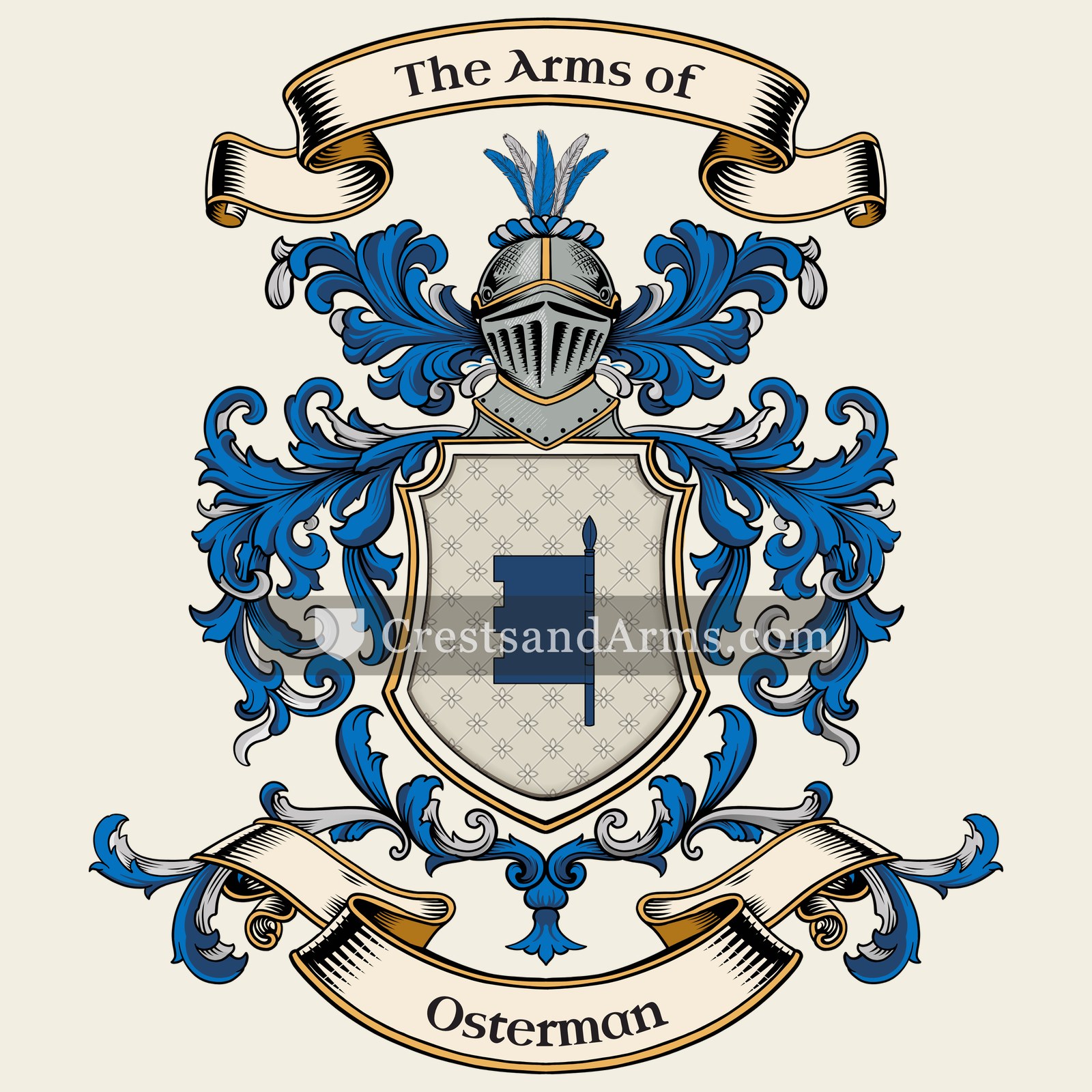


 cross symbolChristian faith and service
 crownSovereignty, authority and just reward
 crescentHonour by the sovereign, and the second son
 lambGentleness, patience and faith