Map of Poland showing where the Ostoja arms are recorded
The Ostoja arms were recorded in Poland, c. 1772.
Arms such as these were typically recorded in Mazovia.
Mazovia held Warsaw, the Polish court and the assemblies where the szlachta met. Poland's nobles were unusually numerous and every one of them bore arms, and Warsaw is where those arms were argued over and recorded.
This is where the arms were entered in the register. Families often moved to other parts of the country, so the same name can turn up in more than one region.
Region
Mazovia
First recorded
1772
Granting Authority for the Ostoja Arms
Ennoblement by the Sejm
Author: Olek Remesz · CC BY-SA 3.0
The body that granted and recorded arms in Poland in this period.
Stanisław August Poniatowski
Sovereign of the period
Stanisław August Poniatowski
1764–1795
Reigning in Poland when the Ostoja arms are first recorded.
How Arms Worked in Poland
Polish noble families shared a single coat of arms across many different surnames, creating large clans rather than individual designs. These symbols were held collectively by all members of the clan regardless of their specific family name. When a new family joined the nobility, they were adopted into an existing clan and began using that group's established shield.
Granting authority
The Sejm, which was the Polish parliament, held the power to grant noble status and the right to bear arms.
How they got arms
Families typically received their coat of arms through a formal act of ennoblement granted by the Sejm for distinguished service.
Where arms were recorded
These grants were officially recorded in the Crown Metrica, which served as the central archive for state documents starting in the sixteenth century.
The family's standing
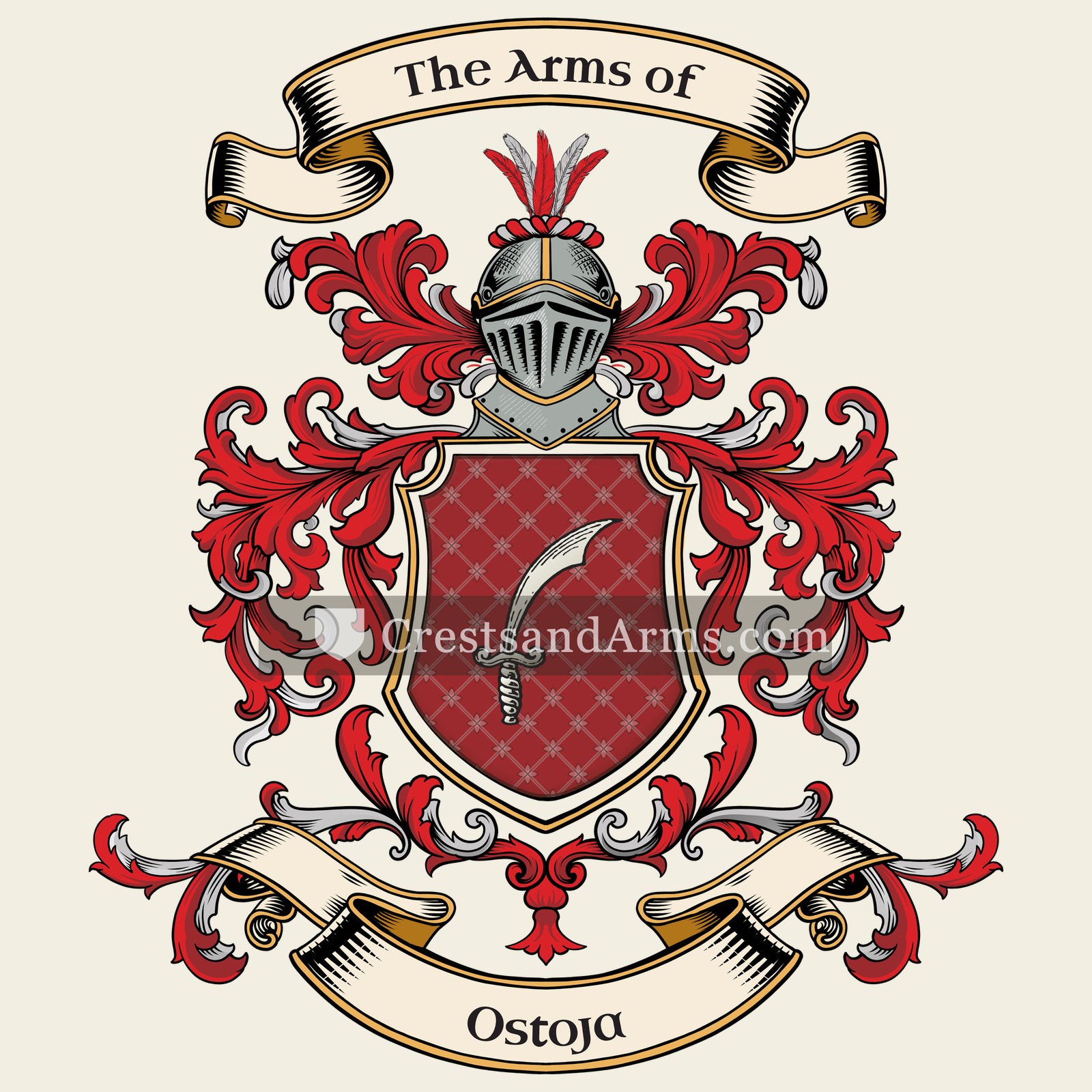
Recorded among the armigerous families of Poland.
Origin & History of the Ostoja Family in Poland
The family name Ostoja has deep roots in the historical landscape of Poland, with significant records placing the family within the Mazovia region by the year 1772. During this period, Mazovia was a central hub for families who held land and participated in local governance. The name itself is thought to be derived from an old Slavic word meaning a place of refuge or a stronghold. This suggests that the earliest ancestors were likely people who provided protection or served as leaders within their local communities. As the family grew, they became well-established members of the regional society, often managing estates and contributing to the agricultural and social development of the Mazovian plains. Their presence in 1772 reflects a long tradition of stability and local influence that helped define their identity for generations to come.
Related Branches & Arms
Root word
ostój
A place of refuge, shelter, or a sanctuary.
This name
OstojaRefers to a person who acts as a protector, a safe haven, or a reliable guardian.
also spelled
Ostajaa
Ostajah
Ostaya
Documented Sources
J. B. Rietstap, Armorial Général, Gouda: G. B. van Goor Zonen, 1884–87
Boniecki, Adam. Herbarz polski: wiadomości historyczno-genealogiczne o rodach szlacheckich. 1905


 swordJustice, and military honour
 swordJustice, and military honour