Map of Sweden showing where the Otter arms are recorded
The Otter arms were recorded in Sweden, c. 1718.
Arms such as these were typically recorded in Stockholm.
Stockholm held the Swedish court and the House of Nobility, where every noble family's arms were entered and kept. Families ennobled for service registered there, which is why so many are recorded around the city.
This is where the arms were entered in the register. Families often moved to other parts of the country, so the same name can turn up in more than one region.
The body that granted and recorded arms in Sweden in this period.
Carl XII of Sweden
Sovereign of the period
Carl XII of Sweden
1697–1718
Reigning in Sweden when the Otter arms are first recorded.
How Arms Worked in Sweden
In Sweden, a coat of arms belonged to a noble family as a whole rather than just one individual. These arms were passed down through the generations to all legitimate descendants. Younger branches of the family used the same shield without needing to change it. This system ensured that the entire lineage shared the same identity and status under the law.
Granting authority
The Riddarhuset, or House of Nobility, regulated all noble coats of arms in Sweden under royal authority.
How they got arms
Families received their coats of arms through royal grants of nobility which were then officially registered with the House.
Where arms were recorded
Coats of arms were officially recorded in the Swedish House of Nobility register starting in the year 1626.
The family's standing
Recorded among the armigerous families of Sweden.
Origin & History of the Otter Family in Sweden
The history of the Otter family in Sweden is closely tied to the rise of the Swedish nobility and the administrative growth of Stockholm in the early eighteenth century. By 1718, members of the family were already established within the capital, where they held positions of influence during a time of significant political change. The name itself is linked to the Swedish word for the animal, which was a common way to create surnames during the era of the Swedish Empire. Families often chose names based on nature or personal traits to distinguish themselves as they climbed the social ladder. As the family became more prominent in Stockholm, they integrated into the professional and bureaucratic circles that helped run the country. This transition from common citizens to recognized figures reflects the broader movement of families seeking to secure their legacy through state service and urban development.
Coat of Arms & Family Crest Details
Symbols on this shield
ravenConstancy and divine providence
Colours
Gold (Or)Means: Generosity
Black (Sable)Means: Constancy
Historical info
Source
J. B. Rietstap, Armorial Général, Gouda: G. B. van Goor Zonen, 1884–87
Blazon (the actual original written record)
“D'or à un corbeau de sa., perché sur une potence de gu., mouv. de la p.”
Netherlandsc. 1815
Digital archive packCoat of arms PNG, gold border print PDF, vector SVG and the certificate of authenticity. Sent to your email in minutes.
Map of Netherlands showing where the Otter arms are recorded
The Otter arms were recorded in Netherlands, c. 1815.
Arms such as these were typically recorded in Friesland.
Friesland was low, wet country on the northern coast of the Netherlands, farmed by families who had held the same land for centuries. Free landholders were unusually common there, and a free landholder could carry arms.
This is where the arms were entered in the register. Families often moved to other parts of the country, so the same name can turn up in more than one region.
Region
Friesland
First recorded
1815
Granting Authority for the Otter Arms
Hoge Raad van Adel
Photograph made by me · CC BY-SA 3.0
The body that granted and recorded arms in Netherlands in this period.
William I of the Netherlands
Sovereign of the period
William I of the Netherlands
1815–1840
Reigning in Sweden when the Otter arms are first recorded.
How Arms Worked in Netherlands
In the Netherlands, coats of arms were often used by noble families and those who held specific public offices. These arms were passed down through the generations to legitimate descendants. Younger branches of a family usually kept the original design without needing to add special marks. This system ensured that the family identity remained clear and consistent over many years.
Granting authority
The Hoge Raad van Adel is the official body that regulates and manages noble titles and coats of arms in the Netherlands.
How they got arms
Families typically obtained their coats of arms through official royal grants or by proving their long-standing historical use of the symbols.
Where arms were recorded
Coats of arms are officially recorded in the registers held by the Hoge Raad van Adel, which began its work in 1814.
The family's standing
Recorded among the armigerous families of Netherlands.
Origin & History of the Otter Family in Netherlands
The family name Otter in the Netherlands is deeply connected to the geography and culture of the northern provinces. By the early nineteenth century, records confirm that members of the family were well-established in the region of Friesland. The name itself is likely a topographic or occupational surname, derived from the animal that was once a common sight along the many canals and waterways of the Dutch landscape. In the rural communities of Friesland, families often adopted names that reflected their immediate environment or their relationship with the local land. Because the otter was a creature that thrived in the marshy, water-rich terrain of the northern Netherlands, it is probable that the name was originally a descriptive nickname or a reference to a specific homestead near a riverbank. As the family grew, they became part of the distinct social fabric of the Frisian people, contributing to the agricultural and maritime traditions that defined the area during the Napoleonic era and beyond.
Coat of Arms & Family Crest Details
Symbols on this shield
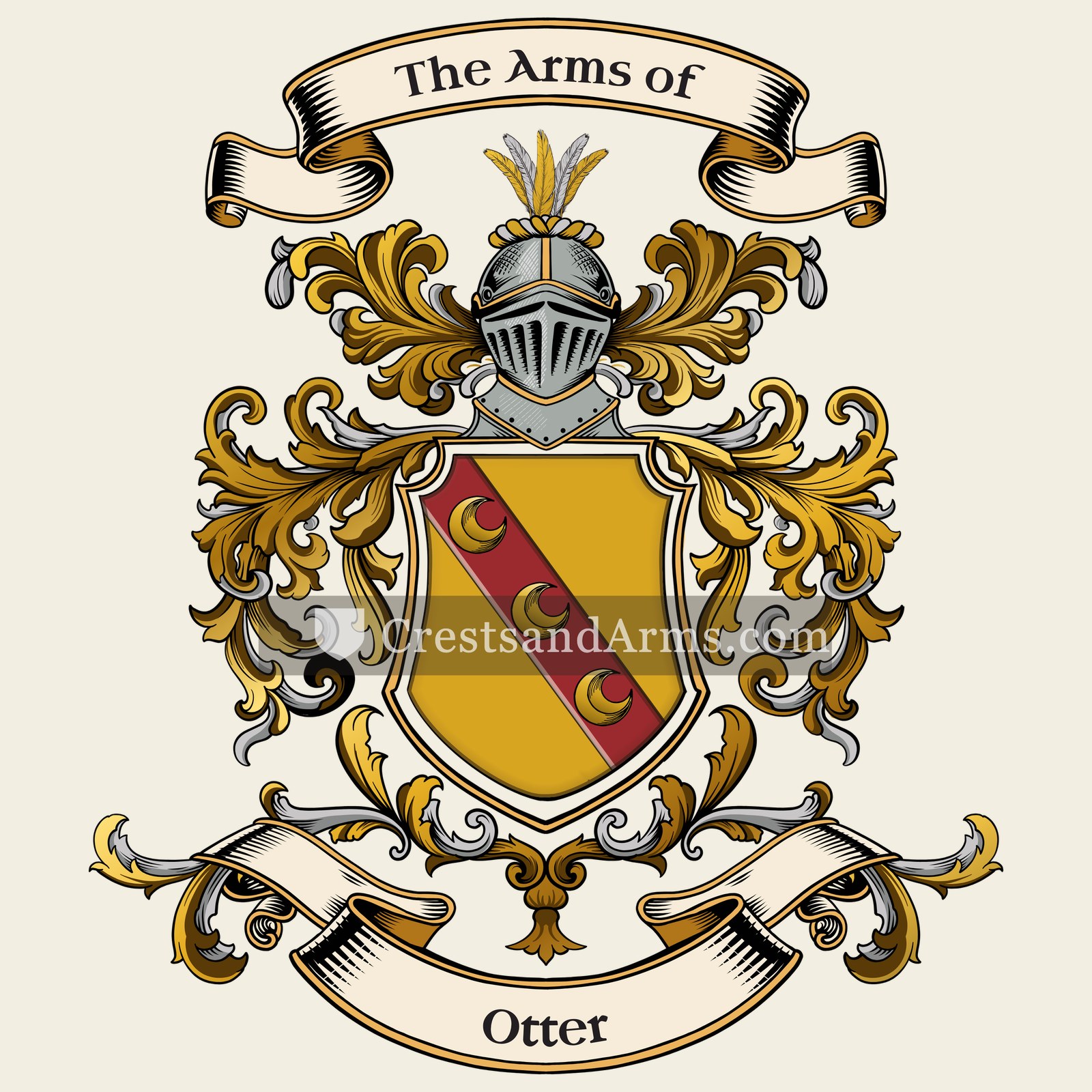
bendDefence, and the scarf of a commander
crescentHonour by the sovereign, and the second son
Colours
Gold (Or)Means: Generosity
Red (Gules)Means: Military strength
Historical info
Source
Sir Bernard Burke, The General Armory of England, Scotland, Ireland and Wales, London: Harrison & Sons, 1884
Blazon (the actual original written record)
“Or on a bend gu. three crescents of the first”
HuntingdonHuntingdon, c. 1620
Digital archive packCoat of arms PNG, gold border print PDF, vector SVG and the certificate of authenticity. Sent to your email in minutes.
Map of England showing where the Otter arms are recorded
The Otter arms were recorded in Huntingdon, c. 1620.
Huntingdonshire was small, flat fen-edge country. Drainage made new farmland and new fortunes, and families who gained by it bought manors and took arms to match.
This is where the arms were entered in the register. Families often moved to other parts of the country, so the same name can turn up in more than one region.
The body that granted and recorded arms in England in this period.
James VI and I
Sovereign of the period
James VI and I
1603–1625
Reigning in Sweden when the Otter arms are first recorded.
How Arms Worked in England
English heraldry allowed arms to be shared by all legitimate descendants of the original owner. These symbols were treated as personal property that moved through the generations to all children. While the eldest son kept the original design, other family members could use the same shield without needing to change it or register their own unique versions.
Granting authority
The College of Arms in London has regulated the use of coats of arms throughout England and Wales since 1484.
How they got arms
Families typically obtained their coats of arms through a formal grant from the Crown or by proving their ancient right to them.
Where arms were recorded
All official coats of arms are recorded in the registers kept at the College of Arms, which date back to the fifteenth century.
The family's standing
Recorded among the armigerous families of Huntingdon.
Origin & History of the Otter Family in England
The surname Otter is rooted in the landscape of medieval England, likely originating as a descriptive nickname for a person who possessed traits associated with the animal, such as agility or a talent for swimming. By the early seventeenth century, the family had established a notable presence in the market town of Huntingdon. Records from 1620 confirm that members of the Otter family were living in this region, which served as a significant hub for trade and local administration in the English Midlands. During this period, families often lived in the same area for generations, working as farmers, craftsmen, or local merchants. The survival of these early records suggests that the Otters were integrated into the social fabric of Huntingdonshire, contributing to the daily life and economic development of their community long before the modern era.
Related Branches & Arms
Root word
Utra
Old Norse term referring to the semi-aquatic mammal.
This name
OtterA topographic or habitational name derived from the animal known for its swimming ability.
also spelled
Oter
Ottere
Otterr
Ottar
Ottre
Related arms
Mercy d'Argenteausimilar arms
Bowerrecorded with Otter, same area
Halfordrecorded with Otter, same area
Southworthrecorded with Otter, same area
Documented Sources
J. B. Rietstap, Armorial Général, Gouda: G. B. van Goor Zonen, 1884–87
Anrep, Gabriel, Svenska adelns ättar-taflor, 1861
Elgenstierna, Gustaf, Den introducerade svenska adelns ättartavlor, 1930
Riksarkivet (National Archives of Sweden), Adelsbrev, 1718
Digital archive packCoat of arms PNG, gold border print PDF, vector SVG and the certificate of authenticity. Sent to your email in minutes.


 bendDefence, and the scarf of a commander
 otterOne who lives life to the full
 bendDefence, and the scarf of a commander
 otterOne who lives life to the full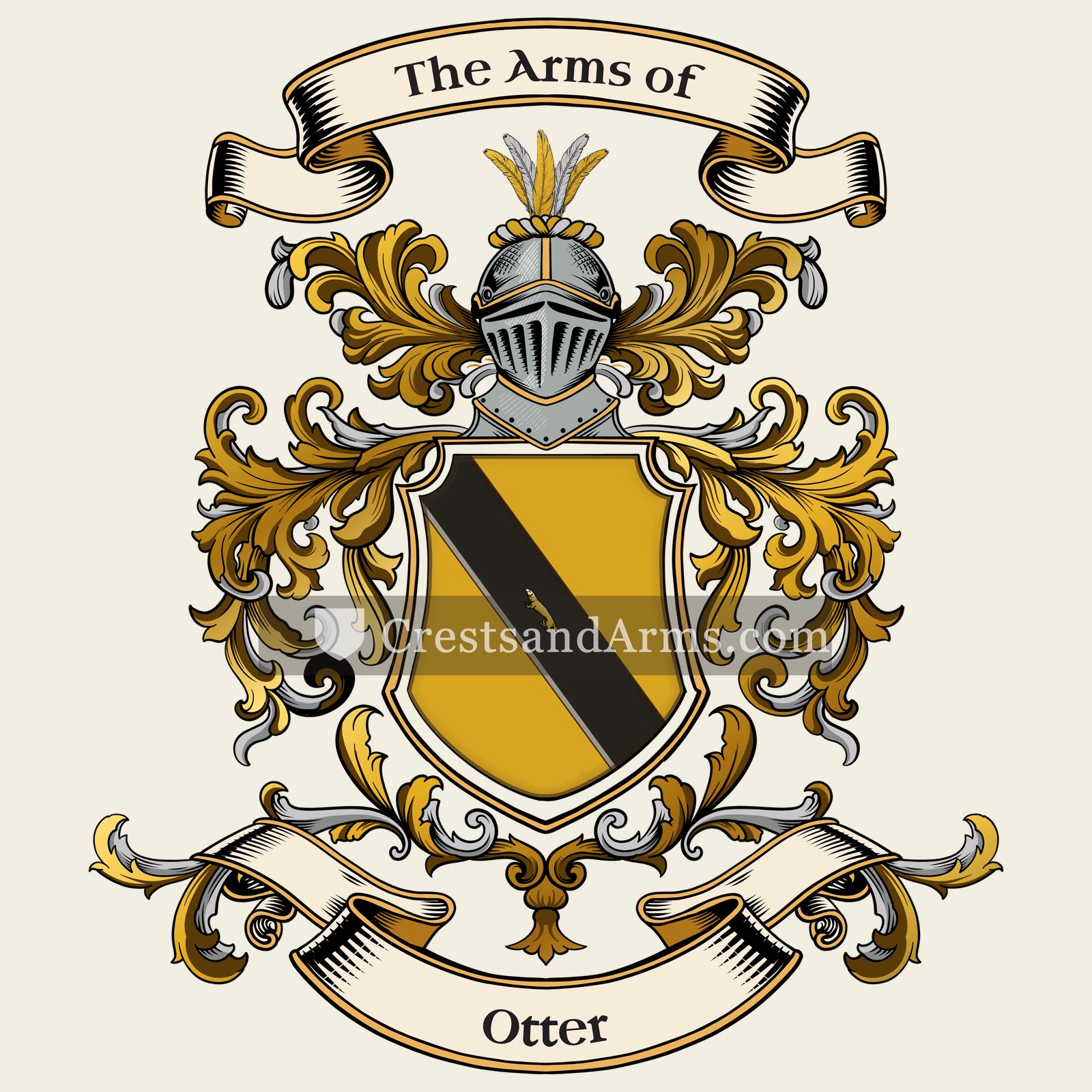


 ravenConstancy and divine providence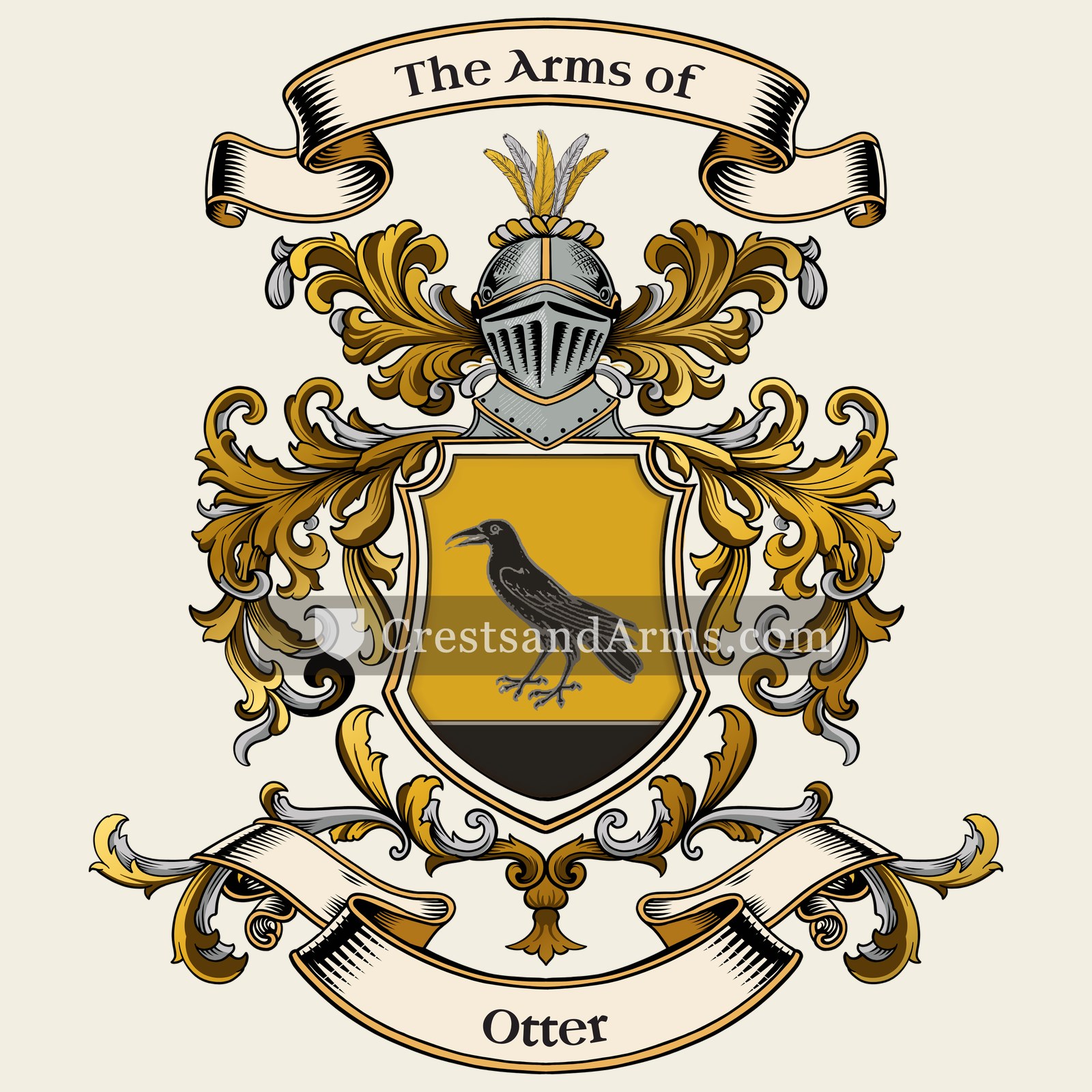


 crescentHonour by the sovereign, and the second son