Map of Netherlands showing where the Otto arms are recorded
The Otto arms were recorded in Friesland, c. 1815.
Friesland was low, wet country on the northern coast of the Netherlands, farmed by families who had held the same land for centuries. Free landholders were unusually common there, and a free landholder could carry arms.
This is where the arms were entered in the register. Families often moved to other parts of the country, so the same name can turn up in more than one region.
Region
Friesland
First recorded
1815
Granting Authority for the Otto Arms
Hoge Raad van Adel
Photograph made by me · CC BY-SA 3.0
The body that granted and recorded arms in Netherlands in this period.
William I of the Netherlands
Sovereign of the period
William I of the Netherlands
1815–1840
Reigning in Netherlands when the Otto arms are first recorded.
How Arms Worked in Netherlands
In the Netherlands, coats of arms were often used by noble families and those who held specific public offices. These arms were passed down through the generations to legitimate descendants. Younger branches of a family usually kept the original design without needing to add special marks. This system ensured that the family identity remained clear and consistent over many years.
Granting authority
The Hoge Raad van Adel is the official body that regulates and manages noble titles and coats of arms in the Netherlands.
How they got arms
Families typically obtained their coats of arms through official royal grants or by proving their long-standing historical use of the symbols.
Where arms were recorded
Coats of arms are officially recorded in the registers held by the Hoge Raad van Adel, which began its work in 1814.
The family's standing
Recorded among the armigerous families of Friesland.
Origin & History of the Otto Family in Netherlands
The name Otto has deep roots in Germanic history, originating as a short form of ancient names that began with the element "aud," which means wealth or prosperity. By the time the name became established in the Netherlands, particularly in the northern province of Friesland, it functioned as a patronymic. This means that children were often given the name to honor a father or grandfather who bore the name Otto. In the early nineteenth century, records show that families with this name were well-integrated into the local Frisian community. During this era, the Napoleonic administration required citizens to formally register their surnames to improve tax collection and military conscription. Consequently, many families in Friesland officially adopted Otto as their permanent family name in 1815, solidifying a lineage that had likely existed as a spoken identifier for generations before it became a legal requirement.
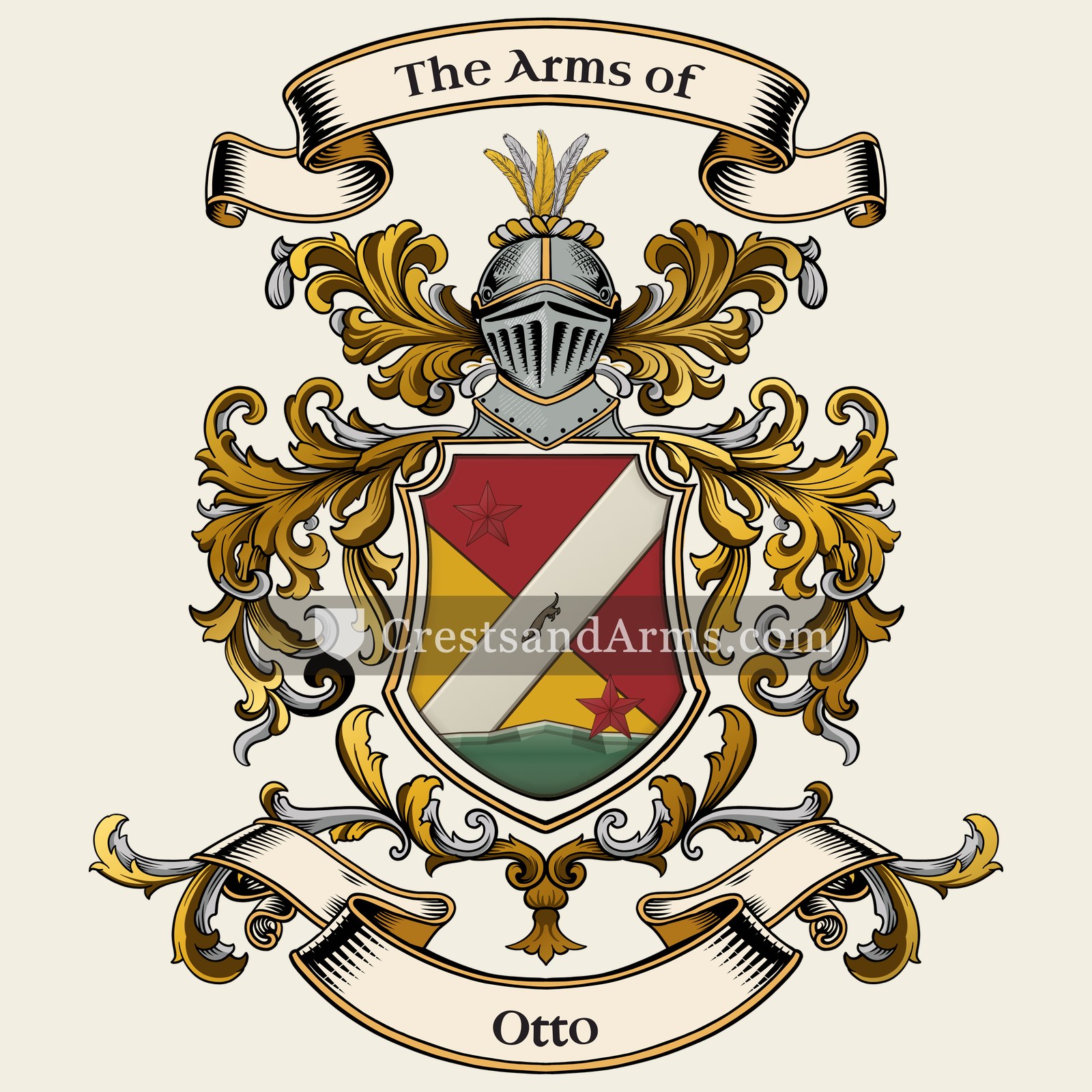
Coat of Arms & Family Crest Details
Symbols on this shield
knightChivalry and service in arms
mulletThe third son, and a divine quality from above
Colours
Blue (Azure)Means: Loyalty and truth
Silver (Argent)Means: Peace and sincerity
Historical info
Source
J. B. Rietstap, Armorial Général, Gouda: G. B. van Goor Zonen, 1884–87
Blazon (the actual original written record)
“D'azur à un homme, tenant une ancre, posée sur son épaule, et acc. au canton dextre du chef d'une étoile d'arg.”
Germanyc. 1765
Digital archive packCoat of arms PNG, gold border print PDF, vector SVG and the certificate of authenticity. Sent to your email in minutes.
Map of Germany showing where the Otto arms are recorded
The Otto arms were recorded in Germany, c. 1765.
Arms such as these were typically recorded in Bavaria.
Bavaria was a country of old landed families and walled market towns. Estates passed down the same line for centuries, and both the landowners and the leading townsmen kept arms, which is why so many Bavarian names sit in the registers.
This is where the arms were entered in the register. Families often moved to other parts of the country, so the same name can turn up in more than one region.
The body that granted and recorded arms in Germany in this period.
Francis I, Holy Roman Emperor
Sovereign of the period
Francis I, Holy Roman Emperor
1745–1765
Reigning in Netherlands when the Otto arms are first recorded.
How Arms Worked in Germany
In the Holy Roman Empire, coats of arms were often granted to individuals by the Emperor or his representatives. These arms were then passed down through the generations to all legitimate descendants of the original holder. Younger branches of a family usually kept the same shield design without needing to change it, as the arms belonged to the entire lineage.
Granting authority
The Holy Roman Emperor held the sole power to grant new coats of arms throughout his vast imperial territories.
How they got arms
Families typically obtained their coats of arms through a formal imperial grant or by proving their noble status to the authorities.
Where arms were recorded
These grants were officially recorded in the Imperial Chancery registers, which began keeping formal records of such honors during the Middle Ages.
The family's standing
Recorded among the armigerous families of Germany.
Origin & History of the Otto Family in Germany
The family name Otto carries a deep history rooted in the Germanic linguistic tradition, where it originated as a short form of ancient names beginning with the element "aud," meaning wealth or prosperity. By the time members of the family were documented in Bavaria in 1765, the name had already been established for centuries as both a common given name and a hereditary surname across German-speaking lands. In the eighteenth century, Bavaria was a region defined by complex social structures and agricultural traditions, and families like the Ottos were often deeply integrated into the local village life or the regional trade guilds. As the name transitioned from a personal identifier to a family name, it reflected the cultural shift toward fixed surnames that helped authorities keep track of growing populations. The presence of the family in Bavaria during this period suggests they were part of the stable, land-holding or artisan classes that formed the backbone of the Holy Roman Empire during its final decades.
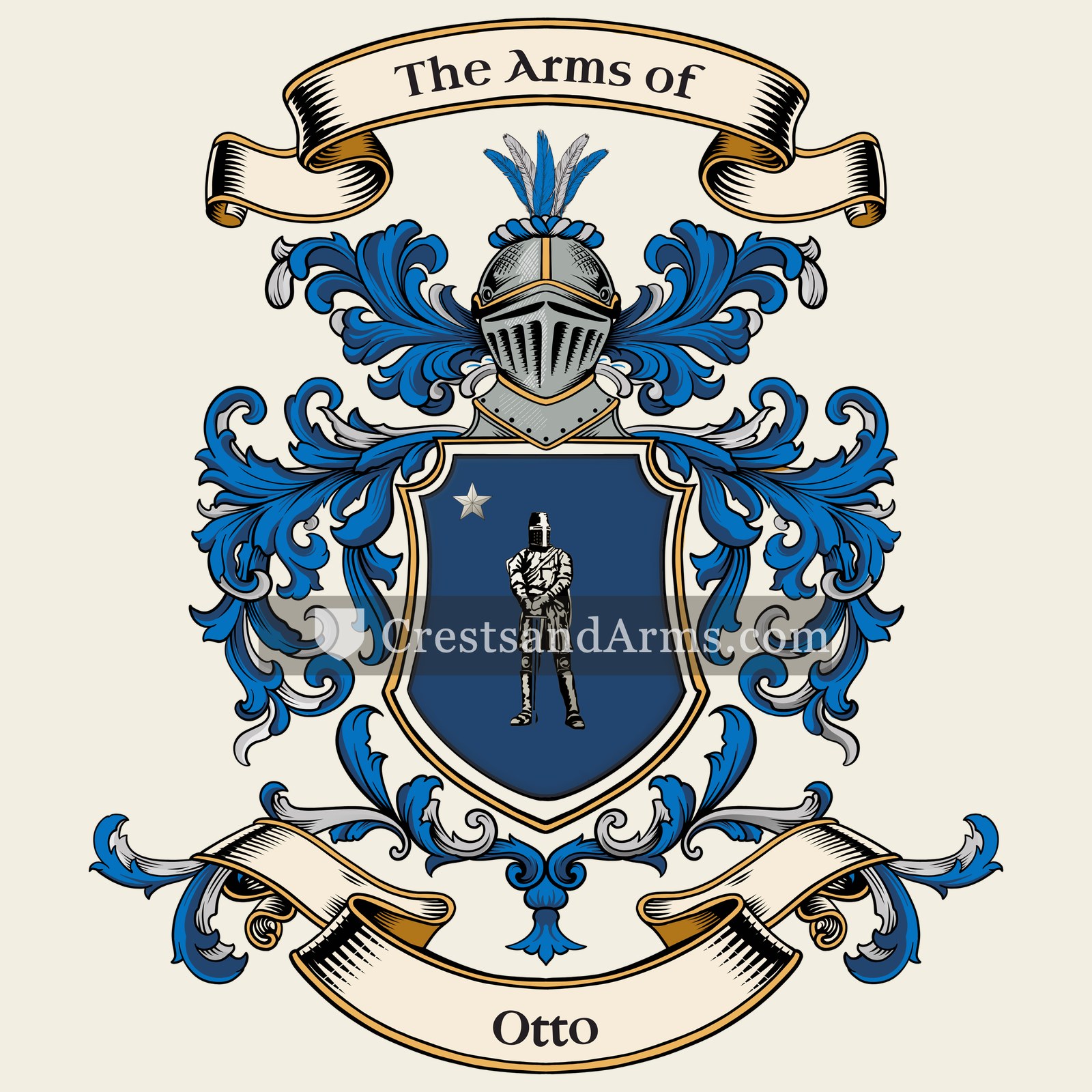
Coat of Arms & Family Crest Details
Symbols on this shield
mountThe ground held, and steadfastness upon it
mulletThe third son, and a divine quality from above
otterOne who lives life to the full
Colours
Gold (Or)Means: Generosity
Red (Gules)Means: Military strength
Silver (Argent)Means: Peace and sincerity
Green (Vert)Means: Hope
Historical info
Source
J. B. Rietstap, Armorial Général, Gouda: G. B. van Goor Zonen, 1884–87
Blazon (the actual original written record)
“Taillé, d'or à deux étoiles de gu., sur gu. plein; à la barre d'arg., br. sur le taillé, ch. d'une terrasse de sin. sur laquelle est couchée une loutre au nat., posée en barre, la tête à dextre, tenant entre ses dents un poisson d'arg. C.: trois pl. d'aut., une d'or entre deux de gu. L. d'or et de gu.”
SwitzerlandBâle, c. 1745
Digital archive packCoat of arms PNG, gold border print PDF, vector SVG and the certificate of authenticity. Sent to your email in minutes.
Map of Switzerland showing where the Otto arms are recorded
The Otto arms were recorded in Bâle, c. 1745.
This is where the arms were entered in the register. Families often moved to other parts of the country, so the same name can turn up in more than one region.
The body that granted and recorded arms in Switzerland in this period.
How Arms Worked in Switzerland
In Switzerland, coats of arms were not restricted to the nobility and were often adopted by common citizens and families. These symbols were passed down through generations to show family identity. When branches of a family grew, they often changed small details of the design to distinguish their own line from the original group.
Granting authority
Cantonal and civic authorities managed the use of coats of arms within their specific regions and local jurisdictions.
How they got arms
Families typically assumed their own coats of arms based on local custom rather than receiving them from a central monarch.
Where arms were recorded
Arms were recorded in various cantonal and civic registers starting from the fourteenth century throughout the Swiss region.
The family's standing
Recorded among the armigerous families of Switzerland.
Origin & History of the Otto Family in Switzerland
The surname Otto has deep roots in the Germanic regions of Europe, evolving from an ancient personal name that signified wealth and prosperity. By the time the family established a documented presence in Bâle in 1745, they were part of a vibrant urban culture where surnames were becoming essential for trade and legal record-keeping. During the eighteenth century, Bâle served as a major center for commerce and intellectual exchange, and families like the Ottos often integrated into the city’s guild systems or merchant networks. These early members likely navigated the complex social structure of the Swiss Confederation, where local citizenship was tightly controlled and highly valued. As they settled into the region, their name became a permanent marker of their identity within the local community, reflecting a history of migration and social stability in one of Switzerland’s most important historical cities.
Otto Meaning & Related Branches
Root word
Aud
Old Germanic element meaning wealth, prosperity, or fortune.
This name
OttoA name signifying one who is wealthy, prosperous, or rich in fortune.
also spelled
Otho
Oto
Related arms
Cadensimilar arms
Seelsimilar arms
Documented Sources
J. B. Rietstap, Armorial Général, Gouda: G. B. van Goor Zonen, 1884–87
Meertens, P.J., Voornamen in Nederland, 1951
Tresoar (Frisian Historical and Literary Center), Burgerlijke Stand van Friesland (Civil Registry of Friesland), 1811–1815
Van der Schaar, J., Woordenboek van voornamen, 1964
Digital archive packCoat of arms PNG, gold border print PDF, vector SVG and the certificate of authenticity. Sent to your email in minutes.


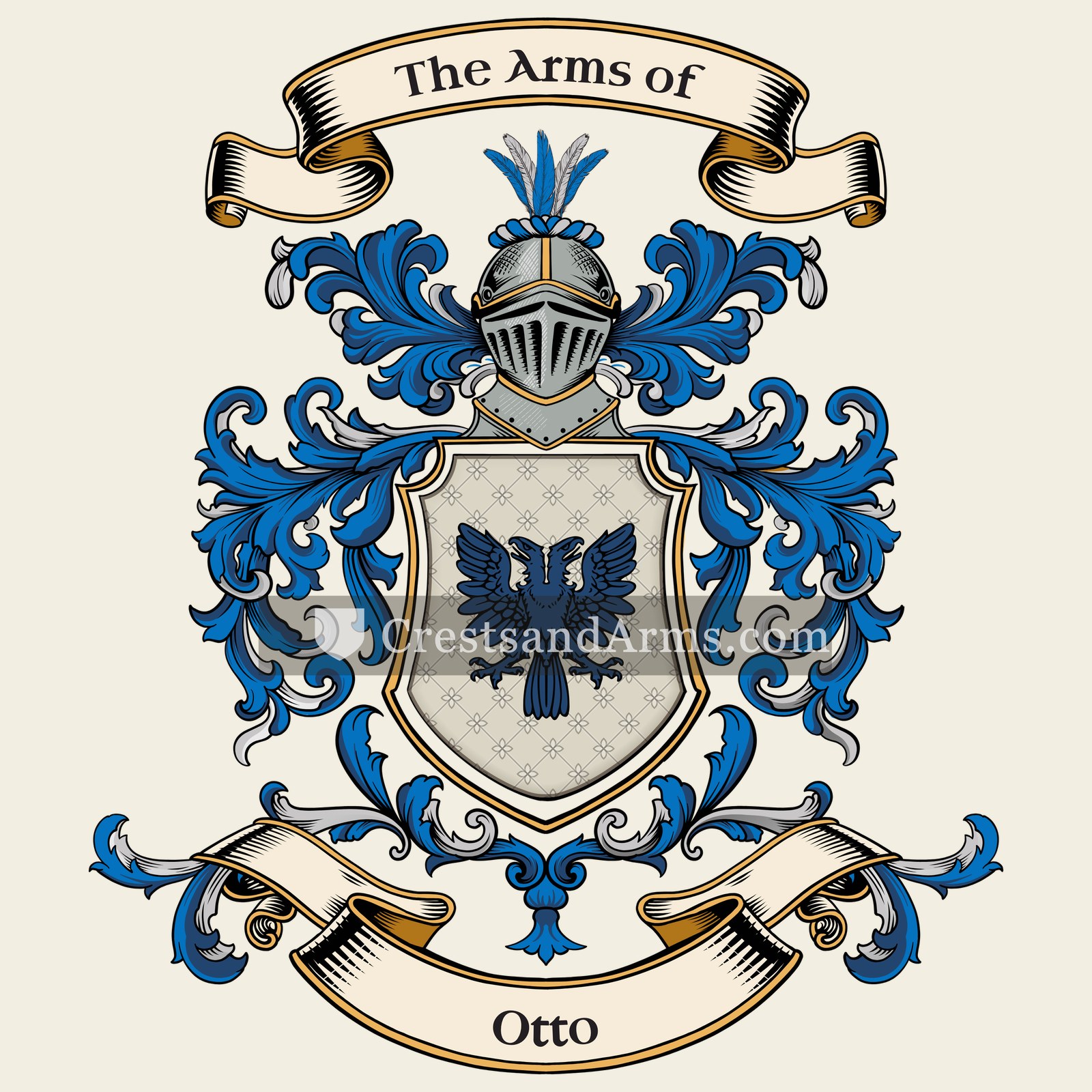
 eagleNobility, strength and a keen mind
 eagleNobility, strength and a keen mind


 knightChivalry and service in arms
 mulletThe third son, and a divine quality from above


 mountThe ground held, and steadfastness upon it
 otterOne who lives life to the full