Map of Italy showing where the Pace arms are recorded
The Pace arms were recorded in Trévise, c. 1775.
This is where the arms were entered in the register. Families often moved to other parts of the country, so the same name can turn up in more than one region.
The body that granted and recorded arms in Italy in this period.
Alvise Giovanni Mocenigo
Sovereign of the period
Alvise Giovanni Mocenigo
1763–1778
Reigning in Italy when the Pace arms are first recorded.
How Arms Worked in Italy
In the Italian states, coats of arms were often used by noble families to show their status and history. These symbols were passed down through the generations to all legitimate male descendants. Younger branches of a family usually kept the original design but sometimes added small changes to distinguish their specific line from the main branch.
Granting authority
Various local rulers and city governments controlled the use of coats of arms across the different Italian states.
How they got arms
Families often assumed their own arms or received them as official grants from local lords, popes, or city councils.
Where arms were recorded
Arms were recorded in local city archives or private family books rather than in one single national register.
The family's standing
Recorded among the armigerous families of Italy.
Origin & History of the Pace Family in Italy
The surname Pace is rooted in the Italian word for peace, often serving as a nickname for a person with a calm temperament or as a name given to a child born during a time of local harmony. While the name appears in various regions across the Italian peninsula, historical records confirm that members of the family were well-established in the city of Treviso by 1775. During this period, Treviso was a significant center within the Republic of Venice, and families like the Pace were often involved in the local mercantile and civic life of the Veneto region. As the family grew, they became part of the social fabric of the city, contributing to the agricultural and administrative developments that defined the late eighteenth century in Northern Italy. This history reflects a broader trend where surnames evolved from personal traits into stable family identifiers that were passed down through generations in growing urban centers.
Coat of Arms & Family Crest Details
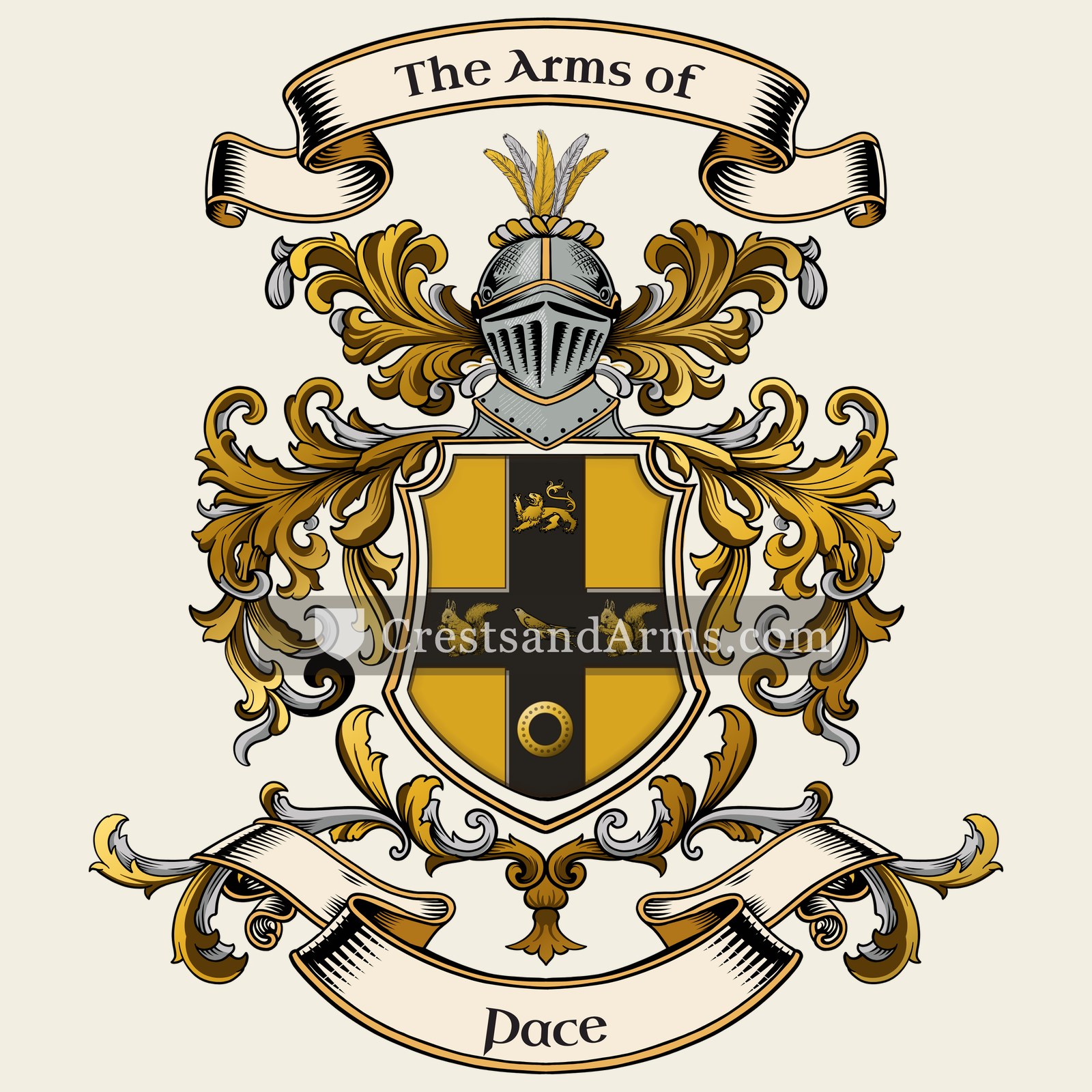
Symbols on this shield
cross symbolChristian faith and service
martletA younger son, who must win his own land
lionCourage, strength and royalty
squirrelPatience and foresight in gathering
ringFidelity, and a promise kept
Colours
Gold (Or)Means: Generosity
Historical info
Source
Sir Bernard Burke, The General Armory of England, Scotland, Ireland and Wales, London: Harrison & Sons, 1884
Blazon (the actual original written record)
“Or, on a cross quarterly az. and gu. a bird betw. a lion pass. in chief, two squirrels sejant in fess, and an annulet in base, all of the first”
Englandc. 1620
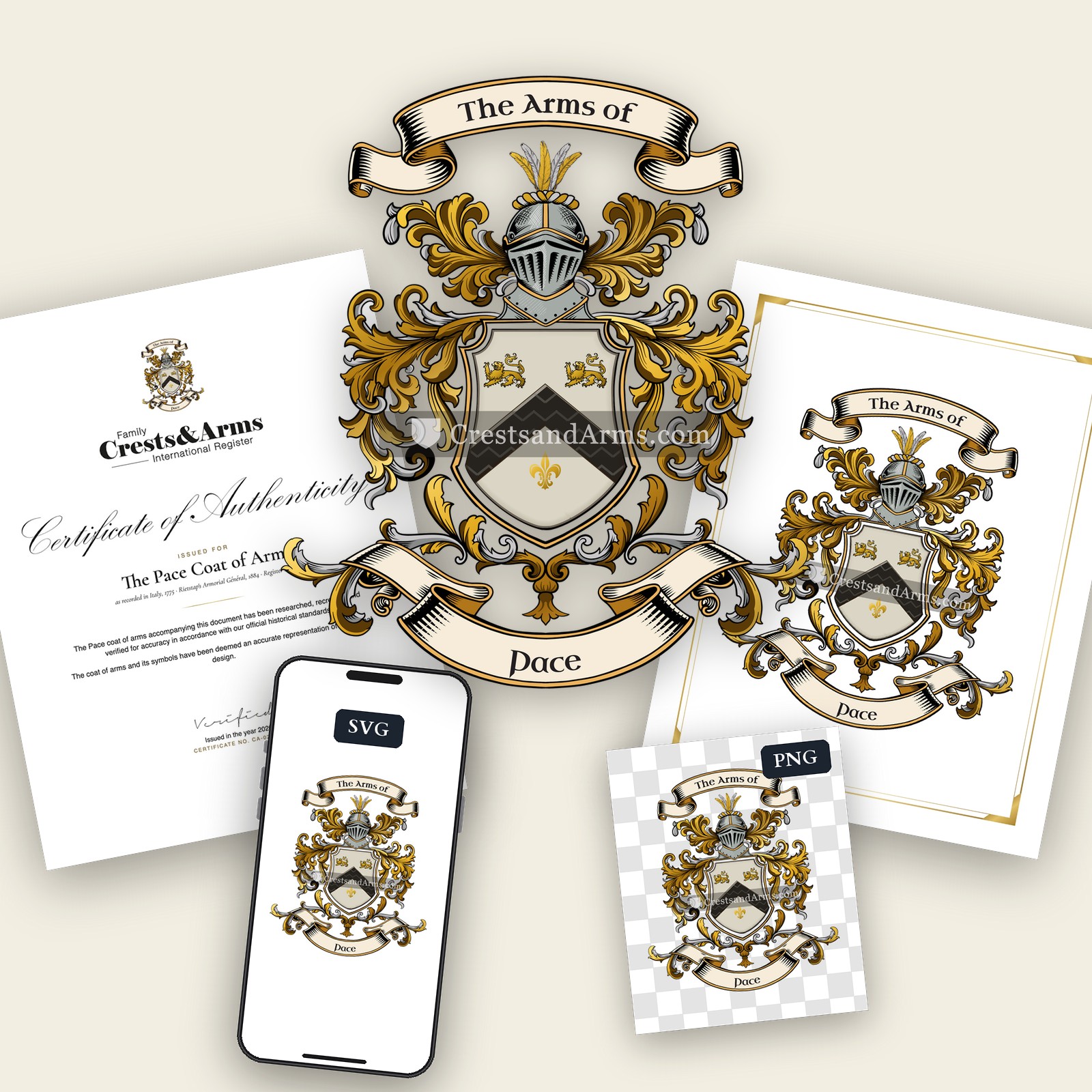
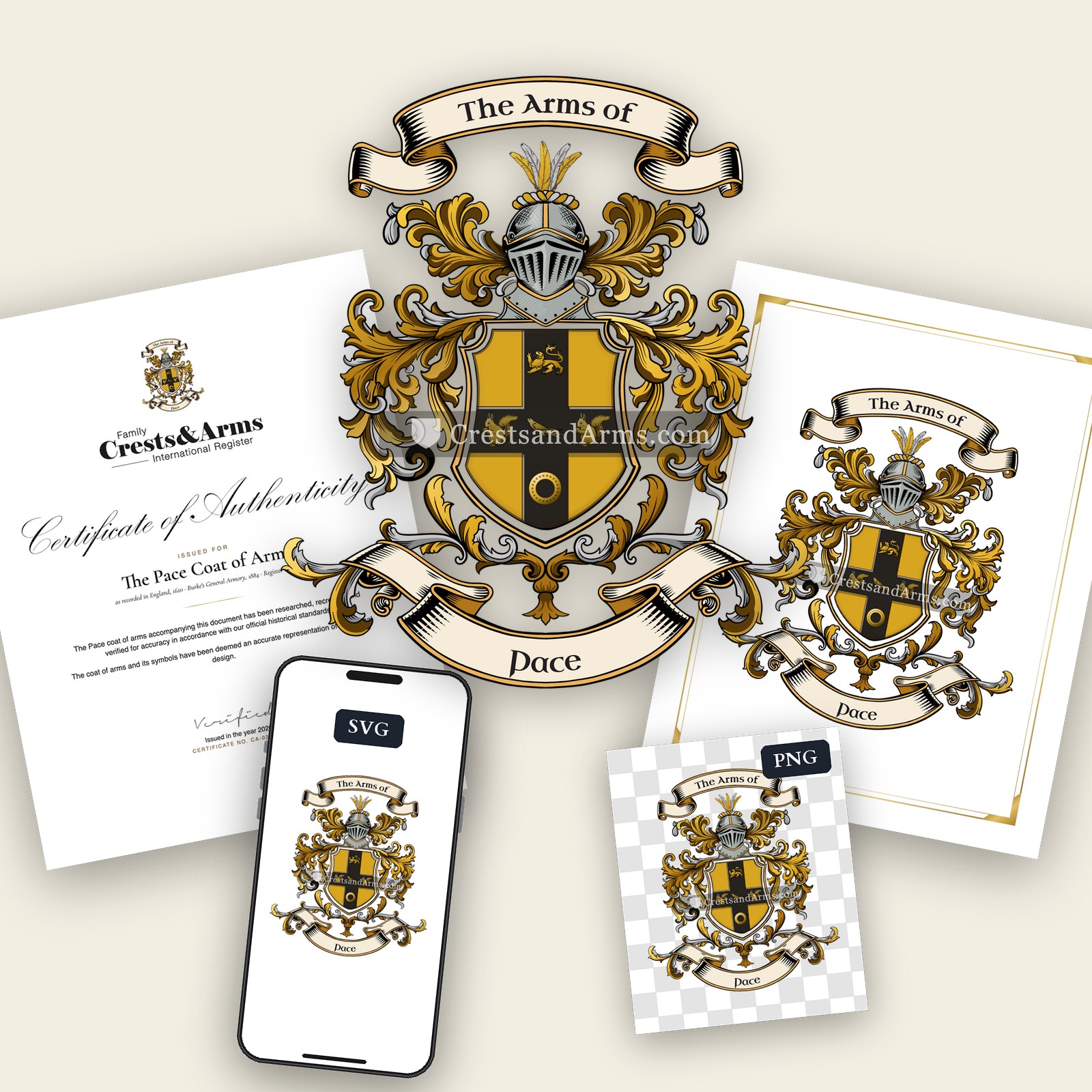
Digital archive packCoat of arms PNG, gold border print PDF, vector SVG and the certificate of authenticity. Sent to your email in minutes.
Map of England showing where the Pace arms are recorded
The Pace arms were recorded in England, c. 1620.
Arms such as these were typically recorded in York.
Yorkshire is the largest of the English counties, and it held more gentry families than any other. Land there was split among a great many households rather than a few, so a great many of them carried arms.
This is where the arms were entered in the register. Families often moved to other parts of the country, so the same name can turn up in more than one region.
The body that granted and recorded arms in England in this period.
James VI and I
Sovereign of the period
James VI and I
1603–1625
Reigning in Italy when the Pace arms are first recorded.
How Arms Worked in England
English heraldry allowed arms to be shared by all legitimate descendants of the original owner. These symbols were treated as personal property that moved through the generations to all children. While the eldest son kept the original design, other family members could use the same shield without needing to change it or register their own unique versions.
Granting authority
The College of Arms in London has regulated the use of coats of arms throughout England and Wales since 1484.
How they got arms
Families typically obtained their coats of arms through a formal grant from the Crown or by proving their ancient right to them.
Where arms were recorded
All official coats of arms are recorded in the registers kept at the College of Arms, which date back to the fifteenth century.
The family's standing
Recorded among the armigerous families of England.
Origin & History of the Pace Family in England
The surname Pace has deep roots in England, where it emerged as a descriptive name during the Middle Ages. It likely originated from the Latin word *pax*, meaning peace, and was often given to someone with a calm temperament or perhaps a person who played the role of a peacemaker in their local community. By the early 17th century, the family had established a notable presence in the historic city of York. Records from 1620 confirm that members of the Pace family were active in this northern hub, which was a center for trade and religious life at the time. Living in York suggests that these early ancestors were likely involved in the city’s bustling merchant guilds or local administration, as families in this region often held positions of civic responsibility. Over the centuries, the name evolved from these early social identifiers into a permanent family legacy that spread across the country.
Pace Meaning & Related Branches
Root word
Pax
The Latin word for peace or tranquility.
This name
PaceA medieval given name bestowed upon a child born during a time of peace.
also spelled
Pache
Paice
Payce
Pasce
Related arms
Mayoultsimilar arms
Documented Sources
J. B. Rietstap, Armorial Général, Gouda: G. B. van Goor Zonen, 1884–87
Censimento della popolazione di Treviso, Archivio di Stato di Treviso, Fondo Anagrafe Storica
De Felice, Emidio, Dizionario dei cognomi italiani, 1978
Libri dei battesimi e matrimoni, Archivio Storico Diocesano di Treviso, Registri parrocchiali del XVIII secolo
Digital archive packCoat of arms PNG, gold border print PDF, vector SVG and the certificate of authenticity. Sent to your email in minutes.


 chevronProtection, and faithful service completed
 lionCourage, strength and royalty
 fleur de lisPurity, light, and the sixth son
 chevronProtection, and faithful service completed
 lionCourage, strength and royalty
 fleur de lisPurity, light, and the sixth son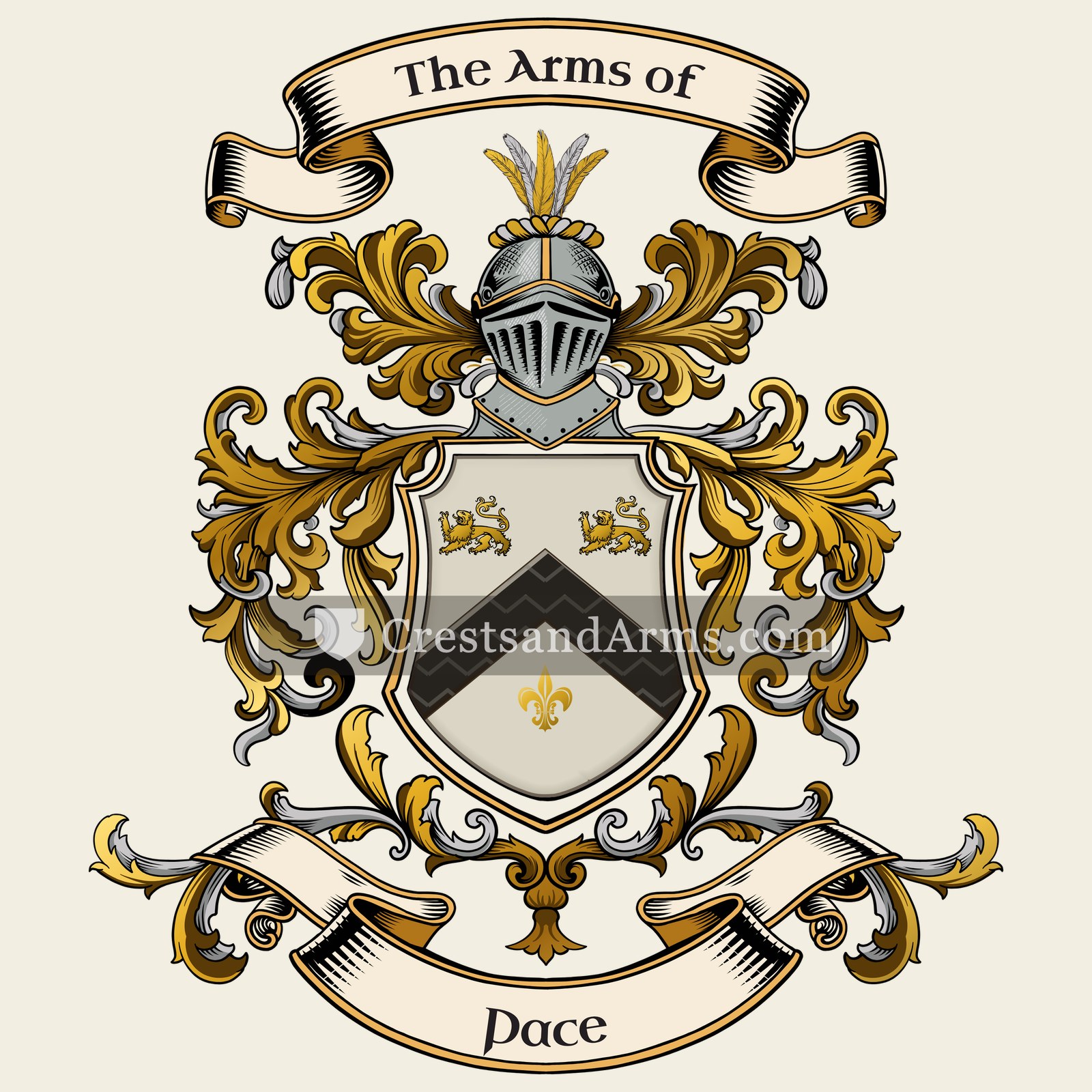


 cross symbolChristian faith and service
 martletA younger son, who must win his own land
 squirrelPatience and foresight in gathering
 ringFidelity, and a promise kept