A record of documented arms, meaning and origin, researched for the Pane family lines. Documented in 3 countries.
Reg. 1573 · French, P–S
Meaning of the Pane family crest colors & symbols
Symbols on this shield
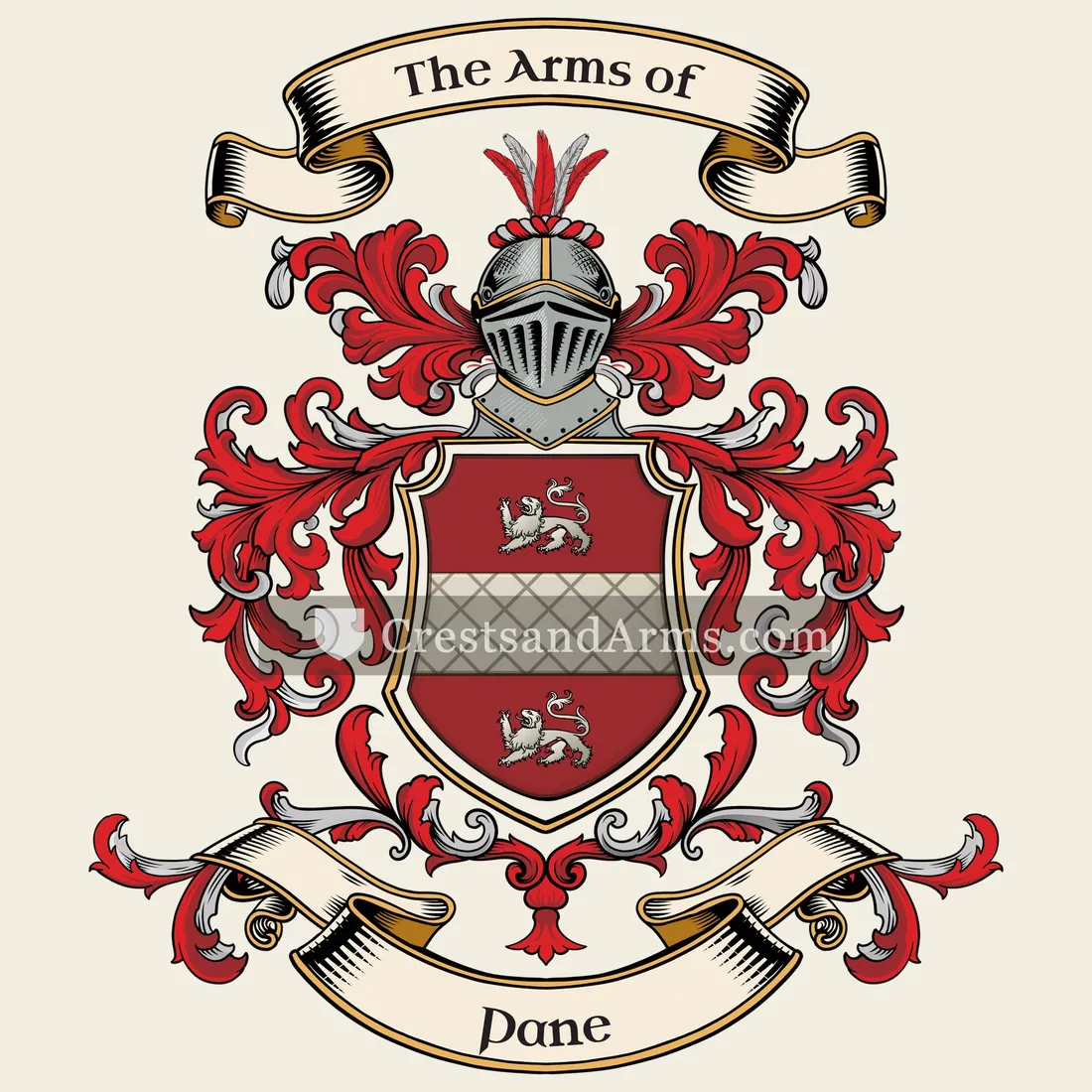
fessThe military belt, and readiness to serve
lionCourage, strength and royalty
Colours
Red (Gules)Means: Military strength
Silver (Argent)Means: Peace and sincerity
Historical info
Source
J. B. Rietstap, Armorial Général, Gouda: G. B. van Goor Zonen, 1884–87
Blazon (the actual original written record)
“De gu. à la fasce d'arg., acc. de deux léopards du même, 1 en chef et 1 en p. C.: une patte de lion d'arg., en pal, tenant une lance de tournoi de gu., brisée et posée en barre. D.: MALO MORI QUAM FOEDARI.”
BedfordshireBedfordshire, c. 1737
Digital archive packCoat of arms PNG, gold border print PDF, vector SVG and the certificate of authenticity. Sent to your email in minutes.
Map of France showing where the Pane arms are recorded
The Pane arms were recorded in Bedfordshire, c. 1737.
This is where the arms were entered in the register. Families often moved to other parts of the country, so the same name can turn up in more than one region.
The body that granted and recorded arms in France in this period.
Louis XV of France
Sovereign of the period
Louis XV of France
1715–1774
Reigning in France when the Pane arms are first recorded.
How Arms Worked in France
In France, a coat of arms was a mark of honor that passed down through the male line to all legitimate descendants. Families often used the same shield without changes to show their shared heritage. If a branch wanted to stand out, they could add a small mark to their shield to show their specific place in the family tree.
Granting authority
The Juge d'armes de France acted as the official authority that regulated and verified coats of arms across the country.
How they got arms
Families typically inherited their arms from ancestors, though they could also receive them through royal grants or by proving their noble status.
Where arms were recorded
Coats of arms were officially recorded in the Armorial Général de France, which began its main collection in the year 1696.
The family's standing
Recorded among the armigerous families of Bedfordshire.
Origin & History of the Pane Family in France
The surname Pane has deep roots in France, where it likely originated as a descriptive name for a person who worked with bread or lived near a specific local landmark. In Old French, the term *pan* referred to bread, and it was common for individuals to adopt surnames based on their trade or their physical surroundings. As families moved across borders, the name traveled from the French countryside into England, eventually appearing in historical records in Bedfordshire by 1737. This migration was often driven by the movement of skilled workers or families seeking new opportunities in growing English communities. By the time the name was documented in Bedfordshire, it had become firmly established as a family identifier, carrying with it the linguistic heritage of its French origins.
Meaning of the Pane family crest colors & symbols
Symbols on this shield
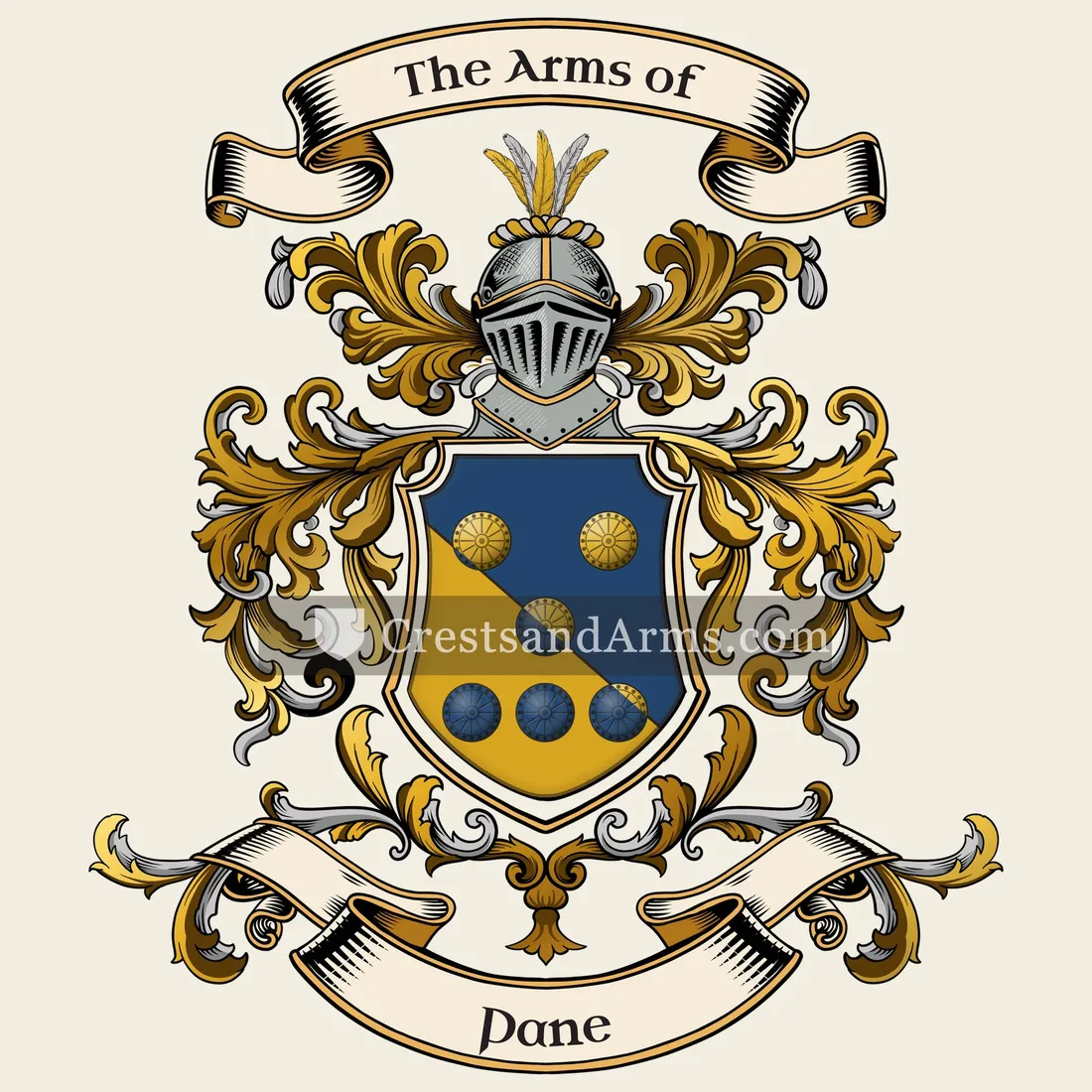
roundelA coin, and one who has been to the crusades
Colours
Gold (Or)Means: Generosity
Blue (Azure)Means: Loyalty and truth
Historical info
Source
Sir Bernard Burke, The General Armory of England, Scotland, Ireland and Wales, London: Harrison & Sons, 1884
Blazon (the actual original written record)
“Per bend or and az. three (another, six) roundles counterchanged, two and one”
Englandc. 1575
Digital archive packCoat of arms PNG, gold border print PDF, vector SVG and the certificate of authenticity. Sent to your email in minutes.
Map of England showing where the Pane arms are recorded
The Pane arms were recorded in England, c. 1575.
Arms such as these were typically recorded in York.
Yorkshire is the largest of the English counties, and it held more gentry families than any other. Land there was split among a great many households rather than a few, so a great many of them carried arms.
This is where the arms were entered in the register. Families often moved to other parts of the country, so the same name can turn up in more than one region.
The body that granted and recorded arms in England in this period.
Elizabeth I of England
Sovereign of the period
Elizabeth I of England
1558–1603
Reigning in France when the Pane arms are first recorded.
How Arms Worked in England
English heraldry allowed arms to be shared by all legitimate descendants of the original owner. These symbols were treated as personal property that moved through the generations to all children. While the eldest son kept the original design, other family members could use the same shield without needing to change it or register their own unique versions.
Granting authority
The College of Arms in London has regulated the use of coats of arms throughout England and Wales since 1484.
How they got arms
Families typically obtained their coats of arms through a formal grant from the Crown or by proving their ancient right to them.
Where arms were recorded
All official coats of arms are recorded in the registers kept at the College of Arms, which date back to the fifteenth century.
The family's standing
Recorded among the armigerous families of England.
Origin & History of the Pane Family in England
The history of the Pane family in England is deeply rooted in the northern city of York, where records confirm their presence as early as 1575. During the late sixteenth century, York was a bustling center of trade and religious transition, and families like the Panes often lived in close-knit communities near the city’s historic Minster. The name itself likely evolved from occupational or descriptive roots common in Northern England, where surnames were often adapted from local dialects or specific roles within the medieval parish system. As residents of York, these early ancestors would have navigated the social shifts of the Elizabethan era, contributing to the local economy and the development of the city’s unique cultural identity. By establishing themselves in such a prominent urban hub, the Pane family became part of the long-standing demographic fabric of Yorkshire, leaving behind a legacy that links them to the growth and daily life of one of England’s oldest cities.
Meaning of the Pane family crest colors & symbols
Symbols on this shield
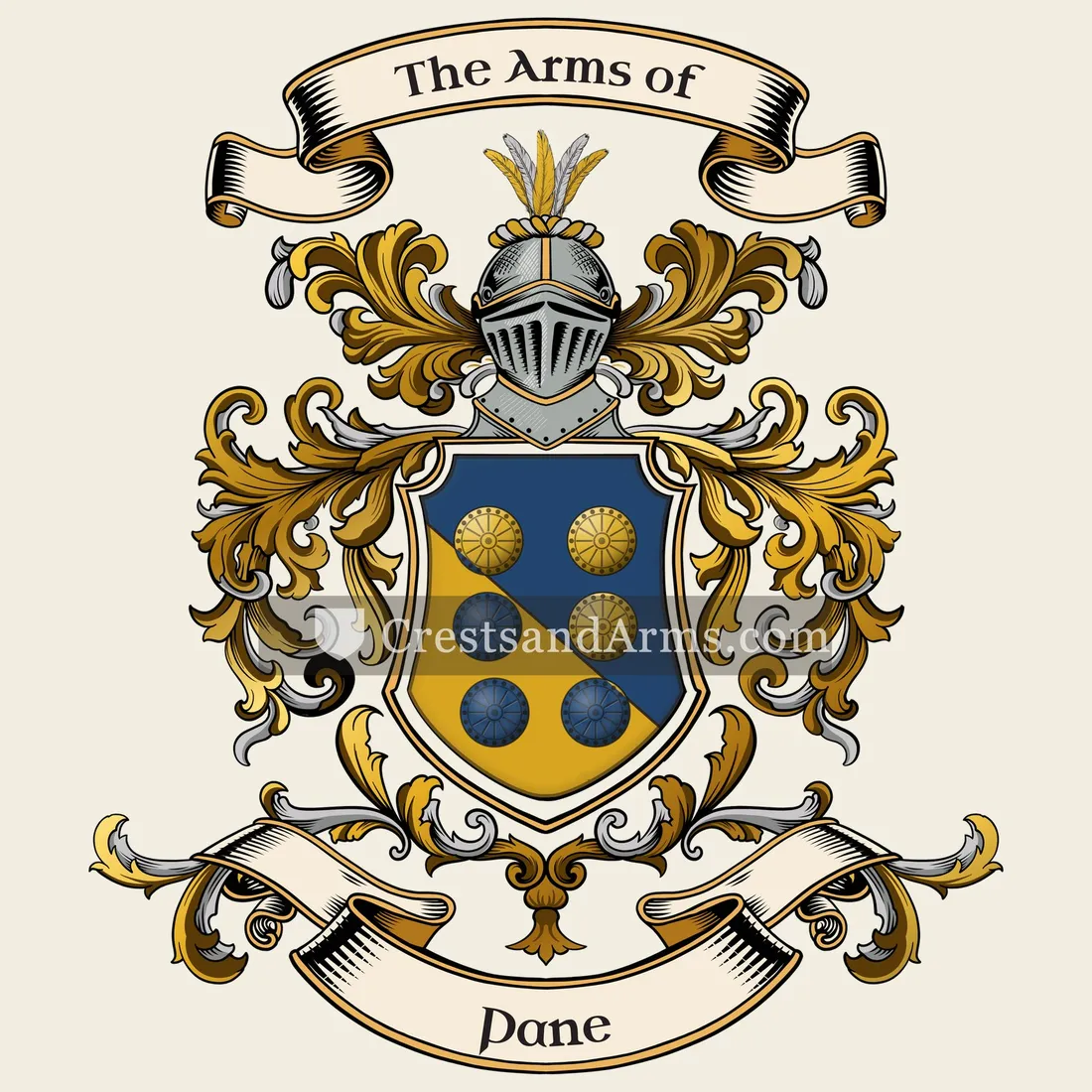
roundelA coin, and one who has been to the crusades
Colours
Gold (Or)Means: Generosity
Blue (Azure)Means: Loyalty and truth
Historical info
Source
Sir Bernard Burke, The General Armory of England, Scotland, Ireland and Wales, London: Harrison & Sons, 1884
Blazon (the actual original written record)
“Per bend or and az. six roundles counterchanged, two, two, and two”
DenbighDenbigh, c. 1647
Digital archive packCoat of arms PNG, gold border print PDF, vector SVG and the certificate of authenticity. Sent to your email in minutes.
Map of Wales showing where the Pane arms are recorded
The Pane arms were recorded in Denbigh, c. 1647.
Denbighshire was north Welsh country of hills and small estates. Land was held by a great many families rather than a few, and each holding brought its own claim to a coat of arms.
This is where the arms were entered in the register. Families often moved to other parts of the country, so the same name can turn up in more than one region.
The body that granted and recorded arms in Wales in this period.
Charles I of England
Sovereign of the period
Charles I of England
1625–1649
Reigning in France when the Pane arms are first recorded.
How Arms Worked in Wales
English heraldry allowed arms to be shared by all legitimate descendants of the original owner. These symbols were treated as personal property that moved through the generations to all children. While the eldest son kept the original design, other family members could use the same shield without needing to change it or register their own unique versions.
Granting authority
The College of Arms in London has regulated the use of coats of arms throughout England and Wales since 1484.
How they got arms
Families typically obtained their coats of arms through a formal grant from the Crown or by proving their ancient right to them.
Where arms were recorded
All official coats of arms are recorded in the registers kept at the College of Arms, which date back to the fifteenth century.
The family's standing
Recorded among the armigerous families of Denbigh.
Origin & History of the Pane Family in Wales
The history of the Pane family in Wales is deeply rooted in the social landscape of the seventeenth century, particularly within the historic county of Denbighshire. By 1647, records confirm that members of the family were established in the town of Denbigh, a location known for its strategic importance and its imposing medieval castle. During this era, families with the surname Pane often lived as tenant farmers or local tradespeople who contributed to the growing economy of the Welsh borderlands. Life in Denbigh at this time was defined by the aftermath of the English Civil War, which had brought significant unrest to the region and forced local families to adapt to changing political authorities. As the Pane family navigated this period, they became part of the local community fabric, likely participating in the agricultural cycles and market activities that sustained the town. Their presence in the historical record serves as a window into the lives of ordinary people who helped shape the identity of North Wales during a time of national transition.
Pane Meaning & Related Branches
Root word
panis
Latin term for bread or food.
This name
PaneAn occupational surname for a baker or someone who distributed bread.
also spelled
Pain
Payn
Paine
Payen
Documented Sources
J. B. Rietstap, Armorial Général, Gouda: G. B. van Goor Zonen, 1884–87
Dauzat, Albert, Dictionnaire étymologique des noms de famille et prénoms de France, 1951
Reaney, P.H., A Dictionary of British Surnames, 1958


 fessThe military belt, and readiness to serve
 lionCourage, strength and royalty
 fessThe military belt, and readiness to serve
 lionCourage, strength and royalty


 roundelA coin, and one who has been to the crusades