A record of documented arms, meaning and origin, researched for the Paque family lines. Documented in 2 countries.
Reg. 9930 · Belgian, P–S
Meaning of the Paque family crest colors & symbols
Symbols on this shield
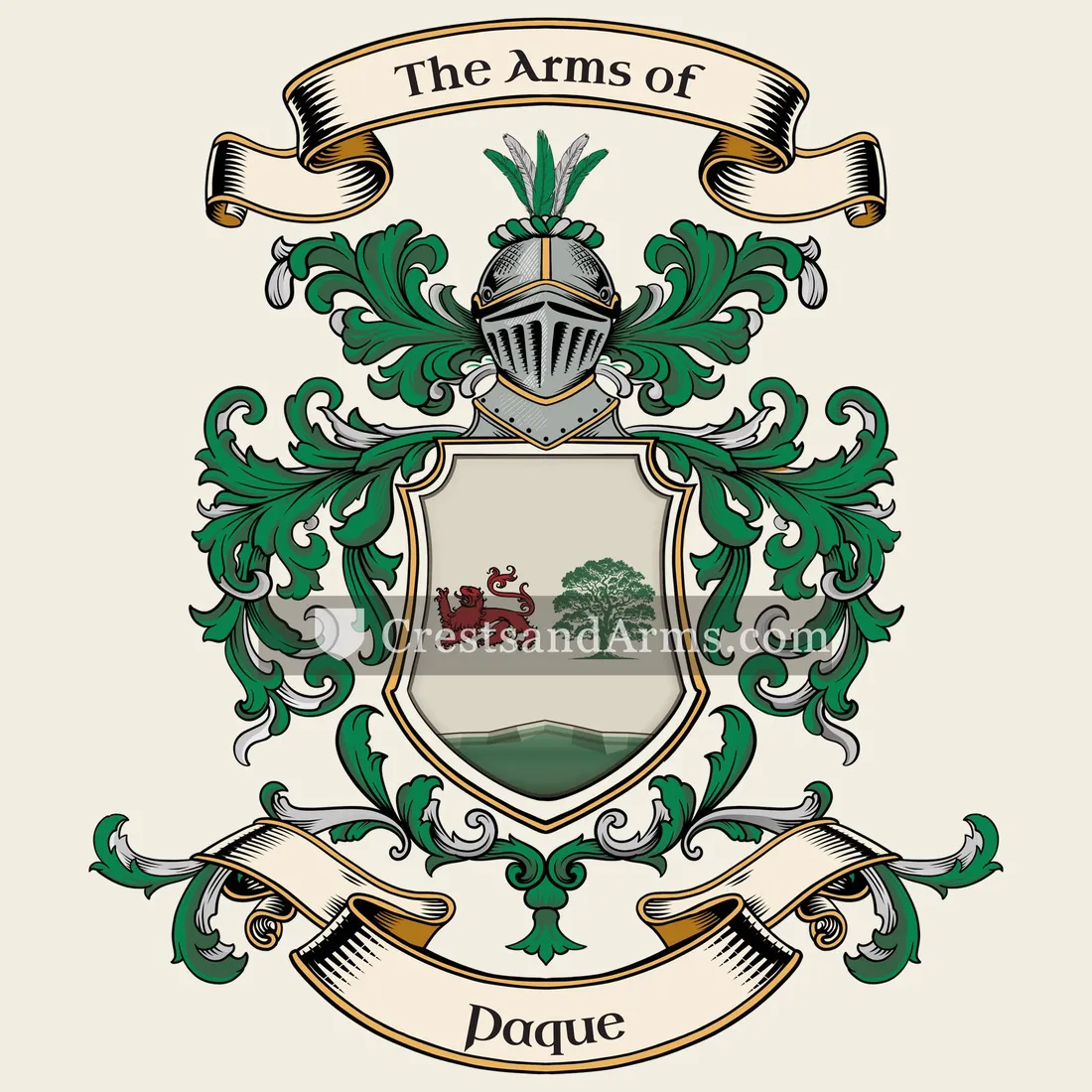
mountThe ground held, and steadfastness upon it
lionCourage, strength and royalty
treeLife, endurance and deep roots
Colours
Silver (Argent)Means: Peace and sincerity
Green (Vert)Means: Hope
Red (Gules)Means: Military strength
Historical info
Source
J. B. Rietstap, Armorial Général, Gouda: G. B. van Goor Zonen, 1884–87
Blazon (the actual original written record)
“D'arg. au lion de gu., cour. d'or, ramp. contre le fût d'un arbre de sin., posé à dextre, le tout soutenu d'une terrasse de sin. C.: un arbre de sin.”
Belgiumc. 1737
Digital archive packCoat of arms PNG, gold border print PDF, vector SVG and the certificate of authenticity. Sent to your email in minutes.
Map of Belgium showing where the Paque arms are recorded
The Paque arms were recorded in Belgium, c. 1737.
Arms such as these were typically recorded in Brabant.
Brabant lay at the heart of the Low Countries, where the trade routes met. Its towns were wealthy and its landowners many, and both kinds of family kept arms, which is why the region is so heavily represented.
This is where the arms were entered in the register. Families often moved to other parts of the country, so the same name can turn up in more than one region.
The body that granted and recorded arms in Belgium in this period.
Charles VI, Holy Roman Emperor
Sovereign of the period
Charles VI, Holy Roman Emperor
1711–1740
Reigning in Belgium when the Paque arms are first recorded.
How Arms Worked in Belgium
In Belgium, a coat of arms is considered personal property that is passed down through the male line to legitimate descendants. Families often use the same shield design across generations to show their shared heritage. If a branch of the family wants to change the design, they must apply for an official update to their specific version of the arms.
Granting authority
The Conseil héraldique is the official body that regulates and approves all coats of arms in Belgium.
How they got arms
Families obtain their coats of arms through formal royal grants or by confirming their historical right to use existing designs.
Where arms were recorded
All approved coats of arms are officially recorded in the public registers of the Conseil héraldique since 1844.
The family's standing
Recorded among the armigerous families of Belgium.
Origin & History of the Paque Family in Belgium
The family name Paque has deep roots in the historical region of Brabant, where records confirm members of the family were living as early as 1737. During this period, the area was part of the Austrian Netherlands, a time characterized by a mix of agricultural traditions and the slow growth of local trade. The name itself likely originated as a descriptive nickname or a variation of local linguistic roots common to the Walloon and French-speaking populations of the region. Families in 18th-century Brabant were often closely tied to their parish communities, where they worked as skilled laborers or farmers on the fertile land. By tracing the family back to this era, we see a lineage that helped shape the social fabric of rural Belgium long before the country became an independent nation. These early ancestors lived through a time of transition, navigating the complex political shifts of the Low Countries while maintaining their presence in the local villages of the Brabant province.
Meaning of the Paque family crest colors & symbols
Symbols on this shield
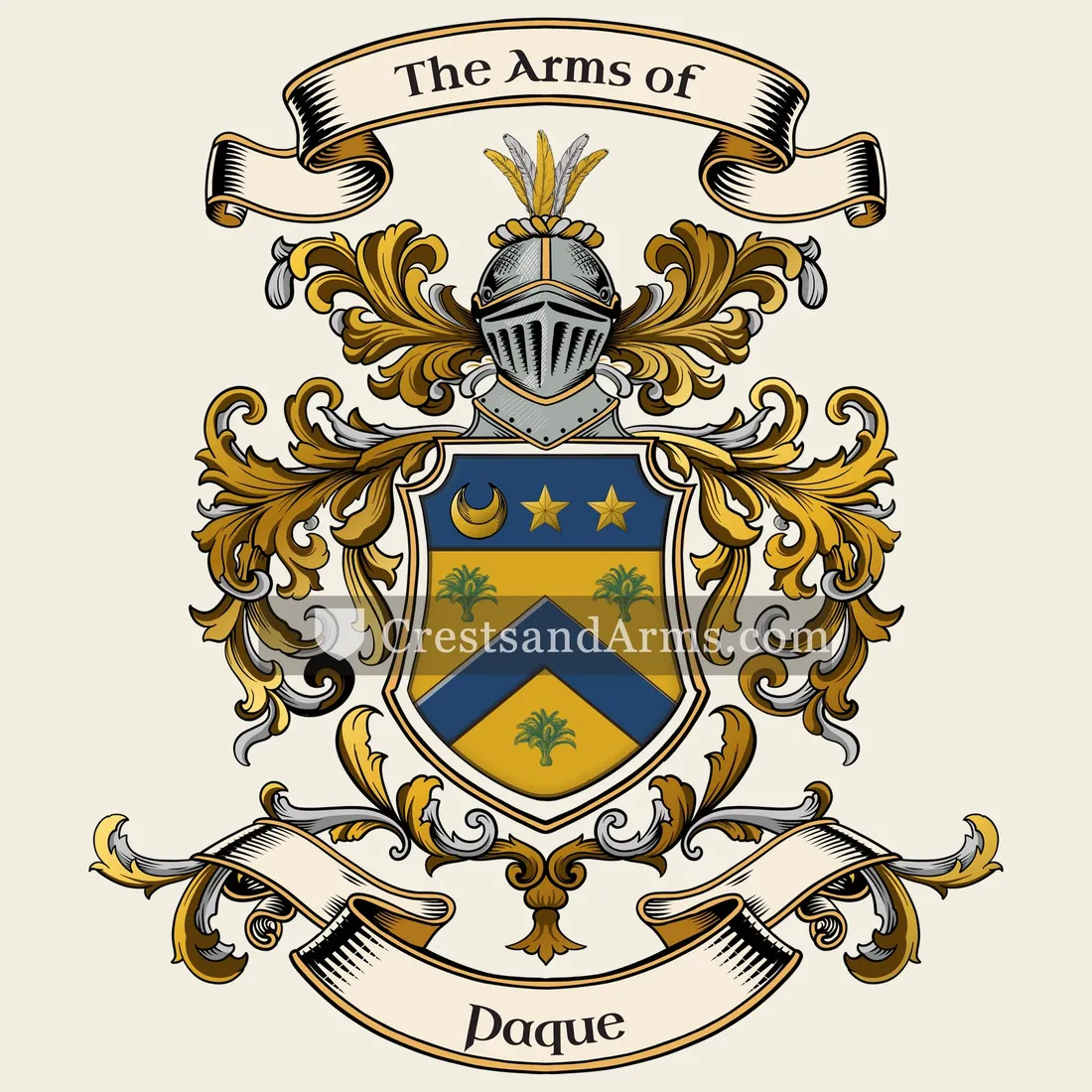
chevronProtection, and faithful service completed
chiefAuthority, wisdom and dominion
palm treeVictory, and righteousness that flourishes
crescentHonour by the sovereign, and the second son
mulletThe third son, and a divine quality from above
Colours
Gold (Or)Means: Generosity
Blue (Azure)Means: Loyalty and truth
Green (Vert)Means: Hope
Historical info
Source
J. B. Rietstap, Armorial Général, Gouda: G. B. van Goor Zonen, 1884–87
Blazon (the actual original written record)
“D'or au chev. d'azur, acc. de trois palmes de sin.; au chef du sec., ch. d'un croiss. d'or entre deux étoiles du même.”
DauphineDauphine, c. 1663
Digital archive packCoat of arms PNG, gold border print PDF, vector SVG and the certificate of authenticity. Sent to your email in minutes.
Map of France showing where the Paque arms are recorded
The Paque arms were recorded in Dauphine, c. 1663.
Dauphine lay in the mountains of south-eastern France, a country of small estates and scattered valleys. Its gentry were many and mostly modest, and even a small landholding was enough to justify arms.
This is where the arms were entered in the register. Families often moved to other parts of the country, so the same name can turn up in more than one region.
The body that granted and recorded arms in France in this period.
Louis XIV of France
Sovereign of the period
Louis XIV of France
1643–1715
Reigning in Belgium when the Paque arms are first recorded.
How Arms Worked in France
In France, a coat of arms was a mark of honor that passed down through the male line to all legitimate descendants. Families often used the same shield without changes to show their shared heritage. If a branch wanted to stand out, they could add a small mark to their shield to show their specific place in the family tree.
Granting authority
The Juge d'armes de France acted as the official authority that regulated and verified coats of arms across the country.
How they got arms
Families typically inherited their arms from ancestors, though they could also receive them through royal grants or by proving their noble status.
Where arms were recorded
Coats of arms were officially recorded in the Armorial Général de France, which began its main collection in the year 1696.
The family's standing
Recorded among the armigerous families of Dauphine.
Origin & History of the Paque Family in France
The family name Paque has deep roots in the historical province of Dauphiné, a region in southeastern France known for its rugged mountains and complex social history. By the year 1663, records confirm that members of the family were already established within this area, which served as a vital crossroads between the French kingdom and the neighboring Italian states. During this period, the people of Dauphiné often lived in close-knit rural communities that relied on agriculture and trade along the alpine passes. The name itself likely evolved from local dialects or descriptive nicknames common in the region, reflecting the daily lives and identities of the families living under the influence of the local nobility and the Catholic Church. As the seventeenth century progressed, the Paque family would have navigated the significant political and religious shifts that defined the era, helping to shape the cultural fabric of the French countryside long before the modern nation was fully formed.
Paque Meaning & Related Branches
Root word
pacare
Latin verb meaning to appease, pacify, or make peaceful.
This name
PaqueA topographic or occupational name referring to someone who lived near or worked on peaceful, quiet land.
also spelled
Paque
Paquey
Pakay
Packet
Documented Sources
J. B. Rietstap, Armorial Général, Gouda: G. B. van Goor Zonen, 1884–87
State Archives in Belgium (Rijksarchief in België), Parochieregisters van de provincie Brabant
F. De Potter and J. Broeckaert, Geschiedenis van de gemeenten der provincie Oost-Vlaanderen, 1864-1902. (Note: While focused on East Flanders, these records provide the essential administrative context for family naming patterns in the broader Brabant region during the 18th century)
Digital archive packCoat of arms PNG, gold border print PDF, vector SVG and the certificate of authenticity. Sent to your email in minutes.


 mountThe ground held, and steadfastness upon it
 lionCourage, strength and royalty
 treeLife, endurance and deep roots
 mountThe ground held, and steadfastness upon it
 lionCourage, strength and royalty
 treeLife, endurance and deep roots


 chevronProtection, and faithful service completed
 chiefAuthority, wisdom and dominion
 palm treeVictory, and righteousness that flourishes
 crescentHonour by the sovereign, and the second son
 mulletThe third son, and a divine quality from above