Map of France showing where the Parcell arms are recorded
The Parcell arms were recorded in France, c. 1725.
Arms such as these were typically recorded in Bretagne.
More families held coats of arms in Bretagne than anywhere else in France. The land was divided into many small estates rather than a few large ones, so far more households counted as gentry, and each needed a shield of its own to be told apart.
This is where the arms were entered in the register. Families often moved to other parts of the country, so the same name can turn up in more than one region.
The body that granted and recorded arms in France in this period.
Louis XV of France
Sovereign of the period
Louis XV of France
1715–1774
Reigning in France when the Parcell arms are first recorded.
How Arms Worked in France
In France, a coat of arms was a mark of honor that passed down through the male line to all legitimate descendants. Families often used the same shield without changes to show their shared heritage. If a branch wanted to stand out, they could add a small mark to their shield to show their specific place in the family tree.
Granting authority
The Juge d'armes de France acted as the official authority that regulated and verified coats of arms across the country.
How they got arms
Families typically inherited their arms from ancestors, though they could also receive them through royal grants or by proving their noble status.
Where arms were recorded
Coats of arms were officially recorded in the Armorial Général de France, which began its main collection in the year 1696.
The family's standing
Recorded among the armigerous families of France.
Origin & History of the Parcell Family in France
The family name Parcell traces its roots to the northwestern region of France known as Bretagne. By the year 1725, records confirm that members of this family were well-established within the local communities of this rugged coastal province. The name likely evolved from regional dialects that were common in the area during the early eighteenth century. Families in Bretagne at this time were often tied to the land or specific local trades, and they lived through a period of significant social change as the French monarchy exerted more control over the provinces. The presence of the Parcell name in these historical documents suggests that the family was part of the stable, working population that helped define the unique cultural identity of the Breton people. Over time, the name became a marker of their specific ancestry and their deep connection to the history of western France.
Meaning of the Parcell family crest colors & symbols
Symbols on this shield
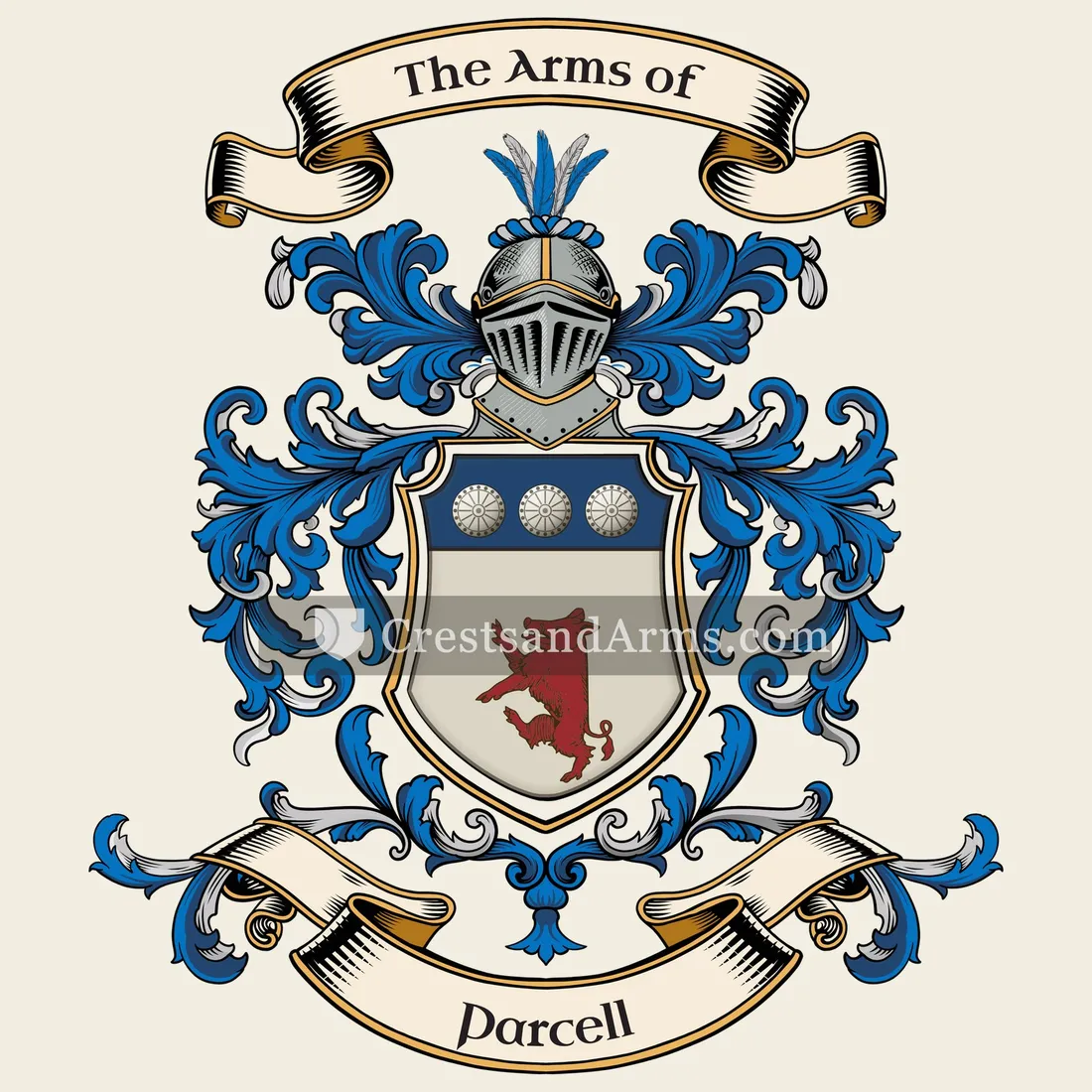
chiefAuthority, wisdom and dominion
boarA fierce fighter who battles to the end
roundelA coin, and one who has been to the crusades
Colours
Silver (Argent)Means: Peace and sincerity
Blue (Azure)Means: Loyalty and truth
Red (Gules)Means: Military strength
Historical info
Source
Sir Bernard Burke, The General Armory of England, Scotland, Ireland and Wales, London: Harrison & Sons, 1884
Blazon (the actual original written record)
“Ar. a boar pass. gu. armed and bristled or, on a chief az. three plates”
DublinCrumlin · Dublin, c. 1598
Digital archive packCoat of arms PNG, gold border print PDF, vector SVG and the certificate of authenticity. Sent to your email in minutes.
Map of Ireland showing where the Parcell arms are recorded
The Parcell arms were recorded in Dublin, c. 1598.
Dublin was the seat of government in Ireland and the place where grants were sought and recorded. Families with business at the castle or the courts settled nearby, and settling there put their arms on record.
This is where the arms were entered in the register. Families often moved to other parts of the country, so the same name can turn up in more than one region.
The body that granted and recorded arms in Ireland in this period.
Elizabeth I of England
Sovereign of the period
Elizabeth I of England
1558–1603
Reigning in France when the Parcell arms are first recorded.
How Arms Worked in Ireland
The Ulster King of Arms granted coats of arms to individuals who proved their social standing and good character. These symbols were typically inherited by all legitimate descendants of the original holder. If a family branch wanted a unique look, they could apply for a specific change to their design through the office to ensure their identity remained distinct.
Granting authority
The Ulster King of Arms acted as the official body that regulated and issued all coats of arms throughout Ireland.
How they got arms
Families obtained their arms through formal grants issued by the office after proving their eligibility and paying the required fees.
Where arms were recorded
All official grants were recorded in the registers held by the Ulster King of Arms starting from the year 1552.
The family's standing
Recorded among the armigerous families of Dublin.
Origin & History of the Parcell Family in Ireland
The name Parcell has deep roots in Ireland that can be traced back to the late sixteenth century. Historical records confirm that members of the family were living in Dublin as early as 1598. During this period, Dublin was a bustling center of trade and administration, making it a common destination for families seeking new opportunities. The name likely arrived in Ireland through migration from England, as it shares linguistic connections with older surnames found in the British Isles. As the family settled into the urban environment of Dublin, they became part of the growing merchant and professional classes that defined the city during the late Tudor era. Over the following generations, the family established a presence in the region, contributing to the social and economic fabric of the capital city.
Meaning of the Parcell family crest colors & symbols
Symbols on this shield
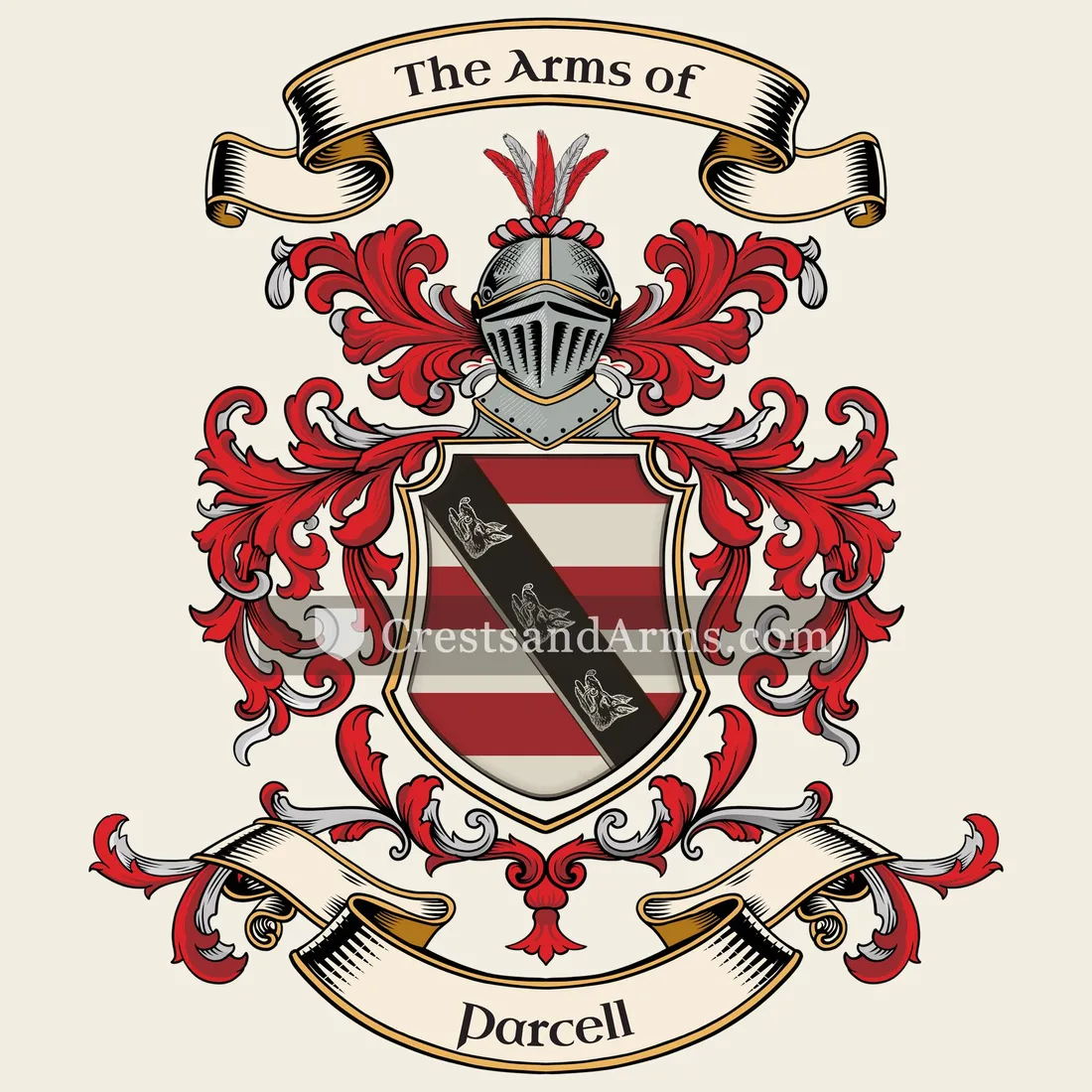
bendDefence, and the scarf of a commander
boars headA fierce fighter who battles to the end
Colours
Silver (Argent)Means: Peace and sincerity
Black (Sable)Means: Constancy
Red (Gules)Means: Military strength
Historical info
Source
Sir Bernard Burke, The General Armory of England, Scotland, Ireland and Wales, London: Harrison & Sons, 1884
Blazon (the actual original written record)
“Barry nebulée of six ar. and gu. on a bend sa. three boars' heads of the first”
SalopOuneslow · Salop, c. 1597
Digital archive packCoat of arms PNG, gold border print PDF, vector SVG and the certificate of authenticity. Sent to your email in minutes.
Map of England showing where the Parcell arms are recorded
The Parcell arms were recorded in Salop, c. 1597.
Shropshire lay on the Welsh border, and border country needed men who could fight. Families held their land in return for service, and service in arms is what a coat of arms was originally for.
This is where the arms were entered in the register. Families often moved to other parts of the country, so the same name can turn up in more than one region.
The body that granted and recorded arms in England in this period.
Elizabeth I of England
Sovereign of the period
Elizabeth I of England
1558–1603
Reigning in France when the Parcell arms are first recorded.
How Arms Worked in England
English heraldry allowed arms to be shared by all legitimate descendants of the original owner. These symbols were treated as personal property that moved through the generations to all children. While the eldest son kept the original design, other family members could use the same shield without needing to change it or register their own unique versions.
Granting authority
The College of Arms in London has regulated the use of coats of arms throughout England and Wales since 1484.
How they got arms
Families typically obtained their coats of arms through a formal grant from the Crown or by proving their ancient right to them.
Where arms were recorded
All official coats of arms are recorded in the registers kept at the College of Arms, which date back to the fifteenth century.
The family's standing
Recorded among the armigerous families of Salop.
Origin & History of the Parcell Family in England
The surname Parcell is deeply rooted in the English landscape, with historical records confirming that members of the family were established in the county of Salop, also known as Shropshire, by the year 1597. The name likely evolved as a variation of the Middle English term "parcel," which was often used to describe a small portion of land or a specific piece of property. During this period, surnames frequently emerged from the way a person interacted with their local environment or the specific plot of land they cultivated. Settling in the West Midlands, the early Parcell family lived in a region defined by its agricultural traditions and proximity to the Welsh border. This location suggests that the family was part of the rural working class, contributing to the local economy through farming or trade in the vibrant market towns of the area. By maintaining a presence in Salop for centuries, the family became a quiet but enduring part of the social fabric of the English countryside.
Parcell Meaning & Related Branches
Root word
Pars
A Latin term referring to a part, portion, or share.
This name
ParcellDerived from a nickname for a person who held a specific portion of land or a share.
also spelled
Purcelle
Purcel
Purcellh
Pursel
Pursell
Documented Sources
J. B. Rietstap, Armorial Général, Gouda: G. B. van Goor Zonen, 1884–87
Archives départementales d'Ille-et-Vilaine, Série B, Fonds de la juridiction de Bretagne
Archives départementales du Finistère, Série E, État civil et registres paroissiaux
Le Moyne de La Borderie, Arthur, Histoire de Bretagne, 1896
Digital archive packCoat of arms PNG, gold border print PDF, vector SVG and the certificate of authenticity. Sent to your email in minutes.


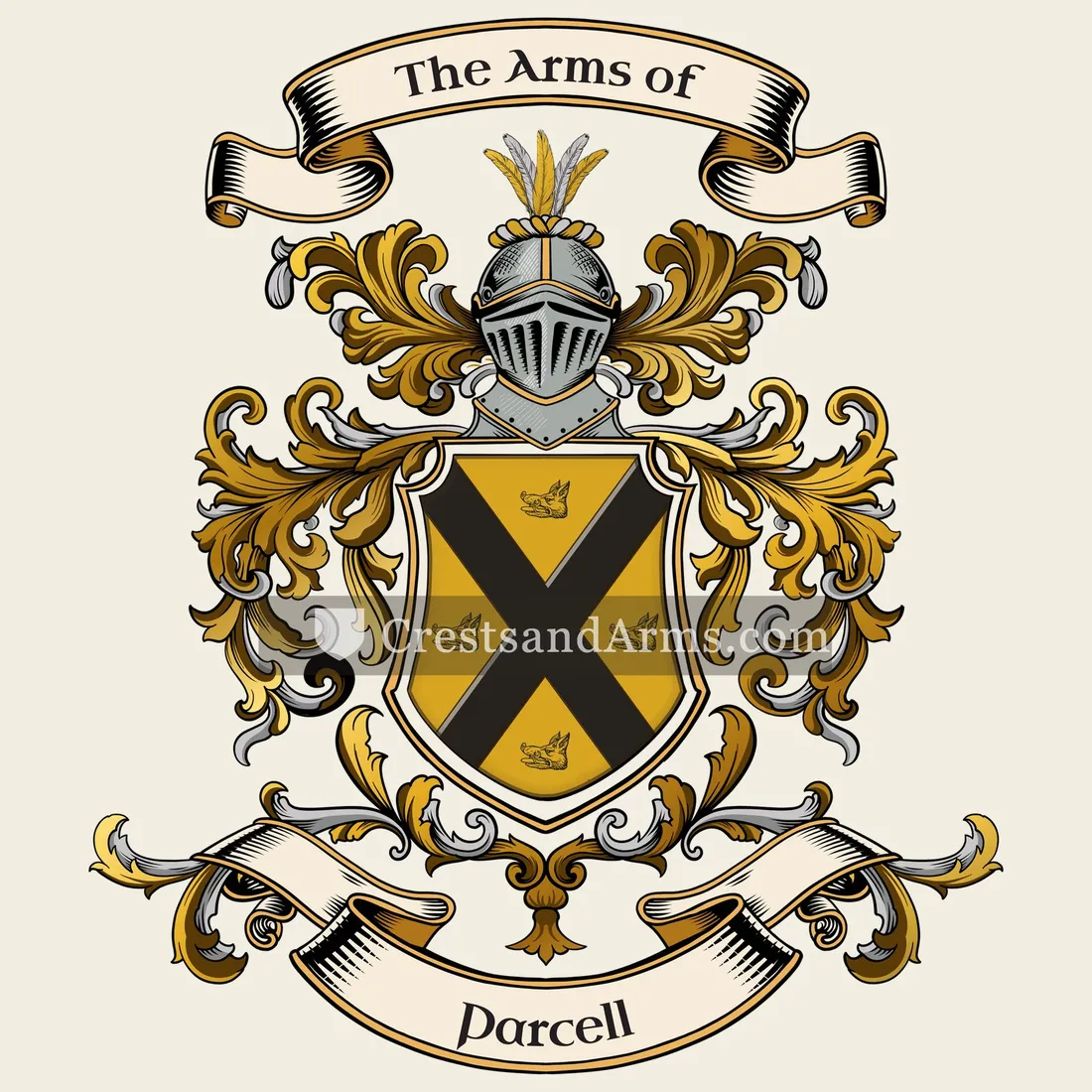
 saltireResolution, and St Andrew's cross
 boars headA fierce fighter who battles to the end
 saltireResolution, and St Andrew's cross
 boars headA fierce fighter who battles to the end


 chiefAuthority, wisdom and dominion
 boarA fierce fighter who battles to the end
 roundelA coin, and one who has been to the crusades


 bendDefence, and the scarf of a commander