A record of documented arms, meaning and origin, researched for the Parry family lines. Documented in 3 countries.
Reg. 5006 · German, P–S
Meaning of the Parry family crest colors & symbols
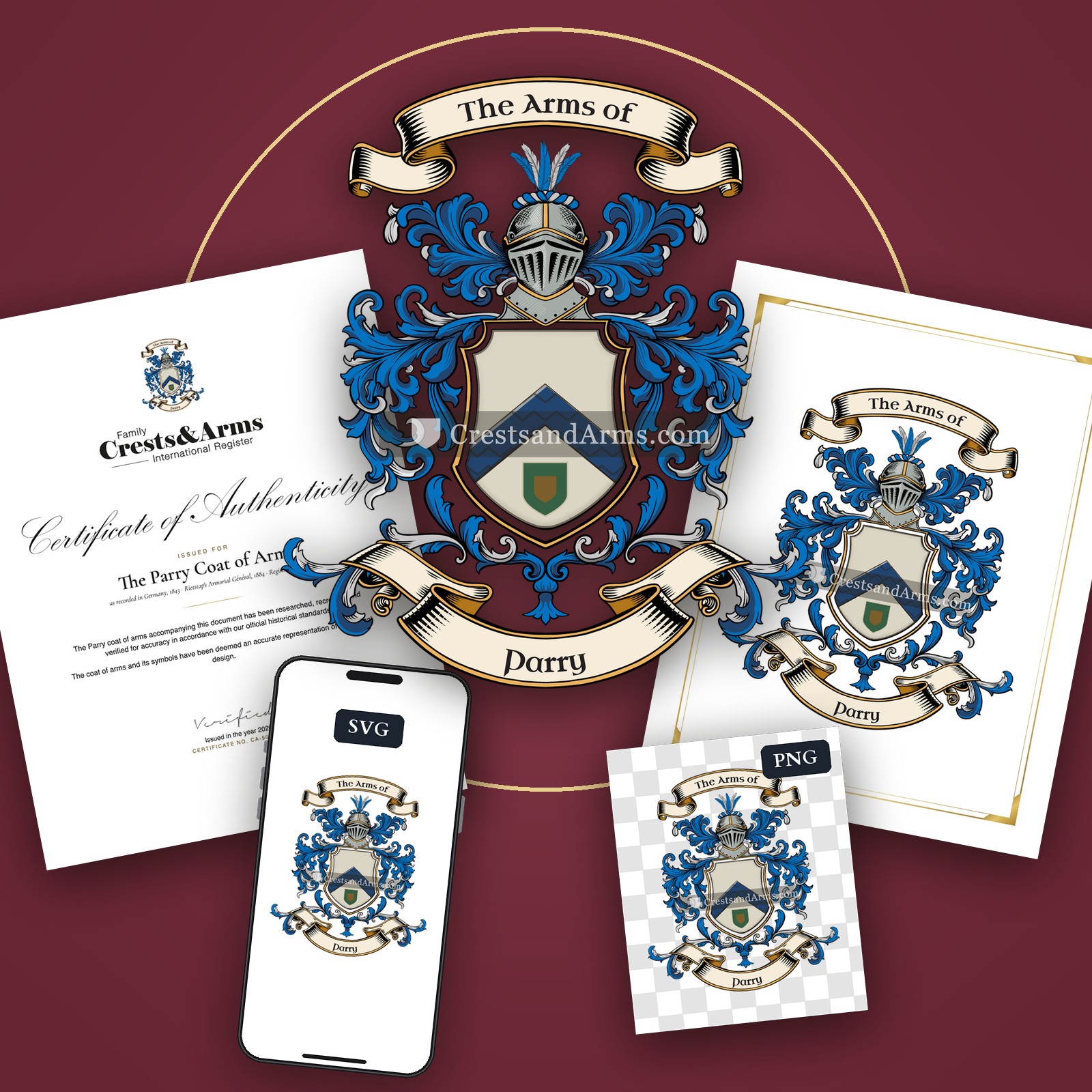
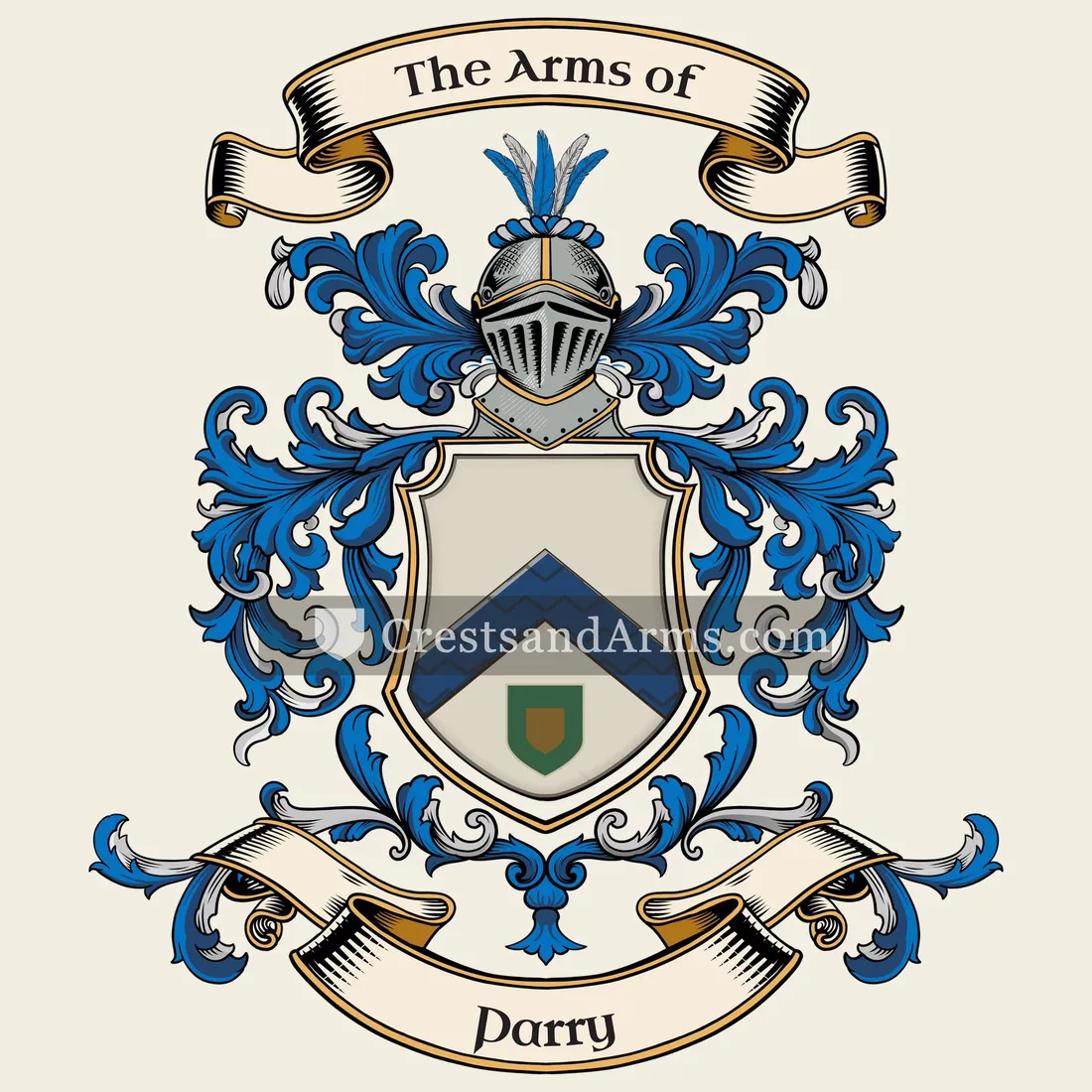
Symbols on this shield
chevronProtection, and faithful service completed
escutcheonA shield within a shield, and a claim inherited
Colours
Silver (Argent)Means: Peace and sincerity
Blue (Azure)Means: Loyalty and truth
Green (Vert)Means: Hope
Historical info
Source
J. B. Rietstap, Armorial Général, Gouda: G. B. van Goor Zonen, 1884–87
Blazon (the actual original written record)
“D'arg. au chev. d'azur, acc. de trois lions du même, les deux du chef affr. et supp. de leurs pattes un écusson de sin. ch. d'une rose du champ. C.: un lion iss. d'azur, portant sur sa tête un gerbe d'or. L. d'arg. et d'azur.”
SaxonySaxony, c. 1843
Digital archive packCoat of arms PNG, gold border print PDF, vector SVG and the certificate of authenticity. Sent to your email in minutes.
Map of Germany showing where the Parry arms are recorded
The Parry arms were recorded in Saxony, c. 1843.
Saxony had mines, trade and old landed families all at once. Silver made some fortunes and land held others, and both sorts of family kept arms, which is why Saxon names appear so often in the registers.
This is where the arms were entered in the register. Families often moved to other parts of the country, so the same name can turn up in more than one region.
The body that granted and recorded arms in Germany in this period.
Frederick William IV of Prussia
Sovereign of the period
Frederick William IV of Prussia
1840–1861
Reigning in Germany when the Parry arms are first recorded.
How Arms Worked in Germany
Prussian heraldry was strictly tied to social rank and noble status rather than being a free choice for every citizen. These symbols were treated as permanent family property that moved through the generations to all legitimate heirs. If a family branch wanted to change their design to stand out, they had to apply for official permission to alter their specific version of the shield.
Granting authority
The Prussian Heroldsamt acted as the central state office that managed and strictly controlled all noble titles and coats of arms.
How they got arms
Families usually obtained their arms through formal royal grants or by proving their long-standing noble status to the state authorities.
Where arms were recorded
All official coats of arms were kept in the rolls of the Prussian Heroldsamt, which functioned from 1706 until 1918.
The family's standing
Recorded among the armigerous families of Saxony.
Origin & History of the Parry Family in Germany
The surname Parry is traditionally associated with Welsh roots, but its presence in Germany highlights a fascinating chapter of migration and cultural integration. By 1843, records confirm that members of the Parry family were established in the region of Saxony. During this period, Saxony was a center of rapid industrial growth and intellectual activity, making it a common destination for families seeking new opportunities or fleeing social changes in their homelands. Families with this name who settled in German-speaking territories often adapted their spelling or pronunciation to fit local linguistic patterns, though they maintained their distinct family identity. These early settlers likely integrated into the local community through trade, agriculture, or the burgeoning manufacturing sectors that defined the Saxon economy in the mid-nineteenth century. This migration pattern reflects the broader movement of people across European borders during the nineteenth century, where families moved to align their skills with the needs of developing regions.
Meaning of the Parry family crest colors & symbols
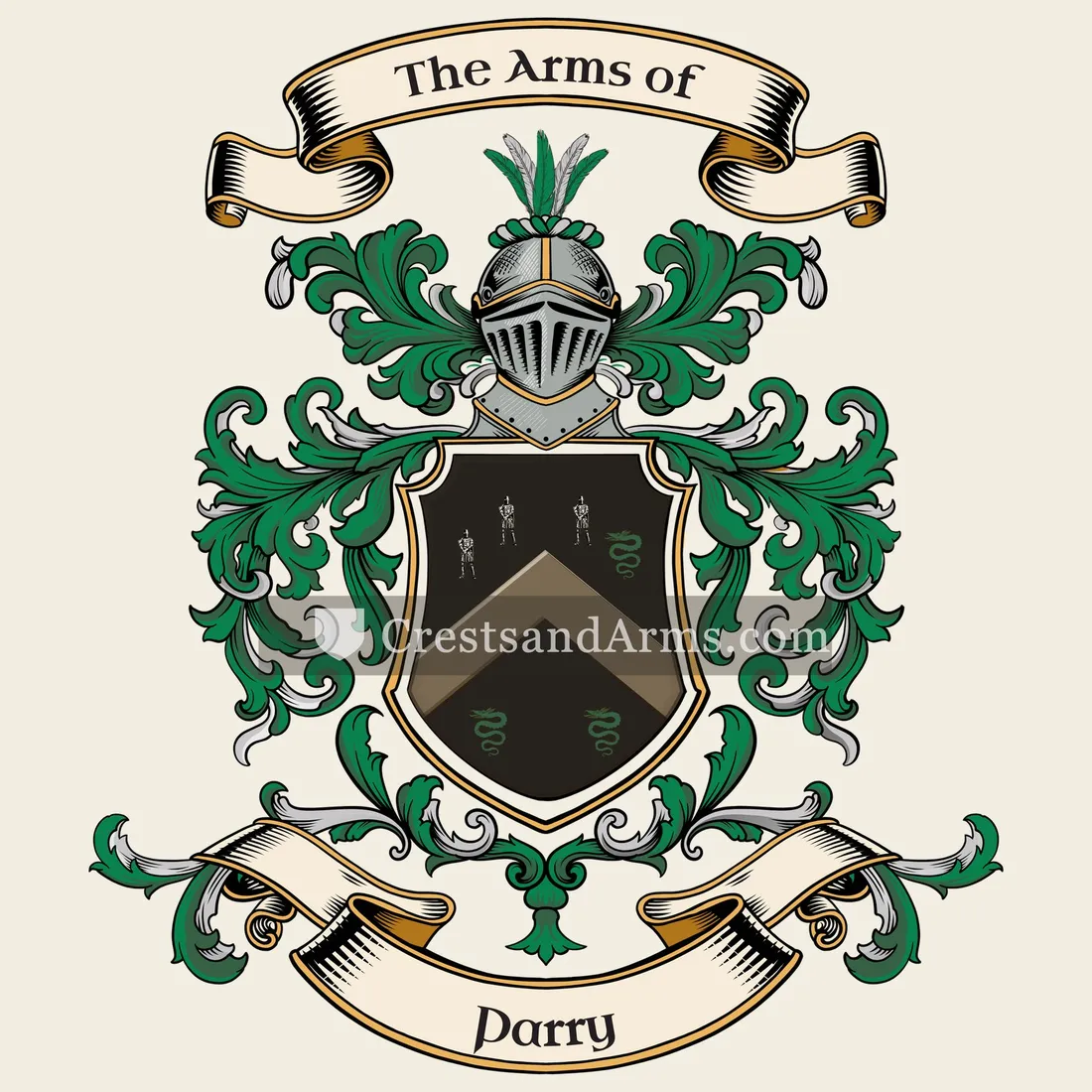
Symbols on this shield
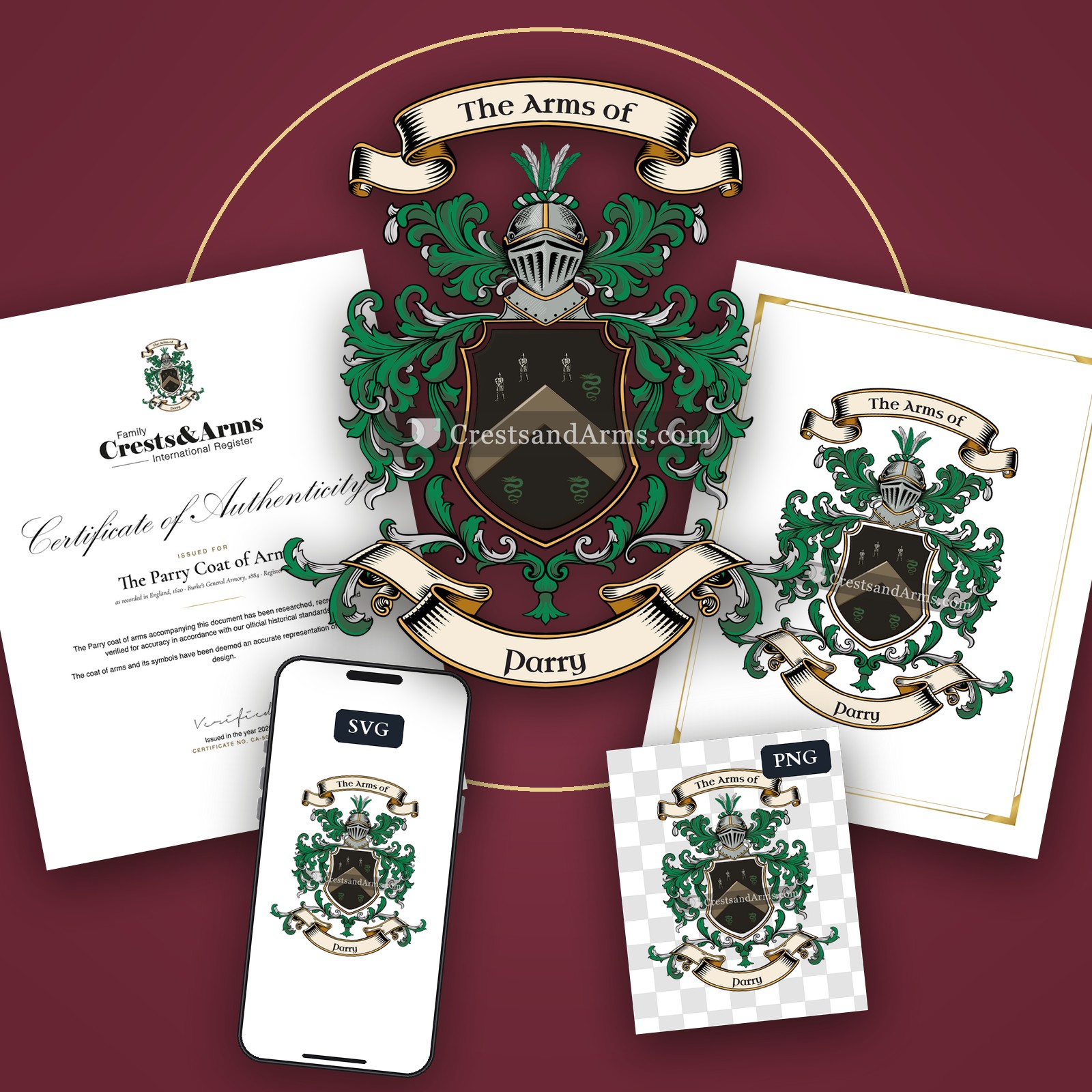
chevronProtection, and faithful service completed
knightChivalry and service in arms
serpentWisdom, healing and prudence
Colours
Black (Sable)Means: Constancy
Green (Vert)Means: Hope
Historical info
Source
Sir Bernard Burke, The General Armory of England, Scotland, Ireland and Wales, London: Harrison & Sons, 1884
Blazon (the actual original written record)
“Sa. a chev. betw. three boys' heads couped at the shoulders ppr. crined or, round each neck a snake tied vert”
BerksHamsted Marshall · Berks, c. 1620
Digital archive packCoat of arms PNG, gold border print PDF, vector SVG and the certificate of authenticity. Sent to your email in minutes.
Map of England showing where the Parry arms are recorded
The Parry arms were recorded in Berks, c. 1620.
Berkshire sat on the road west from London with the royal castle at Windsor in the middle of it. Court families bought estates within reach, and an estate near the court almost always came with a coat of arms.
This is where the arms were entered in the register. Families often moved to other parts of the country, so the same name can turn up in more than one region.
The body that granted and recorded arms in England in this period.
James VI and I
Sovereign of the period
James VI and I
1603–1625
Reigning in Germany when the Parry arms are first recorded.
How Arms Worked in England
English heraldry allowed arms to be shared by all legitimate descendants of the original owner. These symbols were treated as personal property that moved through the generations to all children. While the eldest son kept the original design, other family members could use the same shield without needing to change it or register their own unique versions.
Granting authority
The College of Arms in London has regulated the use of coats of arms throughout England and Wales since 1484.
How they got arms
Families typically obtained their coats of arms through a formal grant from the Crown or by proving their ancient right to them.
Where arms were recorded
All official coats of arms are recorded in the registers kept at the College of Arms, which date back to the fifteenth century.
The family's standing
Recorded among the armigerous families of Berks.
Origin & History of the Parry Family in England
The surname Parry is a patronymic name, which means it originated as a way to identify a person by their father’s given name. It is a shortened form of the Welsh phrase "ap Harry," which translates literally to "son of Harry." While the name has deep roots in Wales, it began to spread across the border into England as families migrated for work, trade, or land ownership. By the early 17th century, the Parry family had established a notable presence in the county of Berkshire. Records from 1620 confirm that members of the family were settled in this region, where they likely integrated into the local agricultural or merchant communities. As the name moved further into England, the spelling often shifted from the original Welsh style to the more standardized English version used today. This transition reflects the broader historical movement of families who maintained their cultural heritage while adapting to the social structures of their new English homes.
Meaning of the Parry family crest colors & symbols
Symbols on this shield
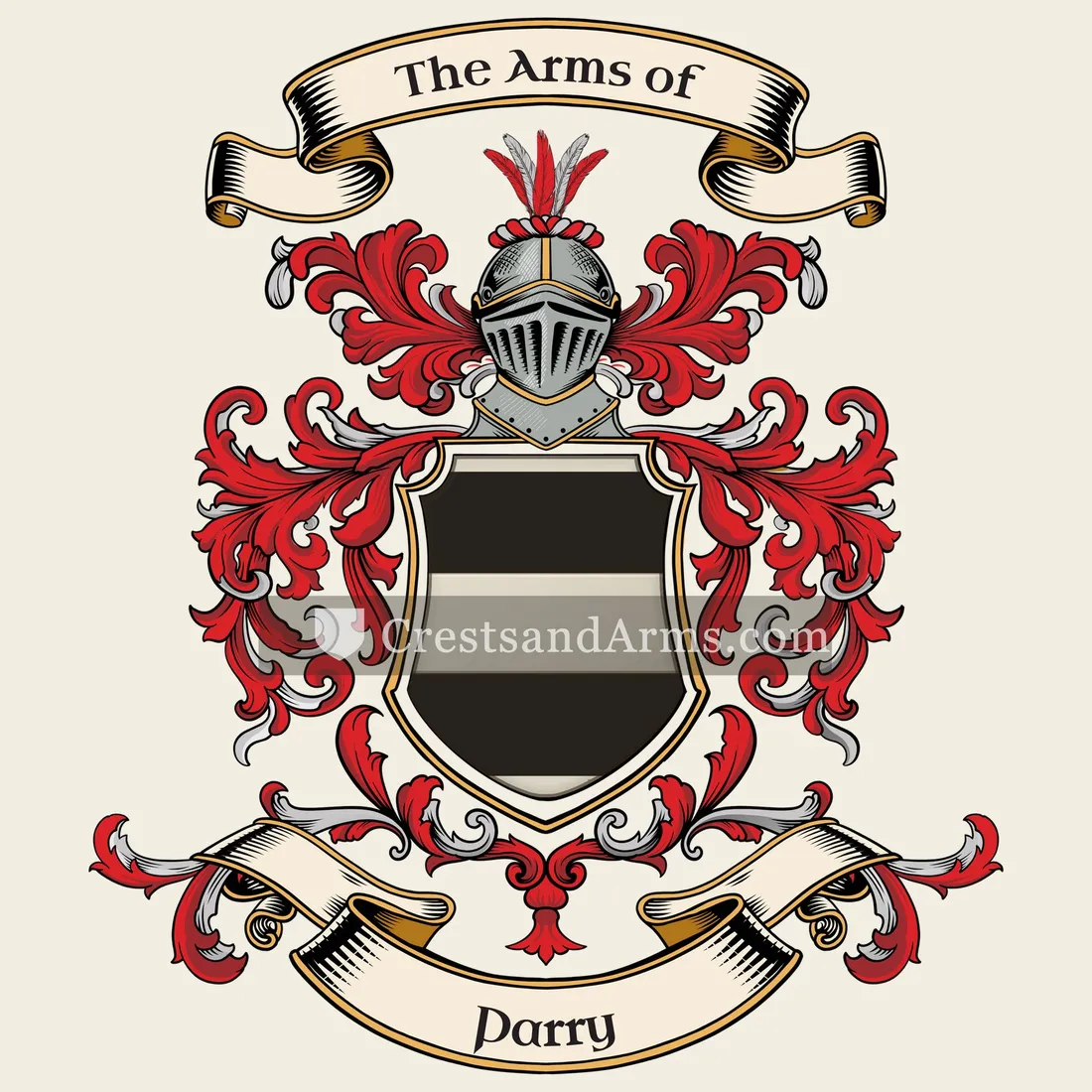
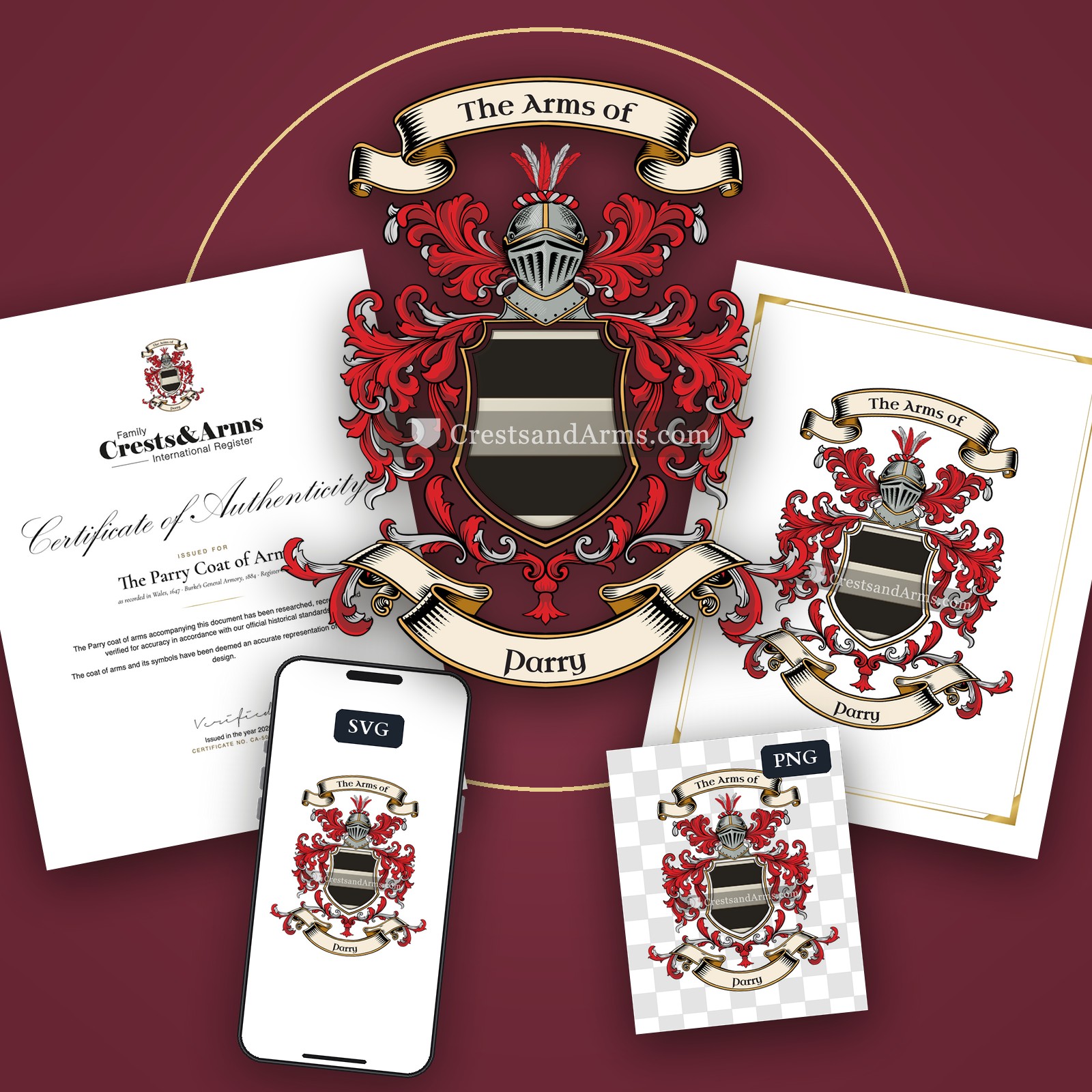
fessThe military belt, and readiness to serve
Colours
Black (Sable)Means: Constancy
Silver (Argent)Means: Peace and sincerity
Historical info
Source
Sir Bernard Burke, The General Armory of England, Scotland, Ireland and Wales, London: Harrison & Sons, 1884
Blazon (the actual original written record)
“Sa. a fesse betw. two bars dancettée ar”
Walesc. 1647
Digital archive packCoat of arms PNG, gold border print PDF, vector SVG and the certificate of authenticity. Sent to your email in minutes.
Map of Wales showing where the Parry arms are recorded
The Parry arms were recorded in Wales, c. 1647.
Arms such as these were typically recorded in Denbigh.
Denbighshire was north Welsh country of hills and small estates. Land was held by a great many families rather than a few, and each holding brought its own claim to a coat of arms.
This is where the arms were entered in the register. Families often moved to other parts of the country, so the same name can turn up in more than one region.
The body that granted and recorded arms in Wales in this period.
Charles I of England
Sovereign of the period
Charles I of England
1625–1649
Reigning in Germany when the Parry arms are first recorded.
How Arms Worked in Wales
English heraldry allowed arms to be shared by all legitimate descendants of the original owner. These symbols were treated as personal property that moved through the generations to all children. While the eldest son kept the original design, other family members could use the same shield without needing to change it or register their own unique versions.
Granting authority
The College of Arms in London has regulated the use of coats of arms throughout England and Wales since 1484.
How they got arms
Families typically obtained their coats of arms through a formal grant from the Crown or by proving their ancient right to them.
Where arms were recorded
All official coats of arms are recorded in the registers kept at the College of Arms, which date back to the fifteenth century.
The family's standing
Recorded among the armigerous families of Wales.
Origin & History of the Parry Family in Wales
The surname Parry is a classic example of a patronymic name, which means it was formed by shortening the traditional Welsh phrase "ap Harry," meaning "son of Harry." In the Welsh language, the prefix "ap" or "ab" was used for centuries to indicate lineage, but as English influence grew, these prefixes often merged with the father's name to create a new, fixed surname. By the time records confirm the family’s presence in Denbigh in 1647, the name had already transitioned from a description of ancestry into a permanent family identifier. This shift reflects the broader cultural changes occurring in Wales during the seventeenth century, as local families began adopting standardized naming conventions to align with administrative practices. The Parry family in Denbigh would have been part of this evolving social landscape, where deep-rooted Welsh heritage met the growing need for formal record-keeping in a changing society.
Parry Meaning & Related Branches
Root word
Ap Harri
Welsh patronymic prefix meaning son of Harry
This name
ParryA surname derived from the Welsh name Henry, signifying son of the home ruler.
also spelled
Pary
Parrey
Parrie
Paris
Related arms
Perrysimilar arms
Vaughansimilar arms
Parisvariant spelling
Horsfallrecorded with Parry, same area
Documented Sources
J. B. Rietstap, Armorial Général, Gouda: G. B. van Goor Zonen, 1884–87
Sächsisches Staatsarchiv, Bestand 10036 (Finanzministerium), Generalia zur Auswanderung und Ansiedlung, 1843
Kohl, Horst, Die Geschichte Sachsens im 19. Jahrhundert, 1905
Leipziger Stadtarchiv, Einwohnerverzeichnisse und Melderegister der Stadt Leipzig, 1843
Digital archive packCoat of arms PNG, gold border print PDF, vector SVG and the certificate of authenticity. Sent to your email in minutes.


 chevronProtection, and faithful service completed
 escutcheonA shield within a shield, and a claim inherited
 chevronProtection, and faithful service completed
 escutcheonA shield within a shield, and a claim inherited


 knightChivalry and service in arms
 serpentWisdom, healing and prudence


 fessThe military belt, and readiness to serve