Map of France showing where the Paschal arms are recorded
The Paschal arms were recorded in Languedoc, c. 1663.
Languedoc stretched across the south of France, a country of small towns, vineyards and old local families. Its gentry were numerous rather than grand, and a great many of them held arms even where their estates were modest.
This is where the arms were entered in the register. Families often moved to other parts of the country, so the same name can turn up in more than one region.
The body that granted and recorded arms in France in this period.
Louis XIV of France
Sovereign of the period
Louis XIV of France
1643–1715
Reigning in France when the Paschal arms are first recorded.
How Arms Worked in France
In France, a coat of arms was a mark of honor that passed down through the male line to all legitimate descendants. Families often used the same shield without changes to show their shared heritage. If a branch wanted to stand out, they could add a small mark to their shield to show their specific place in the family tree.
Granting authority
The Juge d'armes de France acted as the official authority that regulated and verified coats of arms across the country.
How they got arms
Families typically inherited their arms from ancestors, though they could also receive them through royal grants or by proving their noble status.
Where arms were recorded
Coats of arms were officially recorded in the Armorial Général de France, which began its main collection in the year 1696.
The family's standing
Recorded among the armigerous families of Languedoc.
Origin & History of the Paschal Family in France
The name Paschal finds its deep historical roots in the Languedoc region of southern France, where the family was well-established by the mid-seventeenth century. The name itself is derived from the Latin word *paschalis*, which relates to the Easter season. In medieval France, such names were often given to children born during the spring holiday or to those who held a special connection to the church calendar. By 1663, records show that families bearing this name were active participants in the local social and economic life of the Languedoc province. During this period, the region was a vibrant center of trade and agriculture, and the Paschal family likely integrated into the local community as landowners or skilled tradespeople. Their presence in this specific area suggests a long history of stability within the southern French landscape, reflecting the broader patterns of family settlement that defined rural life in the seventeenth century.
Meaning of the Paschal family crest colors & symbols
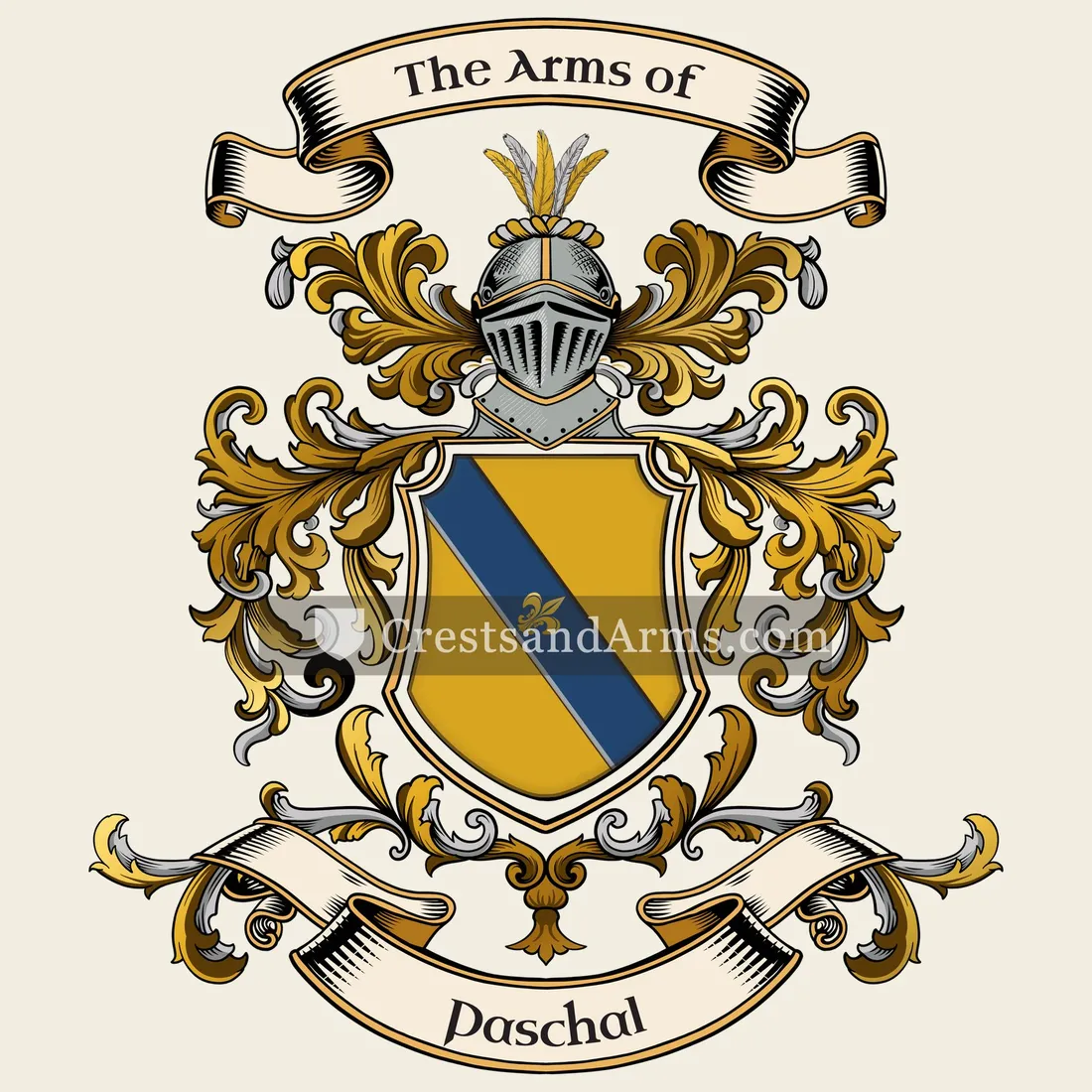
Symbols on this shield
bendDefence, and the scarf of a commander
fleur de lisPurity, light, and the sixth son
Colours
Gold (Or)Means: Generosity
Blue (Azure)Means: Loyalty and truth
Historical info
Source
J. B. Rietstap, Armorial Général, Gouda: G. B. van Goor Zonen, 1884–87
Blazon (the actual original written record)
“D'or à la bande d'azur, ch. d'une fleur-de-lis du champ.”
PiedmontPiedmont, c. 1775
Digital archive packCoat of arms PNG, gold border print PDF, vector SVG and the certificate of authenticity. Sent to your email in minutes.
Map of Italy showing where the Paschal arms are recorded
The Paschal arms were recorded in Piedmont, c. 1775.
Piedmont was Alpine and river country in north-western Italy, ruled from Turin. Its noble houses were listed formally by the state, and a name on that list carried arms as a matter of record.
This is where the arms were entered in the register. Families often moved to other parts of the country, so the same name can turn up in more than one region.
The body that granted and recorded arms in Italy in this period.
Alvise Giovanni Mocenigo
Sovereign of the period
Alvise Giovanni Mocenigo
1763–1778
Reigning in France when the Paschal arms are first recorded.
How Arms Worked in Italy
In the Italian states, coats of arms were often used by noble families to show their status and history. These symbols were passed down through the generations to all legitimate male descendants. Younger branches of a family usually kept the original design but sometimes added small changes to distinguish their specific line from the main branch.
Granting authority
Various local rulers and city governments controlled the use of coats of arms across the different Italian states.
How they got arms
Families often assumed their own arms or received them as official grants from local lords, popes, or city councils.
Where arms were recorded
Arms were recorded in local city archives or private family books rather than in one single national register.
The family's standing
Recorded among the armigerous families of Piedmont.
Origin & History of the Paschal Family in Italy
The family name Paschal finds its roots in the Latin word *paschalis*, which refers to the season of Easter. In Italy, this name often served as a way to identify children born during the holy week or on Easter Sunday. By the late 18th century, the family established a notable presence in the Piedmont region of northwestern Italy. This area was then part of the Kingdom of Sardinia, a territory defined by its mountainous landscape and its role as a bridge between the Italian peninsula and France. Families living in Piedmont during 1775 often worked in agriculture or trade, benefiting from the region's strategic location near major Alpine mountain passes. As the name spread through these communities, it became a marker of local identity, reflecting both the religious traditions of the Catholic Church and the specific cultural heritage of the Piedmontese people during a time of significant political change in Europe.
Paschal Meaning & Related Branches
Root word
Pascha
The Latin term for the Jewish festival of Passover.
This name
PaschalDerived from the Latin word for Easter, traditionally given to children born during the holiday.
also spelled
Paskal
Documented Sources
J. B. Rietstap, Armorial Général, Gouda: G. B. van Goor Zonen, 1884–87
Dauzat, Albert. Dictionnaire étymologique des noms et prénoms de France. 1951
Morlet, Marie-Thérèse. Dictionnaire étymologique des noms de famille. 1991
Archives départementales de l'Hérault, Registres paroissiaux et d'état civil
Digital archive packCoat of arms PNG, gold border print PDF, vector SVG and the certificate of authenticity. Sent to your email in minutes.


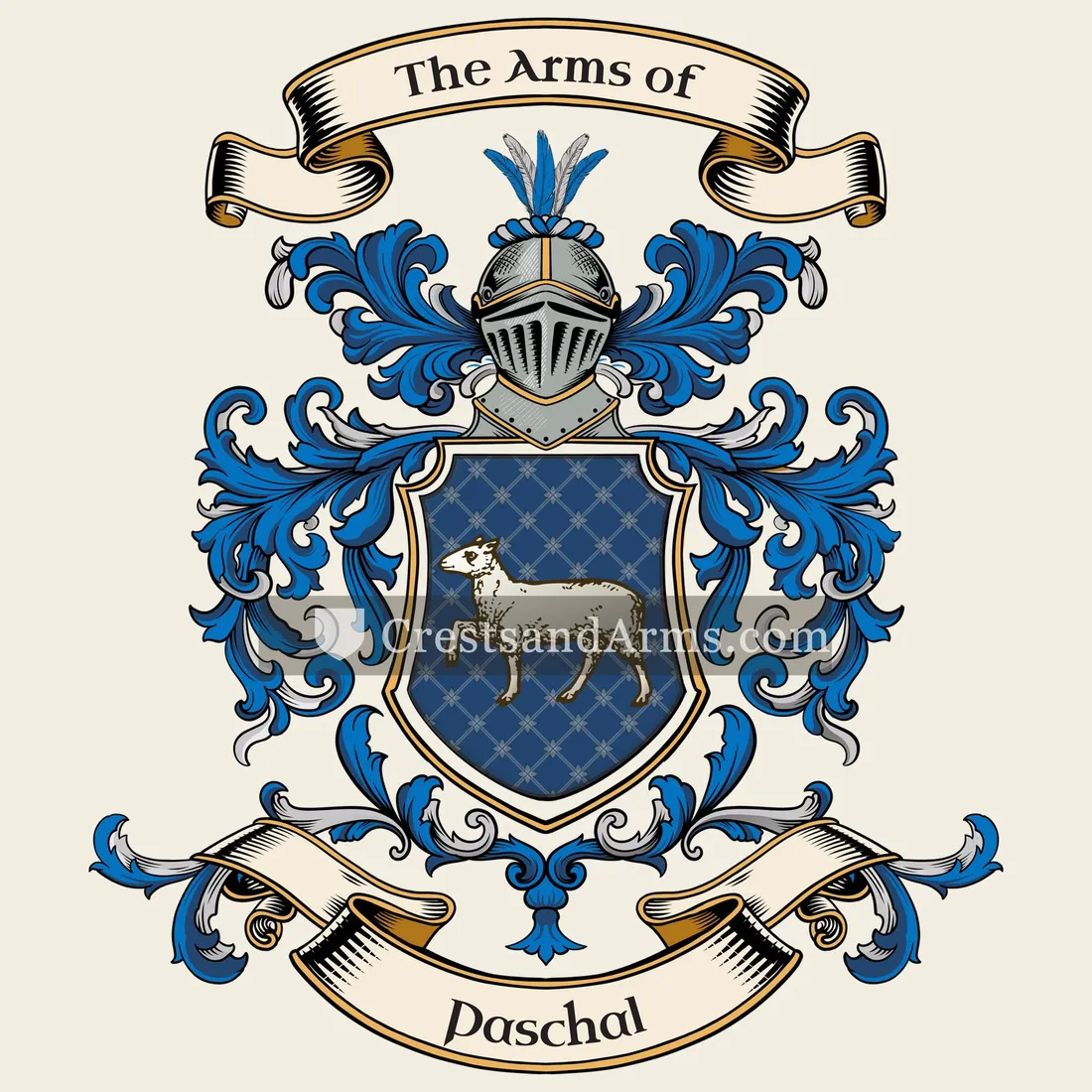
 lambGentleness, patience and faith
 lambGentleness, patience and faith


 bendDefence, and the scarf of a commander
 fleur de lisPurity, light, and the sixth son